


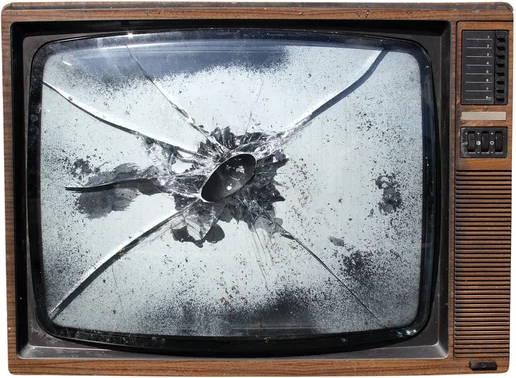

You might wonder about the difference between the "Golden Age" and "Peak TV," and although on first glance the two terms may seem similar, they really aren't. The Golden Age of Television, whichever one you think of (Adams thinks in terms of "the halcyon period that dates from the premiere of The Sopranos in January 1990) is steeped in quality, while "Peak TV" ("the halcyon days when streamers would throw money at established creators and new talents alike, and no idea was too strange to try for a season or three.") measures things in terms of quantity. During the Golden Age, streamers were flush with cash and therefore willing to try anything; the Peak era saw nearly 600 original series aired, hoping to overwhelm potential viewers with choices in hopes they wouldn't notice that the quality, with few exceptions, had dropped.
Now that we've got this out of the way, what does the end of Peak TV mean, and what does it have to do with our website? Well, Adams points out certain trends, from which I've extrapolated certain theories, which amount to the following:
- Because streamers (HBO Max, Netflix, etc.) are looking to monitize their back catalog of programs, previous seasons of your favorite show may just up and disappear, stuck in limbo until they wind up on another streamer, probably ad-supported.
Solution: a return to physical media. You know, DVDs and such. Your physical media can't disappear without notice unless you've just been robbed and your DVD collection is the onlya thing of value you own, in which case you have my sympathies. - It can take up to two years for the next season of your favorite show to drop.
Solution: a return to a fixed seasonal structure. As far as I know, nobody ever waited two years for the next season of Friends or ER. - The freedom of not having a fixed episode length encourages showrunners to write stories that may run for as many as 20 minutes over what the typical episode length is. While proponants claim this prevents stories from being truncated in order to fit a set length, some critics note that these expanded running times often encourage self-indulgence at the expense of tight editing.
Solution: a return to a standard running time as the rule, not the exception. That "very special" cliffhanger? OK, let it run a few minutes over, but try a little discipline, people! - Some shows, even ones with an established fan base, might disappear without ever having a resolution.
Solution: a return to self-contained episodes as the norm, with storyarcs that run for several episodes, not several years. Not every television show has to have a final episode that wraps things up. - Too many new shows each season! Nobody can possibly watch them all, which means some will invariably get short-changed.
Solution: I don't know; maybe fewer new shows? Like when there were only three networks plus a healthy inventory of first-run syndicated series.
If you've been reading carefully, you might notice that almost every concern that's been raised by the end of "Peak TV" and the onset of "Trough TV" can be tackled by returning to more traditional methods of television broadcasting. True, Trough TV may be plagued by a lack of originality, copycat concepts, and appealing to the lowest common denominator. As Adams points out, "For the first time in recent memory, it feels possible to revive the complaint from the pre–on demand era that there’s nothing good on." And, surprise, surprise: "No wonder audiences and critics alike have thrown their arms around Abbott Elementary, an old-fashioned network sitcom that provides new laughs 22 weeks out of the year."
There's an old saying that it doesn't do any good to close the barn door after the horses have escaped, and there's a good reason why it's an old saying: it's true. Not that we were ever going to return to the old days of three (OK, four) commercial networks and a handful of cable networks dominating your viewing via an inflexible schedule of programs with set start- and stop-times; between cord-cutting and streamers, we're never returning to that era again. Maybe that's a good thing, maybe not; as someone who doesn't watch a lot of new television, I'm not really in a position to say.
Which brings us back to the somewhat obscure title of this piece. Perhaps there is what we might call a "natural state" for television. Maybe things were the way they were for a good reason, and that we're now finding out that the tried and true methods were the best ones after all. Maybe some of the challenges we're facing in this so-called Trough TV era exist because we strayed too far away from those methods. Maybe another old saying—what's old is new again—is right after all. Or maybe I'm just trying to fit all of this into some fantasy that things really were better back in the day. That could well be, and it wouldn't be the first time; I don't know.
But one thing is for certain—television is entering yet another period of change, and as long as that's the case, it might not be a bad idea to take a second look at the "old" way of doing things. Like your parents, maybe the people who came up with them actually knew what they were doing. TV


