Showing posts with label Cultural Decline. Show all posts

March 18, 2026

The sociology of soap opera sex


Soap operas have both their fans and their detractors, and we've run across them both over the years in the pages of TV Guide. On Saturday, I mentioned that Edith Efron's essay on sex in the soaps ("anything but 99 44/100 percent pure.") was so long and complex that I decided to give it its own space. It's one of the more critical looks at the genre that you're apt to find, and it presents us with an extremely complicated dissection of contemporary societal mores, with an occasionally convoluted root system of interrelated values that tells us a great deal about values past and present. It is an excellent example of how television can inform us of that past world, and show us the stirrings of our present one.

With no pun intended, the issue of sex in the daytime has become one of the hot issues of the day, as the content of the daily dramas has come under intense criticism. In fact, one critic accuses them of "peddling sex," another declaims the increasing examples of adultery being portrayed in the series, and Variety, the industry newspaper, says there is now a daytime "race to dredge up the most lurid incidents in sex-based human wretchedness."

Now, you might wonder why this was such a big deal at the time. After all, soap operas have had their R-rated reputation for a long time. It wasn't always this way, though; as Efron points out, the daytime drama "is not what it used to be in the old days, when the brave housewife, with husband in wheel chair, struggled helplessly against adversity." As Secret Storm producer Roy Winsor  The soaps have shifted drastically on their axes; the fundamental theme today is, as Roy Winsor, producer of The Secret Storm, puts it, "the male-female relationship." Efron finds that "the theme of nine of the 10 daytime shows on the air when this study was launched is the mating-marital-reproductive cycle set against a domestic background." This is not to say that the outside world of hospitals, offices, and courtrooms is not present, but "the external events tend to be a foil for the more fundamental drama, which is rooted in the biological life cycle. Almost all dramatic tension and moral conflict emerge from three basic sources: mating, marriage and babies." 

This complicated cycle plays out in several ways. Citing storylines from several of the current soaps, Efron identifies three key "values" that exist in the soap-opera universe: "mating, marriage and babies."

The first, and most important of the three—for it serves as the cornerstone upon which the other two are built—is mating, the search for the ideal partner, and it is not only the cornerstone, it is the dominant obsession of daytime characters. "Vacuous teen-age girls have no thought whatever in their heads except hunting for a man. Older women wander about, projecting their intense longing to link themselves to unattached males. Heavily made-up villainous “career women” prowl, relentlessly seeking and nabbing their prey: the married man. Sad, lonely divorcĂ©es hunt for new mates." In the complex ecosystem of good and bad that exists in the soap world, this is a definite good. What determines how it's spun within the story is how the search for the perfect mate is conducted. "Good" people's sex is described as "passive, diffident and apologetic," and the key is "coyness, not chastity."

On the other hand, when "bad" people have sex, "One gets the impression that villains, both male and female, have read a lot of Ian Fleming, through several layers of cheesecloth." It's often played over the top, with lines such as "I play hard and seriously—but not necessarily for keeps." Bad characters also leer, ogle, and speak in double entredees, always delivered with husky voices—when they're not already gasping, that is.

The second of these values is marriage. The dominant view is that marriage consists of two ingredients: love and homemaking.* About love, Efron describes it, as portrayed in the soaps, as "a kind of hospitalization insurance, usually provided by females to male emotional cripples." The greatest love, it would seem, is the love of dependence; a typical declaration of said love, on Search for Tomorrow, consists of the reformed alcoholic pleading to his wife, "I need you," with the wife's response, "That's all I want." That's the psychic representation of love; its symbolic representation comes in the form of homemaking. Food is discussed almost as often as sex, and plays a critical role in romance and marriage. 

As Sammy Cahn and Jimmy Van Heusen could tell you, love and marriage go together like a horse and carriage; today, however, we live in the horseless carriage world.

The absence of said domesticity is a "serious evil," as seen in a recent storyline in The Secret Storm, in which "a husband’s arrival from work was greeted by a violent outburst by his wife, who handed him a list of jobs he had not done around the house. His neglect of the curtain rods was a sure sign that he was in love with a temptress who works in his office. Conversely, if a wife neglects her house, the marriage is rocky." 

This brings us to the third and final crucial values: reproduction. Having a baby is "the ultimate goal toward which almost all 'good' people strive. And 'The Baby' is the household god." "Good" wives are either fighting to become pregnant, worried that they aren't pregnant, actually becoming pregnant, or trying desperately not to "lose the baby." "Good" men are not only sympathetic, they're also "fascinated by every detail of it," discussing it in intimate detail with their friends. And what of those babies whose conception comes out of wedlock? Well, that's a little more complicated. On the one hand, "The girl is viewed as a helpless victim of male villainy," of loving her man too much. At the same time, however, the same woman "has acquired the baby 'the wrong way' and must—and does—suffer endlessly because of it." However, all ends well, because she goes through with the birth despite all this (abortion being verboten on television), and thus "receives an enormous amount of sympathy, guidance and help from 'good' people." 

Only "bad" people are anti-baby, and the worst of them are "career women," who "actually enjoy some activity other than reproducing the species." With rare exceptions, when it comes to married woman, "even the feeblest flicker of a desire for a career is a symptom of villainy in a woman who has a man to support her." And even when female characters achieve their ideal, it doesn't guarantee happiness. "A man to support them, an empty house to sit in, no mentally demanding work to do and an endless vista of future pregnancies do not seem to satisfy the younger soap-opera ladies. They are chronically bored and hysterical." They also live in constant threat of losing their working husbands to those wicked career women. The males suffer as well; "They, too, have a remarkable amount of trouble reconciling their 'needs as men' with their 'needs as fathers.'" They're either sick with jealousy, tortured by the jealousy of their wieves, or both. They also have to worry about curtain rods. 

The result, Efron finds, is a world epitomized by "a lot of drinking, epidemic infidelity, and countless cases of acute neurosis, criminality, psychotic breakdowns and postmaternal psychosis."

What we have as a result of all this, Efron says, is not the lurid, suggestive headlines we saw at the beginning of this article, but instead 'a soggy, dreary spectacle of human misery'" that begs the question: "where did this depressing view of the male-female relationship come from?" The industry experts have excuses ready and at hand; Secret Storm's Roy Winsor puts a finger on it, identifying television's role as reflector, rather than driver, of societal change: "The moral fiber has been shattered in this Nation, and nothing has replaced it..."Some of the contemporary sickness has rubbed off onto TV." Frank Dodge, producer of Search for Tomorrow, puts it even plainer: "These shows are a recognition of existing emotions and problems. It’s not collusion, but a logical coincidence that adultery, illegitimate children and abortions are appearing on many shows. If you read the papers about what’s going on in the suburbs—well, it’s more startling than what’s shown on the air."

Dr. Harold Greenwald, training analyst of the National Psychological Association for Psychoanalysis and supervising psychologist of the Community Guidance Service in New York, agrees with this assessment. "I think they’re more realistic than many of the evening shows. They’re reflecting the changes taking place in our society. There are fewer taboos. The age of sexual activity in the middle classes has dropped and it has increased in frequency. There is more infidelity. These plays reflect these problems." Dr. William Menaker, professor of clinical psychology at NYU, adds, "The theater, the novel, and the film have always reflected people's concern with the sexual life; and in this sense, what’s on the air reflects these realities of life. Increasing frankness in dealing with these problems isn’t a symptom of moral decay but rather reflects the confused values of a transitional period of sociosexual change."

Unfortunately, adds Dr. Menaker, the issue, as portrayed on television, "is mechanical and adolescent, immature. The 'love' seems equally childish; it is interacting dependency, rather than a mutual relating between two autonomous adults.* As for anti-intellectualism of these shows, it is actually antifeminine. It shows the resistance of both writers and audience to the development of the total feminine personality." Feminist writer Betty Friedan (naturally) echoes this outlook: "The women are childish and dependent; the men are degraded because they relate to women who are childish and dependent; and the view of sex that emerges is sick."

*One could say this about the Love Generation of the Sixties in general.

Interestingly enough, one could say that amidst all this debauchery, you can actually see the makings of the core morality that used to be the bedrock of modern society. For it wasn't all that long ago, in the great scheme of things, that having a family was the ultimate goal of marriage, and couples without children were almost always portrayed as having suffered as a result of a miscarriage, infertility, or some other circumstance that was invariably considered unfortunate. Again, a sign of the times—both times, if you want to be specific.

Efron's conclusions are twofold: first, "one can certainly conclude that all this 'sex-based human wretchedness' is on the air because it exists in society. And the producers’ claims that this is dramatic 'realism' appear to have some validity." However, "does the fact that a phenomenon exists justify its incessant exploration by the daytime dramas?" In other words, does the claim that "this is the way it is" really excuse its portrayal on television? The doctors Efron consulted "actively" refrained from making such moral judgements, but Betty Friedan thinks otherwise. "The fact that immature, sick, dependent women exist in our society is no justification for these plays," she says. "The soap operas are playing to this sickness. They are feeding it. They are helping to keep women in this helpless, dependent state." Playing the victim card—or telling it like it is?  TV


If you enjoy the content here and want to support my broader creative work, please consider making a donation at my Ko-fi page. Any amount you contribute helps me continue writing, researching, and sharing these articles and projects. Thank you!

April 9, 2025

What South Park tells us about ourselves


Your faithful scribe has had his hands full lately, trying to balance several projects simultaneously, including the penultimate draft of a new book, which, let's face it, is to your benefit, as well as some future projects which promise much—especially more work. Therefore, with your indulgence (in addition to avoiding a full-fledged anxiety attack) I present, for your consideration, this piece from 2017, which I think still holds up. Or maybe not, but at the very least it takes up—space, that is, which right now is just what's needed.

And now we come to the confession portion of today’s blog, wherein I tell you that I’ve never, ever, seen an episode of South Park. (Not boasting, just fact. Although I've never watched it, I'm quite familiar with it, thanks to my efforts on behalf of you, dear readers, to keep abreast of the pop culture scene.) Now, I know what you’re thinking – well, duh, all you ever watch is classic TV anyway, so what? True, South Park doesn’t exactly fit into my M.O. for TV viewing, but as this article at the AV Club reminds us, it has now been on for 20 years, and so it’s bound to fit into someone’s definition of classic. More than that, and the reason I bring it up today, is that this article asks us to take a close look at the effect South Park has had on society over its run, and how it’s shaped the way people behave. As Sean O’Neill writes, an entire generation has now grown up with South Park always there, a constant part of their lives, with the effect of “allowing a healthy, amused skepticism to ossify into cynicism and self-satisfied superiority, then into nihilism, then into blanket, misanthropic hatred.”

South Park’s influence echoes through every modern manifestation of the kind of hostile apathy—nurtured along by Xbox Live s**t-talk and comment-board flame wars and Twitter—that’s mutated in our cultural petri dish to create a rhetorical world where whoever cares, loses. Today, everyone with any kind of grievance probably just has sand in their v****a; expressing it with anything beyond a reaction GIF means you’re “whining”; cry more, your tears are delicious. We live in Generation U Mad Bro, and from its very infancy, South Park has armed it with enough prefab eye-rolling retorts (“ManBearPig!” “I’m a dolphin!” “Gay Fish!” “…’Member?”) to sneeringly shut down discussions on everything from climate change and identity politics to Kanye West and movie reboots. Why not? Everything sucks equally, anyway. Voting is just choosing between some Douche and a Turd Sandwich. Bullying is just a part of life. Suck it up and take it, until it’s your turn to do the bullying. Relax, guy.

(Sorry about the language there; I tried to edit it as much as possible. But I think it’s equally important to understand just what these cultural forces are, how they walk and talk and influence, and so I’m going to let some of this go through.)

Perhaps this will wind up as part of a chapter in my book, where we can discuss this more at length, but I don’t want to give South Park too much credit for this; we can’t really know whether it created this mindset, exploited it, or merely gave it a louder volume. Neither, however, should we dismiss it's impact as insignificant. The point here is that in comparing television of the past with that of today, one thing we have to consider is the effect the programming has on the public – not just the people who watch the programs, but those who live in the culture populated by and in large part created by those viewers. We’ve seen television pass through many stages during its existence, all the while questioning the effect it has. At various times its purpose has been to entertain, to educate, to challenge, to prevaricate, to lead.

In particular, the history of television is littered with discussions regarding its effect on children. Here, too, the hope has been to educate, but along with that – or maybe I should say in conflict with it – we’ve seen it portrayed as a mindless babysitter, a manic instigator of hyperactivity and short attention spans, an agent provocateur, a thief that robs the young of their childhood and turns them into cynical, sexualized, immature mini-adults. This is what happens when television’s purpose is to tear down.

Sometimes television mirrors the culture, sometimes it drives it. In this case, it’s not clear there’s even anyone at the wheel. Parker and Stone, the creators of South Park, may not have intended this when they started out, and indeed O’Neill suggests they may well have struggled with what their creation hath wrought. But then, we all know the composition of the road to Hell. TV  

March 20, 2024

Television and the Id

DETAIL, THE ROMANS OF THE DECADENCE, 1847


It's quiz time once again boys and girls.  The quote below is a bit lengthy, but I'd hope you agree it's worth it. I've removed a couple of words that would help you to identify the writer and the context of the quote because I think that's one of the most interesting things about this excerpt. As you read it, consider what it says not only about our culture today, but also the world of entertainment, television in particular. As usual, I'll identify the speaker and the context at the end.

We live today in a world that is as deeply devoted to material things as was [theirs]. For example, [they] were obsessed by health, diet, and exercise.  They spent more time in baths and health clubs than in churches, temples, libraries, and law courts.  They were devoted to consumption. A man could make a reputation by spending more than his neighbor, even if he had to borrow the money to do it. And if he never paid back his creditors, he was honored for having made a noble attempt to cut a fine figure in the world.

They were excited by travel, news, and entertainment. The most important cultural productions [...], from books to extravaganzas in the theaters and circuses that occupied a central place in every [...] city or town, dealt with amusing fictions about faraway peoples and with a fantasy peace and happiness that did not exist in their real lives. They were fascinated by fame and did  not care how it was acquired. If you were famous enough, the fact that you might be a rascal or worse was ignored or forgiven.

[They] cared most about success, which they interpreted as being ahead for today, and let tomorrow take care of itself. They were proud, greedy, and vain.  In short, they were much like ourselves.

A pretty good description of the world today, don't you think?

The only difference is that it was written in 1991, and it was written about a people living in the fourth century—the Romans, near the end of the empire. The late Roman world, indeed, was quite like ours.

And the author? If you're a classic television fan, you'll probably recognize the name of the late Charles Van Doren. Yes, the same Charles Van Doren of the quiz show scandals in the late 1950s. Following his disgrace, Van Doren went into a self-imposed public exile, eventually returning to a life of writing (at first under a pseudonym) and becoming an editor at Encyclopaedia Britannica. He authored a number of philosophical and scholastic books (some with his friend Mortimer Adler), the best known of which is probably the one from which this excerpt came, A History of Knowledge.

The relationship of this to television? Well, I can't imagine a better description of the celebrity-infused culture of TMZ, the world of "reality" programming that has little relation to reality, knows almost no bounds, and seems to consist primarily of people who've become famous for being famous. Can you say "Kardashians"? "Real Housewives"? And if Van Doren's description of reality stars and viewers hits the mark, he's no less accurate in describing the world of consumption in which television dwells, not only in how advertising dominates the medium, but in how so much of the programming—not only reality but scripted—glorifies such consumption.

If there's anything optimistic to be taken from this, it's in how it shows that there is truly nothing new under the sun. Van Doren obviously felt that this series of paragraphs were fairly descriptive of the cultural world of the 1980s and '90s, even as it was written about a society that existed some 1500 years before that, and could doubtlessly be used similarly to describe countless societies and cultures in between.

On the other hand, we have to recall that the Roman Empire crumbled - not at the hands of a military enemy, but from internal decay. The historian Arnold Toynbee, himself a writer in the pages of TV Guide, posited that "the Roman Empire itself was a rotten system from its inception, and that the entire Imperial era was one of steady decay of institutions founded in Republican times." I'm afraid that if you're looking for reassuring sentiments in that statement, you're going to have to look elsewhere.

The id of Sigmund Freud has been described as the devil on the shoulder of the super-ego, an inflated sense of self-worth, "a mass of instinctive drives and impulses [that] needs immediate satisfaction." It is to the id that television thus appeals, in its ability to satisfy the insatiable desire for fame that consumes so many of its participants, and its ability to transmit that to viewers who consume it voraciously and live it vicariously. Something, in fact, that Charles Van Doren himself fell victim to at the pivotal moment in his life.

All this is not to lay the blame solely at the feet of television. As regular readers know, I've always felt that television as a medium is morally neutral—it's how you use the technology that counts—although I'll admit that I've been wavering in that belief over the last few years. (A subject for a future article, perhaps?) My fear is that the technology is not being used very well, nor has it been for some time, but even there one can suggest that it is at least as much of a reflection of out culture as it is the source of our dilemmas. And while it's true that television does satisfy that voracious appetite for what Van Doren called "amusing fictions about faraway peoples," but the people and the appetite had to exist in the first place - television merely exploited it and expanded it, but it has been a part of the human condition since Original Sin.  Sic semper erat, et sic semper erit: Thus has it always been, thus shall it ever be. TV  

July 30, 2022

This week in TV Guide: August 2, 1986


I've been doing this gig now for what, 12 years? You'd think I'd know the answer to that, but it's been demonstrated that many of you out there are more familiar with what I've written than I am. Anyway, during all these years, one of my constant themes has been the intimate role that television has played in people's lives. This week's lead story, by Joanmarie Kalter, examines how television "shapes the lives" of people in retirement communities—how, in fact, it is the only link to the outside world for many.

Kalter reports from On Top of the World, a middle-class condo community of about 8,000 in Clearwater, Florida, where the residents aren't afraid to admit that not only do they watch a lot of television, they love doing so. (I wonder if it's too late to get a condo there.) They use it for, among other things, keeping track of the world. "I do like to tune in on Washington Week," says Arley Sica. "And I'll tell you why. Those fellows are specialists. They have contacts in the Pentagon, entree to Congress. They're very important for understanding the news of the week." Among other favorites, they enjoy watching Wall $treet Week, 20/20, Dallas, Cosby, and Dynasty. He'd go into more detail, but he excuses himself, telling Kalter that it's time for the news.

Helen Martin looks at Today hosts Jane Pauly, Briant Gumbel, and Willard Scott almost like friends. Clarence Mahrie enjoys Hawaii Five-O, Police Woman and Barney Miller; he likes these kinds of shows that "solve the problems and it comes to a finish, which you know from the beginning anyway.  Sophia Karageorges watches shows like Highway to Heaven "where things come out good in the end, because life isn't like that. So you find it where you can." And when dinner's through, everyone crowds around, talking about their favorites, what they like and what they don't ("We already know what goes on in the bedroom," one says about the sexier shows on the tube. "They don't have to show us."), and they just laugh when Kalter tells them that TV often portrays older men as "bad" and older women as "unsuccessful." Says one woman, "Television is the best thing that was ever invented. That's all I can say." (These people really are kindred souls.")

Although advertisers poo-poo them, senior citizens are among television's most loyal viewers. They're also among the wealthiest; according to business-research group The Conference Board, "poverty rates among the elderly are now lower than for others, while those aged 65 to 75 enjoy more income per person than those under 45; 'The older consumer, so cavalierly ignored by so marketers, is in fact the prime customer in the upscale market.'" And slowly television has started to respond: Murder, She Wrote, The Golden Girls, Joan Collins, Lauren Bacall, and others are showing that "consumers in retirement are not ready to be old; what they seek, instead, is a final chance to be young."

Television does more than just fill time for these people; rather than being turned into couch potatoes, it keeps them involved. They're "far from old friends, from children, from work and the old home town," Kalter points out, and "television bridges the distance; it keeps them involved." They watch the news, they keep track of movies, they look for public television to replace the culture they left behind in big cities. It stimulates the mind, one person says, and adds, "There are some ladies here who just sit and sleep. They don't know nothing from nothing. It's a shame." The rhythm of their day is shaped by what time their favorite shows are on, and, says 84-year-old Miriam Hartline, "I'd be lost, terribly lost without it." 

Kalter charmingly describes this generation as one "for whom the wonder of television has never quite worn off." "It's all still new to us," Mary Brown says, and I understand exactly what she means. The residents all recall their very first set (so do I), and whether or not they took out a loan to get it; they remember the small screens and the magnifiers that were used to enlarge the picture, and they remember "how the neighbors would all crowd in to see it." They are fond readers of TV Guide, and they carefully mark the shows they plan to watch. They're purposeful on their viewing, and don't leave the set on as background noise. For them, television is not something to be taken for granted.

A few years ago, a writer in his late-twenties named Rodney Rothman wrote a book called Early Bird, about his experiences living in a Florida retirement community for a few months because he wanted to "practice living old," and it now appears that I’ve spent more or less my entire life doing just that, sitting in front of the television when I could have been out somewhere breaking world records or curing diseases or changing the destinies of various nations. The flip side of that, of course, is that I might not have survived to write about any of this, whereas watching television is a fairly sedentary activity where the risks are limited to things like diabetes and obesity and high cholesterol. But, you see, those people in Florida have that beat, because they’ve already lived through most of life, and if they do come down with any of these diseases, well, it’s probably better to have them at the end of your life instead of when it’s just starting out. That may sound cold, but it’s also probably true. My way, the biggest risks are those that you assume by reading what I write

l  l  l

I know this might be a bit hard to swallow, but there was a time when Cosmopolitan was a sophisticated magazine, It was famous for publishing novellas and short stories by writers who were or would become famous; H.G. Wells, O. Henry, A. J. Cronin, Sinclair Lewis, George Bernard Shaw, Upton Sinclair, and Jack London were just some of the authors who had their works published in the magazine. 

Then, Helen Gurley Brown became the editor, and turned Cosmo into a soft-core porn rag. 

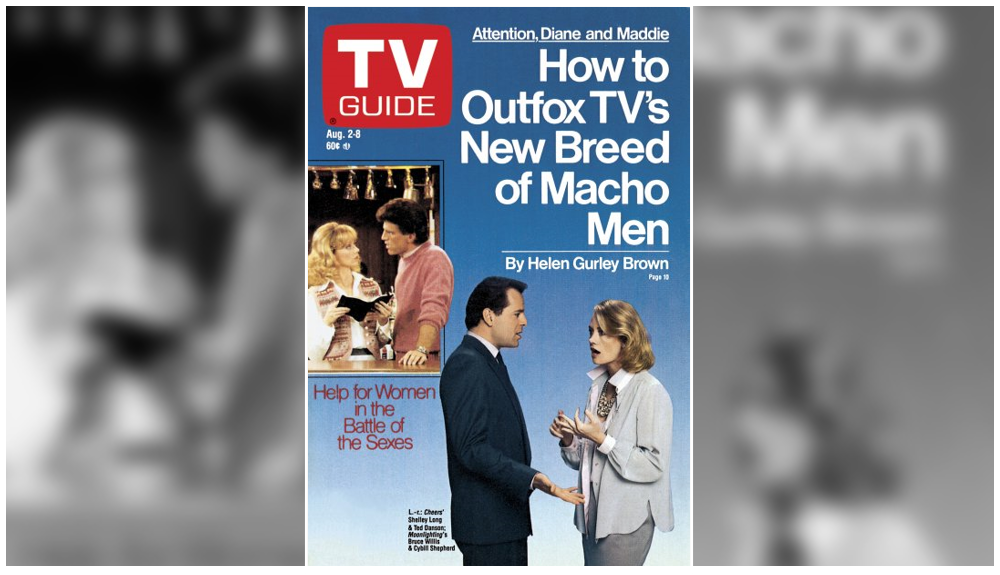
I wonder if Helen Gurley Brown would have been published in the TV Guide of the 1950s or '60s, or even the '70s? We're past that point now, though, and so she features in this week's article, "How to Outfox TV's New Breed of Macho Men." It even reeks of sensationalism, doesn't it? The "macho men" in question—perhaps they'd be called "toxic males" today—are Sam Malone, aka Ted Danson, of Cheers, and David Addison of Moonlighting, also known as Bruce Willis. Now, I'll admit right off the top that I never watched either of these series, nor do I read Cosmopolitan, so I'm basing all my opinions on their respective reputations, as well as my skill at reading about popular culture. 

As Brown enters the scene, her question is a simple one: why do these women spoon for men who are "probably the wrong men," men who'll make them losers even if they win? "Smart Women, Foolish Choices!" she says. Take Diane (Shelley Long), for instance—smart, sensitive, attractive; "why is she hiding her brains in Sam's bar, waiting on machos and men who are afraid to go home to their wives?" Even if she does succeed in landing Sam, she'll still be working at the bar, while he's out playing the field. (So much for the redemptive love of a good woman, I guess.) Here's Brown's prescription for Diane: "Let Sam propose to slick councilwoman Janet Eldridge," she says. "That way, Diane can have the more rewarding role of The Other Woman. Sam is bound to cheat on Janet once he has her." 

As for Maddie (Cybill Shepherd), she's stuck pining for "a Peter Pan unwilling to grow up." Her suspicion is that Maddie would find David a better lover than husband, so she suggests the writers consider having Maddie give in to him. Or they could "have Maddie make the first official move on David, with him being chased around the desk and told he could either give in our lose his job." Wouldn't that be a switch? After all, she's the boss of the firm, and if things go south, it's always the lesser person 

According to Brown, both Diane and Maddie are suffering from "a real-life condition: men who are unwilling to face the responsibility and lack of excitement of a long-term relationship." All Diane gets is "great verbal sparring at which she wins only some of the time." Maddie, meanwhile, is "so involved with David professionally she doesn't get much of a chance at an outside life in which she might meet a prince." Could Diane and Sam, and David and Maddie, live happily ever after? Brown doubts it, and besides, "Their series would be canceled."

The whole article, well-written and witty though it may be, sounds exactly like one would get from a magazine like Cosmopolitan. And while some of her advice is actually insightful—Diane, for example, "may seem a feminist but is actually caught up in the time-honored, one-sided love affair in which a masochist is more in love with a semi-sadist than he is with her."—the whole thing seems, I don't know, so—shallow. There's no depth to these relationships, which always revolve around sex and sexuality, rather than sense and sensibility. And overriding all of this is the idea that for men and women, true equality means letting women benefit from easy sex and shallow connections, just the way men do. I know that there's more to this article than that, but really: isn't the Cosmo lifestyle just the Playboy philosophy for women? I rather think that the answer lies not in bringing women down to the level of men, but raising men to the level of women. But then, I'm old.

l  l  l

It's what Judith Crist calls a "between-seasons" movie week; that doesn't mean, however, that it lacks for quality. The week's major premiere is that of David Lynch's magnificent The Elephant Man (Monday, 9:00 p.m. PT, NBC), featuring a "remarkable performance" by John Hurt as John Merrick, for which Hurt received a well-earned Best Actor nomination, coupled with Anthony Hopkins' compassionate performance as Frederick Treves, who struggles to help Merrick. The black-and-white cinematography paints a grim picture of Victorian London, and Lynch's direction gives a disorienting aspect to a movie that could easily have drifted into sentimentality in the hands of a lesser director. The result is a movie that makes "a deep mark in our sensibilities." 

Anthony Hopkins is back, and "memorable," in a rerun of the 1982 TV movie The Hunchback of Notre Dame (Saturday, 9:00 p.m., CBS), which Crist describes as "a brilliant, glowing version" of Victor Hugo's novel, with Lesley-Anne Down matching Hopkins's performance. Hopkins isn't in Absence of Malice (Sunday, 9:00 p.m., ABC), but it's not lacking for star power, with Paul Newman and Sally Field leading the way in "a slick and witty melodrama." And then there's the documentary The World of Tomorrow (Wednesday, 9:00 p.m., PBS), a wonderful and evocative (and occasionally bittersweet) look back at the 1939 New York World's Fair, narrated by Jason Robards. It's a "first-rate" look back at what Crist calls "a lost American yesterday."

l  l  l

It's football season again, at least the practice version, euphemistically referred to as "pre-season" games. On Saturday afternoon (11:30 a.m., ABC), Wide World of Sports presents the NFL Hall of Fame Game from Canton, Ohio, pitting the New England Patriots and St. Louis Cardinals. The Patriots are off of a 46-10 drubbing in the Super Bowl at the hands of the Chicago Bears, but the real attraction of this game is at halftime, with highlights of the Hall of Fame induction ceremonies, with honorees including Paul Hornung, Fran Tarkington, Ken Houston, Willie Lanier, and Doak Walker. What a group.

On Sunday, the league takes its road show overseas, as those very defending champion Bears take on America's team, the Dallas Cowboys, from Wembley Stadium in London, England. (10:00 a.m., NBC) It's the first game of what would come to be known as the "American Bowl" series of pre-season games played outside the United States; while most games in the early years were played in London, the sites expanded to include Japan, Germany, Mexico, Australia, Ireland, Spain and Canada, before being phased out in 2005. Nowadays, the overseas games get played during the regular season. 

There's one more Hall of Fame worth celebrating, though; on Sunday, ESPN has coverage of the National Baseball Hall of Fame ceremonies; the great Willie McCovey, who hit 521 home runs during his illustrious career, is the sole inductee from the Baseball Writers Association of America, guardians of the gates of the Hall. Bobby Doerr and Ernie Lombardi were elected by the Veterans Committee.

We all know the start of the NFL season means the practical end of any other sport, but they keep trying; on Thursday and Friday, ESPN presents first- and second-round coverage of the 68th PGA Championship from the Inverness Club in Toledo, Ohio (11:00 a.m.); Bob Tway wins his only major with a two-stroke victory over Greg Norman. 

l  l  l

There are a few other things of note in a month that's usually given over to summer reruns. On Saturday night, we've got a couple of failed pilots, and it doesn't take a genius to figure out why: In The Family Martinez (8:30 p.m., CBS), Robert Beltran plays a young lawyer who, on his first day in court, has to figure out how to sneak his fugitive client back into jail. Maybe not the worst plot in the world, but what do you do for an encore? Later (9:30 p.m., NBC) Sylvan in Paradise stars Jim Nabors as an inept but well-meaning bell captain at a Hawaii hotel, where his disasters have a way of working out for the best. That one's all too predictable, even with Brent Spiner playing a man with the unlikely name of Clinton Waddle. After that, a name like Data seems almost normal.

On Sunday, Motown Returns to the Apollo (8:00 p.m., NBC), a three-hour, star-studded tribute marking the 50th anniversary of the famed Harlem theater, dominates the evening. It's hosted by Bill Cosby, and stars Smokey Robinson, Stevie Wonder, Sarah Vaughan, Diana Ross, Sammy Davis Jr., the Commodores, Lou Rawls, Mary Wells, the Four Tops, Martha Reeves, Luther Vandross—well, just about anyone and everyone you can think of, plus Rod Stewart, Boy George, and Joe Cocker thrown in. Anyone left out is due strictly to tired typing fingers.

Throughout the week, PBS's American Masters has "The Long Night of Lady Day," a 90-minute documentary on the often-sad life and hard times of jazz great Billie Holiday. I'd try catching it on Tuesday, unless you're committed to watching 1986, (10:00 p.m.), which was NBC's 14th failed effort at putting together a weekly newsmagazine. It's hosted by Roger Mudd and Connie Chung, and as I recall, the most notable thing about it was that it used the Rush song "Mystic Rhythms" as the theme. It was probably also the best thing about it.

There are a host of other relics of the '80s, lesser series that failed to reach the heights of, for instance, St. Elsewhere, Hill Street Blues, Magnum P.I. or Cheers but still help to define a decade: Knight Rider, Remington Steele, Lifestyles of the Rich and Famous, Silver Spoons, Hunter, Hotel, Perfect Strangers, Webster, and others. It's far from my favorite decade of television, but, as we've seen today, there's still enough to keep viewers occupied.

l  l  l

The reason I chose this particular issue to look at this week was that I felt in it was a foreshadowing, as it were, a shape of things to come. I spent a lot of time looking at two articles that didn't really have all that much to do with what was on television, but they said a lot about what kind of people we were to become. 

I enjoyed the article about the Florida retirement community immensely. It reminds the reader that television is fun, that there's no such thing as hate-watching a program—if you don't like it, you don't watch it. Viewers discuss the shows not over social media, but around the tables after lunch or dinner, and trade stories about their favorites. And yet, you can see a shadow of the future, can't you? Some can't afford any kind of entertainment or exposure to the world other than television. Many of them no longer have family and friends around; they've all moved away or died. There's an isolation to their lives, even if it doesn't weigh them down. But that isolation will only increase over the years, and not just for the elderly, but for everyone. We all live in our own little worlds now, the metaverse, or whatever kind of alternate reality you want to call it, and if that wasn't bad enough, the absurd virus lockdown was about enough to finish us off.

And while Helen Gurley Brown's article had its moments, it points toward the pornographic society we live in today, one where everything goes, and magazines like Cosmopolitan are at the forefront of it. They've succeeded in making women as randy and debauched and depraved as men—that is, if they even recognize such a thing as women, among all the genders, and cis-this and trans-that and how to have sex with anything that moves. I suspect Brown's Cosmo was tame compared to today's, but you still know them by their fruits. 

A fascinating issue, and at the end of the day I'm pulled back to the movie about the New York World's Fair on PBS. The World of Tomorrow, that fair was called. Indeed, we now live in the world of tomorrow that this issue of TV Guide might have presaged, and as we look back to 1986, we see our own "lost American yesterday." TV 

July 13, 2022

Television and the Id


It occurs to me that I haven't written anything serious in a while, and I probably ought to do so. And since quizzes are always popular (except in school, and especially when you haven't studied for it), let's start this somewhat-serious thought with one of those who-said-it quizzes—or, in this case, who wrote it, and when. The quote is a bit lengthy, but I hope you agree it's worth it. I've removed a couple of words that would help you to identify the writer and the context of the quote because I think it's one of the most interesting things about this excerpt. As you read it, consider what it says not only about our culture today, but also the world of entertainment, television in particular. As usual, I'll identify the speaker and the context at the end.

We live today in a world that is as deeply devoted to material things as was [theirs]. For example, [they] were obsessed by health, diet, and exercise. They spent more time in baths and health clubs than in churches, temples, libraries, and law courts. They were devoted to consumption. A man could make a reputation by spending more than his neighbor, even if he had to borrow the money to do it. And if he never paid back his creditors, he was honored for having made a noble attempt to cut a fine figure in the world.

They were excited by travel, news, and entertainment. The most important cultural productions [...], from books to extravaganzas in the theaters and circuses that occupied a central place in every [...] city or town, dealt with amusing fictions about faraway peoples and with a fantasy peace and happiness that did not exist in their real lives. They were fascinated by fame and did not care how it was acquired. If you were famous enough, the fact that you might be a rascal or worse was ignored or forgiven.

[They] cared most about success, which they interpreted as being ahead for today, and let tomorrow take care of itself. They were proud, greedy, and vain. In short, they were much like ourselves.

A pretty good description of the world today, don't you think?

The only difference is that it was written over 30 years ago, in 1991, and it was written about a people living in the fourth century, near the end of their empire—the Romans. The late Roman world and all its decadence was, indeed, much like ours.

And the author? If you're a classic television fan, you'll probably recognize his name: Charles Van Doren. Yes, the same Charles Van Doren of the quiz show scandals in the late 1950s. Following his disgrace, Van Doren went into a self-imposed public exile, eventually returning to a life of writing (at first under a pseudonym) and becoming an editor at Encyclopaedia Britannica. He authored a number of philosophical and scholastic books (some with his friend Mortimer Adler), the best known of which is probably A History of Knowledge. from which the above excerpt came. 

The relationship of this to television? Well, I can't imagine a better description of the celebrity-infused culture of TMZ, the world of "reality" programming that has little relation to reality, knows almost no bounds, and seems to consist primarily of people who've become famous for being famous. Can you say "Kardashians"? "Real Housewives"? Take your pick, you're not limited to them; choose whatever witless soul you prefer to name. And if Van Doren's description of reality stars and viewers hits the mark, he's no less accurate in describing the world of consumption in which television dwells, not only in how advertising dominates the medium, but in how so much of the programming—not only reality but scripted—glorifies such consumption.

If there's anything optimistic to be taken from this, it's in how it shows that there is truly nothing new under the sun. Van Doren obviously felt that this series of paragraphs was fairly descriptive of the cultural world of the 1980s and '90s, even as it was written about a society that existed some 1500 years before that, and could doubtlessly be used similarly to describe countless societies and cultures in between.

On the other hand, we have to recall that the Roman Empire crumbled, not at the hands of a military enemy, but from internal decay. The historian Arnold Toynbee, himself a writer in the pages of TV Guide, posited that "the Roman Empire itself was a rotten system from its inception, and that the entire Imperial era was one of steady decay of institutions founded in Republican times." I'm afraid that if you're looking for reassuring sentiments in that statement, you're going to have to look elsewhere.

The id of Sigmund Freud has been described as the devil on the shoulder of the super-ego, an inflated sense of self-worth, "a mass of instinctive drives and impulses [that] needs immediate satisfaction." It is to the id that television thus appeals, in its ability to satisfy the insatiable desire for fame that consumes so many of its participants, and its ability to transmit that to viewers who consume it voraciously and live it vicariously. Something, in fact, that Charles Van Doren himself fell victim to at the pivotal moment in his life.

All this is not to lay the blame solely at the feet of television. I persist in my defense of TV as a medium which is morally neutral—it's how you use the technology that counts—but I confess that over the years, even since I started this website, I've been finding that defense more and more challenging to maintain. My fear has always been that the technology is not being used very well, nor has it been for some time, but even there one can suggest that it is at least as much of a reflection of our culture as it is the source of our dilemmas. And while it's true that television does satisfy that voracious appetite for what Van Doren called "amusing fictions about faraway peoples," the people and the appetite had to exist in the first place—television merely exploited it and expanded it, but it has been a part of the human condition since Original Sin. Sic semper erat, et sic semper erit.

But that begs the question: what if television isn't neutral, can't be neutral? Perhaps, like social media or the U.S. Constitution, television is a medium that doesn't work unless those involved are good and true. Absent that, it will inevitably take on the characteristics of those who create it and those who watch it. I don't find that a particularly pleasing thought, because it implies that television was doomed to fail from the start, to become a toxic, corrupting force in society, and what does that say about us?  The Christian knows that good will ultimately triumph over evil, but that won't happen universally until the end of the world, and you can bet television won't be around to cover that

I'm not quite sure I like that thought, even in a serious piece, and because I'm also not entirely sure it has an answer, I'm not going to try to provide one. Of course, what you watch matters, and I suppose that has an effect on the level of corruption you experience. But must it inevitably corrupt, even a little? Remember what the man said about power corrupting, and remember that television, as the most intimate of media, is also the most powerful. TV  


Image: Detail, The Romans of the Decadence, 1847

June 24, 2022

Around the dial


The cruellest part of living in the World's Worst Town™ (and there were many) was that, while we were limited to one commercial station, the Minnesota State Edition of TV Guide provided listings for all stations, a subtle way of taunting those of us by reminding us of the shows we couldn't watch. Perhaps they were in cahoots with TV aerial manufacturers to get us to buy one of those tall antennas to put on the roof. (This was long before the age of satellite dishes, of course, because I'm old.) And so it was that, while I was never able to watch the legendary TV-movie The Night Stalker, I was all-too-well aware of it. Eventually I had the last laugh, as I've got both the two movies and the complete series on DVD.* This is, admittedly, a rounbdabout way of introducing us to this week's first link, to Classic Film & TV CafĂ©, where Rick reviews The Night Strangler, the memorable sequel to The Night Stalker, and the clincher that there would be a Kolchak series on ABC in the fall. 

*Which only goes to show the truth of the old maxim that justice delayed is not justice denied.

At Comfort TV, David has a really terrific, thoughtful piece on cutting the pop culture cord. In it, he voices many of the criticisms of contemporary entertainment that I've made or thought, in a very succinct manner. It's a very hard thing to explain to those who aren't a part of the classic TV community—why preferring old shows is not the same thing as living in the past or denying the present. Times change, ways of life change. Religious beliefs, public and private morals, codes of conduct, the social contract, and a common national culture—I don't want to say that these are completely non-negotiable, but they were never meant to be tossed aside like a piece of crumpled paper and ignored. That's what we see too often today, and it's those lost things that we respect, those lost things that we look to respect and emulate, at least in our own lives.

I hope you've been reading John's excellent series "The Prisoner in the Asylum" at Cult TV Blog. I mention it each week as new installments come in, and while I haven't had the chance to try it out against a Prisoner episode, the analysis is nothing less than fascinating. This week, it's part one of a two-part look at "The Girl Who Was Death," and how many of you haven't known that? 

On a lighter note, Joanna has announced this year's "Christmas in July" festivities at Christmas TV History, and it should be a fun one: an entire month of daily reminisces about Christmas TV episodes, specials, and movies inspired by It's a Wonderful LifeWe all know there are a lot of them out there, but I rather expect there are even more than we're aware of. TV  

June 10, 2022

Around the dial


It's kind of a light week in the blogosphere; I hope that means more people are out there enjoying themselves instead of sitting in front of a computer like I am. (And since I am, that means you're stuck with me.) But this does give me the opportunity to make an observation before we get to the rest of the week's news.

You'll recall that on Wednesday, I reprinted a story from a few years ago looking at radio and television coverage of the assassination and funeral of Robert F. Kennedy. It was, I thought, a measured story, and with the exception of a mention that one didn't have to agree with Kennedy to appreciate the tragic nature of his death, a story that was totally apolitical. There was, in fact, a wealth of information about how radio and television networks reacted to the event (even though Mike Doran didn't agree with Broadcasting magazine's description of The Flying Nun episode*)enough that nobody could possibly have disagreed with its inclusion on a television website. 

*Just kidding, Mike. We kid because we care.

I was, therefore, dismayed to see some of the comments that were directed at the story in one of the classic television Facebook groups to which I belong. (I won't share the name because I don't want to cast aspersions on the mostly serious people who contribute to it.) The comments weren't directed at me, so I've no personal bone to pick.

No, what bothered me was that the conversation immediately turned to who was responsible for Kennedy's death, and whether or not it was part of a conspiracy. "J. Edgar Hoover," one person suggested. His assertion was challenged by someone else. A third commentor piped in with "Mr. Green Jeans," the name of one of Captain Kangaroo's friends. 

For some reason, I had a flash of true anger reading this, and I'm a man who doesn't get that angry that often anymore. I replied to one and all that I didn't want to regret having posted the story, but unless they stuck to the topic of the broadcast coverage—which was, after all, what the group was about in the first place—I wouldn't blame the administrator for pulling it. Not only that, there was something so—so juvenile about it all. I swear, these people were like the kids you went to school with who would titter when someone mentioned the word "breast" or "intercourse" or any other word subject to a double entendre. The comments could have come straight from an episode of Bevis and Butthead. They're why we can't have nice things.

There were, fortunately, more comments that were of a serious bent, many from people who remembered the pain themselves; one had seen Kennedy speak during the campaign with her now-husband. 

There have been very few moments on this website when we've had bad comments, and most of those I've deleted. (Including spam, although I may have missed a chance at $14 million dollars, I'm not sure.) I haven't had to do it much, though, because the comments we get here are of a uniformly high quality, knowledgeable in the extreme, educational, thoughtful, and funny. I couldn't ask for a better readership. A bigger one, perhaps, but not a better one. Perhaps I don't mention that often enough; perhaps it takes the bad apple to remind one that the rest of the crop is pretty good.

And now to our regular programming.

You all know them. In fact, I may be one of them. They're the most annoying people on television, the most demanding, the most energetic—whatever, they're the people that are only tolerable on television, and David has them at Comfort TV.

Ah, "The General." The episode of The Prisoner I've been meaning to write about for months, and still haven't gotten around to. But don't wait for me: it's the latest episode that gets John's thoughtful Prisoner in the Asylum treatment at Cult TV Blog. And yes, when we get this back on the schedule, John, I'll share my thoughts. Need to get through Danger Man again first. 

At Classic Film & TV Cafe, Rick looks at In Like Flint, the sequel to James Coburn's Our Man Flint, which puts Coburn squarely in the race for the coolest secret agent around. We've got both of those movies in our collection, and the hotline sound is the ringtone on my phone. Call me sometime and I'll show you.

Linda Lawson, who appeared in many the television episode in the 1950s and '60s, and made a comeback in the '90s, died last month, aged 86. Her career receives a proper remembrance by Terence at A Shroud of Thoughts.

Tomorrow would have been Judy Garland's 100th birthday, and as a fellow native of Minnesota, I think it's well worth commemorating, as Aurora does at Once Upon a Screen. Can you think of many other stars as big as she was, who have been dead for as long as she has, who are just now reaching 100? TV  

March 16, 2022

A wilted rose by any other name is still Hell

Fernando Blanco Farias


First, let me explain.

I don’t actually watch The Bachelor (or The Bachelorette), and I’m pretty sure I'm not going to start—sure in that “Even with the possibility of nuclear war looming, I’m pretty sure the sun will rise tomorrow” sense of the word. 

This isn't the first time I've written about the show, though. I write about it because sometimes I get bored; and when I get bored, I read; and when I read I often go to sites that I like and writers that I enjoy, and read about things that I ordinarily might not have any interest in, just because. And so that’s a long way of going about explaining how I've been happening to read Rodger Sherman’s Bachelor episode reviews in The Ringer.

ABC
Writing about this is also a good way of segueing from last week’s column about being a stranger in a strange land, because after reading about the people who populate the world of The Bachelor, I realize that I’d feel more extinct in that environment than the dodo bird would in ours. More than that, in fact, because the dodo actually existed in the real world at one time, whereas I’m pretty confident that no normal person has ever existed in the ecosystem of The Bachelor.

Anyway, catching up on the lead-in to this season's thrilling finale, it's apparent that, even for the weird world of this show, this season's bachelor, Clayton, has committed a breach of protocol. Several, in fact, as we discover Clayton has told not one, not two, but three different women that he was wildly, madly in love with them. Oh, and he's also slept with two of them. (Well, I doubt there was any actual sleeping going on, but I'm still old fashioned about these things.) He made this revelation to the only woman he loved that he didn't sleep with, which may have been a tactical error on his part. 

Upon hearing the news, Susie—the one whom he says he loves "the most"—rips into him and tells him she doesn't want anything to do with him if he's been sleeping around. Clayton, mature fellow that he is, doesn't apologize, doesn't backtrack, doesn't try to explain that he's made a mistake. No, he blames Susie for his problems. It's not like he was just being a male slut; "I was having feelings of love with this person, and I slept with them because I love this person so I’m gonna see how the physical connection is." And her response hurt his feelings, so he doesn't love her anymore. 

It took me a while to finish that last paragraph, by the way; I had to go to the bathroom. I think you know what I mean.

Sherman sums up the whole situation thusly:

[Clayton] still shouldn’t have told three women that he loved them, especially in a way that made it seem like he was saying those things to only one person. And if he really loved Susie the most, he shouldn’t have had all that sex with everybody else. Meanwhile, Susie shouldn’t have issued a retroactive ultimatum on something she knew Clayton would likely do. She went on the 'have sex with multiple people' TV show and drew a secret line in the sand about whether it was OK to have sex with multiple people. Clayton is playing by Bachelor rules, while Susie is playing by the rules of real life. Both sets of actions are obviously flawed when you look at it through the other’s lens.

Bingo! This is not real life. Oh, it may be the way people behave, but it's not real life. It's a pretend world, one in which words don't mean things, actions don't have consequences, and nothing is more important than what's happening this very instant. This kind of world sounds kind of grotesque to me. 

There's a wonderful moment which Sherman recounts, when Clayton is trying to explain to his parents how something like this could happen: how he could tell three women that he loved them, sleep with two of them and insult the other one, and then decide the woman he really loves is not one of the two who decided to stick with him even though he's clearly an idiot, but the one—Susie—who actually took a hike. When Clayton tries to explain to his mother that Susie actually does like him, because "she could’ve walked away at any moment," mom replies, "She did! She did walk out!" Did I mention that this isn't real life? 

l  l  l

Bishop Fulton Sheen, in one of his television programs, said that there are three kinds of love, and used their Greek words to describe them, because there was no English word that could really measure the difference between them. The first is eros, or affectionate love, which I assume is what Clayton was thinking of in the case of these three ladies, since eros is where we get the word erotic. Then, there's philia, which is love for others made in the likeness of God. Brotherly love, as the name Philadelphia might indicate. The third is agape, or sacrificial, divine love of God for man. Pure love.

So, as I say, I think we can assume that when Clayton says he loves these women, he's talking about eros. There's an easy way to tell, though. Just because we have three distinct kinds of love doesn't mean that they don't overlap, though. One can love their spouse (eros), and because of that they're willing to sacrifice their lives for them (agape). One can love their country, and because of that they're willing to sacrifice their lives for their fellow countrymen (philia). 

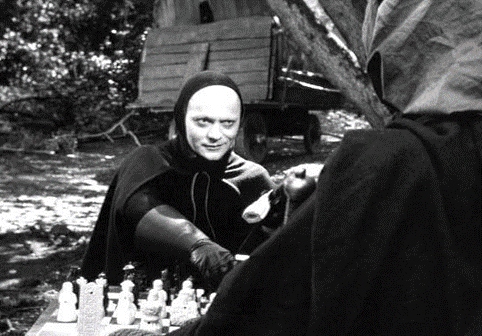
So, we could have asked Clayton if screaming “I’M IN LOVE WITH YOU!!!” at the top of his lungs to each of these women means that, at this very moment, he's willing to lay down his life for them. And I'm not talking about dying in the act of saving one of them from being attacked; any of us might do that, even if the person for whom we're dying is a stranger. No, I'm thinking of that white-faced, dark-clothed Death that played chess with Max Von Sydow in The Seventh Seal. Would Clayton have played chess with Death, knowing that if he loses the game, he dies? No more parties, no more high-fives with his fellow bros, no more falling in love with the next pretty face—no, it's finito for you, pal! Somehow, I don't think his answer would have been in the affirmative.

Of course, you've probably figured out by now that love has nothing to do with what Clayton's experiencing. At best, what he feels for these women is infatuation. Almost certainly, we're talking about lust. But to call it love, at this point, simply cheapens the word. That's not to say that it can't grow into love, but not in the length of time it takes between scoring with a woman and getting out of the bed. That may sound crude and cheap, but it's only because it is.

It also cheapens the meaning of being human, because it reduces us to animals, incapable of controlling our emotions. Man (and woman) may act in superficial ways, but we certainly aren't created that way, and when we fall to that level, we disgrace ourselves, and become a disgrace in the eyes of others.

Susie, the one woman with whom Clayton didn't sleep (and, SPOILER ALERT, the one he winds up choosing; so much for taking a principled stand), more or less admitted that, while sex is famously a part of The Bachelor, and while we can all pretend that it's painless fun for everyone, in real life, when it happens to you, things change.

I wonder how long this relationship lasts? It was revealed, in last night's live broadcast, that Clayton had chosen Susie (thereby breaking the heats of the two women he'd slept with who had, perhaps against their better judgment, chosen to remain in the competition for Clayton's "love"), so I suspect they're still together today, although given the world of The Bachelor, anything's possible. But will their love withstand it all? Will they make it to the altar, and if so, will their vows include anything about "for better, for worse, for richer, for poorer, in sickness or in health," vows that date back at least to the 1300s, by the way, or will it be more like, "So long screwy, see ya in St. Looie"?

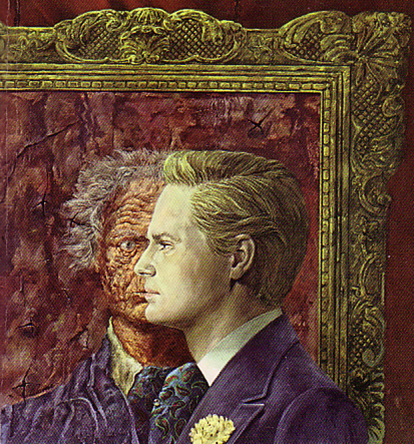
You can say what you want about television from the 1950s, that it was unrealistic, that it painted an idealistic portrait of America and of family life. But, as I've said before, it was also a recognizable portrait, one that others could understand and aspire to, even if they never made it themselves. If it wasn't the most illuminating programming, if it wasn't the most dramatic or the most educational or the most realistic, at least it followed the Hippocratic Oath: "Do no harm." Can we say the same about this? You may scoff at Norman Rockwell's America, but it's a hell of a lot better than finding yourself the subject of a Dorian Gray portrait.

I know, I know, this is the way things are now, and I might as well tell the kids to get off the lawn right now. But, dammit, there is something seriously wrong with this kind of lifestyle, and there is something even worse about splashing it across television where anyone can see it. Look, we know that people are influenced by what they see on the tube, or else no company would bother to advertise on it. We know that television sets trends, and we know that the more people see a particular kind of behavior on it, the more likely they are to find that behavior acceptable, even if they choose not to engage in it themselves. Well, it's not, and even if everyone else told me that it was, I'd still say that. (Mom to child: "And I suppose if everyone jumped off the Empire State Building, you would too.") 

There's not much more to say, really. Except to throw another quote out there, not from The Bachelor, but from Thomas Jefferson, who famously said, "I tremble for my country when I reflect that God is just: that his justice cannot sleep forever." No, indeed it can't. He may just be dozing right now, in which case we truly have something to fear when He awakens completely. TV  

November 29, 2019

Around the dial

If you think about that cartoon above, it comes awfully close to cannibalism, don't you think? I mean, look at the leg on the plate? I suppose it could be a chicken leg, although that seems to be bad enough. At least the turkey has both of his; if it looked like he only had one, I think that might have been too much.

So how was your Thanksgiving? Hopefully yours was as satisfying as ours. Despite yesterday's tryptophan mainline, we're back today with the highlights from the week, and we'll start at Comfort TV, where David looks at five classic shows that deserved one more season. Hard to argue with any of them; of the five that David discusses in detail, I'd probably opt for Ellery Queen, which deserved more episodes on general principle alone.

Have you ever wondered why some period movies--Holiday Inn is one that comes to mind--joke about what day Thanksgiving falls on? Martin Grams tells the story of how a squabble between Republicans and Democrats led to the country having to choose between two Thanksgivings. See, this bitter infighting is nothing new. . .

And now on to Christmas! At Silver Scenes, we have a review of the new bookMister Rogers' Neighborhood: A Visual History, a wonderful look at the much-loved show. Tom Hanks notwithstanding, you almost don't need a movie in order to provide the vivid images that make such a difference.

After a long absence, British TV Detectives returns with The Inspector Lynley Mysteries, a series that I confess to never having seen, though I've seen it on the programming guide many times; I suppose that doesn't count, though, does it?

At The Ringer, Alison Herman and Miles Surrey debate whether or not streaming series should be released weekly or all at once. My own opinion is that once a series is structured for binge viewing, it tends toward serialization; the self-contained episode is replaced by one long story, spread out over several episodes that can be watched one after another. That often leads to overtones of soap operas. But again, that's just my opinion; YMMV.

At Garroway at Large, Jodie uses a small clipping from the Pittsburgh Press of 1939 to serve as a reminder that nobody's perfect, no matter how big a star they are, or are going to be. It should also remind us not to be intimidated by the famous; after all, they are just like us.

Bob Sassone uses a recent encounter at a store to point out how much millennials miss with "their complete lack of interest in anything that happened before Saved by the Bell premiered." He's not talking about television here; he just uses the show as a reference point. But as someone who sees great cultural value in classic television, I share his frustration, and wonder just what it means for the future.

And as you get ready for your post-Black Friday shopping, let Television Obscurities offer you a gift guide to items for that lover of short-lived television shows. (If you need any other suggestions, just click here.) TV