Showing posts with label Easter. Show all posts

April 25, 2025

Around the dial


The "Sylvia Coleridge Season" continues at Cult TV Blog, and this week John looks at "The Chicken," a 1965 episode from the police series Cluff, with Coleridge excellent as a bedridden wife in a difficult situation.

At ReelweegieMidget, Gill reviews a movie that many of us saw on our home televisions: Alfred Hitchcock's The Birds, a movie that's been on my mind lately for reasons that perhaps I'll explain someday, with Rod Taylor, Tippi Hedren (and her fabulous wardrobe) and, well, some birds.

David reaches the end of 1975 in his review of 1970s TV at Comfort TV, with Saturday night specials (Emergency, Mary Tyler Moore, Bob Newhart, Carol Burnett), and not-so-specials (Saturday Night Live with Howard Cosell, Doc). 

At Drunk TV, Paul looks at Rankin/Bass's classic Easter special, Here Comes Peter Cottontail, with Danny Kaye, Casey Kasem, and Vincent Price headlining an all-star voice cast. It just seems as if things were better when specials like this were on!

Martin Grams takes inventory of television's various attempts to bring Wonder Woman to the small screen, efforts that started with the success of Batman, and ended finally with the success of Lynda Carter, who we all know is the real WW.

At A Shroud of Thoughts, Terence pays his respects to two more of classic TV's familiar faces: Will Hutchins, best-known for Sugarfoot, but with many other credits to his name; and Sian Barbara Allen, who seemed to always be on television in the 1970s.

At The View from the Junkyard, Roger takes a look this week at the 1954 Kraft Television Theatre production of "Alice in Wonderland," featuring the great Edgar Bergen, along with Charlie McCarthy, and some commercials for dependable Kraft products.

Finally, at Eventually Supertrain, I'm back for more Garrison's Gorillas, along with segments on Bronk and The Misfits of Science. Don't you dare miss it, or I'll sic Jack Palance on you. TV  

April 12, 2025

This week in TV Guide: April 10, 1965


Even the word sounds quaint, old fashioned. Smut. Sounds like something your grandmother might have warned you about, and if she'd been around in 1965, reading TV Guide, she might have felt justified after reading Leslie Raddatz's article—first in a three-part series—on "Smut in the Living Room."

It's one of the first articles we've seen that indicates a shift, perhaps ever so slight, toward sex replacing violence as the number one concern of television viewers. Raddatz suggests that this may be due to television's ever-increasing use of movies to fill in scheduling gaps. With those older movies that have been staples of broadcasting since the start comes the newer fare from Hollywood, which New York Times critic Bosley Crowther describes as containing "an unmistakable surge of sensuality and just plain smut." Two of the leading offenders of the moment are Kiss Me, Stupid, which Playboy (of all sources) described as "amateur night at a third-rate burlesque house" and The Carpetbaggers, described by Life as "An untalented leering paean to sex." Since this is a three-part article, we're not going to see a comprehensive analysis of the situation right away; indeed, in part one, Raddatz focuses his attention on two men in particular: Billy Wilder, the man who brought us Kiss Me, Stupid; and Joseph E. Levine, the producer of The Carpetbaggers.

Wilder won't discuss Kiss Me, Stupid, but Raddatz has plenty to say about Wilder, whose career and his work "have often verged on an, at best, unconventional and sometimes seamy borderline." Critics have addressed "the inner nihilism, the impatience and contempt for the audience" in many of his movies, and a former associate calls him "the only guy I know who could sneer 'Merry Christmas.' " Despite this, or perhaps because of it, he's one of Hollywood's most honored directors, with the Oscars to prove it. 

   Is this as hot as it gets while fully clothed?
Wilder came from humble origins—when he moved from Berlin to the United States, he initially lived in an unused ladies' lavatory of a hotel—and Raddatz wonders, in the psychoanalytical style of the times, if his desire to bend the boundaries of acceptability somehow constitute "a defense of his base beginnings." His movies tend to deal with "distasteful or single-entendre themes," such as adultery in Double Indemnity and The Apartment, alcoholism in The Lost Weekend, drag in Some Like it Hot, prostitution in Irma la Douce, and—raising the states—double adultery in Kiss Me, Stupid, which Life, in its put-down of the movie, said included "situations and a dialog that would generate blushes in a smoker car." Wilder, an opponent of censorship by "ladies' clubs in Nebraska," professes delight with television, since it gives those in movies "something to look down on."

Levine, whose movies, like Wilder's, have won honors, has several already running on television: "Two Women, which involves the rape of a woman and her teen-age daughter, Room at the Top, which concerns adultery; A Taste of Honey, which deals with illegitimacy and homosexuality; and The Mark, which is about a suspected child molester." The movies run later in the evening, at 10:00 p.m. on Fridays and Saturdays, and carry with them a respectability that seems often to be absent from Wilder's films. 

They also tend to spark less outrage than those of Wilder's, and Raddatz wonders if this might be the answer to a problem faced by television programmers. "The great thing," according to one Hollywood journalist, "is that television has taken over the place of program pictures and B pictures, so that good adult movies can be made. If these adult films can’t be shown on television, does it mean that all motion pictures are to be made at the level of the TV viewer?" In other words, the critics can focus their barbs on Kiss Me, Stupid and the like, allowing "worthwhile adult films in dignified fashion" such as Room at the Top and Two Women to be viewed as acceptable alternatives. 

Or, he wonders at the conclusion of part one, when these new displays of smut turn up on television, will we see things come to a point? Will we see more self-regulation, or is the government, "—either through Congressional committees or the Federal Communications Commission—preparing to move into this sensitive area?"

l  l  l
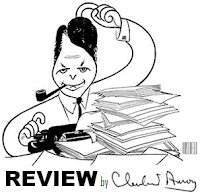
From 1963 to 1976, TV Guide's weekly reviews were written by the witty and acerbic Cleveland Amory. Whenever they appear, we'll look at Cleve's latest take on the shows of the era. 

The question before us is this: is For the People really for the viewers? Cleveland Amory is inclined to think so, although he concedes it may not be for all the people. But as a logical successor to The Defenders, he thinks this legal drama will do just fine. Like its predecessor, the show is long on realism, and desiring of topicality—even though its grittiness may, at times, come close to discouraging us. But, he says, if you stick with it, you won't be sorry.

For the People, as the title might suggest, takes the opposite tack from The Defenders (given that it's produced by the same people, comparisons are unavoidable), with William Shatner as assistant D.A. David Koster, an earnest, bulldog prosecutor, aided by his boss (Howard Da Silva), a friendly detective (Lonny Chapman), and his loyal wife (Jessica Walter), who sometimes wishes he could just let go of the job for awhile. It boasts an equally fine lineup of guest stars, all of whom turn in particularly fine performances. It is, Cleve says, as "equally exciting" as The Defenders, but "even more penetrating and engrossing." 

As someone who, for the most part, appreciated The Defenders and, in fact, has seen a couple of episodes of For the People, I can sympathize, even agree, with much of what Amory says. Where we part company, though, is in the matter of the show's star. Amory sees Shatner as "right up there in the big leagues with David Janssen, Robert Lansing, Vic Morrow and Richard Crenna," to which I can only scoff. This is not to be unduly harsh on the Shat, but I've always felt that he was almost always the weak link in every production he's appeared in. In For the People, as in most of his roles, he comes across either as overly intense, or so over the top that you'd think he was working behind a deli counter, he's hurling so much ham around. I know a lot of you might not agree with me on this, but to suggest that he's in the same league as those other actors is probably the funniest thing I'll read in this issue; he might conceivably be close to Morrow (although I can't envision Shatner in Combat!), but as for the other three, it strikes me as, frankly, preposterous. Apparently the viewers felt at least somewhat the same: For the People lasts but 13 weeks before shuffling off this mortal coil.

l  l  l

This week may seem to you a lot like last week, which wouldn't be surprising, given that Easter doesn't have a fixed date each year. (If you're interested in just how the date for Easter is determined, you can read about it here.) One of those duplicates from last week is the Masters, golf's first major of the season, which concludes this weekend with CBS's coverage of the third and fourth rounds (Saturday, 2:00 p.m. PT, Sunday, 1:00 p.m.) What promises to be a thrilling showdown between golf's big three of Jack Nicklaus, Arnold Palmer and Gary Player—tied for the lead after 36 holes—fails to materialize as Nicklaus puts the pedal to the metal over the weekend, shooting 64-69 to finish with a then-record score of -17, winning by nine shots (another record at the time) over Palmer and Player, who finish tied for second.

One of the commentators on CBS's coverage is Dr. Cary Middlecoff, who won the Masters himself in 1955; this week, he sits down with Melvin Durslag to discuss what he sees as a threat to golf's success on television: overexposure. There's no question that televised golf is thriving at the moment, helping lift prize money to a then-unheard-of $3.5 million over 43 PGA tournaments. (By comparision, last year's Masters—a single tournament—offered $20 million in prize money, including $3.6 million for the winner.) Much of the popularity for the sport, Middlecoff believes, is due to former President Eisenhower, the world's most famous golfer. "While he was in office, he played golf, he watched golf and he talked golf. He made people conscious of the sport." And Arnold Palmer, the most charismatic golfer around, has certainly made the sport attractive. But Middlecoff sees a dark side to all this. "The money is rolling in now," he concedes, "but we could be heading toward overexposure. I wonder what's going to happen if people start watching tournaments, say, 30 times a year on TV." He thinks 15 televised tournaments a year would be about right; "Otherwise, the public will lose interest."

This might sound ridiculous at first glance. Is there any such thing as overexposure for a sport on television? For a long while—during the Tiger Woods boom—people couldn't seem to get enough of it on TV. The result is that today, every tournament is televised, either on networks or cable. And not just the final holes of the final two rounds, either; by shuttling between stations, one can see every shot, not only of those weekend rounds, but the first two rounds as well. And when you combine that saturation coverage with prize money that encourages the top professionals to play only a handful of tournaments each year, plus a general lack of charismatic stars—well, is it any wonder why ratings for golf have fallen dramatically over the past few seasons? Having most of the world's best players competing in rival golf leagues doesn't help, either. Clearly, there are probably two dozen tournaments that could be dropped from the TV schedule without anyone noticing. Which would leave us with somewhere in the neighborhood of 15 tournaments that become important viewing. Just what the doctor ordered, it would seem. (Or dentist, in Cary Middlecoff's case.)

l  l  l

As with last week, this Sunday is Palm Sunday, which leads into some interesting seasonal programming, chief among them being the one-act Passover opera "The Final Ingredient," commissioned by and airing on ABC's Directions '65 (Sunday, 1:00 p.m.). The music is by David Amram, with a libretto by Arnold Weinstein, based on a television play by Reginald Rose. Amram, who most recently composed the movie score for The Manchurian Candidate), also conducts the orchestra in this story of inmates in the Bergen-Belsen concentration camp, preparing to celebrate the Seder for Passover. Willialm Covington, Joseph Sopher, and Malcolm Smith are among the stars in this production, which ABC likely hoped would become an annual event, a la "Amahl and the Night Visitors." Not for the first time, I'm amazed at how little information there is out there on a program that was considered important at the time, was composed by a prominent composer, and was released on record. More info than we see on some lost programs, but still, it goes to show how lost the television historian would be without TV Guide.

Among other Passover programs, there's also "From Exodus to Selma; Marching for Freedom" (Sunday, 10:30 a.m, KRON in San Francisco), in which Bay Area rabbis who participated in the Selma civil rights march discuss "the Jewish concept of freedom found in the Passover as translated into present-day civil rights action." It's a prime example of the social justice bug, one of the plagues of the 1960s, working even then to infect religion, turning it away from the spiritual and toward earthly things.

Continuing, NBC presents a Palm Sunday Mass from St. Peter in Chains Cathedral in Cincinnati (8:00 a.m.). Later Sunday, it's That I May See (11:15 p.m., KSBW in Salinas), with Ruth Hussey and Raymond Burr in a story of Bartimeus, the blind beggar healed by Christ. Tuesday's Bell Telephone Hour (10:00 p.m., NBC) offers an hour of music saluting both the sacred and romantic aspects of spring, hosted by Olivia de Havilland, and featuring Metropolitan Opera star Richard Tucker, the Mormon Tabernacle Choir, Dorothy Collins, Ron Husmann, Anita Gillette, and dancers Edward Villella and Patricia McBride. On Thursday, the First Baptist Church choir and orchestra of San Jose presents a half-hour of Easter music (7:30 p.m., KNTV in San Jose). Finally, a pair of seasonal movies commemorate Good Friday; at 9:00 p.m. it's The King of Kings (KVIE in Sacramento), Cecil B. DeMille's original silent spectacular from 1926, starring H.B. Warner; then, at 10:00 p.m., Paul Newman stars in 1955's The Silver Chalice (KXTV in Sacramento). Newman, by the way, was a better actor than William Shatner.

l  l  l

Thursday night's Kraft Suspense Theatre (10:00 p.m., NBC) airs "Rapture at 240" (video here), the pilot for the upcoming fall series Run for Your Life, starring Ben Gazzara as a man faced with an unspecified terminal illness*, leaving him a couple of years to squeeze in a lifetime of living. The fact that Run for Your Life ran for three seasons always seems to have tainted the series a bit, and some have thought that this was a reason ratings for the series dipped that third season, leading to the show's cancellation. I don't know about that; after all, M*A*S*H, Hogan's Heroes, and Combat! all had longer durations than the wars in which they took place; as someone once pointed out, TV time runs differently from normal time. (There's a website out there that actually posited an unofficial timeline showing how the episodes could have taken place in the given time.) My suspicion is that it might have had more to do with the main character, Paul Bryan, not always being all that likeable, but then I could be reading my own thoughts about Ben Gazzara into that. I think Gazzara might have preferred that the series lean a little more into the existentialism inherent in its concept, which I would agree with. One thing I think we can agree on is that Ben Gazzara was a superior dramatic actor to, say, William Shatner. 

*Some sites have posited that the disease from which Paul Bryan was suffering was chronic myelocytic leukemia, which is plausible as diseases go. It is true, however, that it was never given a name in the series, and if it were, it would be in this pilot, where we see Bryan's doctor giving him the death sentence.

l  l  l

Among the rest of the week's highlights, we have more sports: Saturday, it's bowling's preeminent event, the $100,000 Firestone Tournament of Champions in Akron (3:30 p.m., ABC; video here). Billy Hardwick defeats Dick Weber in the final, taking home a prize of $25,000—more, I'll have you know, than Jack Nicklaus got for winning the Masters. Yes, bowling was a big sport back then. In prime time, KRCR in Redding carries David L. Wolper's documentary The General (6:30 p.m.), a profile of General Douglas MacArthur on the first anniversary of his death. Later, The Hollywood Palace is preempted for the special "Mission to Malaya," a profile of Peace Corps volunteers and the hardships they deal with in Malaya. (9:30 p.m., ABC)

On Sunday, the Boston Celtics and Philadelphia 76ers clash in the fifth game of their Eastern Division final (2:00 p.m., ABC), with the Celtics taking a 114-108 victory and a 3-2 lead in the best-of-seven series. The Celtics eventually win in seven, on their way to a five-game victory over the Los Angeles Lakers and their seventh consecutive NBA championship. And now that I think about it, it's probably a good thing Palace was preempted this week, because I don't think it would have had a chance against Ed Sullivan's lineup, which includes Maurice Chevalier, Cab Calloway, the San Francisco Ballet, singer Felicia Sanders, Soupy Sales, Gerry and the Pacemakers, juggler Rudy Schweitzer, comedian Loundon Lee, light heavyweight champion Jose Torres, and Stiller and Meara.

Saturday was the first anniversary of Douglas MacArthur's death; Monday is the 20th anniversary of the death of Franklin D. Roosevelt, and Charles Kuralt hosts a one-hour special, "FDR Remembered" (10:00 p.m., CBS), looking at the personal side of the late president. Included among the interviews is one with Franklin D. Roosevelt Jr. at the family home in Hyde Park, New York. 

Monday was baseball's Opening Day, and in honor of the season, the Channel 7 all-night triple feature begins with It Happened in Flatbush (Tuesday, 1:00 a.m.), with Lloyd Nolan as a former big-leaguer hired as manager of a team on its last legs. Carole Landis co-stars. Wednesday, Robert Cromie's guest on Book Beat is Ladislas Farago, discussing his book Patton: Ordeal and Triumph, the basis for the 1970 movie biography that won an Oscar for George C. Scott. 

The late Richard Chamberlain is put in charge of the annual nurses and residents' review on Dr. Kildare (Thursday, 8:30 p.m., NBC), giving us a chance to find out that the staff of Blair General Hospital is not only much larger but much more talented that we might have thought, what with Darryl Hickman, Rosemary De Camp, ◀ Dorothy Provine, and Jud Taylor being among the guest stars. 

On Friday, Jack Paar's Good Friday show includes Charlton Heston (a better actor than William Shatner, by the way), who reads a passage from Genesis that inspired Michelangelo's painting on the ceiling of the Sistine Chapel; author Morris West (whose previous novels include The Shoes of the Fisherman), discussing the Vietnam situation in conjunction with his new novel, The Ambassador; and Bob Newhart, who has nothing to do with Good Friday, but is always welcome for good humor. (10:00 p.m., NBC)

l  l  l

We haven't had a fashion spread for a while, so I can't think of a better time for one than now, to wrap up the week. It features Barbara Barrie modeling the year's hottest trend: leather. For motorcycle riding, you know. 


Of course, any fan of The Avengers could talk to you about leather. TV  

March 29, 2025

This week in TV Guide: April 2, 1955


That's singer Tony Martin front and center on the cover of this week's issue. By his own admission, he's never been up there with singers like Sinatra—"I'm no sensation," he says, "never have been, don't want to be—but in a career spanning nearly 25 years, he's had more hits along the way than most. Enough, to be sure, that he'll never be known simply as "Mr. Cyd Charisse," speaking of his second wife, who happens to have been Fred Astaire's former partner; the two have been married since 1948, and will remain so until her death 60 years later, in 2008.   

His secret, he tells Robert Johnson, is in "making comebacks." After starting out as a singer on the Burns and Allen radio show (where he often played a foil to Gracie), he moved to headlining at nightclubs, and then to movies, before doing a stint in the Army Air Force, where he sang in the Glenn Miller band. His biggest challenge, he says, has been the move to television. Of his early work in the Monday night NBC series bearing his name, "The results were pretty bad." Since then, working out of Hollywood with producer Bud Yorkin and musical director Hal Borne, the show has made strides with its lavish production. "Costume changes, scenery, special arrangements—how many 15-minute shows would go to all that trouble?"

It does seem like a lot for a show that only fills the half-hour that includes the evening news (Dinah Shore and Eddie Fisher alternate the other four nights), but here again, he has no complaints. "I’m not saying I wouldn’t like as much time on the air as Como or Fisher,” Martin says, “but I was so late getting into TV I figure I’m lucky to have 15 minutes a week of it." He'd like to get his wife on the show, "if we can figure out some way to do her dancing justice." (They'll perform together many times, including multiple future stints hosting The Hollywood Palace.) And, above all, he remains confident. Once asked if he'd read The Power of Positive Thinking, he replied, "I don't need it. I rehearse." It will do him well in a career that will last into his 90s, before his death in 2012 at the age of 98. Not bad, I'd say.


l  l  l

America's Most Wanted
wasn't the first series to use television to identify and help capture criminals, of course. But, as Herman Lowe writes, it's only taken a few short years for television to demonstrate its effectiveness as a video wanted poster of sorts. More than 40 stations nationwide air weekly programs that include pictures and descriptions of those wanted by the FBI, and four men have been arrested as a direct result of the programming, including one who was on the Bureau's famed "Ten Most Wanted" list. Remarkably, two of the four came from the same station, WGAL in Lancaster, Pennsylvania, which has been airing the weekly FBI program since 1950. Both apprehensions came after viewers had seen pictures of the men on the program. Other apprehensions occured because of spottings on stations KGNC in Amarillo, Texas and KTNT in Tacoma, Washington (Alex Whitmore, the "Most Wanted" arrest; the man was charted with unlawful interstate flight following assault.)

Naturally, FBI boss J. Edgar Hoover is appreciative of television's help in crime fighting. "The four specific instances of arrests brought about by TV to date, portend greater things to come in the alliance between the communications industry and law enforcement, in coping with the desperate fugitive," he tells TV Guide, and he looks forward to continued work between the Bureau and television stations nationwide, especially with help from agent Lewis Erskine.

l  l  l

In case you hadn't noticed, this issue is made up of several short features, which means today's writeup will be the same, and, in fact, one of them has to do with the subject of writing. It's a look at the current trend of TV stars turning to authoring books. Celebrity books are nothing new, and you'd be right to wonder if each and every star is responsible for writing each and every word that appears between the covers. 

One of those whom I'm willing to believe did, though, is humorist Fred Allen, a man who, although he had a writing staff, always did the final edit and rewrite of the scripts for his radio program always had a way with words. He already has one book, Treadmill to Oblivion, a memoir of his days in radio, and he's working on another, Much Ado About Me, which will be published posthumously next year, following his death in March.

Bennett Cerf, publisher at Random House and Allen's co-panelist on What's My Line?, didn't need to write the words in his Encyclopedia of Modern American Humor, nor did Down You Go moderator Bergen Evans, whose collection of silly notions appears as The Spoor of Spooks and Other Nonsense. Books by Bob Hope, Dale Evans, Martha Raye, and Groucho Marx are among other tombs filling the shelves, and Arthur Godfrey, Frank Sinatra, and Liberace are said to be working on autobiographies. And then there's Jackie Gleason; the Great One, who's already mentioned once in this issue for the celebration in honor of his 39th birthday (that's him on the right, with Marilyn Monroe and her estranged husband, Joe DiMaggio), is working with Jim Bishop, whose last book, The Day Lincoln Was Shot, was a best-seller. Jackie, of course, only works with writers familiar with big subjects.

l  l  l

It's Holy Week for Christians, which means some special religious programming, starting on Palm Sunday with a Lutheran service of worship live from Tabernacle Lutheran Church in Philadelphia (10:00 a.m., WNBQ). During the week, Milwaukee's WTMJ presents Holy Week Meditations daily at 12 noon; on Good Friday, the meditation is replaced by a one-hour devotional service. Also on Friday, WBKB presents The Shroud of Turin (4:30 p.m.), a documentary on Christ's burial cloth.

It's also a sacred week in the Jewish faith, with Passover falling on Wednesday, and so we have two Passover Plays broadcast on Sunday: "Night of Vigil" (1:00 p.m., WBBM), the story of Jewish immigrants from Brazil ordered to leave New Amsterdam 300 years ago; and "Home for Passover" (1:30 p.m., WNBQ), based on humorist Sholom Aleichem's story of a teacher trying to get home to his family for Passover.

l  l  l

And the winners are: the Syracuse Nats!
It's a very quiet time in the sports scene this week; the Stanley Cup finals aren't broadcast in the United States; and since the baseball season only lasts 154 games with no league playoffs, Opening Day isn't for a couple of weeks yet. Therefore, what we have is basketball, specifically the second game of the NBA finals between the Fort Wayne Pistons (now located in Detroit) and Syracuse Nationals (now the Philadelphia 76ers) (Saturday, 2:00 p.m., NBC). This game and the sixth game next Saturday are the only two games of the finals to be broadcast, even though the seventh game is played next Sunday. What can I say? Times have changed. By the way, did you know the Pistons might have thrown that series?

Saturday sees the debut of Ziv's syndicated anthology series Science Fiction Theatre (10:30 p.m., WNBQ), hosted by Truman Bradley. Science Fiction Theatre is hard sci-fi, with none of the cheesy, bug-eyed monsters or planet-hopping expeditons you'd see in the movies of the day. It runs for two seasons, with the first in color; thereafter, it becomes a staple on local stations for years.

Without sports, Sunday has been returned to the world of entertainment, and Omnibus (4:00 p.m., CBS) checks in with a 90-minute dramatic version of Homer's "The Iliad," something you wouldn't likely see on network television today. Later, on Toast of the Town (7:00 p.m., CBS), Ed Sullivan has a terrific lineup of guests, including Fred Astaire, the Will Mastin Trio with Sammy Davis Jr., singers Dorothy Dandridge and Julius La Rosa, comedian Jackie Miles, and British strongwoman Joan Rhodes. That would have won the week, no matter what went up against it.

Academy Award winner Greer Garson makes her widely-heralded television debut Monday night in Producers' Showcase's "Reunion in Vienna" (7:00 p.m., NBC), a romantic comedy with Brian Aherne, Peter Lorre, Robert Flemyng, and Cathleen Nesbitt. In an article accompanying the debut, she talks about why she decided to do television: "When I showed up as the mystery guest on What’s My Line? one night, I was just flabbergasted next morning at the number of people who stopped me on the street to talk about it." Having seen her on TV, they were much more comfortable approaching her than what she'd experienced acting in movies. She doesn't have any intentions of acting in a regular series, even though Bing Crosby has been trying to sign her up for his productdion company. She's enjoying the experience, though; "TV offers a challenge, a real opportun—. . .oh, dear, that sounds awful, doesn’t it? But it really is, you know. I think I’m going to like it."

Former First Daughter Margaret Truman narrates a filmed tour of Washington, D.C. on Today (Tuesday, 7:00 a.m., NBC); it's the first in a series of films on travel spots around the world. I don't know when the film was made, but certainly it would have been smart to do it at the end of March, when the cherry blossoms are out. Of course, seeing as how this is black-and-white, it might not have made that much of an impact. And at 6:30 p.m., it's Dinah Shore's 15-minute songfest that takes us up to Plymouth News Caravan with John Cameron Swayze at 6:45 Tuesdays and Thursdays. She's a trooper; according to the Hollywood Teletype; she's playing with two badly burned wrists as a result of having a hot oven door slammed shut on them.

Wednesday
's highlight is undoubtedly on Disneyland (6:30 p.m., ABC), in the animated classic Alice in Wonderland (edited for television time, of course), with the voices of Kathryn Beaumont, Ed Wynn, Richard Haydn, Sterling Holloway, Jerry Colonna, and others. It was originally seen as the second episode of Disneyland back in November; prior to that, Walt Disney had used television heavily as a promotional tool. Even though it's been chopped up and it's airing in black-and-white, it's still a treat. Later in the evening, Best of Broadway presents "Stage Door," adapted by Gore Vidal from the Broadway play by Edna Ferber and George S. Kaufman. Diana Lynn, Rhonda Fleming, Peggy Ann Garner, and Elsa Lanchester are among the stars.

Thursday is, I think, a very good example of what an ordinary evening of television looks like in 1955: The Lone Ranger and his nephew fight stagecoach robbers (6:30 p.m., ABC); Claudette Colbert stars in the suspense anthology Climax (7:30 p.m., CBS), with co-star Lorne Greene; Friday and Smith are on the track of a con-man in Dragnet (8:00 p.m., NBC); David Niven stars in "The Collar" on Four Star Playhouse (8:30 p.m., CBS; he's one of the four stars); Reed Hadley (no relation) is the Public Defender representing a model accused of stealing a mink coat (9:00 p.m., CBS); and James Mason introduces "The Browning Version," a TV adaptation of Terrence Rattigan's play, on Lux Video Theater (9:00 p.m., NBC), with Herbert Marshall. Heavy on anthologies, as was typical of the time.

On Friday, Ed Murrow's guest on Person to Person is the famed orchestra conductor Sir Thomas Beecham and his wife, concert pianist Betty Humby. (9:30 p.m., CBS) And in the 15 minutes between the end of Friday Night Fights and the 10:00 p.m. news, The Jan Murray Show (9:45 p.m., NBC) welcomes, among others, singer Tina Louise, who is surely headed for bigger things.

l  l  l

MST3K alert: Lost Continent (1951) Searching for a missing atom-powered rocket, a plane crew lands in an island-jungle and comes up on a lost continent. Cesar Romero.. (Saturday, 12:05 a.m., WTMJ in Milwaukee) An atomic-powered rocket, rock climbing, and dinosaurs! A good supporting cast that includes Whit Bissell, John Hoyt, Hugh Beaumont, and Sid Melton helps, but the highlight comes from the interstitial MST3K features, with Mike Nelson portraying Beaumont as one of the Four Horsemen of the Apocalypse! And did I mention rock climbing? Really, who could ask for anything more? TV  

March 30, 2024

This week in TV Guide: April 1, 1961


Xoap opera fans have always been known as a loyal and hearty lot. It might be hard for many to appreciate today, with the soaps all but gone from television, but in those first decades of TV fans were consumed by the stories of their favorite series (reminding us once again that the word "fan" derives from "fanatic") with a level of passion perhaps rivaled only by European soccer fans, with stories of actors and actresses accosted on the street by fans furious over some misdeed they'd perpetrated in a recent story.

However, things reached a new high (or low) earlier in the year when CBS' The Edge of Night decided to kill off D.A. Mike Karr's faithful wife Sarah, by having her hit by a car while saving her small daughter from being run over. (Melodramatic, in the best tradition of soap operas.) Although it was actress Teal Ames' choice to leave the show in order to pursue work on Broadway, that didn't stop the show's devoted fans—over seven million each day, mostly housewives—from letting the network and the show's sponsors, including Pet-Ritz, know how they felt about it.

CBS received 2,500 letters the the first week, and the mail was still pouring in as this article was written. A "disillusioned" viewer from Columbus, Ohio wrote that she was finished with Edge, and with CBS. "I had baked a Pet-Ritz cherry pie, but I could hardly eat it last night for supper after that terrible episode.  No more Pet products for me." Meanwhile, a high school in Delco, North Carolina said that "Shakespeare himself did not create a more convincing cast of praiseworthy personalities," and wondered "what perversion of common decency prompted anyone to shatter such a team?" One writer suggested that "you have these sadistic writers locked up in a safe place."

Here's that complete episode, including the melodramatic conclusion that triggered so much angst in the faithful. It was, as TV Guide styled it, a "Death in the Afternoon."
 
l  l  l
 
Sunday, April 2, is Easter, with appropriate programming for the day. On the religious side, CBS leads off at 9:00 a.m. with the special Songs of Triumph from the Cathedral of the Holy Cross in Boston; that's followed at 10:00 a.m. by a Protestant service live from Riverside Church in New York City, the former home of William Sloane Coffin.

Also at 10:00, NBC has a live broadcast of the Easter Sunday Mass, back at Holy Cross in Boston, presided over by Richard Cardinal Cushing. The live broadcast is only scheduled for an hour, which seems awfully short to me; I wonder if it was a low, rather than high, Mass. Locally, WTCN presents a live broadcast at 11:00 a.m. from the Episcopal Cathedral of St. Mark in downtown Minneapolis; I've been in that church, which is architecturally stunning.

Under the category of "holiday viewing for the whole family," The Shirley Temple Show (6:00 p.m., NBC) presents a rerun of "The Land of Oz," L. Frank Baum's sequel to The Wizard of Oz, with Agnes Moorehead as the evil Mombi the Witch (three years before she plays another witch on Bewitched); Jonathan Winters as the equally evil Lord Nikdik, who plots with Mombi to take over Oz; Shirley herself as Princess Ozma, the rightful ruler of Oz; and comedian Ben Blue, as the Scarecrow. You can see it for yourself on YouTube.

Ed Sullivan's Easter program features Charlton Heston, reading selections from the Bible; opera star Leontyne Price; singer Anita Bryant; and the Bill Baird Marionettes. Later, on G.E. Theater, hosted by Ronald Reagan, it's the iconic French short The Red Balloon (8:00 p.m., CBS), the charming story of a balloon that takes on a life of it's own. It's an unusual presentation for G.E. Theater, which usually shows original programming, but it won't be unprecedented for CBS; three years later, perhaps inspired by this showing, The Twilight Zone airs the French short feature An Occurrence at Owl Creek Bridge, which goes on to win the Best Short Subject award at the Oscars.And Roy Rogers and Dale Evans host a "down-home Easter party" on The Chevy Show (8:00 p.m., NBC), with guests Eddy Arnold, the Limeliters, Martin Milner and George Maharis, Cathie Taylor, and Cliff Arquette, probably as Charley Weaver.

l  l  l

This week's cover story is on Roger Smith, suave and handsome co-star of ABC's 77 Sunset Strip, destined to become one of the luckiest men in Hollywood in a few years when he marries Ann-Margret. But for now, the focus is on Smith's (Ouch!) penchant for being accident-prone; an interesting penchant for a man who makes his living in a television show that "requires that he be slapped, socked, slugged, banged, bashed, bonked, creamed, cracked, and coshed."
  
"I don't know why it is, but I always seem to be getting hurt," he tells author Richard Gehman that "I was sewed up 22 times before I was five," and since then was knocked out while playing football in college, has had nine car accidents, sprained his ankle doing a stunt for the show, and suffered a blot clot after bumping his head that was diagnosed only hours before it would have been fatal. As he and Gehman chat, walking down a studio street, Smith promptly trips over an electric cable. "They treat me like a child around here," he says. "They won't let me do anything, they're so afraid I'll get hurt." They would appear to be entirely justified in doing so.

Smith is a happy man, charming and engaging and, as Gehman puts it, spreading "effervescence and ebullience"; not cocky, but "full of himself," which seems to be the proper disposition for a man who's destined to marry Ann-Margret. He's also full of energy, from his incessant conversations (Gehman notes that he barely had to ask a question during three days of interviewing) to his exhausting work for charities, which "would make Jerry Lewis seem reserved." He's obsessed with working around the house, helping build the swimming pool in the backyard, and doing all the work on the garden. Oh, and he's also building an atomic-bomb shelter under the house, including a door that he got from an old Navy destroyer that he found in a junkyard. And did I mention that he's also written scripts for Sunset Strip? And that, as he's telling Gehman all this, he turns the corner and runs into an actress from Hawaiian Eye?

Yes, Roger Smith is a man who has everything going for him. "I never thought when I was a kid I'd have this much fun when I grew up." (And this is without Ann-Margret.) Here, he pauses to stumble over the threshold of the studio. "And you know what? It was all an accident." I can't imagine a more fitting way to put it.

l  l  l

And now for the sports. On ABC's Fight of the Week (Saturday, 9:00 p.m.), Emile Griffith wins the world welterweight championship, knocking out champion Benny "Kid" Paret in the thirteenth round. The two would meet again in September, with Paret winning back the title. Just under a year later, on March 29, 1962, the two men would fight for a third time, and this time Griffith would deliver a twelfth round KO, putting Paret into a coma from which he would never recover; his death ten days later was the beginning of the end for regularly scheduled prime time boxing on TV.
 
The NBA playoffs continue this weekend on NBC, with games on both Saturday (1:00 p.m.) and Sunday (1:30 p.m.). Now, there's nothing particularly unusual about this, except for a couple of things. First, both games involve the St. Louis Hawks, and in today's era, where back-to-back games are kept to a minimum, the idea of a team playing playoff games on consecutive days is unthinkable. Second, Saturday's tilt is the seventh and deciding game of the Western Division finals, with the Hawks defeating the Los Angeles Lakers four games to three; for Sunday's game, the Hawks have to fly to Boston for game one of the finals, with no rest, against the two-time defending champion Celtics, who haven't played since March 26. Is it any wonder that the Celtics win that game, 129-95, en route to a third straight championship, defeating St. Louis four games to one.

Making sure we give all three networks some coverage, The Masters begins on April 6, with CBS covering the final two rounds next Saturday and Sunday. To prepare viewers on what to watch for, current PGA champion Jay Hebert* (pronounced AAY-bear) provides TV Guide readers with a look at the final four holes, where the championship will likely be one or lost, as has been the case in the last five years. These holes, writes Hebert—or, more likely, his ghostwriter—are among "the greatest finishing holes in golf," demanding everything a golfer has to offer. "[T]here are no let-up holes at Augusta," Hebert warns the players, and "if you fall asleep there, this course will get you." There was no let-up in the weather, either; rain forced the final round to be played on Monday, when Gary Player would win the first of his three green jackets, beating Arnold Palmer and amateur Charles Coe by one shot after Palmer double-bogeyed the final hole.

l  l  l

The rest of the week's highlights, and there are many.

Saturday
morning at 10:00 a,m., WTCN presents a perfectly awful movie called Granny Get Your Gun which, believe it or not (and I'd rather not) was based on Erle Stanley Gardner's Perry Mason novel The Case of the Dangerous Dowager, only without Mason. It was said that Gardner wept when he saw it, which was one reason it was so hard to convince him to agree to a television series. Fortunately, he changed his mind. Better that we should stick to primetime, which includes Our American Heritage (8:30 p.m., NBC), hosted by news legend Lowell Thomas; tonight, Raymond Massey reprises his most famous role, that of Abraham Lincoln, in "Not in Vain," the story of the Gettysburg Address and how it was received at the time.

We've pretty much covered Sunday already, but let's add in the special Marineland Circus (7:00 p.m., NBC), from Marineland Park in Florida, hosted by Rosemary Clooney and featuring Sea Hunt's Lloyd Bridges and actor and former Olympic gold medal swimmer Buster Crabbe. If you remember those Ice Follies and Ice Capades shows we've talked about in the past, think of this as similar to that, but on water. And we shouldn't leave without mentioning The Jack Benny Program (8:30 p.m., CBS), with the aforementioned Ann-Margret, plus juggler Francis Brunn, and George Burns, who discovered Ann-Margret.

Why is it that whenever celebrities play thinly disguised versions of themselves on a show, those characters always shares the same first name as the person playing them? It happens again on Monday, when Paul Anka guests as young singer "Paul Pryor" on The Danny Thomas Show (8:00 p.m., CBS). He's auditioning for Danny, and he's grateful to "join the 'grand old entertainer' his grandfather told him about." What a burn! Later, on The DuPont Show with June Allyson (9:30 p.m., CBS), Lloyd Bridges reappears, this time in a one-character show in which he finds himself the sole person left on board a sinking ship during a hurricane. Even Mike Nelson might be challenged by this one. 

Tuesday, Buddy Hackett takes on a rare dramatic role in The Rifleman (7:00 p.m., WTCN), as Clarence Bibbs, a good ole boy janitor whose gun goes off accidentally, killing a gunfighter—and causing him to think he's now the fastest gun in the West. Among the guest stars is Lee Van Cleef, and since he doesn't play the gunman killed at the beginning of the story, I suspect he's the one who's going to call Clarence's bluff. I'm also betting that Lucas McCain's going to have to bail Clarence out before it's all over. Later, Nat King Cole is one of the guests on The Garry Moore Show (9:00 p.m., CBS); you'll also be able to catch Nat on Wednesday in his own syndicated hour-long special, with British comedian Dave King. (9:00 p.m., WCCO, preempting CBS's U.S. Steel Hour). 

Wednesday
is the American premiere of British import Danger Man (7:30 p.m., CBS), starring Patrick McGoohan as globe-trotting NATO agent John Drake. This half-hour show will eventually morph into a one-hour series, renamed (in the United States) Secret Agent Man* which McGoohan would quit after three seasons to begin a new series: The Prisoner. Now, die-hard fans of the series (like me) will argue endlessly as to whether or not John Drake is also The Prisoner's Number 6. McGoohan did not have contractual rights to the name "John Drake," which  could explain why he always denied that Drake and Number 6 were one and the same; personally, having watched all 86 episodes of Danger Man/Secret Agent Man through to the 17 episodes of The Prisoner, I think there are too many similarities between the two—in manner, forms of speech, and the like—for there to be any doubt. But that's just my opinion.

*Using Johnny Rivers' hit single of the same name as the title theme, which contains the provocative lyric "They've given you a number/and taken away your name."

On Thursday, Ernie Kovacs is back with another episode of Silents Please (9:30 p.m., ABC), a program concept taking advantage of the resurgence of interest in silent movies that was then in vogue. Kovacs acted as host, a role not unlike that played by Robert Osborne or Bob Dorian in later years, introducing the movie and then discussing various aspects afterward. This is Kovacs the film aficionado, not Kovacs the satirist, and the affection he holds for these old films is evident. Tonight's classic is 1923's The Hunchback of Notre Dame, starring Lon Chaney in the title role. Coincidentally, Tennessee Ernie Ford's guest on The Ford Show (8:30 p.m., NBC) is Charles Laughton, who, of course, played Quasimodo in the 1939 version of Hunchback.

A couple of first-rate actors highlight Friday's lineup; Walter Matthau reminds us of what a fine dramatic actor he is, on a Route 66 episode in which he plays a gambler who heads to Reno holding the life savings from the citizens of the small town of Knee, Nevada. They want him to "invest" their savings in order to raise money to boost the town's tourist trade (7:30 p.m., CBS). Later, in a classic episode of The Twilight Zone, Cliff Robertson plays a wagon trailmaster who's also headed West, leading a group of settlers from the East, but he won't believe what's waiting for him "A Hundred Yards over the Rim." (8:30 p.m., CBS).

l  l  l

Last, but most assuredly not least, the Teletype scoops us with some chatter on coming attractions, in this case two animated series, both among my favorites. First, Hanna-Barbera is auditioning voices for the six cats in the upcoming ABC series Top Cat. So far they've heard from Hack Oakie, Ken Murray, Stubby Kaye, Jesse White, Herschel Bernardi and the man who would, legendarily, eventually voice Top Cat himself, Arnold Stang. A better choice for the role I couldn't imagine.

There's also a note about CBS's upcoming Alvin and the Chipmunks, which would eventually air as The Alvin Show, based on Ross Bagdasarian's recording characters. Now, to emphasize, this is not the Alvin and the Chipmunks of the 21st century movies, the chipmunks with an attitude (left); neither is it the pseudo-children version of the 1980s revival (center); we're talking about the originals (right):


I know, I know, I'm showing my age again, living in the past, shouting at the sky. But the original chipmunks had attitude enough—ever hear Dave yell "Alllllllvinnnnn"? They weren't punks, they weren't the kind of kids you'd cross the street to avoid. They weren't kids at all—they were chipmunks. Oh well. Classic TV wouldn't be so distinctive were there not so much to contrast with contemporary life.

l  l  l

Speaking of Easter as we were, my wishes for a peaceful and blessed Easter Sunday for those of you who celebrate—and I do mean celebrate—the story of the Good News. TV  

April 8, 2023

This week in TV Guide: April 9, 1955


When I was a kid playing with model trains, there was a line of accessories that you could use to build your own village, complete with stores, factories, and even a depot. It was called Plasticville, and it was (and is; it's still around) pretty cool. But can Plasticville possibly compete with Videotown, U.S.A.? 

Videotown is also known as New Brunswick, New Jersey, a community of nearly 40,000, which has been studied—"relentlessly scrutinized," as Frank De Blois calls it—for the last seven years to find out the impact TV has had on the community, "and, by extension, on all the rest of us." The raw figures tell us that 83 percent of families in Videotown own televisions (compared with 64 percent who own cars, and 80 percent with telephones), that the average size is 21 inches and that the family room is built around it, that 74 percent turn on the set at least once a day, and that the longer they have a set, the more they use it—at least three hours a day. What those numbers don't tell us is the effect television has had on these people. That is what we're about to find out.

It all started in 1948; there were 267 sets in the town at that point, and because of its proximity to New York City, the advertising firm of Cunningham and Walsh decided to launch their study. One of their initial conclusions was that, interestingly enough, television brought families together. "Children stopped playing stickball in the street. Parents quit going to the movies. Bowling leagues broke up. Even the sale of comic books went down. Result: the living room once again became the social center of the family." Said one mother in 1950, "We all stay home now. TV is wonderful." Women began doing their daily routine early in the morning, so they could get to watching TV. "It takes up so much of my time," one woman confided, "that I don't have enough left to do my housework." 

Since then, things have evened out a bit; "[P]eople began to go out to the movies again, to read books and magazines once in a while, and to get back into the bowling league. Even radio made a comeback." Even so, people continued to watch as much TV as ever: "Monday through Friday nights husbands total 13.3 hours; wives, 13.8 hours; kiddies 7.7." The conclusion, according to the firm's research chief Gerald Tasker, was that "for one thing, most viewers had completely stopped visiting their friends." When television first came along, one housewife recalls, "our neighbors used to come in every week and look at Milton Berle with us. But now they got the TV too—and whenever Milton Berle goes on, why, me and Pa just sit there and watch him all alone." Sure enough: whereas 25 percent used to go visiting or entertain, the number has now dropped to 10 percent. And that's how they can continue to go to movies, go bowling, read, or listen to the radio. Those who go out have simply traded one kind of socializing for another, but for those who don't leave the house at all, it's just them and their TV.


One of the broad conclusions that everyone seems to agree on is that people love their TVs ("It's the greatest thing in the world!"), and they'd hate to go without it. ("We'd rather hock the ice box.") The rest of the results are, as you might say, mixed: TV either starts or stops fights, it's good or bad for the eyes, it's better or worse than radio, and so on. 

It's hard to draw a direct parallel between 1955 and today, thanks to social media; you'd have to compare the number of hours people watched television back then with the number of hours they spend looking at their screens now. There are other differences; the multiplication of options and the introduction of various options for on-demand viewing mean that television—media, we have to call it—is no longer a unifying experience, with people watching the same shows at the same time. What it has succeeded in doing is isolating people, not only from their neighbors but from their own family members, as everyone retreats into his or her own virtual world. And it's trivialized so, so much; I do wonder if everyone still thinks of television as "the greatest thing in the world." 

On my reading list is Neil Postman's provocative Amusing Ourselves to Death: Public Discourse in the Age of Show Business, which I expect is going to have a lot to say about the effect television has had on our society. Once I've read it, you can be sure I'll be back to this subject. Maybe Videotown, U.S.A. is just another Plasticville after all.

l  l  l

Here's something for my friend Hal Horn at The Horn Section: a profile of Bob Cummings, the "up and coming" star of The Bob Cummings Show, better known as Love That Bob. He's also the star of My Hero, which is currently in reruns and scoring healthy ratings. And he's also "a man endowed with a talent for spinning yarns so complicated and so fantastic—and yet, coming from him, so believable—that people believe them." For example, there are at least five different versions of how he came upon "Robert S. Beanblossom," the name of his My Hero character; the latest one says Beanblossom was a man who found a mechanical pencil that Cummings had lost and carried it with him for 16 years until he could return it to Cummings. 

Bob with co-star Ann B. Davis
Cummings is considered one of the most versatile performers in Hollywood, particularly in light comedies, but he's also made several movies, a Studio One drama, and a musical for NBC. (That Studio One drama, although the article doesn't mention this, was "Twelve Angry Men," in which he played the Henry Fonda role, and brilliantly.) And he's not afraid to use his influence, either: not only does he deliver the commercials on his show, he won the right to write them as well.

The concept for his new show—a Hollywood photographer with an eye for the starlets he snaps—came to Cummings in an episode he wrote for My Hero; independent of that, a similar idea had also come to Paul Henning, writer for Burns and Allen. When Henning approached Cummings with the idea, it turned out that Cummings had been about to call him with the same idea. Henning is now the show's producer and its only writer. The Bob Cummings Show will run for five successful seasons, and though Bob will have two other series and will appear many times on other shows (including a memorable appearance on The Twilight Zone), audiences will never love Bob as much as they do now.

l  l  l

Sunday is Easter, and as is to be expected in the 1950s, television takes notice. Besides five chuch services on Sunday morning (two Catholic, two Episcopal, one Baptist for those of you keeping count at home), we have coverage of New York's Easter Parade on not one, but two stations. WPIX's ambitious two-hour broadcast, starting at 11:30 a.m., features Ed Sullivan as host and actress Haila Stoddard providing fashion commentary, plus the Georgetown Chimes a cappella group performing Easter songs, actress Patty McCormack reciting an Easter powm, Easter art fromt he Metropolitan Museum of Art, UN members talking about how the holiday is celebrated in their countries, appearances by Nancy Kelly, Don Ameche and other stars, and President Eisenhower's Easter message from Washington. Over on WRCA, coverage begins at 12:30 pm, with Ben Grauer on Fifth Avenue, Arlene Francis covering an international fashion show from the Hotel Pierre, and music from soprano Mimi Benzell and the Robert Shaw Male Chorus. Another Easter fashion show follows on WRCA at 1:00 p.m., this one from the Grand Ballroom of the Waldorf-Astoria, hosted by Tex McCrary and Jinx Falkenburg. The show's called "The World of Silk," and it's sponsored, surprisingly, by the International Silk Association.

One of the day's highlights has to be The Kuklapolitan Easter Show (6:30 p.m., ABC), starring Fletcher Rabbit, with Fran Allison and the rest of Burr Tillstrom's Kuklapolitan puppets, plus a "special appearance" by Kukla and Ollie. It's an "egg-sighting" tour of the Easter Bunny's famous Egg Plant, and I think this would be a delightful show to see. The Hallmark Hall of Fame presents "Lydia" (5:00 p.m., NBC), with Sarah Churchill as a Greek pagan converted by the apostle Paul; there's also a special Easter show by Fred Waring and his Pennsylvanians on G.E. Theater (9:00 p.m., CBS) to round out the evening.

l  l  l

There's music in the air this week as well, with a couple of specials to look forward to. Max Liebman's monthly "spectacular" on NBC is the Franz Lehar operetta, The Merry Widow, with Anne Jeffreys, Brian Sullivan, Edward Everett Horton, and John Conte heading the cast. (Saturday, 9:00 p.m.) And on Sunday, The Colgate Comedy Hour turns itself over to an hour-long adaptation of Roberta, the Jerome Kern-Otto Harbach operetta, starring Gordon MacRae, Nina Foch, Agnes Moorehead, and Jack Carter. The orchestra is conducted by Carmen Dragon, whom, we all know, is the father of Daryl Dragon, the former husband of Toni Tennille. (8:00 p.m., NBC)

As if that isn't enough, baseball season starts on Monday, with two traditions: the Cincinnati Redlegs, the first professional baseball team, opens the National League season at home against the Chicago Cubs, while in Washington D.C., President Eisenhower is on hand for the Senators opener against the Baltimore Orioles. However, in New York the television season begins much earlier; on Saturday, WOR carries the pre-season game betwen the Yankees and Dodgers from Ebbets Field in Brooklyn (1:55 p.m., with Vin Scully on the play-by-play!). and on Sunday the two teams meet again, this time at Yankee Stadium in the Bronx. (1:55 p.m., WPIX, with Mel Allen and Red Barber) You might wonder how baseball was handled in a three-team city like New York; WOR is the hme of the Dodgers, with all 77 home games and 25 road games on the channel; the Yankees and the New York Giants both call WPIX home, with each team having their 77 home games carried. Including the two exhibition games over the weekend, that means New Yorkers will be blessed with 258 games from which to choose. And here's a footnote: all three teams start weekday night games at 8:00 p.m. or so, much later than teams do today. Fewer night games, shorter games, and less crime are your reasons.

Keeping with the baseball motif, Ed Sullivan introduces all the stars on Toast of the Town. (Sunday, 8:00 p.m., CBS) The lineup includes Willie Mays, Pee Wee Reese, Dusty Rhodes, Robin Roberts, Warren Spahn, Vic Wertz, and Jerry Coleman. The first televised regular season games are on Tuesday (Dodgers vs. Pittsburgh Pirates at 1:25 on WOR; Yankees vs. Senators at 1:55 on WPIX.) Play ball!

l  l  l

Some big names on Monday's shows: Robert Montgomery Presents stars Montgomery himself as Jay Gatsby in "The Great Gatsby" (9:30 p.m., NBC), which also includes Phyllis Kirk as Daisy, Ed Binns as Nick, John Newland (host of One Step Beyond) as Tom Buchanan, and Gena Rowlands as Myrtle. And at 10:00 p.m. on CBS's Studio One, Louis Jourdan stars as a Czechoslovakian hockey player plotting to defect after the Soviets take over his country, in "Passage at Arms"; Theodore Bikel is part of the supporting cast.

On Tuesday's Today (7:00 a.m., NBC), Dave Garroway interviews film producer Stanley Kramer; if Kramer's there to promote a movie (the listing doesn't say), it's probably Not as a Stranger, which comes out in June, and stars Olivia de Havilland, Robert Mitchum, Frank Sinatra, Gloria Grahame, Broderick Crawford, and Lee Marvin. Also, "[a]n armored truce is scheduled to drie up with a million dollars worth of jewels and Jinx Falkenburg inside." Whether the guards are for the jewels or Jinx isn't said. 

But since this is the second mention of Jinx Falkenburg in a handful of pages, let's take a timeout for a minute. Last year, after she appeared in a TV Guide from 1951, I noted that Jinx Falkenburg was the owner of the nightgown that Rita Hayworth wore in her famous pinup. Which is why I'm submitting this for your approval.


Getting back to the subject at hand, Tuesday night Wendell Corey and Keenan Wynn star in Rod Serling's "The Rack" on The United States Steel Hour (9:30 p.m., ABC). "The Rack" is a Korean War story about a decorated Army officer being court-martialed for collaborating with the Chinese as a result of being tortured in a POW camp. Marshall Thompson (Daktari) plays the young captain facing charges of treason; when the story's made into a movie the following year, the role's played by Paul Newman. The lesson remains that torture is second in immorality only to war itself.

Wednesday's Disneyland sees the premier of the three-part story "Davy Crockett, Indian Fighter" (7:30 p.m., ABC), shot on location in the Great Smoky Mountains and along the Ohio River, an impressive achievement for television. Fess Parker stars as Crockett, with Buddy Ebsen as George Russell. The Hollywood TV Teletype reports that Disney has already decided on four more Crockett films for next season.

This month's Shower of Stars (Thursday, 8:30 p.m., CBS) is called "Show Stoppers," and it figures to deliver, with Ethel Merman, Red Skelton, Peter Lind Hayes and Mary Healy, Harold Lang, and Cindy Robbins. It's nice to see how the ad reassures us that, even if you don't have a color set yet (a status that applies to roughly most of the country), you can still enjoy it in black and white. Later, on Four Star Playhouse (9:30 p.m., CBS), Charles Boyer and Angela Lansbury star in "Madeira! Madeira!" and Charles Bickford stars in "The Woman at Fog Point" on Ford Theatre (9:30 p.m., NBC). A big night for stars, indeed.

I don't know why, but I noticed the debut of a program on WOR called A Man's World (Friday, 7:00 p.m.), described as "a weekly series of fashion hints for men," starring a man with the unlikely name of Bert Bacharach. And no, of course it's not the composer. It's his father. 

l  l  l

Finally, a collection of those clever slides you used to see on your screen whenever technical difficulties would arise, which in the early days of television happened relatively often. There must have been a million of these at one time or another; these are some of them.


I'm sure we're all grateful that technology has become more dependable over the decades, but there's something charmingly playful that's missing from our oh-so-serious way of doing things, even as the things we do continue to seem less and less serious. The 3D, CGI graphics, slick and polished and identical no matter what or where the channel is—is there really no room for them today? As the pioneers of television might say, so uncreative. TV