Showing posts with label Nostalgia. Show all posts

January 4, 2025

This week in TV Guide: January 6, 1962


t's t's once again the start of a new year: 2025 if you're reading this today, 1962 if you were reading it in real time. I like to think of these TV Guide articles as cultural snapshots, giving us a look at what things were like at a given point in time, and if you want to know what was hot at the beginning of 1962, here it is: the Twist. 

The Twist is something of a scandal in the world of dance, as indicated by the headline of this unbylined article, in which Dick Clark and Chubby Checker are referred to as the "culprits" responsible for the Twist's popularity, "and, worse, they seem happy about it all." It was nearly two years ago that the dance, described as a "spine-torturing, dervishlike tribal rite," first began to appear on Clark's American Bandstand, piquing the curiosity of the host. "I'm always watching for new things," Clark explains, "and I asked [the kids] what it was. 'The Twist,' they said. So I looked it up and found Hank Ballard had a record out called 'The Twist.' " Clark decided to import it from Ballard's nightclub act, and recruited a young singer named Chubby Checker to cut a remake of it. It caught on, in Clark's words, "like blue jeans and chino pants," and soon was being danced everywhere from high schools to country clubs, even bar mitzvahs

And, with the help of Atlantic Records president Ahmet Ertegun, who introduced a few of his society friends to the dance, it soon spread to the adult set. Next thing anyone knew, there was a "Twist Party" at the posh Manhattan nightspot Four Seasons, and everyone from the Duke and Duchess of Bedford to Elsa Maxwell, Merle Oberon, and Greta Garbo, have been twisting away. "I could pontificate around like the brain boys who've been taking pen in hand over this thing," says Clark, "talk about inhibitions, release of cold-war tensions and all that jazz. But I think it's mostly that adults are beginning to find out how much fun the kids are having." 

Despite its looks, it's actually not a particularly difficult dance to perform, as you can see in the pictures of Chubby (like Fats Domino, "only not so fat") demonstrating the moves, "a twisting of the hips to a rock 'n' roll beat." Notwithstanding that, I'd wind up in traction if I tried to do it, but then sitting at a keyboard doesn't call for much in the way of twisting. As for where it all ends, Clark says that it actually peaked about a year ago, and now is actually staging a revival in the wake of the Bop, the Slop, the Chop, the Mashed Potatoes, and other dances that sound like it came from your local Golden Corral. The always-astute Clark, however, thinks it may have a longer lifespan than usual. "The kids discard such dance fads quickly, but I'm inclined to think the adults won't." 


l
  l  l

One of Cleveland Amorys most anticipated columns of the year was the one in which the reader had his say, praising—or, as is more often the case, excoriating—the critic's opinions throughout the past year. Although we don't have Cleve to kick around yet, we do have Gilbert Seldes, and this week he opens up the mailbag to see what you, the viewer, thought of his views. 

Most of the letters he receives begin by asking him to "shut up" and conclude with "We like the show and we don't care what you think!" These, Seldes says, are the letters he most appreciates. One of America's greatest attributes is that it's a free country, "and the editors of TV Guide have made use of their freedom to give me the freedom to say what I think." This, he acknowledges, may have been a mistake, and he's the first to admit that he's commited a mistake or two (or three) himself. But what is beyond any doubt is that he's free to make such mistakes. What is also beyond doubt is that, no matter what he says about whatever program he may be reviewing, he'll get ten letters from people who disagree with him. But when it comes to being a critic, there's one simple fact: "No matter what program you like, there are two or three times as many peole who like something else better." Furthermore, "[t]here are probably 40 million people, not professional critics, who don't particularly like the program you are crazy about." And their letters "give me exactly the same kind of pain I give the readers of this page at times." 

But before we turn this into some kind of Barneyesque "I don't like you, you don't like me" moment, Seldes gets to the point: "one of the most agreeable aspects of our freedom comes in the letters readers write to me, telling me to keep my trap shut." After all, if he's free to tell us what he thinks, it's only fair that we have the same opportunity. One of the problems we face in America these days is that we're really not free to disagree with each other anymore, because our disagreements get so disagreeable. We don't take them as an opportunity to teach each other, or to learn from each other. We view disagreement as chance to prove our superiority versus someone else's inferiority. And let's be honest: where's the fun in that? There isn't any, which is part of what makes modern culture just as disagreeable as our own disagreements. That is what Gilbert Seldes is really writing about here, from a past that was far more open to discussion than ours is. Whereas we are, today, too prone to think that opinions other than ours should be silenced, Seldes thinks just the opposite. To those who say he should keep his "trap shut," his response is a simple one: "I won't." But, he adds, "I'm glad they don't."

l  l  l

And now, here's something I think we can all agree on: that Suzanne Pleshette, according to Troy Donahue, sets "bells ringing." Not only is she a dark-haired beauty of smoldering good looks, she's a very talented actress who throws herself into her work with enthusiasm, and gets nervous when she isn't working. "Luckily I've had only 10 days off since I started four years ago."

She's worked with the likes of old-time stars Victor Jory, Mary Astor, and Mildred Dunnock on anthologies such as Playhouse 90. ("I've never done a TV show I didn't like.") She's worked with Roddy McDowall, Eli Wallach and Tom Poston on Broadway. And she's now making her way into movies, having appeared in The Geisha Boy with Jerry Lewis, and Rome Adventure with Angie Dickinson and the aforementioned Troy Donahue (whom she'll marry and divorce in 1964). As if that weren't enough, she's working on writing a novel; I don't know if it was ever published, although she did write several screenplays under a pseudonym. No wonder she's considered a "non-conformist" and "secret thinker" in Hollywood.

I would have included this brief feature on her regardless, but considering what we previously noted in Gil Seldes' review, I think this quote from a 2006 interview Pleshette gave with the Television Academy is quite prescient: "We're losing manners. We're losing style. We're losing kindness. A lot of it is happening as a result of the television we're doing and the characters we're willing to play that reflect a piece of human nature. But it's done over and over because it gets laughs or because it's dramatically interesting. What's the actor's obligation to make the world a better place?" What, indeed?

l  l  l

The NFL season ended last weekend, with the Green Bay Packers defeating the New York Giants on New Year's Eve, but that doesn't quite mean that we're done with football. On Saturday, we have one of the most pointless, unimportant games ever thought up by the NFL: the Play Off Bowl (1:45 p.m., CBS), pitting the second-place teams from the East and West. Granted, the purpose of the game was to raise money for the players' pension fund, so it served a charitable purpose, but what football player wants to put his health on the line in a game that was originally called the Runner-Up Bowl? At that, the game was played for ten years, from 1961 to 1970, at the Orange Bowl in Miami. Today's contestants are the Philadelphia Eagles and Detroit Lions, with the Lions winning 38-10. They hold the dubious record of having won the first three Play Off Bowls, meaning they were always a bridesmaid, never a bride. On Sunday, the AFL engages in a similarly meaningless game, the inaugural All-Star Game, live from San Diego (3:30 p.m., ABC), with the West All-Stars coming out on top of the East, 47-27.

We've also got a couple of college all-star games on-hand, games that were more important back in the days before specialized scouting and ad nauseam bowl games, because they provided an opportunity for college players to display their talents to viewers and scouts alike. On Saturday, North and South stars face-off in the Senior Bowl from Mobile, Alabama (3:00 p.m., NBC). For the players participating, it's their first "professional" game, as the winners receive $600 each, the losers $500. Of course, that isn't even meal money for these guys today, more credit to them. Sunday sees a game that even I'd never heard of, played (to the best of my knowledge) only once: the U.S. Bowl (2:00 p.m., NBC), with the players drafted by East Division NFL teams playing against those drafted by West Division NFL teams. Yes, back then the draft was held right at the end of the season, rather than being held over until April the way it is today. 

l  l  l

There's a strong whiff of nostalgia in this week's issue, and not just because we're looking back at it from the perspective of 63 years. On Sunday night, the DuPont Show of the Month presents "Hollywood—My Home Town" (10:00 p.m., NBC), a one-hour documentary based on the famous 16mm home movie collection taken by vaudeville comedian Ken Murray, who in 1927 began documenting his Hollywood experiences, and I don't think it's an exaggeration to say that virtually everyone who was anyone showed up in Murray's movies, often in candid moments, including W.C. Fields, Will Rogers, Leslie Howard, Carole Lombard, Jack Lemmon, Douglas Fairbanks Sr., Mary Pickford, Errol Flynn, Gary Cooper, Bing Crosby, Elizabeth Taylor, Bob Hope, Glenn Ford, and others. If Hollywood had a scrapbook, this would be it.

That's followed on Friday by "The Good Years" (8:30 p.m., CBS), a 90-minute Westinghouse Presents variety special based on the very good book by historian Walter Lord, author of the definitive Titanic book A Night to Remember. Covering the years 1900-1914, the show, produced by Leland Hayward and directed by Franklin Schaffner, features Henry Fonda, Lucille Ball, and Mort Sahl using skits, songs, recreations, photograps, and cartoons to review the major events of the day. And there were plenty of significant events over those 14 years, from the Wright Brothers at Kitty Hawk to Teddy Roosevelt becoming president, with figures such as Einstein, Freud, and Lenin thrown in. (As you can see, one of the events that occurred was the adoption of the income tax, which just proves that the word "Good" can be relative.) As remarkable as these two programs are, what might be even more remarkable is that both of them still exist, and can be viewed at those YouTube links. Interesting that while the shows presented a nostalgic look-back in 1962, they themselves are nostalgia for us today.

l  l  l

Contrasting articles on two of television's stars, Vincent Edwards and Michael Landon. At age 25, Landon, according to our unbylined profile, has what one producer called "the most highly intuitive set of natural acting responses I've seen in a young actor." He's seen laughing and joking on the Bonanza set, seemingly unconcerned about an upcoming, highly-charged death scene, only to transform himself as the camera rolls, becoming so involved in the scene that genuine tears roll down his cheeks, and leaving his co-stars too shaken to speak. After a moment to regain his composure, he's off again, with a reference to the deceased character's love life that was "so irreverent, so hilarious (and so unprintable) that they are still talking about it around Paramount studios."

On the other hand we have Vince Edwards, star of ABC's first-year medical series Ben Casey, described by Bobby Darin as "a combination of Charlton Heston and Burt Lancaster." He's a man who, in Robert de Roos's cover story, is absolutely "dedicated" to his work. "I couldn't have stuck to it for 12 years unless I had the same sort of fanaticism Ben Casey has for medicine." Unlike Landon, who seems to be able to turn it on whenever required, Edwards often mirrors the intense, almost surly demeanor of his character. Says co-star Nick Dennis of the similarities between actor and role, "They're both educated peasants, Casey and Vince Edwards. That's the most dangerous kind."

Away from work, Landon raises tropical fish, loves DIY projects, and adores his family. "Acting?" he says. "Sure. I can still get hold of those emotions when I need 'em. But I also like the financial security. Just say I have the family I always loved and wanted." Edwards is a "nut" about many things, from flying ("I used to fly my own plane" but gave it up because of his responsibilities on the show) to sports, working out, and "any kind of excitement," but rarely has time due to the intense filming schedule of Casey; unlike Landon, who is just one member of an ensemble cast, Edwrds is in every scene, every day. "It's a grind, but I've waited for it and I like it." 

It's so interesting looking at the two men in retrospect. There were other things that Edwards was a "nut" about, including his addiction to gambling, which caused him to gain a reputation as "one of the most difficult stars now working on television." leading co-star Sam Jaffe to leave the series, fed up with Edwards' distractions. He makes another attempt at series television after Casey ends, but Matt Lincoln fails to make it past its first season.

And Landon, the dedicated family man, will divorce his wife Dodie later in 1962, and marries twice more before his death in 1991. He, too, gains a reputation for being strong-willed, both on- and off-set. However, unlike Edwards, Landon's television career seems to go from one hit to another: Bonanza to Little House on the Prairie to Highway to Heaven.

All of this is in the future, however. For now, Vincent Edwards and Michael Landon remain two young stars of tremendous talent, with varying reputations that somewhat belie their real lives. But after all, Hollywood is a place of dreams, where reality often takes a back seat. And as someone once said, if sin showed on a man's face, there would be no mirrors. TV  

June 28, 2023

The enduring popularity of Lawrence Welk


Here’s a question for you, how does Lawrence Welk do it? How does he remain popular when, according to popular thought, his audience should have died off a long time ago?

When I was a kid, my grandparents watched Lawrence Welk. I saw enough of it that I knew who all the key players were (Myron Floren, Bobby & Cissy, Norma Zimmer, et al) but I didn’t really pay much attention to it, and for a good reason: it wasn’t my kind of music. Lawrence Welk was for old people and squares; everyone said so.

Fast forward to today. After being cancelled by ABC, Welk continued in first-run syndication until 1982, and in 1987 reruns began showing on PBS; many PBS stations still carry it today. We are now the age that our parents and grandparents were when they watched Welk. And yet the Welk show obviously remains popular. My first question, because there’s going to be more than one, is this: where did that audience come from?

If they’re the children and grandchildren of the show’s original audience, that means more of them actually watched Lawrence Welk than was thought at the time, and they watch it today either because they enjoyed it then, or because it brings back happy memories of the past. On the other hand, if Lawrence Welk really is for old people, does that mean we have some kind of genetic predisposition, that when we reach a certain age a genome kicks in and we suddenly start craving champagne music played on an accordion? (Just look at Weird Al.)

The reason I ask this first question is because some traditional forms of entertainment—classical music and opera, live theater, black-and-white television shows and movies—are said to suffer from an ageing audience, one that isn’t regenerating itself. Those involved in the arts, for example, are often wringing their hands wondering how to attract younger audiences; and the production of classic television on DVD has slowed to a trickle because, we are told, the audience for such shows is dying out.

This leads to my second question: how does Lawrence Welk manage not only to retain his audience, but to perennially rebuild it, especially among viewers who aren’t supposed to find Welk and his music appealing? The man has, after all, been dead since 1992, so it’s not as if he’s suddenly become hip like Betty White. Not only that, we’re coming up on a generation of viewers who may not have the same memories of watching the original show with their family. Which means you’ve got a whole lot of kids who were weaned listening to the Stones singing “Satisfaction” who now seem to find their own satisfaction when Norma Zimmer and Jimmy Roberts sing “Drifting and Dreaming,” a song that was written in 1925, almost 40 years before the Stones even formed.

Which brings me to my third question: if Welk was (and is) able to do it, why aren’t any of these others able to do it? Certainly there must have been kids who grew up with their mom or dad listening to the Metropolitan Opera on the radio. Why didn’t this get passed down the same way Lawrence Welk was? And as far as those old TV shows, there are plenty of fans who became fans because they watched reruns on TV years and years after they were originally broadcast. Why does this audience not keep replicating itself?

    Myron Floren
As I was typing this, I started thinking of possible answers to my own questions. Welk was always considered family entertainment, and the almost-universal breakdown of the family might suggest that Welk is over-represented, that he continues to exist precisely because those who like him come from families that remained intact and kept passing him down from generation to generation. It’s just a theory, mind you, but whenever you watch one of those concerts shown during PBS pledge drives, you notice that audience is almost always made up of the same people who watched these acts when they were a going concern. Could it be that these groups aren’t genetically inherited by future generations in the same way that Lawrence Welk is? It could even be that fans of those groups didn’t have children, or didn’t have as many, meaning that the possibility for future growth via genetics was limited from the very start.

It’s easy to look at all of this tongue-in-cheek, of course, and the idea of there being a genetic predisposition to watching Lawrence Welk at a certain age is, I suppose, as absurd as anything Samuel Beckett would come up with. But there’s a dimension to this story about which I’m quite serious, and I’m still looking for answers. Why does Lawrence Welk continue to be popular, generation after generation, when so few other cultural icons do? What did he do right that these arts organizations do wrong? Is it all in the marketing, is there a demographic component to it, or is there something about champagne music that is inherent in people, that we search for whether we realize it or not—the Comfort TV that my friend David Hofstede writes about?

If you’re looking to me to provide the answer, I can’t. It’s entirely possible that I’ve made such a hash out of explaining this that nobody could conceivably answer it. And the fact is that I never was much of a fan of Welk and his style of music. But I do watch his Christmas shows every December, and maybe, since that’s the time of year that most lends itself to sentimentality, I have my own memories that I’m looking to relive. One thing’s for sure, though, and that’s that I would hate to live in a world in which there wasn’t room for Lawrence Welk and his brand of entertainment. The day that happens, there really won’t be much left to look back at. TV  

August 31, 2022

Fame vs. Greatness: In Television, Does It Matter?


by David Hofstede

His name was Edwin Arlington Robinson. And I’d wager if you asked the next
thousand people you meet who he was, not one could tell you.

But 100 years ago, when Americans read more books and universities still
espoused a liberal arts education (now supplanted by mere liberal indoctrination), it wouldn’t take long to find someone familiar with Robinson’s work. He won three Pulitzer Prizes for his poetry and was nominated four times for the Nobel Prize in literature, achievements that placed him at the pinnacle of his artistic endeavor.

His poems are not widely known today, and his name even less so. Teenagers might have read “Richard Cory,” in high school, as its macabre final verse is just the thing to rouse bored students from their stupor in English Lit. But if they read it they certainly long forgot who wrote it.

Fame can be fleeting (or even non-existent) for poets. How many Americans could identify the country’s current poet laureate? But is television fame any less so?

One would think a mass visual medium that beams pictures of attractive, talented people into millions of homes would confer some level of enduring recognition. But once their shows disappear, or get lost amidst a rerun universe of hundreds of channels and streaming options, once exalted personages are often reduced back to mere faces in the crowd.

A friend who teaches college told me that during COVID he taught a business class online in which his students appeared on the computer screen in rows of boxes. “It looks like The Brady Bunch,” he said, and was greeted with blank stares from the 20-somethings in the class.

It says something that a show with that high of a pop culture profile is now on the verge of being unknown. Is that important? Should it matter? Or did The Brady Bunch just connect with the children who grew up at the same time as the Brady kids, only to pass into obsolescence when they do?

These days television fame is more transitory than ever. Survivor castaways and RuPaul’s Drag Race hopefuls achieve it for a time without even winning their respective contests. How many of this month’s most buzzed about streaming shows will anyone remember in, say, five years? At least syndication kept the Bradys relevant for at least two generations.

Some facets of art and culture do last. And perhaps here is where we need to draw a distinction between fame and greatness, as one does not always accompany the other. Poets can achieve greatness without fame. Television personalities can achieve fame without greatness.

The works of great authors, painters, sculptors, composers, and playwrights may be venerated for hundreds of years. Movies are the closest medium to television, and even here cinephiles recognize names like Chaplin and Bogart, Hitchcock and Capra. Their odds for continued recognition now rest on whether future generations designate them for cancellation for being too white, male, straight, and/or religious. Will the same be said for those that achieved not just fame but greatness in television? Rod Serling? Lucille Ball? Sid Caesar? Mary Tyler Moore? Ernie Kovacs? Will their work endure? If I had to guess I would say no, because television then and now is largely perceived as a disposable medium— a pleasant distraction, but not an art form comparable to a great book or a classic film. That’s disheartening to those of us who love it, but I see no basis on which to believe otherwise.

This isn’t the first time I’ve wondered about this – one of the first pieces I wrote for my Comfort TV blog was titled, “Will Your Granddaughter Think Keith Partridge is Groovy?” That was ten years ago. Why is this still on my mind?

I struggled to find the right words until I read a column by Los Angeles writer and radio personality Doug McIntyre. He had just returned from a Hollywood Bowl tribute to Frank Sinatra and Peggy Lee, in which current pop star Billie Eilish sang the praises of these musical icons, before singing some of their greatest hits.

"Peggy Lee and Frank Sinatra were once enormous stars. Today, young people are likely to ask, 'Peggy who?', or 'That old mafia guy?' When the things we loved all our lives draw a blank from our kids, it’s hard not to feel a sense of loss," McIntyre wrote. But if their legacies live on through subsequent generations of singers, perhaps their names will never be forgotten. "We want our world to be remembered," he admits, "even if we are not."

Maybe that’s it. Maybe this is really more about us than the entertainers whose prominence we want so ardently to preserve. I’m still not confident it will happen with television the way it might in music. I’ll try to be optimistic, but these times were not made for optimists. With all the advances of western civilization under constant assault, what chance do a few old TV shows have to survive?

The best we can hope for now, I think, is for even the greatest of these shows to be mostly forgotten, but hopefully still accessible. Like the poems of Edwin Arlington Robinson, you might have to dig through a lot of other stuff to find them. Hopefully, those that do will decide they were worth the effort. TV  


David Hofstede is the founder of the Comfort TV blog, as well as the author of several books on television history. His most recent book is When Television Brought Us Together: Celebrating the Shows and the Values That Shaped America's First Television Viewing Generations

August 26, 2022

Around the dial


A bit of business to take care of first: only four copies of The Electronic Mirror remain, so if you're interested in getting one for free (plus postage and handling) send me an email! And now we return to our regular programming.

A new writer steps into the spotlight of Jack's Hitchcock Project at bare•bones e-zine: it's Kathleen Hite, and her third-season story "Disappearing Trick," with Robert Horton, Betsy von Furstenberg, and Mr. Drysdale—I mean, Raymond Bailey.

At last, one of John's shows that I've seen! I haven't actually seen the episode of Sapphire and Steel he's writing about this week at Cult TV Blog; it's part of the third assignment, and I haven't gotten that far yet, but I'll want to have this up when I do reach it.

Not many actors get a third act when it comes to TV series, but Dick Van Dyke did, with his eponymous sitcom, followed by his new eponymous sitcom, followed by Diagnosis: Murder, and at RealWeegieMidget, Gill looks at a DM telemovie, "The House on Sycamore Street." 

Once we cut the cord, we didn't get TCM anymore (but we do subscribe to The Criterion Channel, so I think it's a fair trade), but one of the things I do miss is Noir Alley, and for those of you with access to TCM, Terence at A Shroud of Thoughts has the highlights.

I've mentioned more than once that hanging around this site can make you old, and JB contributes to the feeling with his The Hits Just Keep on Comin' piece about two recent articles: the demise of the manual transmission, and Lynn Spigel's book TV Snapshots: An Archive of Everyday Life, which shows midcentury pictures featuring the television set as a focal point of the home. Not unlike the pictures you see at the top of each week's "Around the Dial." 

JB ends with a quote I'll borrow for the end as well, from novelist L. P. Hartley: "The past is a foreign country: they do things differently there." TV  

February 18, 2022

Around the dial


Where should we start today? How about at Drunk TV, where Paul takes a look at the first season of the syndicated series Ripcord, of which I have fond memories from back in the day. I don't remember the stories so much, but the idea of guys jumping out of planes with parachutes was tremendously appealing. Remember the toy plastic skydivers they used to make with the flimsy parachutes attached to them? They never worked for me, either.

And then there's the sitcom Julia, which I remember but seldom ever watched. There's no question that it was a significant program in the television history of the 1960s, although, as Terence points out at A Shroud of Thoughts, it would be seen as fairly innocuous today. Still, it was, appropriately enough, a groundbreaking series.

At The Lucky Strike Papers, Andrew shares a heartfelt tribute to his father, who died on New Year's Day at the age of 100. For anyone who's read Andrew's book on his mother, the elegance of his writing will come as no surprise.

In that nostalgic mood? Over at The Hits Just Keep on Comin', JB looks back to February 15, 2003—what was in the news back then, and how it all looks in retrospect today. As with Andrew, there is a strong sense of remembering the warm embrace of the past, and I don't think it's coincidental. Aren't we all feeling a little bit—or maybe a bit more than a little—that way right now? Yup, back to the grind.

Once upon a time, and maybe once again in the near future, it was a big deal when a television show went to the Soviet Union. At Comfort TV, David recalls the Head of the Class episode "Mission to Moscow," which was just such an event when it aired in 1988.

At Cult TV Blog, John continues to look at orphaned episodes with 1964's comedy The Diary of a Nobody, a quasi-silent program (with only narration), directed by none other than Ken Russell. I always enjoy these links. 

It's time again for Love That Bob!, and at The Horn Section, Hal reviews the 1957 episode "Chuck at College," wherein we see Chuck (Dwayne Hickman) heading off to school, where he's expected to live up to (or is it down to?) the reputation of his famous Uncle Bob (Bob Cummings).

And finally, I'm back on Eventually Supertrain this week, where Dan and I have another pleasant chat on Search. And look at that who's on the cover of the TV Guide that Dan shares—why, it's none other than our intrepid heroes from World Sercurities! TV  

December 10, 2021

Around the dial


Xxne of the things I depend on from classic television is the "inadvertent documentary," the things that once were but no longer are. At Comfort TV, David (who has a fine appreciation of such things) looks at five things you see on classic TV that don't exist any longer. How many of them do you remember?

I've occasionally drifted from the borders of classic TV with stories about classic radio, so I've no problem when John at Cult TV Blog takes a look at a movie short that could easily have been a bit on TV: a parody of Sherlock Holmes called "The Case of the Mukkinese Battle-Horn," starring members of The Goon Show

There's more British television in store at Fire-Breathing Dimetroden Time, with an episode of The Persuaders! called "The Old, the New and the Deadly," featuring Doctor Who's Patrick Troughton, along with Derrin Nesbitt, whom I remember from several Brit shows.

Eddie Mekka, Carmine from Laverne & Shirley, died this week at the young age of 69 (when you get within ten years of my age, I start to get uncomfortable), and Terence looks back at his career at A Shroud of Thoughts,

Television's New Frontier: the 1960s continues to look at the year 1962 with Car 54, Where Are You?, a year in which creator Nat Hiken began to scale back his involvement in the series, affecting the overall quality of the show—and not for the better.

I've mentioned before that It's a Wonderful Life is not among my favorites (I wrote what I thought was a humorous piece on comedy teams that could have made it better), but even I enjoyed Martin Grams and his look at bloopers from the movie.

And at Drunk TV, Paul wraps up this week with 1982's cartoon special Yogi Bear's All-Star Comedy Christmas Caper, bringing along those Hanna-Barbera characters that we all know and love. That was almost 40 years ago, believe it or not. I do, but I don't want to. TV  

March 6, 2021

This week in TV Guide: March 8, 1980

A
nd you thought that your TV set was only good for watching TV shows. Silly you! This week Tom Zito takes a look, 1980s-style, at how a television can work with a home computer to do a whole variety of things: play video games, do your income tax, or learn a foreign language. It's all thanks to "preprogrammed personal computers" that invaded our stores last Christmas, and it has the potential to turn your TV screen into "the standard display unit for a thinking, speaking, remembering, interactive electronic brain that makes the computer Hal in the film 2001 seem not so far-fetched after all."

The new age of personal computing, and the simplicity with which they work (just pop in the right cartridge!) could make them, Zito thinks, "as popular as food processors and pocket calculators." Last year, Radio Shack sold 100,000 home computers that required programming, and California's Apple Computer sold $100 million worth of programmable units. The game changer, though, came when Mattel, Atari and Texas Instruments introduced computers that had already been preprogrammed, which "eliminated the onerous task of keyboarding a program into the system"

To demonstrate the possibilities, Zito describes the baseball fan settling down for a game, even in the middle of December. "Hook the $280 Mattel Intellivision unit up to the TV antenna, slip in the $30 baseball cartridge and the home team runs out of the dugout. The pitcher warms up and the players toss the ball around the inflied. The solid smack of ash meeting cowhide sounds as the first batter connects with the ball and hustles down to first, where an electronic ump rules on the play--shouting 'You're out!' if appropriate" (An Xbox or PlayStation, with less sophisticated graphics!)

"We purposely avoided calling our system a computer," explains Mattel's Jeff Rochlis. "That's been a word with negative connotations. This is a device that will entertain the kids and be a learning aid." In other words, a computer. While some of the systems interface with the television screen ("We laready see some conflict with TV viewing in our consumer testing," Rochlis says), TI and Radio Shack use separat monitors; the resolution is better, but you can't watch TV through them. Telephone-interface devices are available (for between $200 and $390) to allow users to connect with other computers and databases, and disc drives, which increase memory, are available for between $500 and $700. 

The sky's the limit, according to Apple's Phil Roybal. "What we can do now is staggering to most people. And yet the home computer is in its infancy." Creativity, he says, is what will make people buy computers. "They'll be astounded at what they can do right at home on their TV screen, and that may give broadcast television a good run for the money."

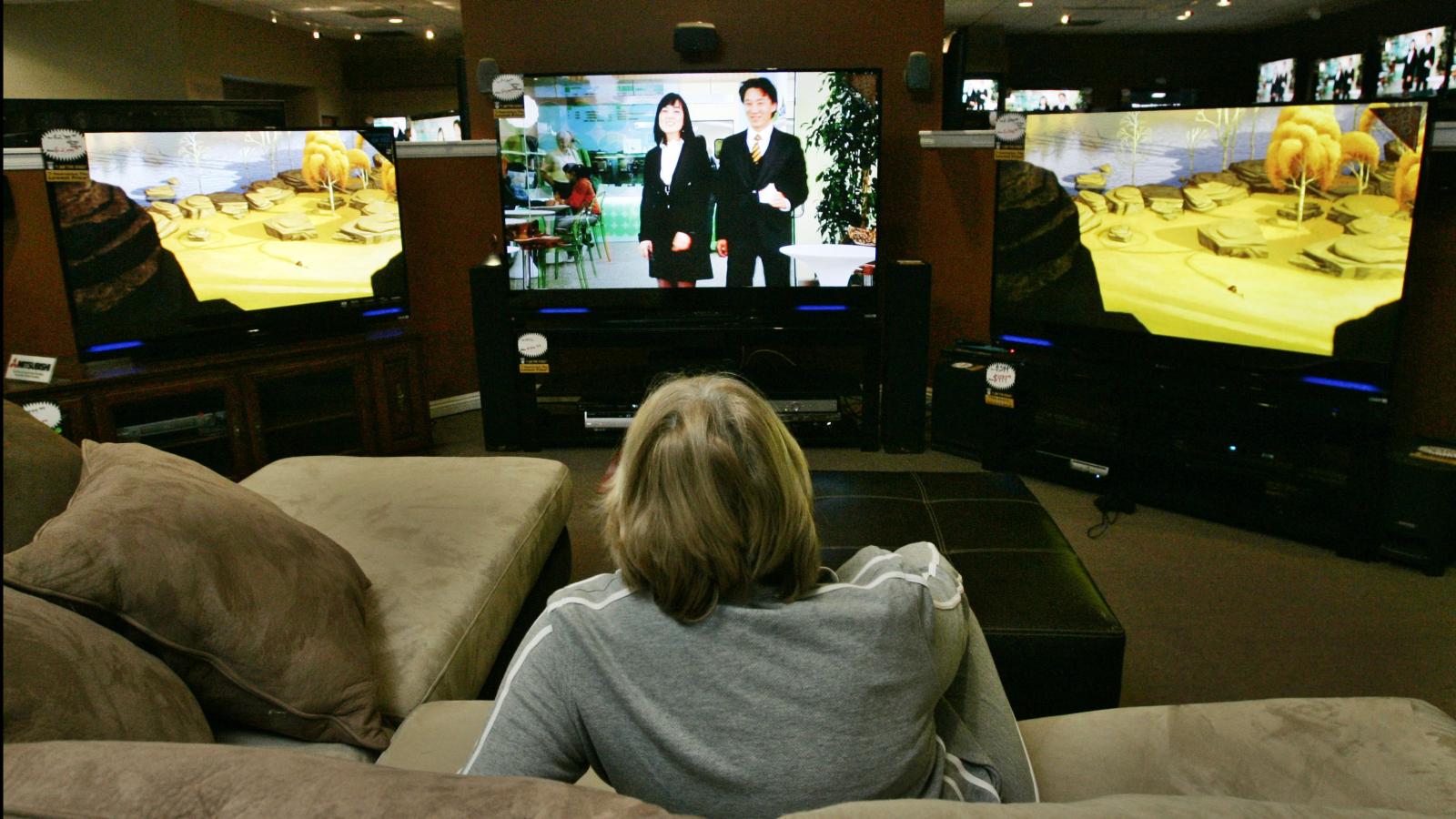
This is, in a way, a seminal cultural moment. We’re beginning to see the displacement of television as the primary mode of household entertainment—more specifically, we’re seeing live television programming become less important. It will continue to mount: people use their televisions to play video games, to watch recorded programs, to watch cable programs, to cut the cord and watch programs on-demand. Eventually, we'll see computers—including our phones—come to equal, if not surpass, television as a visual source of entertainment: we play the games, we watch the shows, we do our shopping.

I'm not sure what Phil Roybal might have been anticipating, but "astounded" is a pretty good word for what's come to pass, at least in the eyes of someone who's lived through the whole era. 

t  t  t

This week we're looking at the New Hampshire Edition of TV Guide, and having lived in Maine for a few years in the early 1990s, I've got more than a passing acquaintance with several of the stations in this issue. Take WENH, the PBS affiliate in Durham, New Hampshire, for example. Despite its location, its signal was beamed into parts of Vermont, Massachusetts and Maine, including Portland, where we lived. I always found WENH to have one of the more interesting and creative schedules among PBS stations; since it was seen in so many different areas with PBS affiliates of their own, they carried a lot of programs that didn't always appear on the national schedule, or were broadcast on other dates and times. 

Here's one example: on Wednesday night at 8:00 p.m., following the latest Jacques Cousteau documentary (a constant over the years in these issues, don't you think?), WENH has TV: The Fabulous 50s, a 90-minute retrospective on "television's golden age" with sketches from Milton Berle, Ernie Kovacs, Jackie Gleason and Art Carney, and clips from shows like The Untouchables, Gunsmoke, I Love Lucy, Frank Sinatra and Paul Newman in a musical version of Our Town on Producers' Showcase An all-star list of hosts—Lucille Ball, Red Skelton, Mary Martin, Dinah Shore, Michael Landon and David Janssen—share their memories from those days.

What you have to remember about these pre-VCR/DVD and YouTube years is that compilation retrospectives like this were often the only chance viewers had to see many of these programs from the 1950s. For every Twilight Zone, I Love Lucy and The Honeymooners, which seem never to have been out of circulation, there were probably ten others that were seldom seen in syndication by the 1980s, including classics like The Fugitive and The Untouchables. (Hour-long shows never did do well in syndication.) PBS was about the only place you could see Ernie Kovacs, or some of the early anthology dramas. I was always a sucker for shows like these, going back to the anniversary specials that each of the networks did in the late 1970s, and I'd have to think that I watched this (I'm sure KTCA in the Twin Cites must have shown it), but I confess to having no memory of it. 

It's easy to complain about those favorite programs that haven't yet made it to DVD or streaming (or the gray market), and I do as much of it as anyone. Back in 1980, though, we all would have been astonished to have these shows available to watch any time we wanted, thanks in no small part to the technology we talked about at the top of the page. Not bad, huh?

Speaking of video, TV Guide's resident technical expert, David Lachenbruch answers questions about TV technology once a month, and this month a letter writer asks, "Will the networks ever release videocassetts or videodiscs of some of their old classic shows?" After pondering the question, Lachenbruch says it's possible. "As the number of video players grows, we're likely to see some albums of alltime television favorites, but they're more likely to be issued by producers and packagers, since the networks rarely own the copyrights on programs they broadcast." Some British shows have made it to tape already, along with highlights of major news events, and owners of programs "see their old products as potential goldmines and are exploring potential home-video release." I wonder if he ever imagined. . .

t  t  t

While we're on the subject of PBS, perhaps the best entertainment of the week is the network's two-part biography of Fred Astaire. Part one, Fred Astaire: Puttin' on His Top Hat (airing Saturday and Sunday on various affiliates) focuses mainly on Astaire's movies with his longtime partner Ginger Rogers, and includes clips of famous dance routines from Flying Down to Rio, The Gay Divorcee, Gtop Hat, Follow the Fleet, Swing Time, Shall We Dance, and Carefree

That's followed on Monday by Fred Astaire: Change Partners & Dance, which features some of Astaire's other partners, including Rita Hayworth, Betty Hutton, Leslie Caron and Barrie Chase, and includes comments from luminaries such as Bob Fosse, Jerome Robbins, and Rudolf Nureyev. Both parts are narrated by Joanne Woodward. 

As for the great man himself, "I can dance, but I don't want to," he tells TV Guide's Ellen Torgerson Shaw. It's not as if he doesn't keep busy; he spends time at the track, doing crossword puzzles, and writing songs, and is a daily devotee of As the World Turns and The Guiding Light, a habit he picked up from his mom. He still does TV on occasion, and he appears occasionally on The Tonight Show. He's more or less indifferent to his fame; he doesn't own copies of any of his movies (although he has "hours of dance on film."), and one gets the idea that he's slightly uncomfortable with it all. "It's nice when people like what I've done," he says. "I accept it with appreciation. But no, I don't love it. It's not my nature. All I ever did was to want to make good, not come up empty."

Is there anyone today with the elegance of Fred Astaire? I mean, he doesn't walk across the stage as much as he does glide; the man could make breathing into an art form.  

t  t  t

On weeks when we can, we'll match up two of the biggest rock shows of the era, NBC's The Midnight Special and the syndicated Don Kirshner's Rock Concert, and see who's better, who's best.

Kirshner: Music by KISS, Gloria Gaynor and New England; comedy by Roger & Roger.

Special: Andy Gibb (host), Tom Petty and the Heartbreakers, Queen, Paul Warren & Explorer.

We may be short on descriptions this week, but we're long on content. Gloria Gaynor's the epitome of disco, and KISS—well, KISS is still going strong today. But Midnight Special has, quite literally, a hall of fame show tonight (plus its own disco Gibb), and there's really nothing Kirshner can do about it. His show will survive, but Special breaks his heart with the win.

t  t  t

We've got some new shows debuting this week, and some of these ring absolutely no bell at all. For instance, take When the Whistle Blows, an hour-long sitcom that premieres this Friday at 8:00 p.m. on ABC. Dolph Sweet, who will have much more success next season in Gimme a Break!, stars in this story of construction workers "and their search for fun both on and off the job." It sticks around for ten episodes. I don't think I've ever heard of it; is it just me? (Maybe I don't remember it because of the show it's up against, Here's Boomer, premiering at the same time on NBC. Or maybe not.)

Tuesday night sees the debut of United States (10:30 p.m., NBC), one of the more interesting experiments in what would come to be known as the "dramedy." United States stars Beau Bridges and Helen Shaver, and focuses on the everyday trials and tribulations of a married couple (the title refers not to the name of the country but to the state of two people being united in marriage), and featured neither a laugh track nor background music. I actually do remember this series; even saw an episode of it, I think; I'd have had to look fast, since it ran for only seven episodes. Some people thought it was just ahead of its time, and that may be true, since both thirtysomething and Gilmore Girls took aspects of the show and put it to better use. In my trusty Complete Directory to Prime Time Network and Cable TV Shows, Brooks and Marsh call it "tedious, boring and didactic," while another critic called the stars' characters "surprisingly unlikable." That's about how I remember it.

A couple of shows that aren't new but are making their season debuts are From Here to Eternity (Monday at 9:00 p.m. and another episode Wednesday at 10:00 p.m., NBC), a spinoff of last season's successful miniseries that returns William Devane but not Natalie Wood (Barbara Hershey instead); and The Facts of Life (Wednesday, 9:30 p.m., NBC), a spinoff from Diff'rent Strokes that stars Charlotte Rae, Lisa Whelchel, Kim Fields, Mindy Cohn and Nancy McKeon. Eternity's run is somewhat less than eternal; it won't last the year. The Facts of Life, on the other hand, lasts until May 1988, and when it leaves the air it's as one of the longest-running and most-beloved sitcoms of the decade, and that's a fact.

One show that isn't new but is equally short-lived is Pink Lady and Jeff (Friday, 9:00 p.m, NBC), and while I never saw it, I certainly remember it—you know, in the same way you remember the Titanic, the Hindenberg, the Edsel. The show features the Japanese singing duo Pink Lady, who were very successful in their home country but were hampered in their attempts to make it big here by the fact they couldn't speak English, and comedian Jeff Altman, who could speak English and served as the host of the show. If you remember me writing about the 60s show Jimmy Durante Presents the Lennon Sisters, that was a better fit than this. Pink Lady didn't do much for the legacy of Fred Silverman, that's for sure. 

t  t  t

Finally, a look at the show that symbolizes the 1980s better than anything else.

Dallas premiered in April 1978, a little under two years ago, and by the time it leaves the air in 1991, it will be have become one of the most iconic programs in television history, credited by some Dallasites with helping to finally rehabilitate the city's image following the assassination of JFK (along with the Dallas Cowboys, that is); later this year, the answer to "Who Shot J.R.?" will be, to the time, the most-watched television episode in history.

That's due in no small part to J.R. Ewing himself, Larry Hagman, who loves playing the bad guy. He calls J.R. a "miserable crud," and proudly tells Dwight Whitney, "I love him. I really do." The fact that such an evil, ruthless, unlikable character could become a folk hero is a testimonial to the actor's inherent likability, and he's grateful to the show for saving his career from underwhelming roles in B-grade shows and movies; in his most successful previous series, I Dream of Jeannie, he was overshadowed by co-star Barbara Eden (he was on-screen 80 per cent of the time, mostly to set up the punchline for Eden, who would breeze in and out of the scene; "He got lost in the shuffle."), not unlike the way he'd been overshadowed in his personal life by his famous mother, Mary Martin. When he accepted the role of J.R., his other choice was a sitcom called The Waverly Wonders, "I didn't find it humorous," he says. The role eventually went to Joe Namath. It didn't last long.

He took to the role instantly. He was from Texas. His father, a small-town Texas lawyer, represented oil interests. He understood these people, what made them tick, and he knew he could make the show work. The final offer from the producers was "insulting," but he was willing to live with it. And the rest is history. 

His castmates recognize him as the best actor on the show. He analyzes the script thoroughly, adjusts the dialogue to give the cadence more of a Texas flow, substitutes gestures and expressions for lines when he can. The show, in its second season, is a massive hit. He's made peace with his past, and with his mother's fame, and he brings a joyfulness to J.R. Ewing while the writers give him ever more outrageous storylines. Yes, life is good for Larry Hagman. "You seldom get a hit of this magnitude in your life. I've had two," he tells Whitney. "I'm not rich yet. I just think I'm ready."

And that's a good a way to finish this look at the 1980s, with a show that epitomizes the '80s better than anything.  TV  

February 20, 2021

This week in TV Guide: February 19, 1954

W
e must be born with some kind of a nostalgia gene as part of our DNA. Why else would we be talking about what television was like "back in the day" from the perspective of 1954? I mean, it isn't as if there were that many days to choose from in the first place, right?

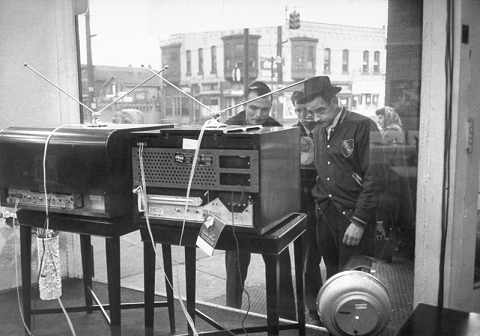
And yet here we are in "Only Yesterday," the lead article in this week's issue, wondering if TV has fallen into a rut, and remembering what things were like six whole years ago, in February, 1948. Back then, "Milton Berle was making money, not in TV, but in night clubs' Eddie Fisher was a little-known singer, and Howdy Doody was a secondary character in an NBC Saturday afternoon program titled Puppet TV Theater." Back then, a TV with a 10-inch screen cost between $350-$400 ($3,631.14 in today's dollars), expensive enough that most people went to the neighborhood bar to watch TV. Back then, there were about 170,000 sets (or "receivers,") as they were called; in 1955 there are nearly 27 million. I guess it was a long time ago, wasn't it?

Of the shows on television in 1955, few of them existed six years ago, the exceptions being Kraft TV Theater, which debuted in 1947 and would run until 1958*, and The Original Amateur Hour, which had an even longer run, from 1948 to 1970. Milton Berle and Ed Sullivan were still a few months away from making their television debuts. On the other hand, NBC had been televising the World Series since 1947, and had shown two of Joe Louis' championship fights in the same year.

*Not only that, it spent 10 seasons in the same time slot; how many shows can say that today?

Pioneers of early television: Burr Tillstrom's
puppets, Kukla and Ollie, and Fran Allison
Speaking of sports, NBC spent about seven hours a week on sports, along with seven hours on "women's shows, mostly of the how-to variety." Three-and-a-half hours were spent on drama, three on kids' shows, two on educational features, and one-and-a-half on quiz and discussion shows. That adds up to 27 hours per week, which sounds pretty good until you realize that includes both daytime and evening programming. 

Still, it's better than CBS, which at the start of 1948 only showed sports and other remote shows, because they'd shut down their New York studios the previous year. In the works, however, was "the world's biggest TV studio," under construction in the Grand Central Station building, and while they still use it in 1954, it "would fit in the vest pocket" of Television City in Hollywood. Meanwhile, ABC and DuMont were airing public affairs programs that became the precursors of shows like Meet the Press.

So I guess that even in a mere six years, television has made giant strides. Remember that progress isn't always good, though: 1948 was also the year that the networks pooled their resources to show the political conventions.

t  t  t

Some interesting shows on this week, or at least shows with interesting backgrounds. Let's take a look at some of them.

Don McNeill with Alfred Hitchcock
After 21 years on the radio, Don McNeill's Breakfast Club is coming to television (Monday, 9:00 a.m. ET, ABC). McNeill started out in Chicago on the NBC Blue Network in the early 1930s, and by 1933 the show had morphed into The Breakfast Club. Fran Allison, the aforementioned co-star of Kukla, Fran and Ollie, was a regular on the show, and one of the vocalists, known professionally as Annette King, was Charlotte Thompson Reid, who grew up to represent Illinois in Congress for five terms. 

This is actually the second go-round on television for Breakfast Club; an initial version was seen in prime time on ABC* in the 1950-51 season. This edition is simply a simulcast of the radio program (heard on ABC radio), and runs for one year.

*NBC Blue was eventually spun off into the ABC Radio Network thanks to intervention by the Federal Communications Commission. 

Don McNeill's Breakfast Club remains on the radio, with McNeill at the helm, until December 27, 1968. According to the always-reliable Wikipedia, McNeill's run of 35½-years run as host (on radio and TV) holds the record for longest tenure as emcee of a network entertainment program, surpassing both Johnny Carson (29½ years) on The Tonight Show and Bob Barker (34⅔ years) on The Price Is Right. Or, put another way, back in 1948, the show had already been on the radio for 15 years; it still has another 20 years to go.

t  t  t

NBC
Wednesday evening at 7:00 p.m. on WBZ, it's The Sue Bennett Show, with "well-known recording artist" Sue Bennett. If you're a fan of classic television, or a longtime reader with a great memory, you'll remember Sue from The Lucky Strike Papers: Journeys Through My Mother's Television Past, the book written by Sue's son (and my friend) Andrew Lee Fielding. I reviewed The Lucky Strike Papers a few years ago; it's a wonderful book, both an affectionate tribute to his mother, and an evocative look at the early days of television, when local programming was much more of a force than is the case today. 

Sue Bennett had previously been on Kay Kayser's NBC show and DuMont's Teen Time Tunes before becoming one of the singers on Your Hit Parade, so she knew what it was like to be on national television. This was different, though; I had the impression from Andrew's book not because of ambition, to work her way back to national TV, but simply becuase she enjoyed singing, and this gave her an opportunity to do so. And I think that's kind of nice, don't you?

t  t  t

We've done our fair share of obscure television shows here over the years, but here's one that I don't think we've looked at yet: Bride and Groom, a daily 15-minute show airing at noon on NBC. The premise of Bride and Groom was about what you'd expect: couples applied to appear on the show, where they'd be married live on the air, given some lovely parting gifts, and then whisked off to an all-expense paid honeymoon. For young couples who might ordinarily have to save up just for a modest wedding, it was an opportunity they might never have otherwise. (Over at my old stomping grounds, TVParty, Zachary Houle has a marvelous story about one couple's opportunity that didn't quite pan out the way you might expect.)

Bride and Groom attracted my attention for another reason, though, one having nothing to do with such domestic drama. In his excellent book on the 1960 Summer Olympics, Rome 1960: The Olympics that Changed the World, David Marinass tells the story of Olympic gold medalist hurdler Lee Calhoun, whose fiancee, Gwen Bannister, applied for the couple to appear on the show; she didn't tell Lee about it until after they'd been selected. A week before they were to appear on the program, the Amateur Athletic Union, governing body for amateur sports in America, ruled that if Calhoun and Gwen appeared on the show, he would lose his amateur status and thus be ineligible for the 1960 Olympics. According to the AAU, Calhoun was profiting from his status as a track and field champion, despite the fact that any engaged couple could be on the show*. They got married on Bride and Groom anyway; Calhoun was suspended from amateur competition for one year, but returned in time to qualify for the Olympic team and win his second gold medal in Rome. Love wins out over all.

*Or almost any couple; divorcees were excluded, as were Catholics, since a sacramental marriage has to be performed in a Catholic church. 

There doesn't appear to be anything like that on this week's shows; for instance on Thursday, Blanche Magill of Silver Springs, Maryland, marries Roger Frody of Greenbelt, Maryland. No life lived is without drama, though; I wonder what kind of story the Frodys could tell us?

t  t  t

As for the rest of the week, Tuesday night at 11:00 on WNHC, NBC's Robert Montgomery Presents adapts "Our Hearts Were Young and Gay," a "comedy about two young girls on an ocean voyage, who heed their parent's advice about being careful with whom they mix." Those "two young girls" were actually author-actress Cornelia Otis Skinner and journalist Emily Kimbrough (played here by Elizabeth Montgomery and Sally Kemp), and the account of their trip, which they wrote in 1942, became a best-seller, spawning a big screen version in 1944, and a play in 1946*. It was also a television series on CBS in 1950, so I suppose you could call this a reverse-pilot. 

*In a nice bit of TV tie-in, the story was dramatized for the stage by Jean Kerr, who later wrote Please Don't Eat the Daisies; the character loosely based on her was portrayed in the series by Pat Crowley (and in the movies by Doris Day).

Remember a couple of weeks ago how Edward R. Murrow told us he liked to choose personalities with contrasting backgrounds to appear on Person to Person? Well, this week is no different (Friday, 10:30 p.m., CBS), as Murrow's guests are film magnate Sam Goldwyn in California, and basketball star George Mikan in his Minneapolis home. 

Jackie Gleason's suffering from a broken ankle, and in these days of live television, that means guest hosts on his Saturday night show (8:00 p.m., CBS). Rumor (and the Teletype) has it that Red Skelton, despite his own ailment (a tightly-bandaged right arm "following an altercation with a shower door"), volunteered to step in for the Great One, but this week's stand-in is Perry Como, who appears in a skit with Art Carney and Audrey Meadows. Not playing Ralph Kramden, thankfully.

On Sunday, Hallmark Hall of Fame (5:00 p.m., NBC) tells a little-known part of American history: "Miss Tracy of Mt. Vernon," starring Sarah Churchill, is the story of Sarah Tracy, the woman who kept Washington's home at Mt. Vernon neutral during the Civil War by using it as a resting place for both Union and Confederate soldiers. She must have been a remarkable woman, able to create neutral ground for two armies in the middle of a war. Too bad Hallmark doesn't make movies about people like her anymore. Probably couldn't toss off enough bon mots for their liking.

t  t  t

As far as coming attractions, the man responsible for Today is at it again. Pat Weaver's latest brainchild is The Home Show, a "revolutionary idea in daytime television."  

Home was a magazine-type show, with guests and features specifically designed to appeal to the homemaker; in that sense, it's not so different from many of the morning shows on TV today—or, one supposes, the fourth hour of Today. Hosting Home is Arlene Francis, making her the second member of the What's My Line? team (the other being John Daly) to host programs on two different networks. Hugh Downs, a man who will spend the next couple of decades sliding effortlessly between morning and late night shows, is Arlene's sidekick (as he will be for Jack Paar), and the whole thing's backed by by the Norman Paris Trio.

Home is the second segment in what Weaver saw as a trio of shows that would unify NBC's daily schedule; the third, which will premiere later in the year, is Tonight. Home runs until 1957; Today and Tonight, of course, are still on the air. Still, two out of three ain't bad.

t  t  t


A long, long ad for The Long, Long Trailer, with Lucy and Desi—and a chance to see that flaming red hair in color. Don't underestimate the appeal of that; when Dragnet became the first TV series to be made into a feature film in 1954, one of the major talking points in convincing people they should pay to watch characters they could see for free in their homes was that now you could see Joe Friday in living color! (According to this week's Hollywood Teletype, filming on the movie is scheduled to start in the next 90 days.)

It wasn't uncommon to see movie ads in TV Guide, even when there wasn't such a direct tie-in with a TV show. After all, it's a great place to advertise, and there were still some things that you could only get in the movies. TV