Showing posts with label Hallmark Hall of Fame. Show all posts

March 7, 2026

This week in TV Guide: March 7, 1970


If you're a regular reader (and, as I always say, if you aren't, why not?), you know how much and how often I rag on the Hallmark Channel, and whatever remnant there is of the Hallmark Hall of Fame, once one of the most prestigious programs on television. I've done it so often that it ceased to become a challenge, and, in fact, got to be something of a bore. I mean, it was so easy. And so I resolved I'd try to avoid it, and thereby make my life just a little bit easier. 

However, as my wife can tell you, I don't always stick to my resolutions, and so it is that we take a look at this week's Hall of Fame presentation of "Neither Are We Enemies" (Friday, 8:30 p.m. ET, NBC), this year's Easter episode. The story takes place during the Roman occupation of Judea, and stars Van Heflin as Joseph of Arimathea, the man whom the Bible tells us helped take Jesus down from the Cross after the Crucifixion and lay Him in the tomb. Kristoffer Tabori co-stars as Joseph's son Jonathan, who hears Christ's words not as those of love and peace, but as a call to revolution. Also featured in the cast are J.D. Cannon as Pilate, Ed Begley as Annas, Kate Reid as Deborah, and Leonard Frey as Judas. 

There are many facets to this story, which scriptwriter Henry Denker wrote "to interpret the events surrounding the Crucifixion with a parallel to the conflicts of our time." And it's easy to see, even in this brief description: the clash of generations, the conflict between war and peace, the military occupation of one nation by another, and so on. It points out the timelessness of Denker's story—indeed, of the entire Bible—in that the parallels that existed in 1970 are just as present today, and likely will be in another fifty years, if we last that long. 

I have no idea if "Neither Are We Enemies" is any good or not; you can't really find out much about it online. For what it's worth, Jack Gould, the TV critic of The New York Times, called it "something out of the ordinary"; while Heflin "was unsteady at the beginning, perhaps because of the initial unevenness of the script," he was effective in portraying the anguish he felt over his estrangment from his son. Gould also singled out the performance of Tabori as "exceptionally good," while Begley was "persuasive as usual." The hope offered by the play lay in the idea that "when the family breaks up there is the consolation that a respect for different outlooks could remove the element of enmity." It's also worth noting that the cast includes three Oscar nominees: Begley, Heflin, and Frey, and that Begley and Heflin both won Oscars.

Having established the bona fides of the play itself, we'll now turn to the sorry state of entertainment at Hallmark, for there are many people, I am sure, who have never, in their lifetimes, seen even five minutes of programming from that network that begins to compare to the impact of this type of story. In a time when the nation is bitterly divided, with family members pitted against each other over matters both substantial and trivial and almost always connected in some way to politics, it would be nice to think that Hallmark might consider offering something relevant like this, rather than the umteenth rendtition of some soapy, soggy, sentimental drivel about reconcilation, finding the right partner, or discovering the perfect Christmas in a quaint small village square. Yes, reconciliation is important, but as this drama suggests, it is also messy, difficult, and painful, and it involves sacrifices on the part of all concerned. That's not all, of course; the story also deals with religion in a way that is totally foreign to today's modern productions, and as for the star quality of the cast, well, perhaps the less said, the better.

I'm no longer worried that I sound like an old man shouting at the clouds when I get off on rants like this; I'm old enough that I simply don't care anymore. What I do care about, however, is the quality of programming on television, another subject of many a piece here. Quality is not, in fact, that hard to achieve if one really wants to achieve it. Hallmark sent the message, many years ago, that it was something they no longer cared about, so we shouldn't be surprised any time we run across an example of what the Hallmark Hall of Fame used to be like, back in the day. The company's motto, "When You Care Enough to Send the Very Best," applied to television as well as greeting cards back then. Of course, if you even send cards these days, you know that much of Hallmark's output hovers somewhere between the crude and boorish on one hand and the saccharine and dewy-eyed on the other; there's a reason for the existence of terms like "sentimental fool." 

It's likely that Hallmark wouldn't be up to the task anyway; doubtless they'd fill the story with romance and woke politics, and water it down. But if they didn't: think of what could come from this simple message that families didn't have to be divided, that friendships didn't have to be torn asunder, over something like politics. That's not to discount the importance of some of these issues, but what ever happened to that innate human dignity to which Jack Gould mentioned, the idea that "respect for different outlooks could remove the element of enmity.

Yes, we shouldn't be disappointed by this fall from grace anymore. One could say that we don't have the right to be disappointed by it. But we do have the right to be offended by it. More than a right; an obligation.

l  l  l

From 1963 to 1976, TV Guide's weekly reviews were written by the witty and acerbic Cleveland Amory. Whenever they appear, we'll look at Cleve's latest take on the shows of the era.
This week Cleveland Amory checks in on one of television's rare genres, the half-hour variety show. It's one hosted by a comedian who was once quite well-known in pop culture, but has now joined the ranks of those one-hit wonders remembered only by those of a certain age or disposition. In case you haven't figured it out yet (to be honest, I'm not sure how you could have), we're about to look at Pat Paulsen's Half a Comedy Hour.

Pat Paulsen came to prominence as one of the regulars on The Smothers Brothers Comedy Hour, where he launched a deadpan, and often very funny, campaign for president. And herein lies the problem, for there are comedians, such as Tim Conway, who were often the life of the party, provided that someone else was hosting it. Try as he might, though, he could never carry a show on his own. Pat Paulsen is one of those comedians. "Put him in Medical Center or The Bold Ones and you've got a large riot. Even put him in another comedy show and he's so individual he'll still give you at least a small riot. But give him his own whole show and you've got a problem." It's that there needs to be contrast, something (or someone) for him to play off of, and as the host of the show, that element is missing. 

As Amory puts it in one of his classically painful puns, Paulsen's comedy persona is one of Caspar Milquetoast. "Make him Mr. Milquehost and he'll still be funny. But one thing is certain—you're going to have to milque harder." Things started off well, with an extremely funny bit, filmed on location, that involved Paulsen's car breaking down in the middle of winter outside former Vice President Hubert Humphrey's home in Waverly, Minnesota. Humphrey, playing himself, still remembered some of the jokes Paulsen had made at his expense during the 1968 campaign, and adroitly avoided inviting Paulsen out of the knee-deep snow to phone for help. It's difficult to explain in a limited space, but it was very funny, and showcased both Paulsen's dry humor and Humphrey's graceful self-deprecation. There was another good sketch involving Paulsen demonstrating how to make a 25-inch color TV "using only materials at hand." However, the effect was undermined by a pair of lame bits, one including guest star Debbie Reynolds. The trend continues through subsequent shows: strong absurdities followed by weak sketches. The best consistent feature of each episode is the close, and these are "so funny that we guarantee, even if you don't like the rest of the show, Mr. Paulsen will leave you laughing." At thirteen episodes, the problem was that they didn't leave viewers wanting more.

l  l  l

ABC has announced its new fall schedule, and, as is typical for the perennial last-place network, it features what Richard K. Doan, in The Doan Report, calls a "massive shake-up," with nine shows biting the dust, including the aforementioned Pat Paulsen show, It Takes a Thief, The Flying Nun, Here Come the Brides, The Ghost and Mrs. Muir, variety shows hosted by the Lennon Sisters and Englebert Humperdinck, and the network's Monday night movie. And that leads to the centerpiece of the new schedule, Monday night pro football. (Although, at this point, nobody could possibly imagine how successful this would become.) Other than that, however, the new shows will leave something to be desired. The Odd Couple, starring Jack Klugman and Tony Randall, will be an unqualified success, unlike The Young Lawyers, The Immortal, The Young Rebels, the Burt Reynolds vehicle Dan August, The Silent Force, Matt Lincoln, and the Danny Thomas comeback Make Room for Granddaddy. 

Doan adds, however, that there is one positive note, with a series that is being renewed, albeit on another network: Sesame Street, which NET has announced will be back in the fall with a new season of episodes.

l  l  l

Speaking of "Vince Baby" Edwards, as we were a couple of weeks ago when his career seemed to be in a kind of holding pattern, we now get a look at the TV series he did take on, after having turned down more than a few opportunities. As I mentioned above, his new series Matt Lincoln is on the fall schedule, although at this point it's not called Matt Lincoln. It's called Dial Hot Line, and the pilot can be seen on the ABC Sunday Night Movie this week (9:00 p.m.). Edwards stars as David Leopold, a "hip psychiatric social worker" who operates a telephone hot line which troubled young people can use when they need someone to talk to. In her review, Judith Crist sees it as an ideal vehicle for a weekly series: "The entertainment possibilities are limitless—suicide and rape are touched upon this time around—in case you haven't problems of your own." 

Now, you may be asking yourself how Dial Hot Line morphs into Matt Lincoln, presumably including a name change, given that the new series isn't called David Leopold, and therein we find ourselves with a story that's probably as entertaining as anything that appeared on the series. According to the always-reliable Wikipedia, citing the reasonably authoritative Harlan Ellison, the name change came about as a result of jokes around the office regarding the Leopold and Loeb murder case, and worries that viewers might make the same association. (One has to wonder if the script was run by DeForest Research in advance; the company, which was frequently used for name clearance and other research projects, might well have pointed out the potential for mischief.)

Ellison also dryly noted that while Leopold was "described as an example of 'the new breed' of mental health professionals, serving 'the many, rather than the few' and involved in a wide array of volunteer activities," that didn't prevent him from obtaining an income that allowed him to "drive a Mustang, have a Marina apartment and a sailboat." By the time Matt Lincoln made it to the fall schedule, the lead character had morphed from a "psychiatric social worker" to a "community psychiatrist" who maintained a private practice that allowed him to take on volunteer activities, as well as maintain a lifestyle to which he had become accustomed.

In any event, Matt Lincoln, by any other name, was a disappointment, lasting only 16 episodes before being cancelled. Considering that one of the series Edwards had previously passed on had included a two-year guarantee from ABC, one wonders if Edwards might have sought professional help himself afterward. Either that, or perhaps a new agent.

l  l  l

Having led off this issue with a look at one of the most distinguished programs on the air, we now turn to something a little different: Neil Hickey's article on Hee Haw, which some critics called the worst show ever when it premiered, but which now is having the last laugh—a laugh it's sharing with its substantial audience.

When Hee Haw debuted, a little less than a year ago, the more responsible critics (and by that, Hickey means those accepted by the entertainment elite) denounced the show as "a program of such stupefying banality, witlessness, irrelevancy, pointlessness, unregenracy and inepitude." Imagine their dismay when the show "immediately zoomed to the upper reaches of the ratings charts and stayed there all summer." And make no mistake about this, the blowback against the show was a prime example of that elitism in action, the sniffing from snobbish upper-crust Eastern Establishment critics "blaming it all on the Silent Majority and the Middle American, who are fed up with bad news, crime in the streets, protest and student unrest." They're especially irritated, Hickey continues, "because this show came to life over the dead bodies of the Smothers Brothers, who were always making those terrific jokes about racial tensions, the Vietnam War, Congressional ethics, air pollution and the military industrial complex." 

And yet, as Hickey points out, "the program was nothing more, really, than a grab bag of purloined bucolic knee-slappers going back to Aristophanes, melded with bathetic rural ballads of a sort never imagined by Sir Walter Scott nor Robert Burns nor Francis James Child." Plenty of people were happy to see the Smothers Brothers go, replaced by down-home humor that struck a chord with ordinary Americans. "We get a lot of letters saying, 'It's great to see a real American show,' " according to Frank Pepplatt, one of the show's creators (he and his partner, John Aylesworth, are, ironically, a couple of Canadians). "We also get angry mail from old Smothers Brothers fans who say, 'How dare you put on material like that? It has no content, no message.' Well, that's the whole point! It's not supposed to have a message."

Says Grandpa Jones, a legendary country comedian who's now gaining mainstream recognition, "these fellows dared to give us a chance. TV people have always been afraid to put on common country stuff. They always figured it had to be polished and slicked up. It took somebody from Canada to show 'em it could be done." (Perhaps there's something to be learned in that SCTV, one of the greatest bite-the-hand-that-feeds-you series of all time, was also brought to life by Canadians.) Co-host Buck Owens adds that "You don't have to be up on current events, nor have watched the Huntley-Brinkley show that day to enjoy it. Anybody can grasp this material."

A couple of confessions: I rarely watched Hee Haw growing up, either during its network run or on first-run syndication. I'm just not with it on that kind of humor, nor the country music stars (some of the top names in the business, mind you) who frequented the show. It's not my style. Number two, I freely admit to being a TV elitist, in case you hadn't figured that out from my lede screed. Nevertheless, I would be the last person to say that there's no room on television for programs like Hee Haw, programs that appeal to the dreaded flyover country. When CBS ushered in the rural purge, Hee Haw was one of the victims, cancelled in 1971; it then went on to thrive in first-run syndication from 1971 to 1993. And let's not forget that Lawrence Welk, another show that supposedly appealed to the "wrong" audience, was also a hit in syndication, with reruns continuing on PBS to this day. 

The point is that television doesn't have to be a homogeneous blob. Just as I'll frequently rail against the romantic slop of the Hallmarks, the crude boorishness of so much network television, and the leftist bias of the late-night shows, I'd be just as dismayed with a television world that had no room for Hogan's Heroes, Top Gear, Mystery Science Theater 3000, or, yes, Hee Haw. We complain that television has become so niche that there's no place for programming appealing to a broad audience, and for good reason. After all, a television diet of nothing but Shakespeare would get pretty boring after a while. Besides, as Hickey notes in his conclusion, "one is nagged by the suspicion that Shakespeare—that most shameless purveyor of bad gags—would have loved it." I wouldn't doubt it for a moment.

l  l  l

So what, in fact, is on this week? Well, in the days before March Madness became a bloated excuse for everyone in the world to take a chance on their own bracket, the NCAA Basketball Tournament tips off on Saturday afternoon (2:00 p.m., NBC), with the major contenders including St. Bonaventure (led by Bob Lanier), Notre Dame (Austin Carr), Jacksonville (Artis Gilmore), Western Kentucky (Jim McDaniels), and eventual champion UCLA (Sidney Wicks). Attention on the tournament might be eclipsed, however, by the real thing: a total solar eclipse, with all three networks planning live coverage, beginning at 1:00 p.m. (You can see CBS's coverage here, with an excerpt from ABC's coverage here.) If you miss it, though, don't worry; you can see it again, following a similar path, in 2024. Remember that?

Fred Astaire guest-stars on It Takes a Thief (Monday, 7:30 p.m., ABC), in a cleverly-titled episode called "An Evening with Alister Mundy," a play on the series of successful television specials that Astaire did in the 1950s and 1960s. Astaire, you may remember, appeared on It Takes a Thief several times as Robert Wagner's father, a fellow master thief. Tuesday's highlight is the delightful Winnie the Pooh and the Honey Tree (7:30 p.m., NBC), the whimsical 1965 adaptation of A.A. Milne's stories, narrated by Sebastian Cabot, and with Sterling Holloway unforgettable as the voice of Pooh. And on Thursday, the Young Americans music group host their first network TV special, with special guest stars Lorne Greene, Tiny Tim, and the Committee improv group. 

l  l  l

Finally, the starlet of the week is Karen Wyman, a 17-year-old "slinky adolescent with a lod of schoolbooks in one arm," as Judith Jobin styles her. More than that, she's a singer with a voice that is equal parts "controlled, earthy, hypnotic, and sexy"; one critic calls it "the voice of a woman who's done a lot of living," quite an accomplishment for someone who's not yet out of high school and, she says, "emphatically hasn't done a lot of living." Her voice teacher, Marty Lawrence, says she has "one of the greatest sounds I'd heard in my 21 years of teaching," and sent a demo to Greg Garrison, producer of The Dean Martin Show. Garrison told him, "If she can perform the way she sings, she's on the show." She could, and she was; she appeared on the show a year ago, did a five-song medley with Martin, who kissed her afterward and said, "You are wonderful, and you are beautiful, and you are some kind of singer," and the rest is history.

Since then, she's done four shows with Ed Sullivan (you can see one of them here), made a couple of visits to Johnny Carson, and her first album is due out this month. And despite her youthful enthusiasms, she displays "a solid core of drive, ambition and perfectionism (which a few people are calling temperament), and has a clear vision of what she wants; while her voice has been compared to Garland and Streisand, "I want to be unique. I want to be the original Karen Wyman." And she wants to be a star: "A star is...you're the hottest thing in show business. The public is nuts about you. It's not so much the money—it's class, people running to the box office to see you. You know when you're right on top, when you get the largest sum ever to appear somewhere."

That kind of stardom is not in the cards for Karen Wyman; she would later say that "I needed to grow up. I felt that I didn't deserve to be a star." She endured two failed marriages, raised a son and daughter (born sixteen years apart), quit singing altogether, and made a "comeback" in 2014. And to this day, she says that her most memorable moment was meeting Dean Martin; "it was really like a fairy tale."

l  l  l

MST3K alert: Agent for H.A.R.M. 
(English; 1966) Tale of a creeping blob from outer space that transforms human flesh into fungus. Mark Richman, Wendell Corey, Carl Esmond. (Thursday, 11:25 p.m., WTIC in Hartford) Peter Mark Richman and Wendell Corey: what are you doing here? H.A.R.M. was, apparently, initially supposed to serve as a pilot for a new series, but wound up in theatrical release instead. My favorite review comes from The New York Times, which called it an "anemic James Bond imitation." I don't believe this is currently part of the MST3K episodes that run on TV; all in all, probably a good thing. TV


If you enjoy the content here and want to support my broader creative work, please consider making a donation at my Ko-fi page. Any amount you contribute helps me continue writing, researching, and sharing these articles and projects. Thank you!

February 4, 2023

This week in TV Guide: February 1, 1969

I think I've written this before—by the way, people sometimes think writers are able to remember pretty much everything we've ever written, and that we're able to recall things at a moment's notice. I'll have someone ask me why I had Winter do what he did on page 142 of The Car, and meanwhile I'll be thinking, "I wrote that?" And when you tell them, they'll ask you in an insinuating way if you actually write your own material. Well, I'd gladly take someone up on that offer, but I'm afraid you'll like them better than you like me, and then the gig will be up. 

But I digress (and I think I've written this before as well). I think I've written this before, but one of the first things I look for in a TV Guide is a hook, something that I can start off with, which usually allows the rest to fall into place. I've even been known on occasion to reject an issue because there was nothing there to get me started. Those cases are few and far between, but still, unless I'm familiar with an issue, there's that moment of suspense: will I find what I'm looking for, something that jumpstarts the week. Does this issue of February 1, 1969, have anything for me?

And there it is:

I'm assuming that most of you know the story of Turn-On, the shortest-lived television series of all time (based on the fact that some local affiliates were cancelling it during the broadcast), a show that has become synonymous with the word "fiasco" to the point that it's listed in the dictionary under F instead of T. (OK, I made that last part up, but a guy can dream, can't he?)

The TV Guide of May 17, 1969, goes in-depth on what it called "The Biggest Bomb of the Season" (yes, I do remember having written that), and it's interesting to look back on how intense the response to Turn-On was, particularly by ABC's affiliates. Robert Doubleday of KATV in Little Rock, one of the show's most outspoken critics, said the network should have listened to people like him warning that "most people still have standards of taste and morality." "It would be a good idea," he said, "to load those people who do those TV series into Greyhound buses and take them on a trip across the country to show them how the rest of the people live."

What's particularly interesting to me is that we have the next week's TV Guide which, due to printing deadlines, still lists the never-seen second episode (here's a clip from it, proving at least that it exists), and one could speculate on what would have happened had the show not been pulled from the schedule so abruptly. Would it simply done its 13-week run and then disappeared? Would the controversy have been replaced by ambivalence, even disinterest? (That might have been even worse.) Would the humor have gotten tamer and lamer as time went on, or would the producers have doubled down on it? Might it even have caught on in certain circles, such as college campuses? Most important of all, what would Cleveland Amory have thought of it? I'll leave all this to people smarter than me to figure out, but it makes for amusing speculation. 

Remember, all this was long before it became customary for a network to pull the trigger on a program so quickly.* Up to that point, the show voted Most Likely to Be Remembered as a Total, Abject Failure was The Tammy Grimes Show, and that at least made it for four episodes before it was yanked. (According to TV Guide, that was a disaster, but not a bomb.) And then there's Jackie Gleason's You're in the Picture, another of television's famous Titanics; true, the show wasn't very good, but one could argue that it's remembered more because of Gleason's brilliant apology the next week. Technically, I suppose you could describe it as a single series consisting of one episode of Picture, one episode consisting of Gleason's apology, and eight episodes of The Jackie Gleason Show, the talk show that filled out the ten-week run. 

     Fixed.
*Nine of the ten shortest-lived series of all time, including several that didn't make it to a second episode, have come since 1995. 

There have been others since then; Andy Griffith once had two series cancelled in the same season. And I believe there have been a couple of series that were actually cancelled before they aired. But few of them have the fame, or infamy, of Turn-On. When a network acts this drastically, there's no way to keep it quiet, and Turn-On probably became more famous because of it than if it had simply run its course. After all, we're still talking about it, right?

l  l  l

During the 60s, the Ed Sullivan Show and The Hollywood Palace were the premiere variety shows on television. Whenever they appear in TV Guide together, we'll match them up and see who has the best lineup.

Sullivan: Tentatively scheduled: singers Sergio Franchi and Vikki Carr, the rocking Vanilla Fudge and Temptations, comedians Stiller and Meara, Jacques d'Amboise of the New York City Ballet and the Antonettes, novelty act.

Palace: Host Don Adams swings the spotlight on singers Tony Martin and the Lettermen, dancer Barrie Chase, comic Joey Forman, Ruth Buzzi and Alan Sues of Laugh-In, the juggling Half Brothers and illusionist Igor Kio from the Moscow State Circus.

Neither show has a great lineup this week, neither show has a bad one. I'm not a great fan of Laugh-In (personal preference only), so Alan Sues and Ruth Buzzi aren't going to do anything for me. Barrie Chase is a terrific dancer, but then so is Jacques d'Amboise. I think, although I'm not positive, that Sergio Franchi and Vikki Carr edge out Tony Martin and the Lettermen, so on that very narrow basis, I'm giving the edge this week to Sullivan.

l  l  l

Throughout the 60s and early 70s, TV Guide's weekly reviews were written by the witty and acerbic Cleveland Amory. Whenever we get the chance, we'll look at Cleve's latest take on the shows of the era. 

For those of you who thought that perhaps Cleveland Amory didn't come out during the daytime, guess again. Thanks to a week in bed with the flu, Cleve had the opportunity to become acquainted with Dark Shadows. "At the end of the week, by which time we had decided that this series was, in our considered judgment, the worst in the history of entertainment, we found that when Saturday came and there was no show, we missed it." And that, he says, is the key to the success of this gothic soap opera: "[T]he worse it is, the more you'll love it." 

But wait: it gets better. "No matter how terrible you may think an idea is—wait, hold your judgment. The execution of it will be so bad that, in retrospect, the idea seems terrific." The same goes for the dialogue; "once you've seen that action, you will look back on that dialogue as manna from heaven combined with the balm of Gilead." Nobody, but nobody, escapes Cleve's tongue. Joan Bennett, who played Elizabeth Collins Stoddard until she was killed off a few weeks ago, "plays this part as if she'd just forgotten where she'd put it." But then, considering your star is Barnabas Collins (Jonathan Frid), "your friendly neighborhood vampire," who's been dead for 200 years, anything is possible. Frid "is at his best—i.e., worst—when he's discovering something for the fourth time that somebody else has already discovered for the third." And then there are the children, Amy and David (Denise Nickerson and David Henesy): "We swear to you that if we see those two talking to that ghost Quentin through that disconnected telephone one more time, we will call them on a connected telephone and read them his review collect."

Does Amory really like Dark Shadows? What do you think? He concludes with a look at Dan Curtis, the executive producer of Dark Shadows. He declares that he "dreamed the whole story of Dark Shadows during, he says, 'a big sleep in upstate New York.' " Says Cleve, "In that case all you can think, or hope, or even pray is that Mr. Curtis never, ever gets that tired again."

l  l  l

It's too bad Turn-On overshadows the rest of the programming on Wednesday, because it's a notable night of entertainment, beginning with the Hallmark Hall of Fame production of "Teacher, Teacher" (7:30 p.m. PT, NBC) starring David McCallum as a tutor trying to rebuild a life shattered by drinking and divorce; Ossie Davis, a handyman denied other opportunities because of his race; and Billy Schulman as the retarded youngster who becomes central to their lives. "Teacher, Teacher" goes on to win critical and popular acclaim, as well as an Emmy for Outstanding Dramatic Program; Schulman, himself retarded, is nominated for Supporting Actor. Even if Shakespeare is too highbrow for today's Hallmark Channel, you'd think that a moving story of redemption like this—no, Hadley, don't go there again. Just don't. (You can watch it here.)


"Teacher, Teacher" ends just in time for you to switch to ABC for part one of Sparticus (9:00 p.m.), the epic adaptation of Howard Fast's novel about a slave revolt against the Romans in the 1st Century B.C., directed by Stanley Kubrick, written by Dalton Trumbo, and starring Kirk Douglas, Laurence Olivier, Charles Laughton, Peter Ustinov, and Tony Curtis. Judith Crist is of two minds about it; it's the rare epic that deals with serious political and social issues, with fine performances particularly from the supporting characters, and has moments that are "literate and even witty." On the other hand, it's also "uneven and dawdling," and Curtis provides "unwitting low-comedy relief as a Bronx-accented Roman poet." Part two airs at the same time next week; Crist thinks "the timing of the film may be helped immeasurably."

With all of that, it's easy to overlook Kraft Music Hall (9:00 p.m., NBC) with Steve Lawrence and Eydie Gorme in "What It Was Was Love," an original suite of songs written and arranged by Gordon Jenkins "as a scrapbook for Steve and Eydie," who had one of the most enduring marriages in show business. With St. Valentine's Day just around the corner, it's not a bad reminder of the important things in life.


Wednesday is the best night of the week by a long way, but there are some other shows of interest, such as Firing Line (Sunday, 7:00 p.m., NET), when William F. Buckley Jr. is joined by our own Cleveland Amory and former bullfighter Barnaby Conrad to discuss animal rights. I also like the program on opposite it, a 1967 BBC production of The Mikado (7:00 p.m., KPIX) starring Cyril Ritchard in the title role with the famed British comedian Harry Worth as Ko-Ko; according to the always-reliable Wikipedia, it's the first-ever color presentation of the Gilbert & Sullivan classic.

There's some prime-time boxing on Monday, which I'm fairly sure I would have watched with my grandfather; George Chuvalo takes on Buster Mathis in a bout between two of the world's top heavyweights, live from Madison Square Garden (7:00 p.m., syndicated). First Tuesday (Tuesday—duh—9:00 p.m., NBC), the Peacock Network's monthly newsmagazine, includes a look at American preparations for chemical warfare, including "animals dying 44 seconds after exposure to nerve gas; human volunteers and animals in 'infection studies'; the manufacture of nerve gas and nerve gas artillery shells; and, briefly, top-secret Pine Bluff (Ark.) Arsenal, a pilot 'germ production' plant." My former home of Minneapolis was the site of chemical warfare experiments in the 1950s; I'll let the morality of all this stand without comment. And on Friday, NBC pre-empts Star Trek for the third-season opener of Experiment in Television (10:00 p.m.), "This is Sholom Aleichem," a series of skits based on the life of Yiddish writer whose short stories were adapted into Fiddler on the Roof. After tonight's episode, the show will be seen on Sunday afternoons, which is probably a good thing. 

l  l  l

I shouldn't forget mentioning a couple of articles of interest. First is Leslie Raddatz's profile of Stephen Young, co-star of ABC's Judd, for the Defense, and since Judd is a program I thoroughly enjoy, I figured I should mention a word or several about it. We find out that the Canadian Young was good enough to earn a tryout with the Cleveland Indians, and he still plays hockey every Sunday night at an arena in Culver City. He's "very aggressive," according to a fellow actor, "but it's a charming aggressiveness. He has a fantastic faith in himself." Carl Betz says Young "just waits to pounce on his lines," and producer Harold Gast says "He's always looking for more to do, so we try to give him a bigger part." He's also popular with his fellow actors; one calls him "a real doll," and another says, "Most of these young actors get fat heads, but not Steve." He's very good in Judd, occasionally getting the lead but never overshadowing Betz. He's also young enough that he's still around today, with his last acting role coming in 2013.

And then there's Robert Musel's witty article about the 74 year-old British aristocrat who's putting his 23-acre French estate up for sale for only $1.2 million. His name is Edward Windsor, although his friends call him David; we know him better as the Duke of Windsor, formerly and for a short time ("Ten months and . . . I can't remember the days . . . oh, 18 days.") he was King Edward VIII. He and his wife, the Dutchess of Windsor, also known as Wallis Warfield Simpson, are being profiled by Harry Reasoner for this week's 60 Minutes (Tuesday, 10:00 p.m., CBS). 

The Duke comes across in Musel's article as a man with a dry, self-effacing sense of humor; at one point Reasoner asked him about the desk on which he signed his abdication—would he leave that for the buyer? "Why not?" the Duke shrugged. And after lighting the logs in the fireplace, he looked around for a place to put the match. "I can't leave it in the ash tray or the Duchess will complain," he confided to Musel. "I am very well house trained."  

Reasoner skillfully guided the Duke through the interview. asked. At one point he asked, "How did you feel when you were no longer King?" The Duke smiled faintly. "It was a great relief. But I enjoyed my work for my country." He didn't think his abdication made much difference in the long run; "I think about it," he admitted, but added, "I don't think I would have changed to course of history by not abdicating, not in a constitutional monarchy like Britain." After taking Reasoner on a tour of the grounds ("I probably don't have enough money to buy this building," Harry warned), the Duke sank gratefully into a chair. "Never stand when you can sit, never sit when you can lie down," he explained. (My kind of guy.) "What's the authority for that?" Harry asked. "Old age," the Duke replied. "After 60 something's bound to hurt."

The Duke and Duchess come across as charming, pleasant, enjoyable. A young English girl working with Reasoner and his team, remarked that "If there had been television in 1936, if the British people had been able to see her as she really is, there might not have been an abdication." Musel isn't sure; after all, the issue was that Mrs. Simpson was divorced. And how likely is it that they'll ever allow an English King to marry a divorcee?

l  l  l

Finally, there's one more premiere this week that bears mentioning. On Friday night at 7:30 p.m, ABC presents the debut episode of a new variety show starring an exciting young Welsh singer: This is Tom Jones. Not only does it last longer than Turn-On, it's a lot cooler. And, like Stephen Young, Tom Jones is still around. And you know what? He's still cool. TV  

December 17, 2021

Around the dial

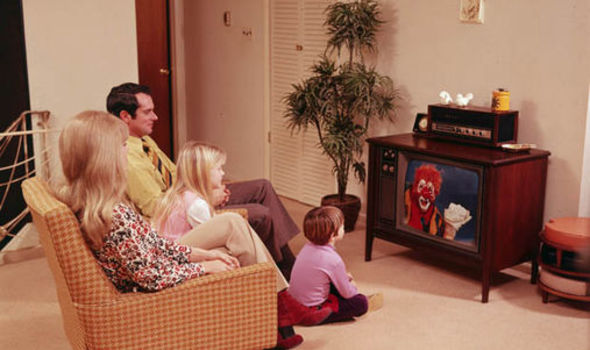
Another family gathered around the TV watching C-SPAN


Whenever I see an article about how classic shows of the past weren't really that good, my Spidey sense starts to in, and I immediately prepare for some kind of knee-jerk reaction—you know, something along the lines of how this author doesn't really know what he (or she) is talking about, blah, blah, blah. And when I saw this Atlantic article by Tom Nichols on how most Christmas specials are terrible, I was prepared to do the same. After all, his focus is entirely on animated specials, leaving out some of the most significant Christmas shows in television history. But in this case, I'm not going to jerk my knee, because as it happens, this is something I like a lot; I feel as if I could have written it myself.

The idea that Rudolph the Red-Nosed Reindeer is, well, kind of stupid, is not one foreign to this site. Its charm, and its classic status, comes almost entirely from the stop-action animation, the songs, and its connection to our childhood. But let's admit it: Rudolph's Santa is a jerk; if I'd been Rudy, with Santa asking for my help after everything I'd gone through, my answer would have been short and sweet: "Bite me, Santa!" (But then, I suppose Rudolph is a more forgiving soul than I am.) And then there's the idea that King Moonracer, who's apparently able to fly around the world gathering up misfit toys, can't fly to the North Pole himself and ask Santa's help. For that matter, why doesn't the king just fly over to Amazon and let them deliver the toys? Anyway, the point is that, unlike A Charlie Brown Christmas and How the Grinch Stole Christmas, the two specials Nichols singles out for praise, Rudolph's story really isn't very good.

There is one thing regarding the Rankin-Bass specials, though, that I ought to point out—and I really am fond of them; I own most of them, including some that aren't commercially available—and that is that they work splendidly, if perhaps unintendedly, as allegories for our modern times. As I've pointed out before, Frosty the Snowman can be seen as a retelling of Christ's Resurrection, while Santa Claus is Comin' to Town works best as an allegory of the fall of Communism, with Sombertown serving as a stand-in for East Berlin. In fact, it seems to me that these readings are the only way either special makes sense. But then, that's just me.

Meanwhile, let's see what else is on tap this week:

At The Guardian, Anne Billson has binged on Christmas romcoms and she's here to see what they're all about. The Hallmark (and now Netflix) Christmas movies have been in my bullseye for a long time, but after reading this article I felt like I needed to go to the bathroom. Fantasy is one thing, but these movies not only dishonor Christmas (although they especially do that), they dishonor moviemaking itself. Remember when the Hallmark Hall of Fame produced class entertainment? One of the things that makes A Christmas Carol timeless is Scrooge's realization that life is not all about "having it all," but about sharing it all, especially yourself, and that you can never undo the past—you can only redeem the present and the future. On the other hand, if this kind of escapism is what people really want, no wonder we have so much trouble confronting the issues we face today.

At bare-bones e-zine, Jack wraps up the Hitchcock Project look at Joel Murcott's contributions to the show with the ninth-season episode "The Dividing Wall," an uneven but nasty little piece of work featuring a nuclear cannister. It isn't quite Kiss Me Deadly, and not nearly vintage Hitchcock.

I've decided this week to use the full name of John's blog, That Blog Where The Bloke With No Shirt Blogs About TV and Tries to Stay on the Subject, as he covers a disastrous rendition of A Christmas Carol as seen on The Play That Goes Wrong, a bizarre series that you really need to see to believe.

And though Christmas is just around the corner, it's not too early to look forward to New Year's, and at Shadow & Substance, Paul lets us in on the episodes that SyFy's chosen for this year's Twilight Zone New Year's Marathon. 

Another icon of 60s television passed this week with the death of Mike Nesmith, and at A Shroud of Thoughts, Terence shares an affectionate remembrance of Wool Hat. And don't miss several other articles that Terence has on his favorite Monkees songs.

At Drunk TV, Paul is back with another look at Hanna-Barbera animated specials; this time, it's the 1972 A Christmas Story. No, not the movie, but a sparkling special with an all-star lineup of cartoon voices. 

Finally, since I started this off by talking a lot about myself, I'll end the same way, with a link to episode 118 of Eventually Supertrain, in which Dan and I revisit Search, Dan and Tim talk about Kolchak, and Dan and Chris take on Battlestar Galactica. Don't miss it! TV  

November 14, 2020

This week in TV Guide: November 11, 1972

What would Alistair Cooke make of America today? Now, we're all friends here, and I know you won't mind me speaking frankly, or hold it against me. 

It was 48 years ago this week that Cooke introduced his landmark, thirteen-episode series America, to viewers. Cooke, the longtime American correspondent for England's Guardian newspaper, had been approached by the BBC and asked to make a television series about this country, the land in which he had lived for over thirty years, and try to, in the words of BBC producer Michael Gill, "distill this whole experience into a series of television programs." After a couple of days of deliberation, Cooke arrived at the format for his series: "to try to tell the history of the United States on television in 13 hours." 

Cooke and his team decided early on that there would be no recreations, no attempts to cast actors in the roles of the Founding Fathers, no experts sharing their interpretations in monologues before the cameras. Only Cooke would face the camera, in what he calls "a one-man tour through the history of the land and the people who made it the United States of America. It took two years and more than 100,000 miles of travel, visiting Americans who were "doing their thing—selling a cow in Illinois, selling bloomers on New York's Lower East Side, rehearsing the War Alert on a submarine, bidding on the floor of the commodity exchange." 

Cooke felt that he was uniquely qualified to take such a look at his adoped country; "I believe that there is a true American heritage which, in dpite of its almost continuous betrayal since the beginning is something most Americans are only vaguely aware of." And indeed it's no surprise that Amercians should be so unfamiliar with their heritage, since history has so often done such a bad job of presenting it. Cooke hoped that America could be, in some small way, a correction to that, a chance to reacquaint them with their own remarkable story. "If I can reawaken Americans to the best of their story, and remind them of the worst, if we succeed in shaking up in your mind the myths and sentimentalities of your high-school textbook, we'll feel it was well worth doing."

Much has changed in the 48 years since America was telecast. For that matter, much has changed in the last 48 months, or the last 48 weeks. George Will once said that Cooke believed it was "the value of the simple virtues and decencies that can make communities flourish and that have made America great and exemplary." Today, communities that once pulled together now view each other with suspicion and distrust; those who dare to voice opinions are censored by those who view those opinions as unacceptable; those who fail to toe the party line regularly lose their jobs for no reason other than that they dare to believe in freedom of expression. The "people," who once made America, have now turned it into a bitter and divided country, prodded by groups preaching anarchy instead of order, division rather than unity, and an open contempt for "deplorables" whom they would seek to strip of their opnions, their rights, their lives. Leaders of business, government and religion work in an unholy alliance, seeking to control rather than serve, and to pay us off with the promises of bread and circuses, while their computers go about gathering information on our habits, our preferences, our movements. Immigrants who once came to this country because of its freedom—its liberalism—see that liberalism being replaced by the very thing they fled: totalitarianism. The America that once proclaimed itself One Nation Under God now worships at the foot of Moloch rather than the foot of the Cross. 

Today we see very little of the best that America has to offer, and far too much of the worst. The American heritage that Cooke admired, exemplified in the Founding Fathers, has been disparaged; their legacy has been slandered, their statues torn down, their names taken off of schools and buildings. Mobs gather in cities around America burning buildings and looting stores, all the while chanting slogans about bringing down the country. The "news" is, so many times, presented by a media more suited to propaganda than fact-finding, led by men who have more in common with Joseph Goebbels than William S. Paley. With few exceptions, educators fill their students with hate instead of learning, and practice intolerance against their own colleagues.

Even the colors of the flag have been distorted into a grotesque image; where red once stood for hardiness and valor, white meant purity and innocence, and blue symbolized vigilance, perseverance and justice, red and blue now stand for two unreconcilable sides openly discussing civil war, and white has become a dirty word. Meanwhile, that same flag is often found burning in the streets. Social media spreads its own unique blend of brutality and depravity, and seeks to shut down anyone who voices a dissenting opinion; we put on masks and lose the face of humanity. Even the results of elections have now fallen under a shadow. It's all the more depressing because I have friends on both sides of the political aisle, and I pride myself on never letting that interfere with friendship, but now I wonder—do I have cause to worry whether they still feel the same way? The United States of America? Not hardly. And our leaders fiddle like so many Neros while Rome—or Minneapolis, or Portland, or Baltimore—burns. 

As you probably know from the many TV Guides I've looked at over the years, I've spent most of my life in the Twin Cities. It's always been my home, even when I lived somewhere else. But it was my childhood neighborhood that burned this spring; the buildings that were scorched were the landmarks of my youth. And now Minneapolis disgusts me; the people who live there feel more like enemies. The city's leadership has not only broken the city, they've broken my heart, and in the end they're driving me out.

What would Alistair Cooke think of America today? How would he feel seeing the county he loved (he became an American citizen in 1941) turned into a tinderbox of hatred and resentment? What would his reaction be to the great American Experiment turned into a banana republic? My hunch is that his heart would be broken, too.

t  t  t

Throughout the 60s and early 70s, TV Guide's weekly reviews were written by the witty and acerbic Cleveland Amory. Whenever we get the chance, we'll look at Cleve's latest take on the series of the era. 


Cleveland Amory has a big problem with The Little People, NBC's sitcom starring Brian Keith and Shelley Fabares as father-daughter doctors working in Hawaii. It's all those children, the "little people" of the title, who are the doctors' patients. And, good curmudgeon that he is, this thrills Cleve no end. "There are more 'little people' here than in any show since the Children's Crusade," he says. "[T]hey come in all ages, sizes, races, etc.—each of them a little darling, cuter, and more precocious and more all-around obnoxious than the rest. Our theory is they aren't children. They're midgets who are overacting."

As was the case in Keith's previous series, Family Affair, his character, Dr. Sean Jamison, is single and surrounded by children who aren't his, although his nurse, Puni, is played by Keith's real-life wife, Victoria Young. (No Mr. French for the Doc!) The theory, according to Amory, is that this makes him more appealing, and "The Little People will stop at nothing to get appeal. Four thousand kids, Hawaii and an unmarried pediatrician. What more could you ask? —except, maybe, a little less." Not only this, but the plots—well, "the plots are so saccharine, they stick in your throat,"

And yet, Cleve is forced to acknowledge that the show does have its funny moments, such as the one in which Dr. Jamison tries to get parents to stop making up stories about where babies come from. It was going well until the kid who says that babies come from cross-eyed bears. Seems her mother had said that "babies were a cross she had to bear." I'm sure the viewers could identify with that. 

t  t  t

It's a big week for movies—I mean, a really big week—starting on NBC's Saturday Night at the Movies (9:00 p.m. ET) with part one of the TV premiere of Giant, the sprawling 1956 epic with James Dean totally overshadowing both Elizabeth Taylor and Rock Hudson, which isn't easy. The movie earned Dean his second posthumous Best Actor nomination; his first was for East of Eden, and the only movie for which he didn't get nominated was Rebel Without a Cause, which is a pretty fair track record, if you ask me. 

Giant concludes on Monday night, which leaves Sunday open for another TV premiere, that of 1969's True Grit (9:00 p.m., ABC), the magnificent Western which earned John Wayne his Best Actor Oscar. Judith Crist limes the supporting performances of Kim Darby and Glen Campbell, but "it's Wayne, eye-patched, wide in the waist and high in the saddle, belching and burping his way to gallant action and shrewd valor, who makes the movie his—by right indeed." Roger Ebert once pointed out that, sentiment aside, John Wayne deserved that Oscar, and if you want to see why, just watch it sometime.

Wednesday night is another premiere, that of Paul Newman's The Left-Handed Gun (11:30 p.m., CBS), which doubles as director Arthur Penn's big-screen debut. In Newman's portrayal of Billy the Kid, Crist sees shadows of his performance as Butch Cassidy a dozen years later. And Thursday night brings the TV debut of 1967's In Cold Blood (9:00 p.m., CBS), the chilling true (more or less) story of the 1959 murder of four members of the Clutter family in Holcomb, Kansas, based on the storied best-seller by Truman Capote (and his research assistant, Harper Lee). It's filmed in black-and-white using many of the actual locations, powered by the performances of Robert Blake and Scott Wilson as the killers, and garnered a Best Director nomination for Richard Brooks.

Not everything movie-related is on the networks, though. I'm looking at Saturday's late-night lineup, for instance. At 11:30 p.m., WCBS has Cat Ballou, with Lee Marvin's Oscar-winning performance; KYW  counters with Alfred Hitchcock's The Birds, starring Rod Taylor and Tippi Hedren; WPVI has the shocker Hush. . . Hush, Sweet Charlotte, with Bette Davis, Olivia de Haviland and Agnes Moorehead; WABC offers Joe, with Peter Boyle's Oscar-nominated performance as the factory worker who hates hippies and social workers; and WCAU has the Irving Wallace tale The Prize, with Paul Newman and Edward G. Robinson. And that doesn't even include fun films like The Scarlet Claw (Basil Rathbone and Nigel Bruce as Holmes and Watson), The Bride of Frankenstein, starring Boris Karloff, and Morocco, with Gary Cooper and Marlene Dietrich. And this all on Saturday night—there's plenty more the rest of the week. Now, I know that you can dial up all of these movies, and more, through various on-demand services (commercial-free!), but imagine how exciting it must have been to live in a market with a dozen or so stations available, and have these to choose from. And you wonder why I'm always talking about what it was like when local stations ran movies.

t  t  t

This Friday evening marks the 100th presentation of the Hallmark Hall of Fame, "The Hands of Cormac Joyce," starring Stephen Boyd and Colleen Dewhurst. (8:30 p.m., NBC) The decline of Hall of Fame from one of the prestige programs on television to telemovies barely suitable for Lifetime is one of the great disasters of television's evolution, but that's in the future; right now, Terrence O'Flaherty takes a look at the glorious history of the program, beginning with Amahl and the Night Visitors, the 1951 Christmas Eve opera. And how is it that Hallmark came to sponsor a program that wouldn't air until everyone had already purchased their Christmas cards? By taking the time to thank all those viewers out there who'd sent Hallmark cards.

You can see this attitude expressed in the comments of J.C. Hall, the founder of Hallmark, who says he has "no interest" in ratings. "Just because people watch your show doesn't mean they are buying your product," he declares. "I'd rather make eight million good impressions than 28 million bad ones." And you get those good impressions from presenting quality programs, thanks in large part to director George Schaefer, "a director who respected the playwright, the actors and the audience and realized all three were linked in the success of any drama." From Schaefer's direction came "a succession of dramatic gems" including Hamlet, King Richard II, Macbeth, The Corn is Green, The Taming of the Shrew, Man and Superman, Abe Lincoln in Illinois, That Fantasticks, The Tempest, and Blythe Spirit among them. And then there are the stars: Dame Judith Anderson, Maurice Evans, Katharine Cornell, Sir John Gielgud, Mary Martin, George C. Scott, Julie Harris, Richard Burton, and the husband-and-wife team of Alfred Lunt and Lynn Fontanne. Talk about a hall of fame of talent.

Four years ago the series began introducing stories from the contemporary scene, without compromising quality. Dramas like Teacher, Teacher (a broken teacher's relationship with a retarded child), A Storm in Summer (the uneasy friendship between a Jewish delicatessen owner and a black youngster), and A Punt, a Pass and a Prayer (an aging athlete coming to terms with the end of his career) have led the series into a new era. For years this will continue, as staged plays yield to filmed classics, but this, too, eventually fades away. Today, the brand exists only on Hallmark's television channel, with movies more appropriate for Bravo, Oprah, Oxygen, and, yes, Lifetime. Your mileage may vary, of course, but I read O'Flaherty's closing words with more than a pang of loss: Hallmark Hall of Fame, he rightly says, has always been "the Rolls-Royce of television entertainment, a handcrafted vehicle of comfort, style and precision. The very best." 

t  t  t

On a somewhat related note, I mentioned on Wednesday that the BBC, which is funded through the "television license" (£154.50 per household per year), has come under increasing scrutiny over the last few years due to an alleged political bias in its news reporting—with the result that there's now a movement afoot to abolish the license and force the Beeb to become a more "commercial" network. Undoubtedly, this would affect the BBC's commitment to arts programming, just as funding cuts to PBS did in this country. But could things have turned out differently?

In the Doan Report, Richard K. reports that "PBS's days as the fledgling public-TV network may already be numbered." The new president of the Corporation for Public Broadcasting, Henry Loomis, says the whole structure is "under review," including "whether PBS is to survive as the vehicle for national programming." The new CPB board of directors is already centralizing control, even when the Nixon administration has been advocating more "localism." (This is one reason why KTCA, the St. Paul-Minneapolis educational channel, was reluctant to join NET; even today, KTCA is one of the most-watched PBS channels in America.) One of the most controversial aspects of public broadcasting is its perceived liberal content, leading critics to urge the Corporation to "get out of 'news and public affairs' programming." Recently, the White House vetoed (for the second time) an HEW bill containing funding for CPB, which is likely to force the service to curtail prime-time programming.

Throughout PBS's history, it has come under fire for its liberal bias, a criticism with which, by and large, I'm in agreement.* The Nixon and Reagan administrations, in particular,  sought to slash funding; consequently, as the Corporation became ever more dependent on pledges and corporate sponsorship, it became ever more necessary to concentrate on popular, crowd-pleasing shows, which is why Pledge Week now looks like Oldies Night at the casino. Just as network cultural programming was first pushed into the Sunday afternoon ghetto and then off the nets entirely—"Let PBS do it; that's what they're for!"—we now seldom see dance, theater, music, drama, or other types of cultural programming on PBS on any kind of regular basis. (And no, Downton Abbey isn't the kind of "drama" I'm talking about.) Even niche cable networks like A&E, Bravo and Ovation wound up dumping their arts programs in favor of endless reruns of NCIS and Real Housewives of Dhaka, Bangladesh, or something like that. 

*Notwithstanding that in the 1980s I was a proud member of KTCA, to show my support for their broadcasting of Doctor Who. After all, man does not live by politics alone.

It's speculation, of course, but had CPB gotten the network out of "news and public affairs programming" back in 1972, could they have avoided the budget cuts that saw cultural programming gradually disappear from their airwaves? Could it, in fact, have preserved the diversity of programming that was part of educational television's original charge? We'll never know, of course (I've got a book on the shelf that might have some answers, if I ever get the time to read it), but it's a question worth asking.

t  t  t

Finally, speaking of cultural programming as we've been, Sunday mornings today are pretty much dominated by political chatfests, but it wasn't always that way. CBS's Camera Three (11:00 a.m.) takes a look at "The dark side of life as photographed by Diane Arbus, who died last year. Her subjects include prostitutes, transvestites, the deformed and insane" 

Maybe it is about those people in Washington after all. TV