Well, here we are on Black Friday, and hopefully, everyone had a thankful Thanksgiving and took at least a few minutes to reflect on the true meaning of the day. It really does represent a whole lot more than just the first cog in the Christmas machine, and we can probably come up with a great many reasons to be thankful, if we just shut out the noise and think about it for a bit. Having said all that, I'm now prepared to add some noise of my own to the general din of the day.
Mavis Movie Madness commemorates Thanksgiving with a look at A Charlie Brown Thanksgiving, one of the lesser Peanuts efforts, as Paul correctly describes it. I know that people like to think of this as a classic, usually packaging it with The Great Pumpkin and A Charlie Brown Christmas, but while there are some good moments, it doesn't add up; never have you had a greater desire to shout, "Where are the adults?"
How many of you remember the sitcom Fay? It was a vehicle for Lee Grant, and ran for ten episodes in the 1975-76 season. At Television Obscurities, Robert shares the video of the fall preview of the series. Does it give us any clues as to the failure of Fay?
Was there ever an episode of The A-Team that didn't tick all the boxes on the show's signature formula? Well, at The View from the Junkyard Roger reviews "It's a Desert Out There," in which a couple of tweaks to the formula provide a surprising episode.
At Cult TV Blog, John continues his fascinating series on whether or not The Prisoner could refer to Soviet Russia, with the episodes "Checkmate" and "Hammer into Anvil," and while they may not fit John's thesis, they still make for a couple of fascinating episodes.
Now, as a kid I happen to remember the big screen version of The Flintsones, the spy spoof The Man Called Flintstone. Did we stand in line at the theater, waiting to get in along with a bunch of other kids? Perhaps. I hadn't thought about it for awhile until Captain Video came up with the comic book adaptation of the movie. Whaddya think? Does it still hold up after all these years?
At Eventually Supertrain, I'm back with Dan to talk about Garrison's Gorillas; there's also the continuing saga of Ghosted, and a mystery show! Like Dan, I'm not telling you about it: you'll have to check it out for yourself and see!
Finally, I'm back on Ed Robertson's great TV Confidential podcast to discuss Darkness in Primetime. (Part two is here). Hopefully, I live up to the high standards of Ed's other guests; that's part of what makes it a fascinating show.
Speaking of which: have you started your Christmas shopping yet? TV
If you enjoy the content here and want to support my broader creative work, please consider making a donation at my Ko-fi page. Any amount you contribute helps me continue writing, researching, and sharing these articles and projects. Thank you!
At Comfort TV, David alludes to something I've often wondered about: why is it that we can watch classic TV commercials—even enjoy them—but get so annoyed by the ones on today? Two reasons: less noise, normal people.
John wraps up his Cult TV Blog look at actor Denis Shaw's TV roles with "Are You Going to Be More Permanent?" from Danger Man, and comes to some conclusions about concentrating on an actor and his roles, rather than the plots of the shows themselves.
At Cult TV Lounge (no relation), it's a look back at the 1983 miniseries V. I remember when this first aired; there was something allegorical about the idea of following resistance members fighting against a world takeover, and their use of the "V" as a symbol of their resistance.
Remember the 1976 series Popi? Based on the 1969 movie of the same name, it starred Héctor Elizondo as a widower living with his two sons in New York; although it ran for only 11 episodes, it does occupy a small place in TV history; Terence recalls its significance at A Shroud of Thoughts.
Remember Rona Barrett? Travanche does, and so do I. She was one of the great gossip columnists of the 1970s and '80s, and if you wanted to know what was going on behind the scenes in Hollywood, you read her column or watched her on TV. This week, she turned 88!
How about some podcasts? At Eventually Supertrain, it's episode #177, and our experts discuss three blasts from the past: Bronk, the police drama starring Jack Palance; Chopper One, a police drama with a helicopter; and Misfits of Science, with young superheroes galore!
At Random Access Television, Zach and Joe turn to T.J. Hooker, with William Shatner as a superhero police sergeant, plus Heather Locklear, Adrian Zmed, and the late, great James Darren. Was this the last series Shatner was in where he wasn't a parody of himself, or was he over the top here too?
At TV Confidential, Ed has a great collection of guests, including Walter Koenig, Louise Sorel, and Dean Butler; there are also segments on Theo Bikel, Sergio Mendes, and more. Also, don't miss where you can hear this week's show, featuring an encore of his interview with Barbara Feldon.
Finally, there's Your 45's Are 50!, where Hugh's weekly recaps are not to be missed. By the time you read this, he'll have this week's episode up, but don't miss the archives; the September 28th, 1974 episode includes a link to my review of that week's TV Guide—thanks again, Hugh! TV
Xefore we get to our regular Friday fare, some housekeeping:
It's time once again for my occasionally somewhat annual call for guest writers. In the past I've had various excuses—I mean, reasons—for doing so, but this time I'm not working on a book, I'm not moving, I'm not poor, I'm just tired. Over the past almost eleven years, I've written more than 1,900 original pieces for It's About TV!, not to mention some original essays for The Electronic Mirror, and it's not as easy as it was when I was younger.
So if you have an idea for an essay, or if you'd like to do one of the Saturday TV Guide riffs (and the Monday listings), send me an email. If you've read the blog, you know the routine: anything that's related to classic television specifically, or the relationship between TV (classic or otherwise) and American culture, is welcome. I'll never monetize this site (other than to sell books), but I will welcome contributions of the writing sort.
We now return to our regularly scheduled programming, with the third of Jack's Hitchcock Project reviews of the work of Lewis Davidson at bare•bones e-zine. It's his adaptation of Larry M. Harris's story "The World's Oldest Motive," with Henry Jones, Linda Lawson, and Robert Loggia; and directed by Harry Morgan!
At Cult TV Blog, John continues his look at orphaned TV shows with It's a Square World, Michael Bentine's off-kilter comedy show from 1960-64. Bentine was one of the original founders of The Goon Show, and Square World is about as off-the-wall as you'd expect.
Tim Considine, who was one of the original My Three Sons, as well as a star of Mickey Mouse Club serials and Disney movies (and was also a photographer and writer) died last week, aged 81. As usual, he gets a respectful writeup from Terence at A Shroud of Thoughts.
I'm a sucker for mid-century stuff, being a little past mid-century myself, and so JB's piece at The Hits Just Keep on Comin' naturally appeals to me: Dean Martin, the pop star. Deano really centers a place and time, doesn't he? (And by the way, much appreciated thanks to JB for the kind words!)
I don't single out video sites as much as I ought to—my focus is on the written word, but my great pleasure derives, of course, from television. And so I want to call to your attention the site Uncle Earl's Classic Television Channel, which has added a lot of new content—more episodes of many of your favorite shows, some mid-centuryish, and some from more recent times. It's really worth your time!
Something else that's worth your time: the latest at Ed Robertson's TV Confidential. I hope you keep track of this podcast on a regular basis, because Ed never has a bad show or a bad guest (except, perhaps for the cast in which I was a guest). Try out his interview with Chuck Harter on why The Untouchables is still riveting today. Because, you know, it is. TV
It is, indeed, a week of big specials, and I must confess that I love these editions, not just because they make my job a whole lot easier (although they do), but because they bring an excitement, a vitality to the television week that's pretty hard to come by anymore. I mean, is there anything out there that's so special it can not just make you, but practically force you, to watch television? Yet that's the feeling one gets here, leafing through the pages and being assulted by one close-up after another, many of them looking, well, pretty special. And what better way to start than with the man who knew Hitler?
ttt
William L. Shirer had been a foreign correspondent since 1925, working for several newspapers and wire services before joining Edward R. Murrow's team at CBS, a team that included Eric Sevareid, Charles Collingwood, Howard K. Smith, Walter Cronkite and Winston Burdette. He was in Berlin the day Hitler went to war, and was there in 1945 when the Nazis fell. "Hitler didn't like me," Shirer tells Neil Hickey. "He considered some correspondents friendly and some not. Still, I was in almost daily contact with him. He was a keen and cynical judge of people. Once he said, in private conversation, 'Ever man has his price, and you'd be surprised how low that price is.'"
Following the war, Shirer wrote about his observations in the 1,245-page best-seller The Rise and Fall of the Third Reich, which comes to television this week as an epic documentary shown on ABC over three nights (Wednesday, Friday and Saturday), with narration by Richard Basehart, a pulsating score by Lalo Schifrin, and extraordinary footage, much of it seldom sceen, tracing the decline of Weimer Germany, the growth of Hitler and the Nazis, and the war that in retrospect is both tragic and inevitable. (For my review of the series, go here.)
In later years, I suspect this might have been done as a docudrama (like the network's 1982 Inside the Third Reich), but the power of The Rise and Fall of the Third Reich comes from the knowledge that what we see and hear is the real thing, from the rallies at Nuremberg to the destruction wrought across the face of Europe. It should have a "special fascination" for young Americans, Shirer thinks, given that half the population was born after the end of the war; he's amazed by the ignorance he sees among students today when talking about Nazi Germany. "Some don't even know who Hitler was. The Sudetenland crisis, the Munich conference, the Anschluss with Austria—they don't know what the hell you're talking about." (Unfortunately, based on what we hear from today's students, they seem to have gotten even more ignorant since then.)
While Shirer's book has been widely praised, it's not without its critics; some historians accuse him of holding an anti-German bias, of lacking an understanding of the subtleties in the Nazi's rise to power, of presenting an unbalanced view of the war. Others suggest the book is "not sufficiently scholarly nor sufficiently well written to satisfy more academic demands." It is, in other words, a popular history rather than a scholarly one, a criticism that I think is not without merit. Despite this, both book and documentary offer a riviting look at what Shirer calls "the story of a great, civilized, Christian people, far advanced in music, science, the arts—and how such a nation can be taken hold of by an evil influence."
The story of Nazi Germany is both fascinating and horrible, and the more you learn about it the more fascinating and horible it becomes. That we have become so ignorant and misinformed about this period of history—that the words "Hitler" and "Nazis" can be thrown out so casually and in such a careless way, with no real understanding of the horrors they truly entail—is the fault of many, primarily those historians and educators who choose to ignore or distort the truths about
National Socialism and its leaders, and those in the media, such as YouTube, who censor or flag videos that try to tell the story, all in the name of cracking down on "hate" speech. The only hate on display is a hatred for the truth, which is only too common; Joseph Goebbels himself would be proud.
ttt
During the 60s, the Ed Sullivan Show and The Hollywood Palace were the premiere variety shows on television. Whenever they appear in TV Guide together, we'll match them up and see who has the best lineup..
Sullivan: Ed's scheduled guests are comedians Alan King, Jack E. Leonard, Joan Rivers, and Morecambe and Wise; songs from Lou Rawls, Sergio Franchi, Gail Martin and Dana Valery.
Palace: Host Sammy Davis Jr. welcomes Diahann Carroll; Rowan and Martin, who conduct a sidewalk interview about actors in politics; Peter Lawford, who gives Sammy a musical French lesson; and the rocking Checkmates, Ltd.
If you've spent any time at all at this site, you know I'm a big fan of Sammy Davis Jr., so this is pretty much a foregone conclusion. But Palace has a lot to offer anyway, with Sammy and Diahann performing a condensation of Porgy and Bess, and I suspect the Rowan and Martin bit makes good mention of both Ronald Reagan and George Murphy, the governor and senator, respectively, from California. And while I think Alan King's very funny, there's just no comparison this week. It's all sweetness for the future Candy Man this week, as Palace takes the prize.
ttt
Throughout the 60s and early 70s, TV Guide's weekly reviews were written by the witty and acerbic Cleveland Amory. Whenever we get the chance, we'll look at Cleve's latest take on the shows of the era.
There are, says Cleveland Amory, three kinds of people: those who don't like games of any kind; those who don't like games on TV but enjoy them at home; and those who love games on TV. The first two groups should, under no circumstances, watch ABC's The Newlywed Game. As for the third group, they "are not necessarily people beyond help. They are just beyond outside help."
For the uninitiated, if there are any of you out there, The Newlywed Game pits four teams of newly-married couples (one year or less) against each other, with the winning couple being the ones where the husband most often correctly predicts how their wives will answer particular questions, and vice versa. These questions, according to Cleve, are either complicated or inane, or both. Many of them, although Amory doesn't get into this, are also loaded with double ententres, most of them having something to do with "Whoopie," and one of them resulting in one of the great moments in television history.
Nobody could possibly be surprised that Amory turns his nose up at The Newlywed Game; it's not his kind of show, and I'm not quite sure it should be anyone's type of show. In truth, it more closely resembles some of today's reality shows more than it does a game show, with the humor often coming at the expense of the dim contestants. (You also couldn't be surprised that the show was the creation of Chuck Barris.) The show, he notes, is hosted by a young man named Bob Eubanks, who goes on to become one of the most famous, and most fondly remembered, of all game show hosts. He never pretended that the show was anything other than what it was, and he didn't generally make fun of the contestants; he just gave them the rope and let them hang themselves. But hey: at least they all believe in marriage, and in the Sixties, that's saying something.
ttt
Sunday gives us another of ABC's "Movie Night" TV dramas based on big-screen classics of the past and featuring stars of the present. (Or, as Judith Crist calls them, "nonmovies.") Tonight it's A Hatful of Rain (9:00 p.m. ET), based on Michael V. Gazzo's play about a Korean War veteran hooked on morphine and the effect it has on his young family. Gazzo himself adapted the script for the broadcast, which stars Michael Parks, Peter Falk, Sandy Dennis and Herschel Bernardi in the roles played by Don Murray, Tony Franciosa*, Eva Marie Saint and Lloyd Nolan in the 1957 film version.
*Franciosa copped a well-deserved Oscar nomination for Best Actor for the film version, in which Art Fleming, the beloved original host of Jeopardy!, has a small part.
On opposite A Hatful of Rain (and The Smothers Brothers Comedy Hour) is NBC's warhorse Bonanza, now in its ninth season. Dwight Whitney's cover story profiles David Canary, the "new boy" on the set. Canary's presence as ranch foreman Candy is symptomatic of the challenges facing the Cartwrights in this era of the "now generation" (more on that later); last season, CBS's Smothers Brothers hurt Bonanza in the ratings, and Tom Smothers hurt the show's image with his cracks about the show and its "middle-aged spread." Robert Blees, the show's new line producer, admits as much, telling Whitney, "[Candy's] there to shake up the Cartwright establishment, put a bomb under all those chliche little morality plays. While Papa Ben is yelling for a fair trial, Candy is capable of something a little more underhanded—and human." It's a dilemma that all long-running shows eventually face, whether because of the age of the actors involved or the stagnancy of the plots, or both, but it's doubly unfortunate for Bonana that the show has to try and tell a conventional story of traditional families in the Old West while all around it the acid trip of the Sixties rages on. I wonder if any other decade in TV's history forced shows to deal with such cultural and societal upheaval?
A brief note on Monday; here's an ad for The Cleveland Amory Show, weekdays at 10:00 a.m on Philadelphia's WFIL. I'm not sure if I've ever known that Amory had his own talk show, or if I've just forgotten about it. You can't find much on it online, although there's a note in a 1968 issue of Broadcasting that it's part of a trend caused by "the decline in the supply of feature films and the rise in price of movies." Triangle Program Sales, is looking to put the show into national syndication in the spring; that wouldn't be Triangle as in Triangle Publications Inc., the publisher of TV Guide (and located in Philadelphia), would it? I'll bet Mike Doran would know for sure. I would have watched it, though.
Tuesday's special is Dear Mr. Gable (8:00 p.m., NBC), a tribute to the man known in Hollywood as "The King," produced by his old studio, MGM, and narrated by Burgess Meredith. Clark Gable, who had died in 1960, is still very much a contemporary figure in American pop culture; even though his most famous movie, Gone with the Wind, was made in 1939, Gable maintained a charisma and movie-star presence to the end of his life at age 59. The documentary includes clips from many of Gable's hits, including It Happened OneNight, Mutiny on the Bounty, Boomtown, and the aforementioned Gone with the Wind. Speakng of which, the scenes shown from GWTW mark the first time any clip from the movie has ever been shown on television; it will be 1976 before the film, which MGM re-releases every few years, receives the TV treatment.
ttt
For a nation that fought a war to free itself from the tyranny of royalty, we Americans sure seem to be obsessed with royals. A royal love story is even better! And somewhere between the love stories of Edward and Mrs. Simpson and Charles and Di, we had a royal love story of our very own—and her name was Grace Kelly. Twelve years after her fairy-tale marriage to Prince Rainier of Monaco, Her Serene Highness makes a rare television appearance to host ABC's Monte Carlo: C'est La Rose (Wednesday, 9:00 p.m.) a musical tour of Monaco that includes British comedian Terry-Thomas, French singing stars Françoise Hardy and Gilbert Bécaud (whose hit song "C'est La Rose" serves as the show's theme), and choreographer David Winters and his dancers. The show is a hit, not surprisingly; one reviewer comments that the Princess is "not only breathtakingly beautiful but quite charming as well." Look at her picture from the Close-Up. The simplicity is beauty itself: still only 39, a dozen years removed from Hollywood, but looking every bit as glamorous as any movie star.
Grace's tour of Monaco is just one of an extraordinary night of specials on ABC, beginning at 7:30 p.m. with "The Savage World of the Coral Jungle," the second documentary in The Undersea World of Jacques Cousteau. Narrated by Cousteau and Rod Serling, the special gives viewers a stunning look at the mystery and beauty of a coral reef in the Indian Ocean. That's followed at 8:30 p.m. by The Now Generation, hosted by Ryan O'Neal, a pilot for a projected series on the "now generation." Ryan's guest tonight is his former Peyton Place co-star Mia Farrow, who shares her thoughts on Vietnam, today's youth, and how her life has been changed by "celebrity guru" Maharishi Mahesh Yogi. That brings us to the Princess at 9:00, and concludes with part one of The Rise and Fall of the Third Reich at 10:00.
And now for the rest of the story, the part that makes 3½ hours of specials even more special: Three of those hours—Cousteau, Grace and the Reich—are produced by the same man, David L. Wolper. Think of it: one producer, and a documentarian at that, whose shows make up almost an entire night of television (If only there was some way to tie him to The Now Generation; and believe me, I looked.) Yes, that is special.
ttt
As we know, this is not always the case
Nineteen sixty-eight is an election year, and if we had forgotten for even a minute, the end of the week will surely remind us. On Thursday, it's the excellent drama The Best Man (9:00 p.m., CBS), Gore Vidal's savage look at a political party coming together to nominate its presidential candidate, with an all-star cast including Henry Fonda, Cliff Robertson, Edie Adams, Margaret Leighton, Lee Tracy, Kevin McCarthy, Ann Sothern and Shelly Berman. It is, says Judith Crist, "a caustic commentary on the facts of our political life," saved from cynicism by its integrity, "for it pretends to be neither a panacea nor a speech-ridden preachment—simply a picture of practical politics." And in that sense, the movie isn't dated at all. (You can read more about it at my list of the top 20 political movies.)
Meanwhile, Les Crane's guest on Friday is Alabama governor and independent presidential candidate George Wallace (11:00 p.m., WKBS). Wallace had announced his candidacy for the presidency in 1967, but unlike his campaigns in 1964 and 1972, he's running not as a Democrat, but as the standard-bearer of the American Independence Party. (He won't be getting Crane's vote, though; "I wouldn't vote for you for dogcatcher," Crane told him.) Virtually every obituary of Crane lists Wallace as one of his guests, probably because they all used the same information from AP, but since there's very little video of the Crane show still in existence, we can't see it for ourselves. I can show you, however, this show, from later in 1968, in which Crane interviews Joseph Lewis, author of What Makes Reagan Run?
ttt
A non-TV Guide reminder: as I mentioned yesterday, my conversation with Ed Robertson on his TV Confidential program is now available for listening on demand. We talk about my book The Electronic Mirror and some of the programs that helped shape the era of classic TV. I really hope you'll give it a listen, because it was a lot of fun and I think you'll enjoy it; and after you've given it a listen I really hope you'll by a copy of The Electronic Mirror, because it's a good book and I think you'll really enjoy it. And also because I need the money. Or at least I would like the money. So would my accountant. Confidentially, that is.
ttt
Finally, some odds and ends: Debbie Reynolds also has a special this week (Thursday, 8:00 p.m., ABC, and it's not your imagination that most of this week's specials come from that network), with an all-star cast of guest stars including Bob Hope, Jim Nabors, Frank Gorshin, Bobby Drin, and her old co-star from Singin' in the Rain, Donald O'Connor.
Monday, Dick Cavett's This Morning, premieres as a Monday-Friday morning show. (11:00 a.m., ABC) Dick's guests for this premiere show are Muhammad Ali, Tony Bennett, Tony Randall, and the Lemon Pipers; at the conclusion of the program, Marlene Sanders offers a news update. This is Cavett's first network show; by the end of next year, after a stopover in prime time, he'll be in the late-night spot vacated by Joey Bishop.
The Teletype reports that Lucille Ball's two kids, Lucie and Desi Jr., may join their mother on her new CBS series Here's Lucy next season. (They do.) Also in the Teletype, a British-based adventure series, The Prisoner, will be a summer replacement for Jonathan Winters' show on CBS. (It winds up as a replacement for The Jackie Gleason Show.) The Doan Report says that Voyage to the Bottom of the Sea, Lost in Space, I Spy, The Monkees and I Dream of Jeannie are among the shows targeted to be cancelled this season, replaced by Here Come the Brides, Hawaii Five-O, Adam-12 and Name of the Game, among others. Richard K. Doan's report on TV coverage of the 1968 elections notes that President Johnson (who's still a candidate at this point) overrode the Democratic site committee's rejection of Chicago as the party's convention site, based on Chicago Mayor Richard J. Daily's assurances that "the Windy City's cops would be prepared to put down any unruly exhibitions of disagreement with the Administration's war and domestic policies." (The networks are dubious, and they're preparing for trouble.)
Finally, the letter of the week comes from Rita Roork of Muskogee, who writes that "I wouldn't really call the Smothers Brothers irreverent, just irrelevant." I think I'll agree with that. TV
I'm not going to be coy about it; I'm starting off this week with parts oneand twoof my appearance with Ed Robertson on his TV Confidential program. We talk about my book The Electronic Mirror and some of the classic programs that helped shape the era of classic TV. I really hope you'll give it a listen, because it was a lot of fun and I think you'll enjoy it; and after you've given it a listen I really hope you'll by a copy of The Electronic Mirror, because it's a good book and I think you'll really enjoy it. And also because I need the money. Or at least I would like the money. So would my accountant.
If there's one thing I've learned over the years, it's that if a character on Alfred Hitchcock Presents tells you "I'll Take Care of You," you should not take that as reassuring. Case in point is this week's Hitchcock Project at bare-bones e-zine, in which Jack takes us to the season four episode of the same name, with Ralph Meeker as the sinister speaker of the quote.
At Realweegiemidget, Gill revisits the 1978 TV-movie Cruise into Terror, which, quite frankly, has just about everything you could ask for in a Seventies TV flick (or an episode of The Love Boat): big names (John Forsythe, Ray Milland, Hugh O'Brien, Stella Stevens), a cruise ship in trouble, and a dangerous Egyptian sarcophagus. Read all about it!
It's always nice to see Carol Ford and Linda Groundwater get the opportunity to share Bob Crane's story and try to clear up some of the misinformation that continues to swirl around him; at Bob Crane: Life & Legacy, Carol talks about their latest appearance, on The Claw's Corner. (You can see that appearance as well!)
A show with the title The Enigma Filesought to be mysterious, don't you think? Well, it is—a police procedural, that is, British, '80s style. John has the lowdown on what he calls a "proto-Morse" over at Cult TV Blog. And that's no mystery. TV
We'll kick off the week with a personal note: this weekend, I'll be one of the guests on Ed Robertson's terrific TV Confidential radio show. We'll be talking about classic TV, of course, as well as my book The Electronic Mirror. I had a great time talking with Ed, who's a gentleman as well as a host who really knows how to bring the best out of his guests (and having interviewed a few people in my time, I know that's no mean feat). Check here to find the time and station near you. And if you like what you hear, buy a book!
And now for the rest of the news. Are you feeling down and out, bunky? At Comfort TV, David has the answer for you: "The Kappa Sigma Party," a charming episode of Ozzie & Harriet that points to a simpler time, a world that one might not mind being part of.
One of those comfort TV worlds that David talks about is that of Perry Mason, and as you all know, Perry's trusty detective Paul Drake was played by William Hopper. At Classic Film & TV Café, Rick tells us seven things to know about a man who was much more than a P.I.
At Bob Crane: Life & Legacy, Carol shares another great find: an aircheck of a 1968 broadcast that Bob did for the U.S. Armed Forces Radio and Television Network, including pre-recorded interviews from the early '60s with Otto Preminger, Bill Dana, Steve Allen, and Jayne Meadows.
At A Shroud of Thoughts, Terence pays tribute to the career of the late Christopher Pennock, whose long television resume includes various roles on Dark Shadows (including Leviathan leader Jeb Hawkes and astrologer Sebastian Shaw).
Finally, Drunk TV (what a great name!) goes in-depth to look at the second season of the 1960s sitcom Dennis the Menace, the highest-rated of the show's four seasons. Check out some of the stars that helped make the season a success. TV
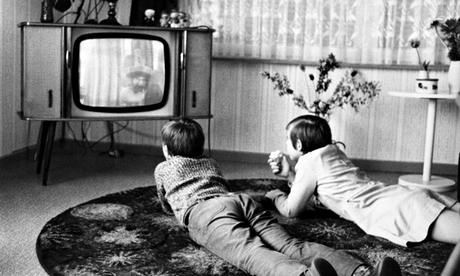
HONEY, THE KIDS ARE WATCHING THOSE CHARACTERS IN WASHINGTON AGAIN.
Let's start off the week at Television's New Frontier: The 1960s, with a look at The Jack Benny Programin 1962. The Benny show, in both its radio and TV incarnations, was frequently hilarious, in no small part because Jack Benny was a generous performer who felt it didn't matter whether or not he had the best lines, as long as they got a laugh. This is a very good glimpse at some of the show's great storylines and guests.
The comic strip Blondie not only spawned nearly 30 big-screen movies, but a couple of television series as well; while I recall the version from the late 1960s, I don't know that I've ever seen the 50s edition that starred Arthur Lake, who also played Dagwood in the movies, and Pamela Britton. Good thing Television Obscurities is around to rectify a gap in my education.
I only saw Alex Trebek in person once; it was at the Minnesota State Fair back in the 1990s, and he was at the KARE 11 booth (Channel 11 showed Jeopardy in the Twin Cities). When his segment was over, he didn't want to leave; he chose to stick around even after the show to make sure as many people as wanted autographs got them. I was always impressed with that, just as I'm impressed with Terence's write-up of the good man's career at A Shroud of Thoughts following his death this week after a long and courageous fight against cancer.
At Shadow & Substance, Paul has a plug for an appearance that he and Steven Jay Rubin had on Pop Culture Man Arlen Schumer's Night Light Radio, as they discussed TZ and how often its stories seem to serve as a reminder—or warning—for today's times. (For those of you who missed it, I wrote about one of those instances here.)
Speaking of audio, Ed Robertson's latest TV Confidential podcast has a conversation with Liliana Tandon, who wrote and starrs in the Christmas movie A Ring for Christmas, a new romantic comedy that also features Lorraine Bracco and Michael Gross. I had the immense pleasure of talking with Ed last week myself, and you can look for my appearance on TV Confidential in late November or December; stay tuned for all the details.
One of my favorite sayings is "Words Mean Things," which I suppose isn't surprising to hear coming from a writer, but it's true; when asked why he was fond of using polysyllabic words so often, William F. Buckley Jr. said, "Because they say what I wish to say." (Well, actually he said, "I Am Lapidary But Not Eristic.") Anyway, at Garroway at Large, Jodie discusses the power of words, and how they still can pack a punch.
No Hitchcock Project from Jack this week; it's an every-other-week feature. But not to say Hitch is gone completely, because at Classic Film & TV Café, Rick looks at the second season of Alfred Hitchcock Presents, currently streaming on Peacock (I wish they had more shows like that in their library, but they do have the Premier League, which is something), and highlights some of the best episodes.
Finally, and appropriately enough, we go to David at Comfort TV, where the topic is five classic shows with great final seasons. It's something that shouldn't be taken for granted, considerng how many series over the years have left with a whimper, not a bang. As for what those five shows are—well, you're just going to have to read it for yourself. TV
For the first Hitchcock Project of the year, Jack at bare-bones e-zine wraps up his overview of Bernard C. Schoenfeld's work with season five's "Hitch Hike" (which I haven't seen yet, so I'm not going to go to far with it). Schoenfeld strikes me as one of the program's best writers.
The Broadcast Archives at the University of Maryland shares a 1967 ad from Saginaw's WNEM thanking women viewers for making their movies and syndicated programs so successful. They call the ad "patronizing," and perhaps it is; or perhaps it's a fairly accurate assessment of the way things were then, as well as an example of how things have changed in the intervening 52 years.
We haven't heard from Amanda lately, but the "Queen of TV Movie Knowledge" is back at Made for TV Mayhem with this review of "The Scarecrow," which appeared on PBS's excellent Hollywood Television Theater back in 1972. A pity that even PBS doesn't have room for plays like this anymore.
At Bob Crane: Life & Legacy, Carol travels (visually) to Port Clinton, Ohio, home of the Liberty Aviation Museum, repository of the Hogan's Heroes uniforms and props, for a big band version of the "Hogan's Heroes March."
Jodie takes a look back at 2018 at Garroway at Large, along with an update on her Dave Garroway biography. I can't wait to read this; Jodie says she's beginning to understand Garroway, and that should be fascinating.
Martin Grams tells us how we can help save Popeye the Sailor. It has to do with Warners' release of volume four of the Popeye cartoons, which starts in on the 1940s. As seems to be the way of things nowadays, Warners says there will only be additional volumes released if the sales volume demands it. Popeye fans, you know what to do.
Take a listen to the latest edition of TV Confidential; film and television actor Kirk Bovill and television historian Steve Randisi will join Ed Robertson this weekend for a brand new edition , airing January 4-6. Follow the link to find out where and when you can listen.
And by the way, as I mentioned a couple of weeks ago, I'm on Twitter now, so be sure to follow me for treats not available on the website. Speaking of which, there'll be another TV Guide on the website tomorrow; come back then. TV