June 17, 2022

Around the dial


Xnly four this week, but it's quality, not quantity. Let's start off right, with the latest Hitchcock Project presentation by Jack at bare-bones e-zine. It's the fourth season episode "The Diamond Necklace," the last of Sarett Rudley's contributions to the show, and features wonderful performances by the great Claude Raines and Betsy von Furstenberg.

At Cult TV Blog, John continues his fascinating series on The Prisoner, viewed through the prism of Number 6 (Drake? Smith?) being in an asylum. The latest: "Do Not Forsake Me, Oh My Darling," which I've always enjoyed because the title leads you to think it's some kind of Western, and of course there is an episode of The Prisoner that's set as a Western, but this isn't it. Anyway, another thought-provoking writeup. 

At The Hits Just Keep On Comin', JB looks at an odd, sobering bit from the recent Kids in the Hall revival, with Dave Foley as a DJ who keeps broadcasting after the end of the world. It's a jumping-off point for a reflection on being behind the mic in times of stress, and what to do when the end comes. It reinforces the comments I made a couple of weeks ago in that RFK article, and just how intimate radio can be.

The blog Television Obscurities has been on the sidebar almost since the very start of this blog, and this week Robert celebrates 19 years of obscure television. The only further thing I could wish for is that he would blog more, but he took a well-earned step back a few years ago, and believe me, I can't blame him for that! TV  

June 15, 2022

What's old is new again

The other night we were watching a YouTube video of ABC's 1968 summer schedule, with the openings to all of their shows, and a programming grid at the end. You know the kind, right? We'd seen this one before, as we have with most of them; it's the type of video that's easy to have on in the background, without having to concentrate too much or take your eyes off what else you might be doing. Like having dessert, for instance, which just happens to be what we were doing at the time.

At some point in the proceedings, though, my wife turned to me and said, "Look at how many of these shows we've got. We've seen most of them!" I started thinking about that, not only the ones we've got on DVD, but those we've started watching on various YouTube channels. It occurs to me that the 1968 season must be close to the tipping point at which a majority of TV series still exist, either on DVD, the gray market, or through YouTube. It would certainly be a contender for the 1960s season having the most shows; the Golden Age of DVD releases was very kind to this era. (Going to all-color programming didn't hurt, either.)

I'm also intrigued by how many of those series are from ABC. I'm sure if we were looking at an NBC or CBS video, we'd find the same thing. But you wouldn't necessarily think that so many of these shows from the perennial third-place network still exist. Or maybe you would; someone—it might have been a comment someone left here—once mentioned that because ABC had nothing to lose, they took more chances creating new and different shows than did the other two networks. True, that includes shows like The Dating Game and The Newlywed Game, but as we all know, different does not necessarily equate to better.

At any rate, I've taken a screenshot of the schedule from the end of the video (don't worry; you'll get to see the video)—look at how many of these shows we could be watching right now:


In our own DVD collection, we've got The FBI, The Rat Patrol, N.Y.P.D., The Avengers, Man in a Suitcase, and The Guns of Will Sonnett. Voyage to the Bottom of the Sea, The Big Valley, It Takes a Thief, The Invaders, The Flying Nun, Bewitched, That Girl, and at least some of Peyton Place have gotten commercial releases. The complete (or nearly complete) Garrison's Gorillas, Judd, for the Defense and Felony Squad are on YouTube, along with nearly 150 episodes of The Lawrence Welk Show (plus those you can catch on PBS), at least 75 episodes of The Hollywood Palace, 16 (at least) out of 26 episodes of The Second Hundred Years, and a few from Cowboy in Africa, the Newlywed and Dating Games. You can even find an episode of Dream House! And I suspect many of the movies that aired on Sunday and Wednesday nights, as well as on Off to See the Wizard, are available. (We've watched nine of them on a regular basis.) 

All in all, I figure there are 17 series (out of 25, not including the movie shows) that are complete or nearly so, plus four that have a high number of episodes available. Only the three game shows and Cowboy in Africa are significantly less than complete. No matter how you look at it, that's a pretty high percentage, especially when you're talking about shows that were on 54 years ago. In fact, you've got an excellent chance of being able to reproduce any given week from this schedule in its entirety. That is impressive. And since 1968 is a year of particular interest for me, you can see why I appreciate this.

Here's the video in question; undoubtedly, I'll do the same with CBS and NBC someday.


TV  

June 13, 2022

What's on TV? Friday, June 18, 1965


You know that summer is on the way when you see notices for programs like Vacation Playhouse, which will be filling in for Gomer Pyle starting next week. Reruns dominate the rest of the night, except for that special on gambling that I mentioned on Friday. But I think the Minnesota Twins game on WTCN looks very attractive, especially since this is the year the Twins go to the World Series. At least that's what I was probably watching, since this TV Guide is from the Twin Cities.

June 11, 2022

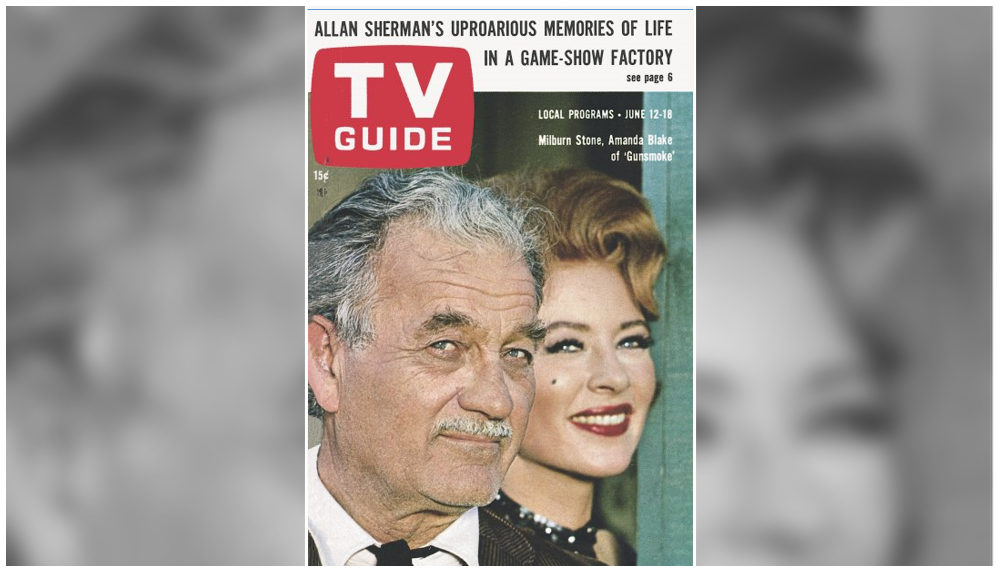
This week in TV Guide: June 12, 1965


I suppose I was about five, the year this issue came out, that I received a book from my mother. It was an illustrated version of "Hello Muddah, Hello Fadduh!", the hit song by comedian Allan Sherman. I loved both the song and the book, and for many years this was how I knew Sherman—this and the other novelty songs he did, many of which were pantomimed on the beloved Twin Cities children's show Lunch With Casey.

But I digress. As I say, it wasn't until much later that I found out Sherman was also a game-show empresario of sorts. As he describes this week in an excerpt from his autobiography, A Gift of Laughter (which might be worth tracking down some day), he and his partner, Howard Merrill, created the show I've Got a Secret, which they then sold to Goodson-Todman Productions for the princely sum of $1, with the proviso that if the show made it to air they would each receive a weekly royalty of $62.50, and Sherman was named Associate Producer, receiving an additional $125 a week. (A few years later, Sherman notes, Goodson-Todman sold I've Got a Secret to CBS for three million dollars.) 

Lest you think creating a game show concept is all fun and games, it was neither for Sherman; as he puts it, "After all those months of taking out the bugs, we had a regular insectarium on our hands." Sherman frankly admits that the first show was a disaster, and that the "secrets" that they created for celebrity guests were insipid. This came to a stop around the time that actor Monty Woolley's secret was disclosed to be that he slept with his beard under the covers. Asked by Henry Morgan whether this was really true, Woolley shouted, "Of course not, you bloody idiot. Some damn fool named Allan Sherman told me to say it." 

And then, there was the president of one of the sponsors, Prom Home Permanent, who kept meddling with the lineup of the panel. He was "violently" opposed to Laura Hobson, Nina Foch and Faye Emerson, because they all had straight hair. "His idea of the perfect panelist was Harpo Marx."

Sherman also tells of when Sir Edmund Hillary became the first man to reach the top of Mount Everest. Figuring he'd never have a better guest, he told his Production Assistant Adraia to get him on the phone." Where? she asked. "At the top of Mount Everest," he replied. "It had never occurred to me that there might not be a telephone booth at the top of Mount Everest." As it turned out, she was able to get through to the bottom of Mount Everest, where she was told Hillary was expected back in a month. "Too late!" Sherman shouted. Tell them we need him now!"

Frankly, I don't believe this story, or at least I suspect Sherman embellished it for effect, and that effect is very effective indeed. He goes on to share Mark Goodson's mania for memos (when Sherman complained that Goodson would "exhaust the world's supply of paper" if he didn't desist, Goodson replied by memo. Bill Todman wasn't any better; Sherman's request for a raise had to wait until Todman finished a call to Henry Ford to have a Lincoln Continental made to order; Todman then told Sherman that while he wouldn't give him a raise, he had something even better: a promotion from Associate Producer to Producer. 

Whether or not any of this actually happened doesn't really matter, though, because it's entertaining, and Allen Sherman is an entertainer. This book might be worth tracking down some day.In part two of this article, he promises to tell us of the day when he finally got a secretary, and he spent that weekend wondering if she'd be blonde, slinky, with a throaty voice and exotic perfumes. That is, until he got to the office on Monday and met his new secretary, Roger Peterson. 

l  l  l

During the 60s, the Ed Sullivan Show and The Hollywood Palace were the premiere variety shows on television. Whenever they appear in TV Guide together, we'll match them up and see who has the best lineup.

Sullivan:  Ed's live this week, with comedian Sid Caesar; comics Allen and Rossi; French pop singer Jean Paul Vignon; British rock 'n' roller Tom Jones; comic London Lee; singer Dee Dee Sharpe; the Seekers, folk singers; and the Wychwoods, an illusionist act which uses 14 trained poodles.

Palace:  We’re in the rerun zone at the Palace this week, with host Arthur Godfrey welcoming comedian Shelley Berman; songstress Dorothy Collins; singer John Gary; the comedy team of Gaylord and Holiday; Dwight Moore and His Mongrels; juggler Eva Vidos; and the Dalrays, comic acrobats.

Let's see: dog acts? Check. Comedians? Check. Comedy teams? Check. Singers? Check. Each show has ticked the boxes this week, which leaves us to look at the personalities.  Shelley Berman can be very funny, Dorothy Collins is easy on the eyes, and John Gary has a smooth voice. On the other hand, you have the Ceasar of comedians, and Tom Jones is still going strong! So it's not unusual for Sullivan to be the winner this week.

l  l  l
Throughout the 60s and early 70s, TV Guide's weekly reviews were written by the witty and acerbic Cleveland Amory. Whenever we get the chance, we'll look at Cleve's latest take on the shows of the era. 

This week, Cleveland Amory is conducting what we might think of as something of a self-review, in which he takes a look back at some of his reviews of the past season about which, in his words, he's had "second thoughts" For, as he says, "One cannot re-review the past season without coming to grips—and possibly even stagehands—with the show which, ratings or no ratings, has become the biggest thing since Amos 'n' Andy." 

That show would be Peyton Place, and while Cleve was taken to task by many over his favorable review of the program, there's no question that everyone was talking about it. He still has one criticism, though: the pace. "The show has an irritating habit of making a federal case out of every conversation. At the wedding, for example: Rod: 'Your mother looks—beautiful.' Allison: 'You were going to say "happy," weren't you? Why didn't you, Rod?' Rod: 'Why didn't I say "happy"? Why didn't I, Allison? I don't know.' Etc, etc." And speaking of Allison, "If she can't get another emotion—or even another boy friend—would it be too much to ask for her to get another speed?"

Amory also offers praise for the best performances of the year: Jim Nabors and Frank Sutton were standouts on Gomer Pyle, as were Elizabeth Montgomery and Dick York on Bewitched. He also mentions a "splendid quartet" in serious drama: Richard Crenna (Slattery's People), David Janssen (The Fugitive), Vic Morrow (Combat!), and Robert Lansing (Twelve O'clock High).  

In late night, Amory's discouraged by the failure of ABC's Nightlife, which he calls a "monument to futility," which started out with Les Crane, and adds that "even when they did finally come up with the right man, Dave Garroway, they didn't seem to know it." And he laments the absence of new faces in the news, with the exception of ABC's Peter Jennings, and the lack of commentary on network news (specifically citing NBC, but it could apply to all three). However, let us not end on a down note. There were three bits of good news: the real possibility of a fourth commercial network, the growth of educational television, and the best news of all: CBS has a new president. James Aubrey is dead, long live James Aubrey.

l  l  l

We're always looking for good, or interesting, programs during the summer rerun season, and we've got several this week.

Secret Agent is still in first-run on American television, and Saturday's episode is one of particular interest, especially for those who debate whether or not John Drake became Number Six. "Colony Three" (8:00 p.m., CBS) is, as one author put it, "a fascinating anticipation of The Prisoner." The premise: "Drake assumes a new identity and joins a group of defectors about to be transported to a training school for spies in Eastern Europe."

On Sunday, ABC presents the third installment in their Daring Americans series, "Assault on Le Mans" (6:30 p.m.), portraying American Grand Prix champion Phil Hill, one of the greatest racing drivers of the 1960s. Hill was the first American, and the only native-born one, to win the World Driving Championship. Now he's at the fabled Le Mans, a race he's won three times in the past. His teammate in the 24-hour race is Bruce McLaren, as they drive for the upstart American Ford team, taking on the legendary European powers, particularly Ferrari. Hill and McLaren don't win; as a matter of fact, they dropped out after 192 laps. But two years later, Ford would topple mighty Ferrari, the legendary Ford GT taking first, second and third. The documentary is done in cinéma vérité style by Robert Drew Associates, which famously did several similar documentaries on John F.Kennedy, including Primary.

As we move into reruns, Monday's Ben Casey (9:00 p.m., ABC) presents a story that, for all the complaints scriptwriters have about not being able to tell adult dramas, probably wouldn't have been told even five years ago. In "A Disease of the Heart Called Love," Shelley Winters plays a divorced, middle-aged nurse who becomes pregnant. She's also got a medical condition that makes her pregnancy dangerous. Casey and Zorba advise her to "terminate the pregnancy," but she wants to keep the baby. So this touches a number of buttons: unmarried mothers, abortion, the loneliness of the unmarried. They don't get much more adult than that. It's directed by Mark Rydell, and features Milt Kamen and, as Dr. Watson, James Doohan.

Tuesday features one of those how-many-times-has-this-happened-to-you moments on The Fugitive: (9:00 p.m., ABC): "When a philandering husband is found murdered, the chief suspect is his girl friend Lucey Russell. But Lucey has an alibi: she was with Kimble." I did a bit on this many years ago, where I looked at the typical tropes of typical series and wondered just how many times they actually happened to average people. This one is a little better, though, in that you don't have to be relyiI' ng on an escaped convicted murderer to provide your alibi; it could be someone cheating on their spouse, someone who called in sick to work, or any number of people who wind up in the wrong place at the wrong time doing something they shouldn't be doing. I think it's called karma.

I'm going off the primetime grid for Wednesday's choice: Stanley Kubrick's terrific noir The Killing (10:30 p.m., KMSP), with Sterling Hayden leading a gang planning a race-track robbery. The gang includes Vince Edwards, who was Ben Casey on Monday night; Elisha Cook, Jr. as a very nervous teller working for the gang on the inside; and Marie Windsor as the dame who does him wrong. Based on this movie, Kubrick and his producer, James Harris, got the chance to make a movie for MGM: Paths of Glory. That was a pretty fair movie, too.

Thursday's repeat episode of The Defenders is "Blacklisted" (9:00 p.m., CBS) with Jack Klugman starring as a formerly blacklisted actor whose comeback is being threatened by a "vigilante" group trying to get him fired. So we have Klugman, one of the most intense, scene-chewing actors around; we have McCarthyite villains in the "vigilantes" trying to prevent a decent man from earning a living; and we have The Defenders itself, one of the more strident, issues-oriented programs on the air.

I don't say that this wasn't a good episode; regardless of the show's political slant, The Defenders was one of the quality programs of the early 60s, a series that wasn't afraid to take on serious issues. It's their advocacy that often grinds on me. Likewise, Klugman's a man who's very good at intense but doesn't have any other speed, and I think it's a race to see who tires first: the actor or his audience. And we don't need to deny that there were misdeeds done during the blacklist to acknowledge that the anti-Communists make a juicy straw man target. But decide for yourself—you can see it here.

On Friday night, ABC turns its attention to gambling in another amusing documentary, as host Terry-Thomas takes a humorous look at "the urge to gamble" in Everybody's Got a System. (7:30 p.m.) The show visits horse racing tracks in Europe, talks to bettors and bookies to learn about the sport's attraction, visits a bingo parlor to see how even small-scale gambling can thrill, and visits the casinos, where Thomas explains his own "system" at the roulette wheel. It seems lightweight, but a fun show, not unlike something you might see on History or A&E today.

Also on Friday, Jack Paar's in London for this week's rerun (9:00 p.m., NBC), with a stellar cast of his own: the legendary Judy Garland, the very witty Robert Morley, and the distinguished journalist Randolph Churchill, son of the late Winston. I've seen clips of this on one of the Paar compilation videos, and it's very funny—particularly this bit where a slightly tipsy Judy has some fun at Marlene Dietrich's expense:


Oh, and she can still sing a bit, too.  Yesterday would have been her 100th birthday. What a sad, sad life she led.

l  l  l

Fashion alert: it's time for another starlet to display the latest in haute fashion.  This time it's actress Janet Margolin, who will go on to a successful career with appearances in media as varied as Woody Allen movies, a Ghostbusters sequel, and episodes of Columbo and Murder, She Wrote.  But never mind that—her mission this week is to show off the newest craze, the Finnish Marimekko, made famous by Jackie Kennedy.

SOURCE: HADLEY TV GUIDE COLLECTION

Janet Margolin died of cancer in 1993, not quite 30 years after this issue.

l  l  l

James Arness is so big (besides being 6'7", that is), he even dominates this week's profile of Milburn Stone, who plays Doc on the long-running Gunsmoke. Stone remembers the first few years working with Arness, and he wasn't impressed: "He'd be late or wouldn't show up—never apologize. And once he was there he'd clown around." When Stone couldn't take it any longer, he lit into Arness at a rehearsal, telling him that he didn't belong in the business, and added that "I've read my contract and there's nothing in it that says I have to put diapers on you or wait for you. And if you ever show up late again, buddy, you'll have two things to explain—not only where you were, but where I went!" To Stone's surprise, Arness took the tongue-lashing like a man, telling him that "You're absolutely right." "From that moment on," Stone says, Arness changed, becoming the consummate profession we've read about in TV Guide. "I began to love that guy. He's a great big wonderful cub bear."

I watched Gunsmoke when I was a kid, primarily because my grandfather did, and although I wouldn't rank it as a favorite it was a memorable show nonetheless. The byplay between the main characters—Matt, Doc, Festus and Kitty, and the obvious chemistry between the actors playing them—is the glue that held the show together, and watching it in reruns today confirms the quality of the program.

As for Stone, he's now making the circuit with Ken Curtis, the former Ripcord star who plays Festus, playing fairs, rodeos and horse shows. Of all the characters on Gunsmoke I think Doc and Festus were my two favorites. Seeing them appear together must have been quite an experience.

l  l  l

Finally, on this longer-than-usual entry, a brief mention of Edith Efron's profile of Gig Young. Young is an acclaimed stage and movie actor, and his career will end with three Oscar nominations (and one win) to his credit, but in this issue he's talking about his current series, The Rogues, in which he stars along with Charles Boyer and David Niven. I bring this up because this article, which I read some years ago now, was the first time I'd read about The Rogues, a series about a family of good-natured con artists making a living out of swindling people who deserve it. According to the reviews, there is a sense that The Rogues is too literate, too clever, for the average viewer who wants his television without having to think about it.

I first saw The Rogues a few years ago, when we first got MeTV, and I was absolutely charmed by it. It's a show that desperately deserves a commercial DVD release (although you can get copies if you know where to look); it's better than Leverage, more humorous than The A-Team, and not nearly as complicated as Mission: Impossible. And since it is a series, unlike The Sting, you get to see it every week. It should have run for more than one season, and if you ever get the chance you should give it a try. I will be surprised if my readers aren't as charmed by it as was I. TV  

June 10, 2022

Around the dial


It's kind of a light week in the blogosphere; I hope that means more people are out there enjoying themselves instead of sitting in front of a computer like I am. (And since I am, that means you're stuck with me.) But this does give me the opportunity to make an observation before we get to the rest of the week's news.

You'll recall that on Wednesday, I reprinted a story from a few years ago looking at radio and television coverage of the assassination and funeral of Robert F. Kennedy. It was, I thought, a measured story, and with the exception of a mention that one didn't have to agree with Kennedy to appreciate the tragic nature of his death, a story that was totally apolitical. There was, in fact, a wealth of information about how radio and television networks reacted to the event (even though Mike Doran didn't agree with Broadcasting magazine's description of The Flying Nun episode*)enough that nobody could possibly have disagreed with its inclusion on a television website. 

*Just kidding, Mike. We kid because we care.

I was, therefore, dismayed to see some of the comments that were directed at the story in one of the classic television Facebook groups to which I belong. (I won't share the name because I don't want to cast aspersions on the mostly serious people who contribute to it.) The comments weren't directed at me, so I've no personal bone to pick.

No, what bothered me was that the conversation immediately turned to who was responsible for Kennedy's death, and whether or not it was part of a conspiracy. "J. Edgar Hoover," one person suggested. His assertion was challenged by someone else. A third commentor piped in with "Mr. Green Jeans," the name of one of Captain Kangaroo's friends. 

For some reason, I had a flash of true anger reading this, and I'm a man who doesn't get that angry that often anymore. I replied to one and all that I didn't want to regret having posted the story, but unless they stuck to the topic of the broadcast coverage—which was, after all, what the group was about in the first place—I wouldn't blame the administrator for pulling it. Not only that, there was something so—so juvenile about it all. I swear, these people were like the kids you went to school with who would titter when someone mentioned the word "breast" or "intercourse" or any other word subject to a double entendre. The comments could have come straight from an episode of Bevis and Butthead. They're why we can't have nice things.

There were, fortunately, more comments that were of a serious bent, many from people who remembered the pain themselves; one had seen Kennedy speak during the campaign with her now-husband. 

There have been very few moments on this website when we've had bad comments, and most of those I've deleted. (Including spam, although I may have missed a chance at $14 million dollars, I'm not sure.) I haven't had to do it much, though, because the comments we get here are of a uniformly high quality, knowledgeable in the extreme, educational, thoughtful, and funny. I couldn't ask for a better readership. A bigger one, perhaps, but not a better one. Perhaps I don't mention that often enough; perhaps it takes the bad apple to remind one that the rest of the crop is pretty good.

And now to our regular programming.

You all know them. In fact, I may be one of them. They're the most annoying people on television, the most demanding, the most energetic—whatever, they're the people that are only tolerable on television, and David has them at Comfort TV.

Ah, "The General." The episode of The Prisoner I've been meaning to write about for months, and still haven't gotten around to. But don't wait for me: it's the latest episode that gets John's thoughtful Prisoner in the Asylum treatment at Cult TV Blog. And yes, when we get this back on the schedule, John, I'll share my thoughts. Need to get through Danger Man again first. 

At Classic Film & TV Cafe, Rick looks at In Like Flint, the sequel to James Coburn's Our Man Flint, which puts Coburn squarely in the race for the coolest secret agent around. We've got both of those movies in our collection, and the hotline sound is the ringtone on my phone. Call me sometime and I'll show you.

Linda Lawson, who appeared in many the television episode in the 1950s and '60s, and made a comeback in the '90s, died last month, aged 86. Her career receives a proper remembrance by Terence at A Shroud of Thoughts.

Tomorrow would have been Judy Garland's 100th birthday, and as a fellow native of Minnesota, I think it's well worth commemorating, as Aurora does at Once Upon a Screen. Can you think of many other stars as big as she was, who have been dead for as long as she has, who are just now reaching 100? TV