March 16, 2022

A wilted rose by any other name is still Hell

Fernando Blanco Farias


First, let me explain.

I don’t actually watch The Bachelor (or The Bachelorette), and I’m pretty sure I'm not going to start—sure in that “Even with the possibility of nuclear war looming, I’m pretty sure the sun will rise tomorrow” sense of the word. 

This isn't the first time I've written about the show, though. I write about it because sometimes I get bored; and when I get bored, I read; and when I read I often go to sites that I like and writers that I enjoy, and read about things that I ordinarily might not have any interest in, just because. And so that’s a long way of going about explaining how I've been happening to read Rodger Sherman’s Bachelor episode reviews in The Ringer.

ABC
Writing about this is also a good way of segueing from last week’s column about being a stranger in a strange land, because after reading about the people who populate the world of The Bachelor, I realize that I’d feel more extinct in that environment than the dodo bird would in ours. More than that, in fact, because the dodo actually existed in the real world at one time, whereas I’m pretty confident that no normal person has ever existed in the ecosystem of The Bachelor.

Anyway, catching up on the lead-in to this season's thrilling finale, it's apparent that, even for the weird world of this show, this season's bachelor, Clayton, has committed a breach of protocol. Several, in fact, as we discover Clayton has told not one, not two, but three different women that he was wildly, madly in love with them. Oh, and he's also slept with two of them. (Well, I doubt there was any actual sleeping going on, but I'm still old fashioned about these things.) He made this revelation to the only woman he loved that he didn't sleep with, which may have been a tactical error on his part. 

Upon hearing the news, Susie—the one whom he says he loves "the most"—rips into him and tells him she doesn't want anything to do with him if he's been sleeping around. Clayton, mature fellow that he is, doesn't apologize, doesn't backtrack, doesn't try to explain that he's made a mistake. No, he blames Susie for his problems. It's not like he was just being a male slut; "I was having feelings of love with this person, and I slept with them because I love this person so I’m gonna see how the physical connection is." And her response hurt his feelings, so he doesn't love her anymore. 

It took me a while to finish that last paragraph, by the way; I had to go to the bathroom. I think you know what I mean.

Sherman sums up the whole situation thusly:

[Clayton] still shouldn’t have told three women that he loved them, especially in a way that made it seem like he was saying those things to only one person. And if he really loved Susie the most, he shouldn’t have had all that sex with everybody else. Meanwhile, Susie shouldn’t have issued a retroactive ultimatum on something she knew Clayton would likely do. She went on the 'have sex with multiple people' TV show and drew a secret line in the sand about whether it was OK to have sex with multiple people. Clayton is playing by Bachelor rules, while Susie is playing by the rules of real life. Both sets of actions are obviously flawed when you look at it through the other’s lens.

Bingo! This is not real life. Oh, it may be the way people behave, but it's not real life. It's a pretend world, one in which words don't mean things, actions don't have consequences, and nothing is more important than what's happening this very instant. This kind of world sounds kind of grotesque to me. 

There's a wonderful moment which Sherman recounts, when Clayton is trying to explain to his parents how something like this could happen: how he could tell three women that he loved them, sleep with two of them and insult the other one, and then decide the woman he really loves is not one of the two who decided to stick with him even though he's clearly an idiot, but the one—Susie—who actually took a hike. When Clayton tries to explain to his mother that Susie actually does like him, because "she could’ve walked away at any moment," mom replies, "She did! She did walk out!" Did I mention that this isn't real life? 

l  l  l

Bishop Fulton Sheen, in one of his television programs, said that there are three kinds of love, and used their Greek words to describe them, because there was no English word that could really measure the difference between them. The first is eros, or affectionate love, which I assume is what Clayton was thinking of in the case of these three ladies, since eros is where we get the word erotic. Then, there's philia, which is love for others made in the likeness of God. Brotherly love, as the name Philadelphia might indicate. The third is agape, or sacrificial, divine love of God for man. Pure love.

So, as I say, I think we can assume that when Clayton says he loves these women, he's talking about eros. There's an easy way to tell, though. Just because we have three distinct kinds of love doesn't mean that they don't overlap, though. One can love their spouse (eros), and because of that they're willing to sacrifice their lives for them (agape). One can love their country, and because of that they're willing to sacrifice their lives for their fellow countrymen (philia). 
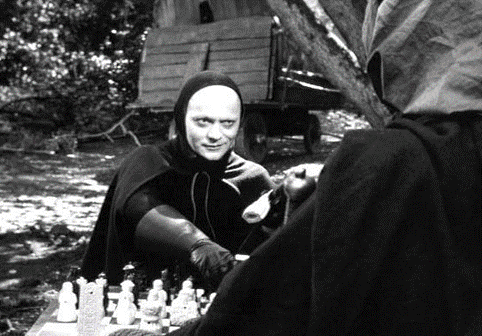
So, we could have asked Clayton if screaming “I’M IN LOVE WITH YOU!!!” at the top of his lungs to each of these women means that, at this very moment, he's willing to lay down his life for them. And I'm not talking about dying in the act of saving one of them from being attacked; any of us might do that, even if the person for whom we're dying is a stranger. No, I'm thinking of that white-faced, dark-clothed Death that played chess with Max Von Sydow in The Seventh Seal. Would Clayton have played chess with Death, knowing that if he loses the game, he dies? No more parties, no more high-fives with his fellow bros, no more falling in love with the next pretty face—no, it's finito for you, pal! Somehow, I don't think his answer would have been in the affirmative.

Of course, you've probably figured out by now that love has nothing to do with what Clayton's experiencing. At best, what he feels for these women is infatuation. Almost certainly, we're talking about lust. But to call it love, at this point, simply cheapens the word. That's not to say that it can't grow into love, but not in the length of time it takes between scoring with a woman and getting out of the bed. That may sound crude and cheap, but it's only because it is.

It also cheapens the meaning of being human, because it reduces us to animals, incapable of controlling our emotions. Man (and woman) may act in superficial ways, but we certainly aren't created that way, and when we fall to that level, we disgrace ourselves, and become a disgrace in the eyes of others.

Susie, the one woman with whom Clayton didn't sleep (and, SPOILER ALERT, the one he winds up choosing; so much for taking a principled stand), more or less admitted that, while sex is famously a part of The Bachelor, and while we can all pretend that it's painless fun for everyone, in real life, when it happens to you, things change.

I wonder how long this relationship lasts? It was revealed, in last night's live broadcast, that Clayton had chosen Susie (thereby breaking the heats of the two women he'd slept with who had, perhaps against their better judgment, chosen to remain in the competition for Clayton's "love"), so I suspect they're still together today, although given the world of The Bachelor, anything's possible. But will their love withstand it all? Will they make it to the altar, and if so, will their vows include anything about "for better, for worse, for richer, for poorer, in sickness or in health," vows that date back at least to the 1300s, by the way, or will it be more like, "So long screwy, see ya in St. Looie"?
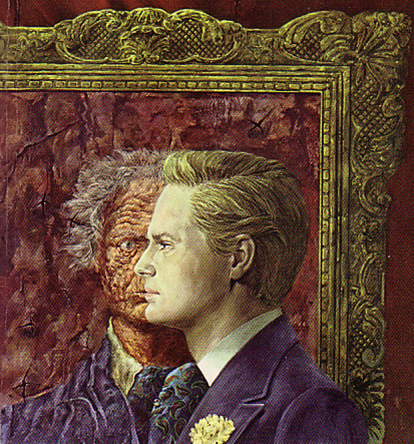
You can say what you want about television from the 1950s, that it was unrealistic, that it painted an idealistic portrait of America and of family life. But, as I've said before, it was also a recognizable portrait, one that others could understand and aspire to, even if they never made it themselves. If it wasn't the most illuminating programming, if it wasn't the most dramatic or the most educational or the most realistic, at least it followed the Hippocratic Oath: "Do no harm." Can we say the same about this? You may scoff at Norman Rockwell's America, but it's a hell of a lot better than finding yourself the subject of a Dorian Gray portrait.

I know, I know, this is the way things are now, and I might as well tell the kids to get off the lawn right now. But, dammit, there is something seriously wrong with this kind of lifestyle, and there is something even worse about splashing it across television where anyone can see it. Look, we know that people are influenced by what they see on the tube, or else no company would bother to advertise on it. We know that television sets trends, and we know that the more people see a particular kind of behavior on it, the more likely they are to find that behavior acceptable, even if they choose not to engage in it themselves. Well, it's not, and even if everyone else told me that it was, I'd still say that. (Mom to child: "And I suppose if everyone jumped off the Empire State Building, you would too.") 

There's not much more to say, really. Except to throw another quote out there, not from The Bachelor, but from Thomas Jefferson, who famously said, "I tremble for my country when I reflect that God is just: that his justice cannot sleep forever." No, indeed it can't. He may just be dozing right now, in which case we truly have something to fear when He awakens completely. TV  

March 14, 2022

What's on TV? Wednesday, March 16, 1955


Xome familiar names greet us in these listings from what's called the Mid-States Edition, comprising Iowa and Illinois, and including a pair of DuMont affiliates. For starters, Jack Paar's name jumps out, still hosting the CBS Morning Show. At the other end of the scale, Steve Allen's still on duty at Tonight. Eddie Fisher's guest on his NBC show is singer Morton Downey Sr., whose son Morton Jr. becomes a sensation some 30 years later. And Henry Morgan makes a rare acting appearance in the movie comedy So This Is New York on WREX's Million Dollar Movie. But for my money, the best program description in this issue—perhaps the best description you'll ever read in any TV Guide—comes from KCRG's Wrestling from Chicago: "Favorite grunt-and-groaners in action." I didn't realize the Playboy Channel was around in 1955.

March 12, 2022

This week in TV Guide: March 12, 1955


As you know, Sunday has long been considered the graveyard of cultural programming, a time when the networks could prove their commitment to the edification of their viewing public by airing shows that appealed to our better nature. By airing such programming, the suits were able to accomplish two objectives:
  1. Satisfy the Federal Communications Commission that they were, in fact, fulfilling their obligations to serve the public interest, and thereby removing any obstacle to having their license renewed; and
  2. Stick low-rated programs in a timeslot where they couldn't damage the ratings for the rest of their shows.
I realize that this observation may strike you as somewhat cynical, but anyone who spends much time with the history of television learns to be that way. And this week we see that such an attitude dates all the way back to 1955, less than a decade into the history of American television.

At last count, according to the unbylined article, there were fifteen—count 'em, fifteen—such shows on Sundays, covering a wide variety of "thought-provoking" shows, from Hallmark Hall of Fame to Meet the Press to Zoo Parade.* The networks say, wide-eyed and sincerely, that it's because Sunday is "family day," but we know better, don't we? As the author points out, many of these programs are aired without sponsors, Sundays being replete with unsold ad time. "So rather than permit their local affiliate stations to fill the day with old movies, the networks are using it to carry out their public service commitments."

*I told you it was a wide variety.

Not that kind of culture!
An anonymous network vice president doesn't deny the claim, but adds that the networks are actually doing such shows a favor. On other days of the week, he points out, people are looking for entertainment, not culture. "By being scheduled on Sunday, these shows don't face the competition of the big, popular entertainment programs." 

It's not just plays (Omnibus) and operas (NBC Opera Theatre) that we're talking about; besides news programs like Meet the Press, NBC has Youth Wants to Know, which "brings students and government officials face to face"; meanwhile, CBS offers Face the Nation, You Are There and The American Week, For those of an artistic bent, ABC has the art and literature program Key to the Ages, and Dr. Frank Baxter's literature program Now and Then airs on CBS. Zoo Parade, Marlin Perkins' precursor to Wild Kingdom, is an NBC perennial, Horizons, CBS explores the world of natural history with Adventure, and ABC's medical program, actually airs on Sunday night.

Throughout the 1960s, this kind of programming remains a staple of Sundays, from G-E College Bowl to Science All-Stars to Johns Hopkins Science Review. (Science programs were a big deal during the space race.) Today, Sundays are almost exclusively dedicated to sports, infomercials, and the odd syndicated program or reality series. Things have certainly changed, but even if we didn't watch the cultural fare being offered, can we honestly say that television is better off without it?

l  l  l

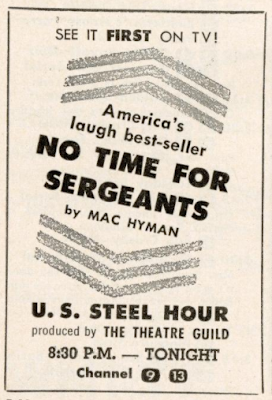
It isn't often that we get to look at a program that would become a defining moment in television history, but here we are. It's Tuesday night's United States Steel Hour broadcast of "No Time for Sergeants" (8:30 p.m. CT, ABC), written by Ira Levin, based on the novel by Mac Hyman. And the significance lies in its star, Andy Griffith.

Griffith is far from an unknown at this point; his comedy monologue "What it Was, Was Football" had gone to #1 just the previous year, back in the days when comedy records were big stuff, and Griffith had done the routine on Ed Sullivan's Toast of the Town show. He didn't, however, have a reputation as an actor, until he was cast as airman Will Stockdale, a bumpkin who drives his commanding officer, Sergeant King, crazy

The broadcast is a smash, and Griffith becomes synonymous with the role. As was frequently the case in the early days of television, the script is expanded and turned into first a Broadway play and then a big-screen movie, both of which star Griffith.* He garners a Tony nomination for the play, and by the time he does the movie version in 1958, he's coming off an unforgettable performance in A Face in the Crowd. Fast forward to 1960, when he appears in an episode of Make Room for Daddy as the sheriff of a small southern town who nabs Danny Thomas for driving through a stop sign. 

*Also appearing in the Broadway and film productions: Don Knotts, starting a lifelong relationship with Griffith.

The name of Griffith's character in that episode is Andy Taylor. And you don't need Paul Harvey to know the rest of that story.

l  l  l

We've read about Max Liebman's monthly Saturday night color spectaculars on NBC, and this month's is certainly spectacular enough: the musical comedy "A Connecticut Yankee" (8:00 p.m.), written by Richard Rodgers and Lorenz Hart and based on the Mark Twain story, with Eddie Albert, Janet Blair, and Gale Sherwood, and an appearance by Boris Karloff as King Arthur. 

You may remember a few weeks ago our discussion about ice shows on TV. (After all, we have nothing better to do.) Well, we're back at it this Sunday, as Ed Sullivan takes Toast of the Town on the road to the great Chicago Stadium for a performance by the Ice Capades and its star, Donna Atwood. (7:00 p.m., CBS) Accompanying Ed is Dublin's Irish Festival Singers, Victor Borge, Teresa Brewer, juggler Rudy Horn, and child acrobats Vernon & Bumpy. Meanwhile, over at NBC, it's Sullivan's great rival, The Colgate Comedy Hour, with Abbott and Costello making their first hosting appearance of the season, welcoming guests Gordon MacRae, Debra Paget, and Bobo Olson, the world middleweight boxing champion. Not to turn this into a Sullivan vs. The Palace, but which show do you favor? 

Here's something you don't often have: a soap opera changing its name without changing the cast or the premise. Portia Faces Life began (as so many soap operas did) on radio, in this case in 1940, and shuttled between CBS and NBC until 1953; the following year it made the move to television, debuting on CBS in April of 1954. Monday sees it come back from the weekend break as The Inner Flame (noon, CBS), while keeping everything else the same. It doesn't do much good; the show will go offer the air on July 1. I wonder what the motive was for the name change? Perhaps they were afraid it sounded too much like a sitcom, like My Little Margie, rather than a soap opera? When primetime comes around, don't miss the famous gossip columnist Hedda Hopper guesting on I Love Lucy (8:00 p.m., CBS)

Tuesday
's highlight comes after primetime on Tonight (11:00 p.m., NBC), as Steve Allen honors the famous photographer Edward Steichen, who curated the landmark photographic exhibition "The Family of Man" at the Museum of Modern Art in New York. (Steichen, one of the most influential photographers of the 20th Century, is, according to the always-reliable Wikipedia, credited with "transforming photography into an art form"; the great Stieglitz called him "the greatest photographer that ever lived." 

Big doings on Wednesday's episode of Howdy Doody (4:30 p.m., NBC): the mysterious "Mr. Nick" turns out to be the mayor of Clarabell the Clown's hometown of Clowntown.* Behind the scenes, Lou Anderson takes over the role of Clarabell from Bob Nicholson, who is now playing Mr. Nick. (I wonder what that was all about?) Anderson is the third and final actor to play the famous mute clown; the originator of the role, as many of you will probably know, was Bob Keeshan. 

*I didn't know Clarabell was from Washington, D.C., did you?

It's a rare color broadcast on CBS Thursday night, as Shower of Stars (7:30 p.m.) presents a musical version of the Broadway hit "Burlesque," starring Dan Dailey, Marilyn Maxwell, Joan Blondell, Jack Oakie and James Gleason. All that in just an hour. The second half of Shower has to contend with Dragnet (8:00 p.m., NBC), as Friday and Smith contend with an uncooperative husband whose wife has been kidnapped. My bet is that they'll talk him into letting them investigate the case—unless, of course, he knows what happened to her. . . (I've seen the episode, but I'm not telling.) 

Schlitz Playhouse of Stars (Friday, 8:00 p.m., CBS) may have a similar title to Shower of Stars but quite a different kind of story; John Ireland stars as "a fast man with a gun who likes to right wrongs without troubling with legal processes" in "Ride to the West." Sounds like my kind of guy, doesn't he? Later on CBS, Ed Murrow's Person to Person (9:30 p.m.) spends the half-hour with hotel magnate Conrad Hilton and comedian Red Buttons.

l  l  l

Not related

l  l  l

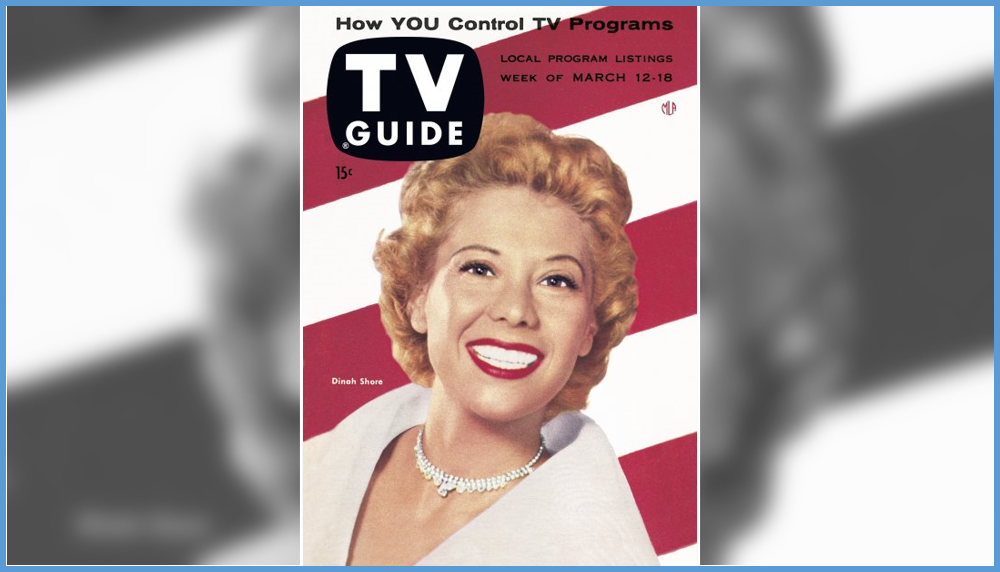
On the cover this week is the lovely Dinah Shore, one of television's most durable stars, a fixture on the small screen from 1951 to 1992. In 1955 she's spending 30 minutes a week on NBC, with her 15-minute program airing twice-weekly (Tuesdays and Thursdays, right before News Caravan); she's also headed out on tour with her supper club act, accompanied by husband George Montgomery and her 6½ year-old daughter Missy. You can see her at right during her successful gig at the Waldorf-Astoria in New York City.

In October, 1956, she'll graduate to a full-hour variety show (The Dinah Shore Chevy Show), which remains on the air until 1963. One of the more famous cultural touchstones of this time is the Chevy theme song, which Dinah would sing in every episode. ("See the U.S.A./in your Chevrolet.") Dinah wasn't the first celebrity to sing that jingle, though; it originated with Peter Lind Hayes and Mary Healy, who were hosting a show called Inside U.S.A. With Chevrolet (which is an interesting story in and of itself, perhaps for another day). By 1952, though, our girl Dinah was belting it out, as she would for another decade. If they hadn't composed that, though, they could always have used one of Dinah's own hits: "Nothing could be finer/than to drive around with Dinah/in your Chev-ro-let." Or maybe not. TV  

March 11, 2022

Around the dial


Xefore we get to our regular Friday fare, some housekeeping:

It's time once again for my occasionally somewhat annual call for guest writers. In the past I've had various excuses—I mean, reasons—for doing so, but this time I'm not working on a book, I'm not moving, I'm not poor, I'm just tired. Over the past almost eleven years, I've written more than 1,900 original pieces for It's About TV!, not to mention some original essays for The Electronic Mirror, and it's not as easy as it was when I was younger.

So if you have an idea for an essay, or if you'd like to do one of the Saturday TV Guide riffs (and the Monday listings), send me an email. If you've read the blog, you know the routine: anything that's related to classic television specifically, or the relationship between TV (classic or otherwise) and American culture, is welcome. I'll never monetize this site (other than to sell books), but I will welcome contributions of the writing sort.

We now return to our regularly scheduled programming, with the third of Jack's Hitchcock Project reviews of the work of Lewis Davidson at bare•bones e-zine. It's his adaptation of Larry M. Harris's story "The World's Oldest Motive," with Henry Jones, Linda Lawson, and Robert Loggia; and directed by Harry Morgan!

At Cult TV Blog, John continues his look at orphaned TV shows with It's a Square World, Michael Bentine's off-kilter comedy show from 1960-64. Bentine was one of the original founders of The Goon Show, and Square World is about as off-the-wall as you'd expect.

Tim Considine, who was one of the original My Three Sons, as well as a star of Mickey Mouse Club serials and Disney movies (and was also a photographer and writer) died last week, aged 81. As usual, he gets a respectful writeup from Terence at A Shroud of Thoughts.

I'm a sucker for mid-century stuff, being a little past mid-century myself, and so JB's piece at The Hits Just Keep on Comin' naturally appeals to me: Dean Martin, the pop star. Deano really centers a place and time, doesn't he? (And by the way, much appreciated thanks to JB for the kind words!)

I don't single out video sites as much as I ought to—my focus is on the written word, but my great pleasure derives, of course, from television. And so I want to call to your attention the site Uncle Earl's Classic Television Channel, which has added a lot of new content—more episodes of many of your favorite shows, some mid-centuryish, and some from more recent times. It's really worth your time!

Something else that's worth your time: the latest at Ed Robertson's TV Confidential. I hope you keep track of this podcast on a regular basis, because Ed never has a bad show or a bad guest (except, perhaps for the cast in which I was a guest). Try out his interview with Chuck Harter on why The Untouchables is still riveting today. Because, you know, it is. TV  

March 9, 2022

Stranger in a strange land


This is a piece I first wrote about five years ago, and I think it's as relevant today as it was back then—maybe even more so, I don't know. It captures a certain feeling, a mood that's symbolic of this age we've entered. Not the Twilight Zone, but another kind of twilight—the twilight of an era, maybe the twilight of everything. Again, I don't know. Even with the respite we've gotten after moving out of Minnesota, I still can't shake the feeling that life today is like being surrounded by the enemy. 

l  l  l

Stranger in a Strange Land? Or is it The Man Who Fell to Earth? Either science fiction analogy is OK, I guess, because the world we live in today is more like science fiction than anything else. The question is what people from the ‘50s and ‘60s would think of television today, if they hadn’t been exposed to the cultural evolution that some of us have gone through. You find this in reverse many times when trying to explain the appeal of classic television to those who are either too young to remember it, or too lacking in an appreciation of history to care about it. I’ve been told of many young people (and some not so young) who won’t even consider watching a black-and-white TV show or movie, which I think is ridiculous since all you’re really doing is arbitrarily depriving yourself of something you might otherwise enjoy based solely on your lack of imagination in being unable to appreciate anything that doesn’t spell it out for you right there.*

*On the other hand, I saw an article today that says today's kids, weaned on Netflix and the like, don't know what commercials are. On balance, that's probably a good thing, although try explaining those DVD sets of classic commercials to them.

I was prompted to this thought by reading a discussion at Home Theater Forum, one that unfortunately got a bit testy toward the end, as such discussions tend to do. The topic had morphed into comparing classic television with current television, whether or not wholesomeness was an adequate substitute for gritty realism, how one defined “realism,” what the purpose of television was in the first place, and other existential questions. Experience has taught me not to get in the middle of these kinds of discussions – well, that, and the fact that I’ve got my own blog where I get to control the conversation myself.

Anyway, people who have no particular appreciation of cultural history often find it impossible to understand what things were like in the ‘50s and ‘60s (or even the ‘70s and ‘80s, if we’re being honest), prompting them to declare anything from that time period “unrealistic” because it doesn’t match up to their contemporary expectations. (People like me who express pleasure in classic television are often accused of "living in the past," or "denying progress.") Given a nuclear family, children who aren’t juvenile delinquents, couples who don’t sleep together prior to marriage, women who don’t work outside the house, and any number of by-products of another era (comments that appear to be sexist, racist, or otherwise offensive), and for these people it simply doesn’t compute; hence, it has to be something totally idealized, which is another way of dismissing “things that never were the way they’ve been portrayed.”

This is a subtle point, which is why it’s not a good idea to dismiss it with such a simplified, off-hand solution. It is true that most portrayals of a given period in time are, to some extent, idealized. Even documentarians do this in order to substantiate a narrative they’re trying to present. We shouldn’t expect total realism from anything; even a photograph or a home movie can’t capture everything that went into creating a particular moment. Given that total realism is, therefore, impossible, the best you can do is present something that is recognizable to viewers – or maybe I should say plausible. It’s true that series like Leave it to Beaver probably fell on the “idealized” side of the line, but not to the extent that the people who watched it couldn’t understand what it represented.

The complaint many people have about contemporary television is that, as one HTF commentor put it, "the characters [on classic TV shows] seem to be relatable human beings. I stopped watching present-day 'entertainment' years ago, but when I see segments of it I feel as if I must live in a different Universe." The stranger in a strange land, indeed.  Flip to any given series, and you'll find a world in which your next door neighbor might be a meth dealer, the couple down the street might be a threesome, or undercover Communist agents (or both), everyone’s a quirkbot and every single life seems to have been ripped from the pages of a soap opera script, religion is barely mentioned (and when it is, it's usually disparaged) and the default setting is not good humor and hopefulness, but cynicism and world-weariness. It's as if, when we decided to get rid of Frank Capra and his "Capra-corn," we replaced him with Albert Camus. There’s a certain sort of realism here as well, in that these things do happen, but I’m willing to bet that if you dropped most people into the middle of a neighborhood like this, they wouldn’t recognize it.

Contrast that with the average viewer's reaction to a series from the classic era. Whether or not your family was like the Cleavers, for example, they weren’t far off from what how many families lived. Their values were similar, their families seemed a lot like the ones you knew in the neighborhood. Except, maybe, for the couple who lived down the block, the one where he’s always getting drunk and shouting about something, and she goes running from the house, crying, only to come back in a day or two. They didn’t show people like them, at least not on sitcoms, but then that was the point, wasn’t it? They weren’t funny, and they weren’t entertaining, and that wasn’t what Leave it to Beaver was all about. My point is that nobody living in the same time period as the Cleavers would have looked at them as if they were out of place, people from another neighborhood, anything like that. They were like you and me, if perhaps a little more perfect than we were. And, lest you forget what you were watching, the commercials would remind you that this was a television show you were watching, not real life.

Back then, married couples on television didn't even sleep in the same bed together. Now, you've got plenty of couples knoodling between the sheets - and not all of them are married, nor are all of them even members of the opposite sex. The cops aren't always the good guys, and many cable series (cable? What's that?) center around something called an "anti-hero." And try explaining to someone who watched I Led Three Lives and The FBI how you could create a series around a couple of Soviet spies, let alone calling that series The Americans. If many of those earlier shows were like a steady diet of sugary cereal, today's series often require a prescription for Prozac.

In a way this is so similar to how the elitists of Establishment America have, for so long, misunderstood the rest of the country, its values and its way of life. As the last presidential election demonstrated, there’s a wide gap out there between the world of the elitists and the world of everyone else, and considering how most people in the entertainment industry come from that world of elitists, I don’t suppose we should be surprised. After all, everyone writes about what they know about.

This segues us, ever so gently, into the eternal question of television’s version of the chicken and the egg. Does television determine cultural mores, or does it simply reflect them? My own opinion, for what it’s worth, has always been that television is a follower, not a leader – BUT it’s also a persuader, a facilitator, an enabler, a whisperer. Immerse yourself in the world of television, and then try to resist the temptations that these shows offer, the way they gradually – over a period of months or years – lure you into their way of thinking. Many people advocate a withdrawal from popular and social media - including television and movies - in order to recapture and reinvest in their faith. Others insist that Christians must engage with popular media and the arts if they hope to change the culture. I don't know who's right; either way, it speaks to the power of television to shape minds and attitudes.

I could go on, and someday will, because I'm as guilty of simplification as anyone. The point, however, remains the same. While there are some outstanding programs on television today, many of them relate to a recognizable world, one not so different from our own. There is something fundamentally different about classic television, about how it develops organically from the culture which it reflects. That's something I can't say about most of today's programs. They present a world that, for the most part, is far different from the one which I inhabit - darker, cruder, rougher, more nihilistic. It's not the world I want to live in. To paraphrase Dominick Dunne's wonderful book about the O.J. Simpson trial, it's another country, not my own. Perhaps that's the best analogy of them all. TV