


The author is Louis Kronenberger, Professor of Theatre Arts at Brandeis, author of novels and essays, and former drama critic for Time magazine. This must be understood, Kronenberger says at the outset: "[T]elevision is not just a great new force in modern life, but that it virtually is modern life. What, one might ask, doesn't it do?" It is, he concludes, "a truly stupendous addition to American life—our supreme cultural opportunity." It is, as well, "a supreme cultural commodity," a case of Big Business operating in tandem with Bigger Business. "Business calls—or cuts short, or calls off—the tune." And because of this, nothing else about television and its potential matters; "it makes any other fact about TV and its effect upon our civilization ultimately subsidiary and expendable."
Kronenberger compares television to the menu of a vast banquet; a fair amount on the menu is "unexceptionable" while a good deal more is "harmless entertainment." Some is even very good, but much else is not good, and even more is "truly dreadful." In offering this argument, though, Kronenberger goes beyond the artistic merits of the program itself, whether it is "good" or "bad" in conventional terms. Instead, he refers to the effect that such programs have on the audience. Not only does it pander to the lowest common denominator, it does so in the hopes of keeping that denominator low - hence, making it easier to keep the audience entertained, and available for the messages of its advertisers.
More than that, however, is the corrosive effect the programming has on the, for lack of a better word, dignity of the individual watching it. Take the Quiz Show Scandal, for example: the technical crime, as Kronenberger puts it, was that the shows were being rigged, the immorality being that the networks should and probably did know about it. "But what was really degrading, indecent, uncivilizing was that, rigged or not, the quizzes pandered to the venality of a whole nation, had multitudes glued to their televisions not at all for the fun of the game, but for the size of the stakes. Knowledge had become the grossest, the most uncultural, of commodities." To despoil the purity of knowledge, to turn it into a tool for making ever larger sums of money—aye, there's the rub.
It's not just this, of course—the corruption extends to violence, to "cheap gags and gossipy wisecracks," to an invasion of privacy—"not just in terms of outright gossip, but in the way of candid 'discussion,' or psychiatric 'discovery,' or photographs of the sick, the unhappy, the doomed?" In other words, the kind of exploitation found in everything from the early pity-party Strike it Rich to today's reality television. (Or, as I put it some time ago, trafficking in human misery.) The ratings system encourages "not merit but mass popularity"; by basing the value (and therefore continued existence) of programs on ratings, "it turns any illiterate into a critic; an entrepreneur into a craven; a defeated contestant into a criminal."
And it all surrounds money, money, money, making the offscreen antics just as craven, just as uncivilized, as what happens on the tube: "TV doesn't even wash its dirty linen in public; it merely waves it." The Great Networks are assisted by the Great Advertising Agencies and the Great Artists' Representatives, with the end result that "the alluring daughters and nieces of art—Language and Laughter, Melody and Declamation and Dancing—are constantly bedded and wedded to the paunchy sons and nephews of Mammon. The general effect is often about as civilized as gluttony." There's nothing in the least altruistic about the actions of the network executives responsible for all this; they have absolutely no interest in improving their audience, in enlightening them, in doing anything other than analyzing them not as individuals, as humans, but as statistics on a balance sheet.
 It's a pretty harsh assessment, especially for a self-professed fan of television such as yours truly to have to record. And yet while I don't know that I can wholeheartedly agree with everything Kronenberger says—to do so would be to call into question most of the shows that I spend so much time watching and enjoying—I find it difficult to disagree with most of what he says, particularly the idea of how the quest for profit has made television's effect on the public both coarse and profane. "TV," writes Kronenberger, "has consistently either imposed uncivilized elements on American life, or aggravated and intensified those it found there. It has helped destroy respect for privacy, it has helped foster a more rackety publicity."
But herein lies the dilemma. Certainly we can argue about the corrupting influence of advertisers on viewers. Quoting Gore Vidal from some time back, what television could use is "a sense that getting people to buy things they do not need is morally indefensible." As for the coarsening of culture, as my friend Gary used to say, he feared letting his small son watch something as harmless as golf on TV because he didn't want to be asked "What does erectile dysfunction mean?" It's understandable that under these circumstances, networks want the highest ratings they can get in order to attract the advertisers whose dollars keep the network on the air. And since Kronenberger mentions sports in passing, let's take a moment with that as well—it's more than just ED commercials. Look at how TV has gone from covering the games to influencing them—start times, endless commercials stretching game lengths, advertising covering the players and saturating the stadiums, rules changes designed to make the game more exciting, more palatable to targeted demographics. And whereas once upon a time the goal was to win the championship, now it often seems that, as was the case with the quiz shows, winning means being able to get more money in the next contract negotiation.
What's the alternative, though? Sure, there's government subsidy, as you'd see in Britain, but if television is as pervasive in the culture as Kronenberger said it was in 1966 (and, expanding the definition of television to encompass all of today's mass media, it's probably even more so today), do you want the government to be controlling that? Really, do you? But if you go the PBS route, you're going to run into what PBS itself has discovered, namely that you still have to have "popular" programs in order to get viewers to contribute, which means more British series and aging Baby Boomer rockers. Plus, of course, the ever-present fear that if you broadcast something the government doesn't approve of, your funding will suddenly die out. Frankly, I don't have an answer, if indeed one exists, which suggests that perhaps television was doomed from the start.
Kronenberger's conclusion is not optimistic. About television, he says, "There has been nothing too elegant for it to coarsen, too artistic for it to vulgarize, too sacred for it to profane." For whatever good television may have done, truer words have seldom been spoken.
l l l
 During the 60s, the Ed Sullivan Show and The Hollywood Palace were the premier variety shows on television. Whenever they appear in TV Guide together, we'll match them up and see who has the best lineup..
Sullivan: Scheduled guests are comic Alan King; singer Petula Clark; rock 'n' rollers Gary Lewis and the Playboys; singer Jerry Vale; comic Richard Pryor; the Tokyo Happy Coats, a girls' jazz band; and the Berosini Chimps. (According to the episode guide, Nancy Sinatra was also a guest tonight, taking the place of Pet Clark, and singer Blossom Seely and The Trio Rennos, an aerialists group, also appeared. Jerry Vale was "scheduled," but it sounds as if he might have been a no-show.)
Palace: Host Liberace presents comedian Bob Newhart; singers John Davidson and Marni Nixon; the comedy team of Avery Schreiber and Jack Burns; magician Channing Pollack, and trapeze artist Betty Pasco.
Well, this was easy. Liberace and Newhart start out pretty well, but after that the Palace goes off a cliff. No offense to Marni Nixon, who has a lovely voice and a lovely television presence, but I can't stand John Davidson, and Burns & Schreiber always left me cold. On the other hand, Ed has a strong lineup with King, Pryor, and Gary Lewis, and if Jerry Vale does show up, it's icing on the cake. This week is a comfortable victory for Sullivan.
Well, this was easy. Liberace and Newhart start out pretty well, but after that the Palace goes off a cliff. No offense to Marni Nixon, who has a lovely voice and a lovely television presence, but I can't stand John Davidson, and Burns & Schreiber always left me cold. On the other hand, Ed has a strong lineup with King, Pryor, and Gary Lewis, and if Jerry Vale does show up, it's icing on the cake. This week is a comfortable victory for Sullivan.
l l l
From 1963 to 1976, 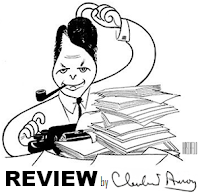 TV Guide's weekly reviews were written by the witty and acerbic Cleveland Amory. Whenever they appear, we'll look at Cleve's latest take on the shows of the era.
 TV Guide's weekly reviews were written by the witty and acerbic Cleveland Amory. Whenever they appear, we'll look at Cleve's latest take on the shows of the era.
This week we're looking at the original Smothers Brothers show: not the variety show, but the sitcom that preceded it, wherein Tom plays an angel (on probation) who has to do good to earn his wings (quite possibly the most incompetent angel since Clarence, or perhaps Jack Benny in The Horn Blows at Midnight), and Dick is his brother, presumably the beneficiary—or victim, if you prefer—of Tom's good deed-ing. "If you accept it all," says Cleve, "you can have a very good time with this show. If, however, you can't accept it and are on the side not of the angels but the angles, and you even regard the whole thing as a rather "B" switch on Bewitched—you won't have a good time."
Amory is of two minds on the show; sometimes it works, other times, "we have seen another one which was so bad we wouldn't have accepted the fact that there were ,are, or even ever have been, two brothers named Smothers." A different producer has made the show, in Amory's words, character-funny instead of funny-funny, which is an improvement—especially when the writers avoid saddling Tom with hackneyed jokes, such as his telephone calls to his angel-in-chief, Ralph—e.g., "when he takes the telephone off his chest, and says inevitably, 'I've got to get something off my chest'; or. when he says, 'Roger and over,' and then asks, 'I wonder who "Over" is—I know who Roger is.' " Well, I think you get the point there.
So things are looking up. Under the new regime, the show is, in Amory's opinion, "now developing some very funny character funnies—as, for instance, in the recent Christmas show when the brothers did an inimitable 'There isn’t any Kriss Kringle' routine." (It's possible that this could be due, in part, to Tom's more active participation in the production of the show; his involvement in the details didn't begin with the later Comedy Hour.) But there's one thing they absolutely need to do, according to Cleve, and that's improve the show's beginning. I mean the real beginning—the theme, which is "bad enough," and what follows it, when the brothers come on to tell everyone what's about to happen in the show. "Honestly, it takes strength to handle it when you don't know, but when you do—well, never mind." After one particularly painful beginning, "you could hardly wait for the first commercial." (You can judge it for yourself here.) His final verdict: like the angel Tom, the show needs to do not only good, but better.
Amory is of two minds on the show; sometimes it works, other times, "we have seen another one which was so bad we wouldn't have accepted the fact that there were ,are, or even ever have been, two brothers named Smothers." A different producer has made the show, in Amory's words, character-funny instead of funny-funny, which is an improvement—especially when the writers avoid saddling Tom with hackneyed jokes, such as his telephone calls to his angel-in-chief, Ralph—e.g., "when he takes the telephone off his chest, and says inevitably, 'I've got to get something off my chest'; or. when he says, 'Roger and over,' and then asks, 'I wonder who "Over" is—I know who Roger is.' " Well, I think you get the point there.
So things are looking up. Under the new regime, the show is, in Amory's opinion, "now developing some very funny character funnies—as, for instance, in the recent Christmas show when the brothers did an inimitable 'There isn’t any Kriss Kringle' routine." (It's possible that this could be due, in part, to Tom's more active participation in the production of the show; his involvement in the details didn't begin with the later Comedy Hour.) But there's one thing they absolutely need to do, according to Cleve, and that's improve the show's beginning. I mean the real beginning—the theme, which is "bad enough," and what follows it, when the brothers come on to tell everyone what's about to happen in the show. "Honestly, it takes strength to handle it when you don't know, but when you do—well, never mind." After one particularly painful beginning, "you could hardly wait for the first commercial." (You can judge it for yourself here.) His final verdict: like the angel Tom, the show needs to do not only good, but better.
l l l
As predicted, the resignation of Fred Friendly makes headlines in "For the Record"—right below the item commending the networks for covering the Senate Foreign Relations Committee's hearings into the progress of the Vietnam War. (In particular, author Henry Harding singles out NBC for covering the hearings in their entirety, unlike some other networks we could name but won't, other than their initials are C, B, and S.) As you might recall, on February 15, Friendly "quit his job as president of the CBS News division after John Schneider, newly promoted No. 3 man in the CBS corporate hierarchy, turned down his request that the network telecast a specific session of the Senate Foreign Relations Committee hearings on Vietnam." The network instead scheduled a rerun of I Love Lucy.
I don't suppose it's an exaggeration to say that these hearings, chaired by powerful Arkansas Senator J. William Fulbright, mark the beginning of the end of majority support for the war, or, as the above article says, they "parted the curtain," allowing the public a view of what was actually going on. Although the clip below shows the appearance of Secretary of State Dean Rusk, it is probably the testimony of General Maxwell Taylor, former Chairman of the Joint Chiefs of Staff, that is the most pivotal; it is Taylor's contention that Hanoi will never agree to negotiate unless they are convinced that the United States is committed to fighting on behalf of the South Vietnamese. Harding calls the broadcast of the hearings "some of the most rewarding, most effective, most important, presentations in the history of network television."
The hearings, according to historian Marc Selverstone, "legitimized public dissent" over the war, creating a story that, along with its fallout (e.g. Watergate), would dominate television—and the nation—for much of the next decade.
l l l
The hearings, according to historian Marc Selverstone, "legitimized public dissent" over the war, creating a story that, along with its fallout (e.g. Watergate), would dominate television—and the nation—for much of the next decade.

The Twentieth Century (Sunday, 6:00 p.m., CBS) profiles the show's "Man of the Month," Dr. Michael DeBakey, already a renowned cardiovascular surgeon, a pioneer in heart transplants, and already at work on the development of an artificial heart; "We could help many people if we had a truly workable artificial heart, and there is no really basic reason why we cannot," he tells Walter Cronkite. Later, it's a historic airing of Perry Mason (9:00 p.m., CBS). Does Mason finally lose to Hamilton Burger? Don't be ridiculous; that's already happened, and he managed to get his client off any. No, it's series' the first, and only, color episode. Had it continued for another season, every episode would likely have been in color. Personally, I don't think it worked; things just didn't look right, and the series lost whatever noir qualities it still had. A better story might have helped as well. Still, Mason is Mason, and there's a great turn from Victor Buono, so there's that.
On Monday night, Vivian Vance guests on I've Got a Secret (8:00 p.m., CBS), and that's followed (not surprisingly) by The Lucy Show, with guest stars Jay "Dennis the Menace" North and the wonderful character actor Vito Scotti. Meantime, on the music side, Hullabaloo (NBC, 6:30 p.m.) has George Hamilton doing the hosting, with guests Lainie Kazan, Simon and Garfunkel, Mel Carter, and the Young Rascals. Later, at 8:00, NBC preempts Andy Williams for Perry Como's once-a-month Kraft Music Hall, with Judy Garland and Bill Cosby. Big show!
Tuesday's highlight is the first of the two-part episode "Hills Are For Heroes" on Combat! (7:30 p.m., ABC), in which the platoon is given a hopeless assignment: take two entrenched German pillboxes preventing the Americans from advancing. It's a hopeless task, and the story (directed by Vic Morrow) doesn't shy away from the "Knee Deep in the Big Muddy" vibes, fully justifying the two-hour overall length of the story, as well as co-star Rick Jason's comment that it was the greatest anti-war movie ever made. Later, on the IBM-sponsored Town Meeting of the World (9:00 p.m., CBS), the subject for debate is "How to Stop the Spread of Nuclear Weapons." The debaters: Sen. Robert F. Kennedy in New York, French presidential adviser General Pierre Gallois in Paris, former West German Defense Minister Franz Josef Strauss in Munich, and Lord Chalfont, British Foreign Minister, in Geneva. Eric Sevareid is the moderator. Perhaps the best-known of these Town Meetings would come a year later, when RFK debates California Governor Ronald Reagan over the Vietnam War (there's that war again). Alas, it was not to be a preview of coming presidential attractions.

Gilligan's Island always was a little surrealistic, but on Thursday's episode (8:00 p.m., CBS), things go a little too far: somehow or other, a lion has wound up on the island. Don't ask me; I just write these things. After that, one of my favorites, Leon "General Burkhalter" Askin, is secret agent U-45 in the short-lived spy spoof The Double Life of Henry Phyfe (8:30 p.m., ABC), starring Red Buttons. Secret Agent it ain't; I'm not even sure it even measures up to My Favorite Spy.
On Friday Britt Ekland, aka Mrs. Peter Sellers, makes her U.S. TV debut on Trials of O'Brien (10:00 p.m., CBS). We mentioned a while back that one of O'Brien's low-ratings problems was its lack of clearance on CBS affiliates, and this is a good example: of the four CBS affiliates that appear in the Northern California edition, only one of them carries O'Brien. Meanwhile, The Sammy Davis Jr. Show (8:30 p.m., NBC), a show that ought to have been much, much better than it was, features Jonathan Winters, the Supremes, the Andrews Sisters, and singer Johnny Hartman. And Johnny Carson wraps up yet another week off on The Tonight Show (11:30 p.m., NBC); his guest hosts this week are Bob Barker (Monday), Alan King (Tuesday and Wednesday), Hugh Downs (Thursday) and Henry Morgan (Friday).
l l l
Didn't we just do a profile of Debbie Watson? By golly, you're right; if you're a regular reader, you'll recognize her from just two weeks ago. No matter, here she is in an earlier phase of her career, doing a fashion layout. Apparently, in 1966, women are just panting for pants. Speak for yourself, I say.

We've also got a profile of Dick Kallman, the young star of NBC's sitcom Hank, who first came to attention in the national touring company of the smash musical "How to Succeed in Business Without Really Trying." Kallman comes across in Michael Fessier Jr.'s article as a good guy with endless energy and ambition, who hopes that someday people will feel about him as a comedian the way he does about Sir Laurence Olivier. Alas, he never quite makes it in showbiz, but becomes a very successful antiques dealer before he and his partner are murdered in a robbery attempt in 1980.
Of course, how can we leave without at least a word about Barbara Stanwyck? Missy, she's called on the set (mostly affectionately) comes across as confident yet insecure, an accomplished actress who feels she still has something to prove, a strong woman who still hasn't found what (or who) she wants in life. A woman of contradictions, a puzzle, but leaving absolutely no doubt that she's a star. And when you're a star the magnitude of Barbara Stanwyck, you don't get that way simply by telling people you're a star, or acting like a star. You just are. Her anthology series of the early '60s was, she hoped, a way to be able to play a strong character on television, and although that failed, I think you can say that as Victoria Barkley, the matriarch of The Big Valley, she's tougher than all of her sons put together. I like that woman.
l l l

I'll show myself out now. TV
If you enjoy the content here and want to support my broader creative work, please consider making a donation at my Ko-fi page. Any amount you contribute helps me continue writing, researching, and sharing these articles and projects. Thank you!


Like TRIALS OF O'BRIEN, CAMP RUNAMUCK & HANK had affiliate clearance problems on Friday nights, this time on NBC. My local affiliate in Schenectady, NY, preempted both shows for a local show, and my later local affiliate in Nashville, TN, preempted 2 hours of NBC shows for a Friday night movie, rejoining NBC's evening programming with MR. ROBERTS at 8:30 PM CT. (I think NBC's B&W show CONVOY also suffered from bad affiliate clearances at 7:30 PM CT.)
ReplyDelete