


We're in the 21st year of American television, and during that time more than 140 million sets have been manufactured, and "no other institution or industry in our history has achieved so much growth or so much influence in so short a time." For all that, though, "remarkable and revolutionary changes" are on the way, changes that will transform your TV from an appliance housed as an attractive piece of furniture to a "system," an "electronic-communication center that touches on almost every phase of your daily life." And since his future is our past, we're able to see just how accurate his predictions were.
As television enters the 1990s, your flat screen will display pictures "virtually life-size and in realistic depth, without the need for special viewing eyeglasses." You'll be connected to a nationwide computer grid that will allow you to acces just about anything you want, 24 hours a day—you'll be able to "solve math problems, tell you your bank balance, help junior with his homework, look up recipes, make travel reservations, map out auto routes (and supply you with instructions for the exact setting of your autopilot) and perform a wide variety of other services." There will be "Telegames," video games you can play against the computer, with results shown on your screen. Transponders sewn into your children's clothes will allow you to track them wherever they might be in the neighborhood.
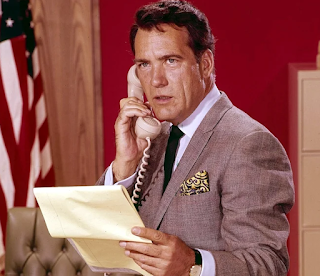 After eight seasons as Dr. Alex Stone, the "foil and kindly domestic mediator" of The Donna Reed Show, Carl Betz must have jumped at the chance to play a role with some real weight to it, that of the high-profile, high-octane defense attorney Clinton Judd, on Judd for the Defense. As Betz sat, "slightly numb," in executive producer Paul Monash's office, "I realized he was serious, but I kept wondering, 'Why me?' I knew there must be others they wanted. Then Paul said, 'You might be just the man,' and I heard myself say, 'You’re damn right.' "
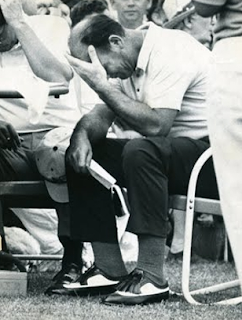 The first of golf's major championships is on Saturday and Sunday; CBS carries third round coverage of the Masters Saturday at 2:00 p.m PT, while Sunday's coverage begins at 1:00 p.m. The tournment provides one of the strangest endings ever: British Open champion Roberto De Vicenzo appears at first to have tied Bob Goalby for the lead (which would have necessitated an 18-hole playoff on Monday), but he was found to have signed an incorrect scorecard, having failed to notice a mistake on the 17th hole (where he was marked down for a par rather than a birdie); and winds up one shot behind Goalby. I wouldn't call this a controversy; while some people feel the punishment was unduly harsh, the rules are the rules; De Vincenzo himself will tell reporters, "What a stupid I am" for the error; he blames neither the rules nor his playing partner, Tommy Aaron (who'd written down the wrong number), but instead takes sole responsibility, and wins many fans for his gracious acceptance of his fate.
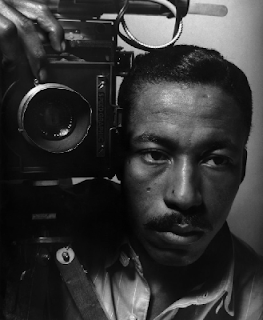 Tuesday's Jerry Lewis Show features a stellar cast, with Count Basie and his orchestra and Mel Torme providing the entertainment. (8:00 p.m., NBC) At 9:30 p.m., David Susskind's Open End (9:00 p.m., KQED) takes on three subjects you'll rarely see discussed on the same show: comedian Ronny Graham, who was jailed for refusing to pay alimony, discusses the unfairness of the system; Gore Vidal, author of Myra Breckenridge, and Fr. Morton Hill debate censorship; and there's a discussion on astrology. Next, Harry Reasoner profiles a true Renaissance man: Gordon Parks. (10:00 p.m., CBS) Parks is considered one of the greatest photographers of all time, frequently looking at the plight of American blacks, but in his spare time he also directed Shaft and Shaft's Big Score with Richard Roundtree; composed classical music and ballets; wrote books on photography, plus poetry, novels, and three momoirs; and helped found Essence magazine. What have you done since you got up this morning?
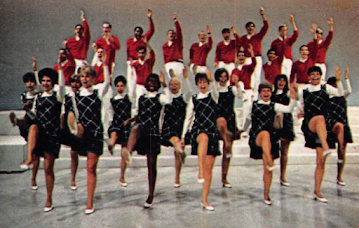 Anderson reviews with Judith Jobin the process by which the group is formed: from the thousands of applications he receives, he selects 86 studients, from which a core of 36 perform most frequently. Those chosen have to be performers, of course, with "large doses of talent," but more important, "they must be Good People. Good People are people who aren’t all wrapped up in themselves but have thoughts and feelings for others."

For example, in five years (1973), you'll be able to take advantage of the Home Video Recorder (HVR), which we'll come to know and love as the VCR. This gizmo, which will cost less than $500, will allow you to record and replay your favorite shows, watch pre-recorded movies and other programming that you can buy or rent at the store, and make and show home movies, courtesy of a midget camera included with the HVR. You'll also have more television than ever to choose from, thanks to cable TV; it's already in use in over two million homes, but by 1973 your wired system should provide you with "20 or 25 channels, including the regular on-the-air stations." You'll be able to see everything from 24-hour weather to local city council meetings to "Teleshop" —where you can shop for clothes, toys, or groceries and then place your order by phone. On the technology side, tiny integrated circuits mean large-screen sets will be reduced in size by about a third, and you'll rarely have to adjust your picture.
In ten years (1978), your television will be able to receive faxes; your list of reading material (books, magazines, newspapers) will print overnight and be ready for you to read the next morning. Your picture tube will now be so thin that you'll be able to hang it on your wall "in an attractive furniture frame," and every room in your house will be wired with closed-circuit cameras so you can monitor your baby or see who's at the door. There will be pocket-sized portable TVs, operaing without batteries or line cords, " 'stealing' power through the air from near-by TV or radio stations." We'll even be able to view live color TV from the moon, although "It's not clear whether the commentary will be in English or Russian."
Fifteen years (1983) will bring a change in the aspect ratio of your screen to that of movie theaters. You'll have a sharper picture as well, "as the result of a switch from the present 525 horizontal TV lines to 1000 or more, vastling increasing the resolution of the picture." You'll be able to use push buttons to teleshop (instead of ordering on your phone), take telecourses, and maybe even vote in elections. And you may be able to use your television to see the person you're talking to on the phone; a small screen will be built into your telephone for more private conversations.
 |
| Why are they sitting so close to the screen? |
And so on. As you can see, Lachenbruch's predictions are remarkably accurate. Not all of it came via the TV, of course; the home computer really became the hub of the telecommunications revolution, and many of the achievements that Lachenbruch mentions actually come from your mobile phone. But the flat screen hanging on the wall? The high-resolution picture? VCRs, DVRs, wireless communcation, home shopping channels? Distance learning? Absolutely! He's even a little behind the curve on some things; those color TV images from the moon, for instance, actually came in 1969 on Apollo 12 (that is, before the camera was ruined by accidentally pointing it at the sun).
In fact, if there's anything he didn't anticipate, it's that television would become irrelevant to so many people, although it's taken much longer for that to happen. Who would think that speciality cable stations, for instance—one of the achievements predicted since the 1950s—would come and go, pushed out by the medium's insatiable desire for profit? Or that the traditional television network would be replaced by on-demand programming, streaming, and video games? Could he have even anticipated the "cutting the cord" movement? Or that most of us would carry our entertainment around with us in our pockets? Maybe only insane minds could have come up with that; after all, the whole world seems pretty crazy from our perspective today.
l l l

As Michael Fessier Jr. notes in this week's profile, Betz was not the first choice of ABC; they were thinking more along the lines of Chuck Connors or Martin Landeau. But Connors would have demanded part ownershihp of the show. and besides, he'd already failed once as a defense attorney, in Arrest and Trial, only four years ago. (Although to be fair, a lot of that was the fault of the show's premise.) Meanwhile, Landeau has busy as Rollin Hand on Mission: Impossible, although he would have been an interesting choice. But Monash prides himself on his casting acumen, and personally, I can't imagine anyone better for the role that Carl Betz. He plays Judd with the intensity of a man finally getting a chance to show what he can do; says soundman Jerry Kosloff, "Carl really lives the part. He has worked his tail off. He has a lot riding on this show."
For too long, Betz had been stuck in the kind of roles that didn't require him to flex his muscles—"three crummy Westerns," as he describes his days at Fox, and a long stint on Love of Life—culminating in his eight years as Dr. Alex Stone. And he won't put down those years on Donna Reed; "I miss the fun we used to have," he tells Fessier, but admits, "after eight years you run out of material." It left him all feeling that "The goal in an actor's mind can be a great illusion." Between seasons of the Reed show, though, he'd done "some heavyweight drama" in local theater—plays like "Night of the Iguana" and "Krapp’s Last Tape." Monash had seen those performances and liked them, and, when it came time to cast Judd, he remembered them. Betz imbues a gravity and dignity to a role that could easily become preachy and strident; and wears Judd's Western hat and string tie with an easy confidence. He's become a smash critically, often getting better reviews than the show itself, and he'll wind up with an Emmy for best actor in a drama.
Betz admits he's an Anglophile; his greatest acting admiration is for the English theater and actors like Paul Scofield. Don't get the idea that he's putting down "lowbrow" shows, though. "There is a place for The Flying Nun and The Donna Reed Show," he says, "and a place for shows like Judd and The Defenders." Nerves are flying high on the Judd set right now, as everyone waits for word from the network as to whether or not the show's going to get picked up for a second season; as everyone acknowledges, Betz has puat everything on the line for this show. It's rallied from the bottom of the ratings to a place in the low 30s, and Monash's emphasis on current issues (race, rape, sex) helps. It will only run two seasons; both the series and Betz deserve more. One contemporary critic has remarked that had Betz not died at the young age of 56, he might in time have pulled a Brian Cranston, evolving in the public mind from sitcom characters to being seen primarily in dramatic roles. As far as I'm concerned, though, Carl Betz has nothing left to prove.
l l l
That takes care of our cover stories, so let's see what's on the tube this week. Anything?

Sunday is Easter, and Duke Ellington takes the spotlight with a performance of his "Sacred Concert," filmed during the piece's premiere last January at the Episcopal Cathedral Church of St. John the Divine in New York. (8:00 a.m., CBS) There's no copy of this concert on YouTube, but you can see an excerpt of a subsequent performance from 1969 here. Opera stars Cesare Siepi and Judith Raskin appear in the Bell Telephone Hour's Easter special, "Going to Bethlehem" (6:30 p.m,. NBC); in this case, the Bethlehem is in Pennsylvania, home of the Bethlehem Bach Festival, and the centerpiece is Bach's epic Mass in B Minor. Meanwhile, ABC's Easter offering is a repeat of the 1953 drama The Robe (8:00 p.m.), with Richard Burton, Jean Simmons, and Victor Mature. The movie is known for being the first done in Cinemascope; Judith Crist calls it "relatively tasteful," but notes that its Cinemascope spectacle is mostly lost on the small screen.
On Monday, Nancy Sinatra hosts "Movin' with Nancy," a "fast-paced musical tour" (don't you just love those canned descriptions?) with daddy Frank, Dean Martin, Sammy Davis Jr., and Lee Hazlewood. (9:00 p.m., NBC) The ad tells us that this special won Nancy the coveted "Hollywood Star of Tomorrow" award; and while I might have thought it was due more to her last name, who am I to disagree? At 9:30 p.m., in a sign of things to come, NET Journal shows highlights of Canada's Liberal Party Leadership Convention, in which party members come together to select a new party leader; since the Liberals control Parliament, this means the new party leader will become Prime Minister. The three leading contenders are External Affairs Minister Paul Martin, Justice Minister Pierre Trudeau, and Transport Minister Paul Hellyer. Trudeau, the winner, will go on to become one of the most prominent and colorful leaders on the world scene.

On Wednesday afternoon we'll see one of Jack Nicholson's early cult classics, The Terror (3:30 p.m., KSBW), with Boris Karloff and Sandra Knight. Karloff is the real star, and portions of the movie wound up in Peter Bogdanovich's movie Targets. The story of the making of the movie is probably more interesting than the movie itself; I'm surprised it's never been made into a movie. Later on, it's a rerun of Julie Andrews' Peabody-and Emmy-winning 1965 special, where she's joined by Gene Kelly and the New Christy Minstrels (9:00 p.m., NBC). If you don't want music, give a second go to the 1967 telemovie The Desperate Hours, one of David Susskind's video remakes of classic movies (9:00 p.m., ABC); in this version, Arthur Hill and Teresa Wright are the Hilliards, whose lives are upended by a home invasion by three escaped convicts: George Segal (in the Humphrey Bogart role), Michael Conrad, and Barry Primus. And if that doesn't work, switch over to NET at 10:00 p.m., where Julia Child takes us behind the scenes at a White House state dinner.
You'll recall—I'm sure of it—a while back, when we looked at The Tunnel, the true story of a group digging a tunnel from East to West Berlin to aid refugees escaping the Communists. Well, as proof that truth can be more engaging than fiction, there's Thursday night's movie Escape from East Berlin (Thursday, 9:00 p.m., NBC), based more or less on the true story (and made in the same year as The Tunnel), with Don Murray and Christine Kaufmann engineering the escape, and Werner Klemperer as Colonel Klink—I'm just kidding; he actually plays Walter Brunner, one of those working on the tunnel. Says Judith Crist, the authentic locales lend "enough interest, perhaps, to make one overlook the obvious mechanics of characters, dialog and bits of business."
That brings us to Friday, when not much happens No, I'm kidding again; this has been a week with not one, not two, but three documentaries connected to the ocean. Monday, Search in the Deep saw Jacques Cousteau use new research submarines to record the life cycle of the great sea turtle, and on Tuesday National Geographic looked at Portugal's Men of the Sea, harvesting the North Atlantic cod. Tonight, we have the third part of the trilogy, as NBC's Tomorrow's World explores "Man and the Sea" (10:00 p.m.), with Frank McGee reporting on the latest scientific developments regarding "Earth’s greatest source of food, minerals and energy." To say that these shows are all wet would be a cheap joke (as well as perhaps inaccurate), so I'm not going to make it.
l l l
Next up in the cultural zeitgeist: the kids "proud to be happies, not hippies."
Milton C. Anderson is not the last angry man, but there is one thing that burns him up: the way the youth of America are being portrayed in the Sixties. "The picture of young America—in the papers, on television—was something completely different from what I saw every day at school," he says. "And what was true in ’61 is even more true today." So instead of "tune in, turn on, drop out," he came up with "drop in, tune up and turn on" to a group of young people, all high school or college students, who are "all cleanliness, friendliness and Sunday-school manners." Thus were born the Young Americans, using their clean-cut, flag-waving song and dance to spread, according to their motto, "Understanding of people through youth and music."

Since their first appearance on a Bing Crosby special in the early 1960s, the Young Americans appear to have struck a chord with a public "increasingly discomfited and unnerved by rampant 'naysaying' among the country’s youth." Just ask Alex Grasshoff, the director of a documentary about the group: "They generate a fantastic emotional level. When I first saw them, I started to get a lump in my throat." Members of the group ("Unashamed Pollyannas all") talk about how "Talking out differences is the only way to world peace," and despite the upheaval in the world, they try to remain apart from it. "We talk about school, we worry about getting drafted," one says. "Well, we don’t talk about the Government—we’'re not politically inclined."
Not everyone is a fan of the Young Americans; "it’s hard to ignore the fact that other young musicians—Dylan and Donovan, the Beatles and Buffy Sainte-Marie, to name a few—are doing songs that 'tell it like it is' ", while the Young Americans sing show tunes and upbeat songs with lyrics like "We’ve got the road ahead of us . . ." and “We’ve got the future in our hands . . ." One member of the group acknowledges that "It does get kind of cutesy-cutesy at times," and that cutting out references to smoking and drinking, and words like "damn" is "not too realistic." For all that, though, the Young Americans are a close-knit group; members must leave when they reach 21, and "Nobody ever wants to leave. All your friends are inside the group." And, more than 60 years later, they continue to perform and tour, "inspiring the world through music."
l l l
Fashion layouts usually go over well, so I'd be remiss in not including this one with Angie Dickinson. Here, she's showing off the spring collection for TIffeau & Busch; designer Jacques Tiffeau "likes hippie bells, colored sandals and short, curly hair with his clothes—and we couldn't agree more."

The outfits swing for sure. But Ang, that hair—it looks like someone stuck your finger in a light socket.
l l l
Finally, a quick look behind the scenes at what goes into "This Week in TV Guide."
Some issues are chosen for a specific reason—a story in the issue, or a particular program on at the time. The majority, though, are picked more or less at random, depending on what might be available for a given week. For instance, I was going to do an issue from 1954 this week, but considering the last issue from the '50s didn't get much of a response, I though you all might prefer something more recent, so I looked through the issues that fit the week, and chose this one, for no particular reason.
We come to The Doan Report, and the headline: "How TV Covered Dr. King's Death."
The turnaround time is impressive, cosidering the assassination happened on Thursday, April 4, just a week before this issue landed on newsstands. That day, news of King's shooting reached most viewers during the evening news; announcement of his death came about an hour later. Cameras switched back and forth: to Washington, where President Johnson and Vice President Humphrey expressed their shock; to Atlanta, where Coretta Scott King was. to Memphis, the scene of the crime. NBC cancelled Dragnet at 9:30 p.m. ET for a special report; ABC was on at 10:00 p.m. for an hour, and later Joey Bishop devoted his entire late-night show to King tributes. (Although it's not mentioned here, Johnny Carson skipped his monologue the following night, instead using the time to talk about King, who'd been a guest two months earlier,) CBS had an 80-minute summary at 11:00 p.m. Coverage continues next week, including the funeral, which forces the rescheduling of the Academy Awards.
In a couple of months you'll be reading from the issue of June 15, 1968; I was looking through it recently, doing some preliminary scouting for items of interest, and saw the following headline, again from The Doan Report: "How TV Saw the Assassination." He's speaking this time, of course, about Robert F. Kennedy; a virtually identical headline, only with different names, but death casts the same odor.
In the issue of April 20, following up on the King story, Doan says that King's assassination "pre-empted TV’s attention as had nothing since the assassination of President Kennedy." Just wait, though; you'll have another opportinity a couple of months later. TV


