


Afterwards, you're ready for a little time to yourself, so while the missus is at the store getting things for dinner and the kids are playing outside, you settle in to your barcalounger with a cold brew and a snack and turn on TV to catch the late football game. You have your choice, but instead of the NFL's Rams-49ers on CBS, you decide to go with the AFL game on NBC, pitting the New York Jets against the Oakland Raiders, a showdown between the two best teams in the league.
And what a game it is; with Joe Namath of the Jets and Daryle Lamonica of the Raiders trading touchdown passes, the two teams go back and forth throughout the game. The Raiders lead 14-12 at the half, but early in the 4th quarter Namath launches a 50-year touchdown pass to his favorite receiver, Don Maynard, and the Jets take a 26-22 lead. By now your wife is home and dinner's cooking; the kids have finished their homework and everyone's ready to eat, but it's been a long game, what with scoring and penalties and incomplete passes, it's already dragged well past the time you would have expected it to be done. After a Jets field goal, the Raiders drive down the field and Lamonica tosses a 22-yard touchdown to the great Fred Biletnikoff with four minutes left to tie the game 29-29. Then, with a little over a minute to play, another field goal puts the Jets back in the lead, 32-29. "Can you keep it down?" you yell to your impatient wife, "I'm watching the game! It's almost over!"

A number of sources, including this article and Jeff Miller's history of the AFL, Going Long, provide the rich details that prove Talleyrand's saying, "It is worse than a crime; it is a blunder."A succession of increaingly abusrd events guaranteed the game's place in infamy. Network executives tried to reach Dick Cline, NBC's broadcast supervisor, to tell him to keep the game on the air; they weren't able to get through to him because the lines were jammed by concerned viewers themselves worried that the end of the game wouldn't be shown. After the switch was made, the network president, Julian Goodman, himself called to demand that they go back to the game, but it was impossible to reach a technician who could throw the switch. Once NBC became aware of the furor erupting, they ran a crawl on the bottom of the screen telling people the final score; the crawl ran during one of the most dramatic moments in the movie, infuriating those who actually preferred Heidi to football.
Cline's dry recitation of the facts in subsequent interviews, including his response to Goodman's demand to resume the game ("Well, I'll try."), and the equally dry coverage of the events by David Brinkley on the Huntley-Brinkley Report the next night, make anniversary recaps of the game hilarious to watch. One of the funniest occurred in 2003, when the NFL Network commemorated the game's 35th anniversary by preempting their regular schedule to broadcast the movie Heidi (the first non-sports related programming the network had ever shown), only to interrupt the movie at the climactic moment, when Klara walks without her wheelchair,* to replay the final minute of the game and the two Raiders touchdowns that most of the nation had missed back in 1968.
*The same point in the movie at which NBC chose to craw the final score across the bottom of the screen, ruining the movie's emotional high point. Turnabout is fair play, one assumes.
The Heidi Game becomes far more than a great football game; it makes the front page of the New York Times, is featured on evening news broadcasts, and proves to television executives the appeal of pro football. Never again will a football game take second fiddle to anything. But to get to that point, it has to start somewhere, and November 17, 1968 is that day.
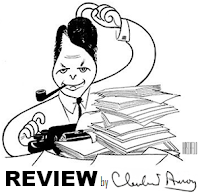 From 1963 to 1976, TV Guide's weekly reviews were written by the witty and acerbic Cleveland Amory. Whenever they appear, we'll look at Cleve's latest take on the shows of the era.
Cleveland Amory's target this week is the new CBS sitcom The Doris Day Show. And I use the word "target" unreservedly, given that this is as savage a review as we've ever read from Cleve. For instance, referring to the show's main title, with Dodo singing her best-known hit "Que Sera, Sera," (translated, "Whatever will be, will be," Amory remarks, "In this show, whatever will be, will be, all right, but it won't be good." This, he stresses, is not to be taken as an attack on Miss Day, although "she is photographed through so many filters that you feel she is not on TV but on your radio—but never mind. If she's too far away to think of as the girl next door, think of her as the girl next to the girl next door."
With that out of the way, he continues, "Unfortunately, it is now necessary to discuss—and now you can get mad—the rest of the show." Take the idea behind the show, for example, but "don't lose it, because the producers of this show sure did—if indeed they ever had one." Two of the regulars, played by Denver Pyle and Fran Ryan, number among the the two most irritating people on television. The kids aren't any better, but "don't blame them. Presumably they don't write the lines, although we wouldn't bet on it." Of supporting player James Hampton, he says, "Even when he's not on, he's a threat—there is always the chance that he will appear."
There are plots in the episodes, although Amory realizes most people won't believe that statement, but "they are buried under so many layers of cotton-candy writing, not to mention the thunderous laugh track, that they deserve better. Like, for example, internment with attendant ritual, at Forest Lawn." And that's one of the nicer things he has to say. In fact, he is convinced that The Doris Day Show is not only no more interesting than the average person's everyday life, it's "a good deal less so." And to those of you who may doubt this, Our Critic has a challenge for you: "Tonight, instead of tuning in on the show, don't. Just sit around in your kitchen with your family and friends. Ask whether anyone would like a glass of milk. If someone says either yes or no—terrific. You've got your dialogue. You want action, too? All right, get up and butter some bread. Ask Grandpa if he wants some. He shakes his head. Ah, something's wrong. Wonderful, you've got a plot." And, presumably, nowhere to go but up.
At The Doan Report, Richard K. Doan looks at the role TV played in the recent presidential election, and wonders just how great a role it was. Richard Nixon's campaign spent more than half of his $18-20 million stockpile on TV shows and spots; many observers felt the campaign "raised the political uses of TV to a new art." Hubert Humphrey, on the other hand, was hurting for funds, and what television he did do was "generally undistinguished," and yet he came a whisker or two of beating Nixon. What does it all mean?
As far as Election Night coverage, ABC (to no one's surprise) finished with the fewest viewers by far. However, they were the first network to (correctly) call Illinois for Nixon, giving him the Electoral College victory; they made the call at 7:15 a.m. CT, and signed off 45 minutes later. CBS and NBC, "aghast at ABC's audacity," held off for an additional two hours before making the same call. I've seen the coverage from all three networks on YouTube, and the only difference between the three is that ABC, convinced that their projection desk had enough information to make the call, went ahead and did it. Back in the day, they used to call something like that a scoop.
 One show not on the chopping block is Family Affair, and perhaps the person with the most challenging role in the show is none other than 19-year-old Kathy Garver, "the most soundly upstaged young thing in television!" according to Dick Hobson. She has to deal not only with two adorable little kids, but Sebastian Cabot, a master of upstaging, as well. Well, if all that is true, it's not keeping Kathy awake at nights. "I don't worry about that," she says. "After all, I am the only ingenue on the show and I do get the most fan mail." She will admit, however, that she'd rather like a little more to do. "ON days when I come in and I have only one or two scenes, I blow my mind because I'm bored sitting no matter where I am. I like to be doing things every minute."
 Wednesday night is the season premiere of the Hallmark Hall of Fame (6:30 p.m., NBC) which makes sense since the company's got greeting cards to sell, and Christmas is right around the corner. (There'll be another episode next month, just in case anyone missed the reminder the first time.) This episode is, alas, not one of the series' more distinguished efforts: "A Punt, a Pass and a Prayer," starring Hugh O'Brien as an aging pro quarterback, trying to come back from a serious injury, who refuses to believe the glory days may be over. As a story it has great potential, but it's always difficult to watch actors trying to play athletes, and while the storyline has potential (an aging football star tries to come back from a serious injury), it falls short of what one might have expected from Hall of Fame. Don DeFore, Betsy Palmer, and Shelly Novack co-star. That's followed by a special edition of Kraft Music Hall (8:00 p.m., NBC), as Roy Rogers and Dale Evans host the Country Music Association Awards, including performances by Johnny Cash, Glen Campbell, Jeannie C. Riley, and Tammy Wynette.
Thursday is dominated by friendly, familiar names. The episodes aren't themselves particularly special, but the titles are comforting to see: Daniel Boone (6:30 p.m.), Ironside (7:30 p.m.), Dragnet (8:30 p.m.), and The Dean Martin Show (9:00 p.m.) on NBC (the latter with Gordon MacRae, Bob Newhart, Abbe Lane, and Paul Lynde); Hawaii Five-O (7:00 p.m.) and The Thursday Night Movie (8:00 p.m., John Ford's Cheyenne Autumn, with Richard Widmark and Carroll Baker) on CBS; and The Flying Nun (7:00 p.m.), Bewitched (7:30 p.m.), and That Girl (8:00 p.m.) among the offerings on ABC. No specials, just a night of, as my friend David Hofstede might put it, Comfort TV.
 Friday gives us NBC's 90-minute wheel series The Name of the Game (7:30 p.m.), tonight featuring Robert Stack's investigative reporter Dan Farrell working to clear a woman currently on death row. Assisting Farrell in his efforts is Peggy Maxwell, played charmingly by Susan Saint James. As Leslie Raddatz relates, Susan's rise to co-star of a weekly series is nothing short of astonishing: having worked as a model for three years, she walked into the office of Universal's casting director and told her "Now I want to act." Finding out that Saint James' previous experience was limited to six acting lessons, Monique James suggested that she take some more lessons and then come back and do a scene. But that wasn't good enough for Susan; she came back the next day and did a scene from Barefoot in the Park that was so good that James signed her up and took her over to the producer and director of Fame is the Name of the Game, the film that served as the pilot for the series. "I thought they might do a test on her, so I'd have some film. That was all I had in mind." Instead, they had her memorize a scene, which she did in five minutes, and nailed it. She was cast in the movie, without a screen test. From there, Universal put her in the pilot for It Takes a Thief, and the rest is history. She'll win an Emmy for Name of the Game; still in the future are her most famous roles: Sally McMillan in McMillan & Wife, and Kate McArdle in Kate & Allie. Not bad, for someone who only took six acting lessons.
Finally, I mentioned that Christmas is just around the corner, and proof of that is a string of ads for Mattel's new toy line, which they have helpfully pointed out to parents by letting them know when their commercials can be seen on TV.
For example, there's this reminder that on Tuesday night, you can catch commercials for Strange Change, "the toy that turns time capsules into monsters over and over again!" on I Dream of Jeannie at 6:30, while Skediddle Kiddles and Disneyland See 'n' Say can be seen on The Avengers, also at 6:30. Incidentally, if you want to see how Strange Change works, or if you had it when you were little and just want to relive the memories, here's a clip of it in action.

I loved the Matt Mason toys when they came out. I was already a long-term space buff at that point, and I collected all the different astronauts, along with the moonwalker, the space station, the play set, and other things, I'm sure. This could well be the very commercial; I'm surprised they couldn't find a science fiction series to put this on.

Since Barbie was born, has there ever been a time when she wasn't a best seller? Parents who saw her on Get Smart! and made a mental note were the smart ones.

Finally, a more somber sign of the times—here's an ad you wouldn't have dreamed of seeing six months ago. How quickly things change.
 TV
TV
The Heidi Game becomes far more than a great football game; it makes the front page of the New York Times, is featured on evening news broadcasts, and proves to television executives the appeal of pro football. Never again will a football game take second fiddle to anything. But to get to that point, it has to start somewhere, and November 17, 1968 is that day.
l l l
 From 1963 to 1976, TV Guide's weekly reviews were written by the witty and acerbic Cleveland Amory. Whenever they appear, we'll look at Cleve's latest take on the shows of the era.
With that out of the way, he continues, "Unfortunately, it is now necessary to discuss—and now you can get mad—the rest of the show." Take the idea behind the show, for example, but "don't lose it, because the producers of this show sure did—if indeed they ever had one." Two of the regulars, played by Denver Pyle and Fran Ryan, number among the the two most irritating people on television. The kids aren't any better, but "don't blame them. Presumably they don't write the lines, although we wouldn't bet on it." Of supporting player James Hampton, he says, "Even when he's not on, he's a threat—there is always the chance that he will appear."
There are plots in the episodes, although Amory realizes most people won't believe that statement, but "they are buried under so many layers of cotton-candy writing, not to mention the thunderous laugh track, that they deserve better. Like, for example, internment with attendant ritual, at Forest Lawn." And that's one of the nicer things he has to say. In fact, he is convinced that The Doris Day Show is not only no more interesting than the average person's everyday life, it's "a good deal less so." And to those of you who may doubt this, Our Critic has a challenge for you: "Tonight, instead of tuning in on the show, don't. Just sit around in your kitchen with your family and friends. Ask whether anyone would like a glass of milk. If someone says either yes or no—terrific. You've got your dialogue. You want action, too? All right, get up and butter some bread. Ask Grandpa if he wants some. He shakes his head. Ah, something's wrong. Wonderful, you've got a plot." And, presumably, nowhere to go but up.
l l l
 |
| ABC's Howard K. Smith makes the call |
Elsewhere, the ratings axe is claiming the first casualties of the season. NBC is giving the heave-ho to The Beautiful Phyllis Diller Show at the end of December; the network isn't yet sure what's going to take its place, although it could be Strange Report, a London-based show starring Anthony Quayle. In the event, the replacement turns out to be My Friend Tony, which Cleve reviews here. (Strange Report winds up on the 1969 fall schedule.)
The big changes are coming at ABC, where six series have already been sacked: The Ugliest Girl in Town, The Felony Squad, The Don Rickles Show, the second night of Peyton Place, Journey to the Unknown, and Operation: Entertainment. That's Life is on the brink, but the network is hoping to save the musical-comedy series. Among the series lined up as replacements: This Is Tom Jones, Let's Make a Deal (moving over from NBC), What's It All About World? (starring Dean Jones), Generation Gap (a quiz show), and Section 8, from the Laugh-In stable. I wonder: did Section 8 wind up being Turn-On?
The Teletype offers us a look at some additional series making it out of development limbo in time for the 1969 fall schedule. Michael Parks' Then Came Bronson debuts as a pilot in March of that year before becoming a regular series on NBC in September, joining Bracken's World, a movie-studio drama that NBC had been considering, and ABC's Bill Bixby vehicle The Courtship of Eddie's Father, for which that network had just ordered a pilot. The only clunker in the list is a proposed CBS sitcom starring Minnie Pearl. Don't worry, though; she'll make it on Hee Haw.
l l l

Kathy's life seems to be built around that philosophy: in addition to Family Affair, she's a senior at UCLA, where she's been a cheerleader ("I like to yell and scream.") and majors in speech. She's also national teen chairman for the March of Dimes, for whom she's traveled around the country, speaking to 150,000 teens; honorary chairman of the State Youth Conference for teh Mentally Retarded; and, until recently, wrote a monthly column for a fan magazine. Kathy, if you're reading this somewhere, I'm exhausted just typing this.
Producer Ed Hartmann says she's the one person in the cast required to act, since she's a 19-year-old playing a 16-year-old. She acknowledges that she's always looked younger than she really is, "and I seem to be getting younger looking all the time." In fact, so convincing is she as a sweet sixteen that her fan mail includes money from teen-age boys who send her five-dollar bills on her birthday. (Little do they know that five dollars makes a great contribution to the March of Dimes.) And, just like any other teenager, she dates. In fact, a recent date with a dentist provided quite the experience when he received an emergency call to treat a toothache, requiring her to fill in as his dental assistant. "I had a little plastic thing and I put a bib around the patient and I got him some water and it was really fun. I like to be needed." Let's see Sebastian Cabot play that role. She's still active as a prolific voice talent, and just as charming—and youthful—as ever.
l l l
November is a sweeps month, so it's not surprising we see a lot of specials and the like on the schedule this week.
 NBC gives us back-to-back specials on Saturday night, preempting Saturday Night at the Movies: first, Tennessee Ernie Ford (8:00 p.m.) hosts an hour of music and "topical comedy" (written by head writer Digby Wolfe, who named and helped create Laugh-In), with special guests Lucille Ball, Andy Griffith and the Golddiggers. That's followed by Jack Benny's Bag (9:00 p.m.), described as a "'with-it' hour for Waukegan's favorite flower child," starring Phyllis Diller (in a spoof of The Graduate) and Dick Clark, and featuring cameos from Jack Lemmon, Walter Matthau and Rowan and Martin. If you're looking for something slightly more serious, check out On the Beach (10:30 p.m., WMT in Cedar Rapids), one of the darknest movies of the decade, starring Gregory Peck, Ava Gardner and Fred Astaire in the story of a world slowly dying following a nuclear war. Be prepared for bad dreams after watching this one.
Our Sunday potpourri, in addition to the infamous Heidi, includes the broadcast premiere of The Sons of Katie Elder (8:00 p.m., ABC), starring John Wayne and Dean Martin. Judith Crist calls it "pleasant and lighthearted," and I'd say that's about right. If you want more of The Duke and Dino, the late movie is Rio Bravo (10:45 p.m., KRNT in Des Moines), which also offers us Angie Dickinson, Ricky Nelson, and Walter Brennan. On a musical note, The Smothers Brothers Comedy Hour (8:00 p.m., CBS) presents a show in the round featuring songs from Donovan, Dion, and Jennifer Warren; due to the continuing musicians' strike, the show's music is provided by the Jimmy Joyce Singers.

Our Sunday potpourri, in addition to the infamous Heidi, includes the broadcast premiere of The Sons of Katie Elder (8:00 p.m., ABC), starring John Wayne and Dean Martin. Judith Crist calls it "pleasant and lighthearted," and I'd say that's about right. If you want more of The Duke and Dino, the late movie is Rio Bravo (10:45 p.m., KRNT in Des Moines), which also offers us Angie Dickinson, Ricky Nelson, and Walter Brennan. On a musical note, The Smothers Brothers Comedy Hour (8:00 p.m., CBS) presents a show in the round featuring songs from Donovan, Dion, and Jennifer Warren; due to the continuing musicians' strike, the show's music is provided by the Jimmy Joyce Singers.
Monday and Tuesday nights, NBC unleashes an epic blockbuster, El Cid (8:00 p.m. both nights), with Charlton Heston and Sophia Loren in the film biography of Spain's national hero. Crist praises it as "a dazzler, a historical jam-crammed with castles and crowds and battles galore and enough jousts and tournaments and armored extras to satisfy the most arden medievalist among us." El Cid has a running time of three hours and four minutes, although I suspect some of that was edited out for television. By the way, remember when longish movies were split into two parts? Sometimes, as in this case, they'd air on consecutive evenings, but I can remember when you might have to wait several days, if not an entire week, for the conclusion.
For centuries, scientists (and science fiction writers) have been captivated by the search for "The Criminal Chromosome," the extra Y in the XYY chromosome that may cause of violent behavior; and the possibility of being able to preemptively "cure" such antisocial individuals through genetic tests and treatment. On the locally produced news program Spectrum (Tuesday, 9:00 p.m., WHBF in the Quad Cities), research geneticists and public health officials discuss the latest scientific findings and what they may promise for the future.

Thursday is dominated by friendly, familiar names. The episodes aren't themselves particularly special, but the titles are comforting to see: Daniel Boone (6:30 p.m.), Ironside (7:30 p.m.), Dragnet (8:30 p.m.), and The Dean Martin Show (9:00 p.m.) on NBC (the latter with Gordon MacRae, Bob Newhart, Abbe Lane, and Paul Lynde); Hawaii Five-O (7:00 p.m.) and The Thursday Night Movie (8:00 p.m., John Ford's Cheyenne Autumn, with Richard Widmark and Carroll Baker) on CBS; and The Flying Nun (7:00 p.m.), Bewitched (7:30 p.m.), and That Girl (8:00 p.m.) among the offerings on ABC. No specials, just a night of, as my friend David Hofstede might put it, Comfort TV.

l l l
Finally, I mentioned that Christmas is just around the corner, and proof of that is a string of ads for Mattel's new toy line, which they have helpfully pointed out to parents by letting them know when their commercials can be seen on TV.
For example, there's this reminder that on Tuesday night, you can catch commercials for Strange Change, "the toy that turns time capsules into monsters over and over again!" on I Dream of Jeannie at 6:30, while Skediddle Kiddles and Disneyland See 'n' Say can be seen on The Avengers, also at 6:30. Incidentally, if you want to see how Strange Change works, or if you had it when you were little and just want to relive the memories, here's a clip of it in action.

I loved the Matt Mason toys when they came out. I was already a long-term space buff at that point, and I collected all the different astronauts, along with the moonwalker, the space station, the play set, and other things, I'm sure. This could well be the very commercial; I'm surprised they couldn't find a science fiction series to put this on.

Since Barbie was born, has there ever been a time when she wasn't a best seller? Parents who saw her on Get Smart! and made a mental note were the smart ones.

Finally, a more somber sign of the times—here's an ad you wouldn't have dreamed of seeing six months ago. How quickly things change.


