Showing posts with label Night Gallery. Show all posts

February 8, 2025

This week in TV Guide: February 5, 1972


We begin this week with a personal memory, if you'll permit. I realize that for most people, NBC has been the network of the Olympics for many years, but if you're my age, you can remember when the Olympics meant ABC, Jim McKay, and "Up Close and Personal" coverage. The history of the Olympics on American TV only goes back to 1960, when CBS provided minimal coverage of both the Summer and Winter Olympics. ABC made its first appearance with the 1964 Winter Games, while NBC carried the Summer Games. My first experience with the Olympics was in 1968, and both of them were on ABC, so by 1972 I'd come to expect to find them there. 

However, this year's Winter Olympics, from Sapporo, Japan, are on NBC, and with the network planning extensive live coverage, the fourteen-hour time difference between Japan and New York has necessitated a most unusual broadcasting schedule. The network has divided its weekday lineup into three segments, starting with a 30-minute broadcast at 8:30 a.m. ET, preempting the last half-hour of Today. Primetime shows (which include live coverage of skiing and speed skating) are on Monday and Tuesday nights for an hour each, and a two-hour broadcast on Thursday.* Daily coverage concludes with 90-minute broadcasts at 11:30 p.m., preempting The Tonight Show. Things are somewhat more expansive on the weekend, with four-and-a-half hours on Saturday and three hours on Sunday.

*In case you're wondering what programs were so important that they couldn't be preempted on Wednesday or Friday, they were Columbo and Night Gallery (Wednesday) and Friday Night at the Movies on Friday. (Two Mules for Sister Sara, FYI.) Even in the middle of the Olympics, a network has to have its priorities in order.


In total, the network presents 36 hours of coverage across the 12 days of competition; by contrast, the NBC family of networks provided close to 3,000 hours of coverage of the 2022 Winter Olympics in Beijing, across 19 days. For absolutists, I'm sure today's broadcasts provide a bonanza. I'm a meat-and-potatoes, just-the-facts kind of guy, though, and back when I watched the Olympics, I was only interested in seeing medal-winning performances, not all the preliminaries or various features; I think that the advent of saturation coverage was when I started to lose interest in the Olympics; I haven't watched them since, I'd guess, the 1990s, and I don't have any plans to take them up again any time soon. Maybe NBC could offer a "skinny package" of coverage on one of their streaming platforms, but even then I don't think I could be convinced to tune in to some of the newer "sports."
There's a closing irony about this though, as there is about almost everything. The theme to NBC's Olympic coverage, written by John Denver, Bill Danoff, and Taffy Nivert, was called "Victory Is Peace." It only took eight months, until the Summer Olympics in Munich, for that to come crashing down.

l  l  l

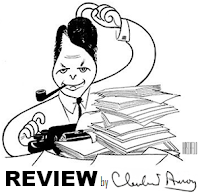
From 1963 to 1976, TV Guide's weekly reviews were written by the witty and acerbic Cleveland Amory. Whenever they appear, we'll look at Cleve's latest take on the shows of the era. 

Of the many tough lessons learned in the process of being Cleveland Amory, TV critic, one stands out this week: "[B]eware of any show which is titled Somebody's Something. It's inclined not to be anybody's anything." Case in point is Rod Serling's Night Gallery. And if you don't see where he's going with this review, he continues: "Most episodes contain three separate stories, so if you don't like the first, you can always look forward to the next two. On the other hand, if you don't like either the first or the second, you can always look forward to the third. By the same token, if you don't like the first or the second or the third—well, look at it this way, it's over."

The problems with Night Gallery are legion: the stories are often either overwritten, or overacted, or overproduced—and, on occasion, all three. Most of the episodes are based on overworked gimmicks, and on the rare occasions when the show threatens to succeed, something gets in the way. Two episodes come to mind, both written by Serling: one in which a man from the future sents his deformed son to anothet planet in accordance with "The Federal Conformity Act of 1993." (The story Cleve's referring to "The Different Ones," according to IMDb.) "It could have been touching," Amory says, "but, being in this show, it wasn't." The other story he references is undoubtedly "Green Fingers," with Elsa Lanchester as a woman who refuses to sell her cottage to a developer. "Again, it had its points—aside from the fact that, like so many stories here, it didn't really have an end." It's important, Cleve says, that stories like this have an end; it's not good enough that they are ending.

What this show really strives for, Amory believes, is the sort of sensation one got from Alfred Hitchcock Presents, "And it really is infurating, 50 years after Hitchcock, to have something not anywhere near as good." It's particularly puzzling that "such drivel" manages to attract name stars. We know from Serling's own comments that he had major problems with Night Gallery, and became frustrated with elements such as the comic blackout sketches, which he felt distorted the entire program. Several of his scripts were rejected, and when NBC ruled out any Twilight Zone-type philosophical stories, Serling commented that "These people are taking what could have been a good series and they're so commercializing it it's not going to be commercial." For better or worse, Serling knew what he wanted Night Gallery to be, and I'm not at all sure he wouldn't have agreed with Cleveland Amory on the results."

l  l  l

Elizabeth Baur is, as Dick Adler relates in this week's cover story, the new face on Ironside, and I can remember, during one of my occasional forays into viewership, wondering what had happened to the blonde I'd seen before. Was it the same actress, with a new hair color? (Well, you can't always expect sophisticated analysis at that age.)

It's true that there had previously been a blonde, Emmy-winning Barbara Anderson, for the previous four seasons. But she'd left the show, rather surprisingly, to get married and try her luck with movies, and so Baur, who had previously been on the Western series Lancer, was selected from a large group of contenders. You'd be forgiven for thinking she hadn't made much of an impression at first, though; the first three episodes of the season had already been written for Anderson when Baur came on-board, so neither she nor the writers had much of an opportunity to establish her character. That has since changed, and she's flourishing as part of the ensemble cast. 

At the same time she'd tried out for Ironside, producer Cy Chermak told her that she wasn't really what they had in mind for the role, but that he wanted her to come back and read for him. After that second meeting, he again told her that she wasn't the type they were thinking of, but would she come back and do a screen test? She did, along with seven other actresses, and she was the unanimous choice. Not taking any chances, however, she also auditioned for a role in the daytime soap Bright Promise, which she got. The next day she was offered the role for Ironside, and sent Bright Promise her regrets. 

It's all interesting, and her impression of Raymond Burr ("he was very sweet and charming") pretty much lines up with everything else we read about him from people who've worked with him. What I find most interesting, though, is not the Ironside story, but her experience on Lancer. That series ran for two seasons, from 1968 to 1970, placing it in the midst of television's latest anti-violence period, and her comments on how the "silly business" of "violence points" on the show were handled are quite illuminating. "We had a limit of a certain number of points per show—like 10. You got maybe three points for a slap, four points for hitting somebody with a fist. It got to be pretty foolish. I mean, Westerns are supposed to have action in them, and when you take that away the shows getvery talky." And, she might have added, bland. So when you're watching television from this era and wonder why the bad guys never seem to get shot, just ask yourself how many points that might have been worth.

l  l  l

Would you care to take a guess at how many times, over the years, I've written disparagingly about the contemporary version of Hallmark Hall of Fame, comparing it unfavorably to its classic presentations? Anyone? Buehler? I'm not sure myself, but I'd have to guess it happens at least a half-dozen tims a year. And I don't believe any of you fine connoisseurs of television out there would disagree with me in those criticisms. Well, this week I get to take aim at a presentation from this more distinguished era. It's called "Love! Love! Love!" (Tuesday, 7:30 p.m., NBC), and it's part of Hallmark's advertising blitz for Valentine's Day. By the way, if you have any doubts about that point, take a look at the Hallmark ads appearing in this issue alone:


Three ads, three mentions of "Love," and a story called "Love! Love! Love!" Get it?

Anyway, this musical "tribute to young love" features Robert Wagner playing the emcee at The Troubadour in Los Angeles, where he introduces performances by Mac Davis, Helen Reddy, and Bread. As they sing, "a series of montages shows six young couples enjoying the pleasure of each other's company." It's not quite a musical, not quite a variety show, not quite a drama, and—as far as I'm concerned—not quite interesting enough for me. The idea itself is a creative departure for Hall of Fame, and I think it could have worked with a different selection of artists; as it is, the only one I can halfway listen to is Mac Davis. I know they were all big stars, but—and this is the kind of comment I might have reserved for Sullivan v. Palace—I don't know why. According to the Hall of Fame website, the next presentation will be Harvey, with Jimmy Stewart reprising his famous role, and that's more like it.

l  l  l

Once again, one of the highlights of the viewing week comes to us courtesy of the big screen, so let's start with the television premiere of Tennessee Williams' A Streetcar Named Desire (Thursday, 9:00 p.m., CBS), with Oscar-winning performances by Vivian Leigh, Kim Hunter, and Karl Malden; Marlon Brando's iconic, much-parodied role as Stanley Kowalski lost out to Humphrey Bogart in The African Queen, but, as Judith Crist says, his performance here is "nothing short of brilliant," as he "furthered the style that innumerable young actors were to ape and established his reputation for greatness." 

Be that as it may, I'm opting for Akira Kurasawa's masterpiece The Seven Samurai (Friday, 8:30 p.m., PBS), one of the greatest movies of all time (featuring a star-making turn from Toshiro Mifune), and the basis for the American Western The Magnificent Seven, a pretty good movie in its own right. When it was released for American theaters, it was edited from 200 minutes to 160, but PBS promises that it will be showing the original; though it has inspired many a Western in both America and Italy, it is, as Crist says, "a meaningful film, concerned with individuals rather than stock characters, and [Kurasawa's] artistry raises his work to classic stature."

Down a notch or two perhaps, but still eminently watchable, is the two-part showing of Ice Station Zebra (Sunday and Monday, 9:00 p.m. both nights, ABC), an action-adventure adaptation of Alistair MacLean's Cold War thriller, with an all-star cast including Rock Hudson, Ernest Borgnine, Patrick McGoohan, Jim Brown, and Lloyd Nolan. It received mixed reviews in its release, but as Crist says, "With Cdr. Rock Hudson in charge—who's to worry?" 

What else? Victor Borge presens a lesson in his famous phonetic punctuation on The Electric Company (Saturday, noon, WGBH in Boston). I must have been younger than this the first time I saw Borge do this, and it was as funny then as it is today. On American Bandstand (1:00 p.m., ABC), it's a "Salute to the Fifties" with Little Richard and Flash Cadillac and the Continental Kids. We still do these tributes today, but in 1972 the 1950s weren't that long ago.

Sunday is Glenn Ford night on CBS. First, it's a repeat of The Brotherhood of the Bell (7:30 p.m.), a darkly sinister story of a secret society with its members in all the right places of power; you may recall me writing about it here, in my "Descent into Hell" series. That's followed at 9:30 p.m. by Ford's underrated modern Western, Cade's County, in which Ford plays a tough Southwestern sheriff, the kind of role he plays best. Tonight's episode is part two of a drama in which Cade seeks to clear a man charged with murder.

On Monday, Bill Bixby and Brandon Cruz, stars of The Courtship of Eddie's Father, star in ABC's Monday Night Special, "Bill Bixby and Brandon Cruz at the Budapest Circus" (8:00 p.m.). Bill and Brandon not only introduce the acts, they perform with some of them! Hollywood Television Theatre presents a repeat of an adaptation of John Dos Passos's monumental trilogy "U.S.A." (8:00 p.m., PBS), telling the story of American life from pre-World War I to the Depression; Peter Bonerz, John Davidson, James Farentino, Joan Hackett, Shirley Knight, and Michele Lee play all the roles, while Edward G. Robinson reads the prologue.

It's easy to forget that the Sunday Mystery Movie used to be on Wednesday (when it was called, for no other reason, the Wednesday Mystery Movie), and that's why Columbo is bumping out the Winter Olympics tonight; the episode is Blueprint for Murder" (8:30 p.m., NBC), with Patrick O'Neal as the killer, and Peter Falk himself as the director. If you're not a Columbo fan, and I can't imagine why that would be the case, you're perhaps watching the week's second dose of Bill Bixby and Brandon Cruz, this time on their own show (8:00 p.m., ABC), with tonight's special guest, Sammy Davis Jr. 

In honor of Lincoln's Birthday on February 12, CBS presents a repeat of the David L. Wolper documentary They've Killed President Lincoln! (Thursday, 8:00 p.m.), an excellent "You Are There"-type look at the events leading up to the assassination. Civil War historian Bruce Catton supervised the production; Richard Basehart narrates. Meanwhile, over on PBS, NET Playhouse airs "Abraham Lincoln" (8:30 p.m.), D.W. Griffith's first talkie, with Walter Huston as Honest Abe and Una Merkel as his first love, Ann Rutledge. And that's not all; next week, PBS's NET Opera Theater carries the world premiere of Thomas Pasatieri's one-act opera "The Trial of Mary Lincoln," covering the firmer First Lady's insanity trial. There was no particular Lincoln commemoration in 1972, at least as far as I know; it's interesting that he's getting so much attention this year. 

Friday's highlights come from late-night, unless you're in the mood for some heavyweight boxing, with Floyd Patterson taking on Oscar Bonavena from Madison Square Garden in New York. (10:00 p.m., WSMW in Worcester). At 11:25 p.m., part one of the WTIC (Hartford) double feature is Alfred Hitchcock's shocker The Birds, with Rod Taylor and Tippi Hedren, and at 11:30, Dick Cavett's guests include Liza Minnelli, promoting her new movie, Cabaret (opening next week), Pete Seeger, Robert Klein, and Gale Sayers.

l  l  l

No MST3K movie this week, so we'll look at a recipe. "Cooking with wine adds something very special to a dish, making chicken superb, veal delicate and transforming beef stew into beef bourguignon." I'll take their word for it, but here's a nifty recipe for Chicken Marengo. Bon appetit!


TV  

April 26, 2024

Around the dial


At Realweegiemidget, Gill looks at the 1956 Robert Montgomery Presents version of Sunset Boulevard. Most of us are probably familiar with the classic movie, starring Gloria Swanson and William Holden, but how does this version hold up, with Mary Astor and Darren McGavin? Let's find out!

There's always been controversy about the effect scary television shows have on children. I've never heard of a scary TV lamp, though—at least not until this bit at the Broadcast Archives. TV lamps are, themselves, an interesting subject, so be sure to check out the link within the piece for more.

At Cult TV Blog, John turns his attention to the long-running British series Comedy Playhouse, and the episode, "Elementary, My Dear Watson." If you like Monty Python, John assures us, you'll probably like this Holmes takeoff, with John Cleese as the master detective. Well, I do, so I'll have to watch this!

We've lived in Indiana for 2½ years now, and after having moved so many times, I'd be happy to never see the interior of a moving van again. There are several classic TV families who felt the same way, contemplating moving but deciding to stay put: read about them in David's latest at Comfort TV.

We all know that the growth of television had a major effect on radio, meaning it was up to local DJs to find a formula that would keep them (and their stations) in business. Martin Grams reviews one such example with Janice and Mike Olszewski's book Mad Daddy, a look at the career of Cleveland's legendary Pete Myers.

Terry Carter, whose TV career ranged from military camps to the streets of New York to the stars and beyond, died this week, aged 95. At A Shroud of Thoughts, Terence remembers the actor, whose work included The Phil Silvers Show, McCloud, Battlestar Galactica, and much more.

At Travalanche, it's a look at Edward R. Murrow and his legendary series Person to Person. There's always been something of a dichotomy between Murrow, the hard journalist, and the celebrity interviews he did in Person; learn more about the man, his career, and the show.

"Noon Doomsday" is the latest Avengers episode to get the treatment from Roger and Mike at The View from the Junkyard. It's a Western-themed episode written by Terry Nation, creator of the Daleks, and like most Nation scripts, it has its good points and bad. Does this one have more good than bad?

Finally, A Vintage Nerd looks at the impressive list of classic Hollywood actors who appeared in Rod Serling's Night Gallery. Daffny lists over one hundred of them, and that's quite a list for any series, let alone one with a relatively short run. Makes you want to watch an episode right now. TV  

October 27, 2023

Around the dial


At The View from the Junkyard, Mike continues his examination of Star Trek: The Animated Series with "The Infinite Vulcan," an episode written by Walter Koenig. Does this episode live up to expectations? Well, you'll have to read it and find out, but, like it or not, it's undeniably Star Trek.

Ready for some seasonal fare? At A Shroud of Thoughts, Terence takes a look at "The Haunted House," a fourth-season episode of The Andy Griffith Show. It's considered the only Halloween episode of the series, though it's not specifically referred to as such. But when you've got a haunted house to play with, who's going to complain?

Speaking of Halloween, just about any episode of Night Gallery could qualify as a story worthy of the season, but at Shadow & Substance, Paul uses the episode "Dr. Stringfellow's Rejuvenator" as background for how Rod Serling loved using roving pitchmen as a plot device. I suppose pitchmen still exist today in a city like New York, but I've only seen them at state fairs.

At Cult TV Blog, John continues his series on the Seventies with a look at two British game shows that are very much of the time: The Indoor League, which ran from 1973 to 77 and involves people playing pubroom games (darts, foosball, etc.); and The Joker's Wild (1969-74), which bears no resemblance to the American game show of the same name.

David has a new Comfort TV piece that should be seen to be appreciated, as it deals mostly with pictures of famous television pairings (Lucy & Ethel, Matt & Miss Kitty, Ozzie & Harriet, etc.), through which you can essentially trace the history of classic television. See if this doesn't bring back some fond memories for you!

Finally, my latest appearance on Dan Schneider's Video Interview is available for your viewing pleasure; in this episode, Dan and I discuss the history of television variety shows. It's an interesting topic, to which I hopefully did some justice, so when you have some time, check it out!  TV  

November 4, 2022

Around the dial


Thanks for indulging me last week when I preempted this feature to participate in the Donald Pleasence blogathon (and if you haven't read my review of the Twilight Zone episode "The Changing of the Guard," you can do so here). This week it's back to normal, and we'll start off at ReelWeegieMidget, co-sponsor of the Pleasence blogathon, with Gill's recap of this year's entries. Read through some very good articles on a very good actor.

Next, it's the latest Hitchcock Project entry by Jack at bare-bones e-zine: "The Baby-Blue Expression," Helen Nielsen's nasty little story about infidelity and foolishness, with Sarah Marshall, Peter Walker and Richard Gaines. The satisfaction factor in this one is high.

David continues his "journey through 1970s TV" at Comfort TV; he's into the second year now, looking at Sunday nights in 1971. Remember The Bold Ones? Bonanza? The Jimmy Stewart Show? They're all there, along with Cade's County, the underrated Glenn Ford contemporary Western that ran for two seasons. Let David bring back some memories. 

At Cult TV Blog, John has been reviewing a number of interesting documentaries, and the latest is "Cromwell Street," about the infamous serial killers Fred and Rose West, and particularly on the role Cromwell Street itself played in the commission of these murders.

At Classic Film & TV Cafe, Rick reviews the 1954 romantic drama Three Coins in the Fountain, which, as I've mentioned before, was based on the novel Coins in the Fountain by future ABC news correspondent and documentarian John Secondari. It's also the only time Frank Sinatra sang the theme for a movie that he didn't appear in. 

We're still thinking about the late, great Angela Lansbury, and since Halloween was just a few days ago, it's appropriate that at Silver Scenes, the Metzingers look back at the 1987 Murder She Wrote episode "Night of the Headless Horseman." And this one isn't in Cabot Cove!

Keeping with that Halloween theme, at A Shroud of Thoughts, Terence takes us back to The Beverly Hillbillies and the show's only Halloween episode, "Trick or Treat," the sixth episode of the show's first season, and the first (of many) to hit #1 in the ratings.

For F Troop Friday at The Horn Section, Hal revisits the first-season episode "Too Many Cooks Spoil the Troop," with O'Rourke and Agarn up to their tricks again, this time taking on guest stars James Gregory and Jamie Farr.

At Shadow & Substance, Paul tells us about the expanded edition of Scott Skelton and Jim Benson's book Rod Serling's Night Gallery: An After-Hours Tour. And when he says "expanded," he means it; check out what he has to say, and you've got until tomorrow to get in on the Kickstarter and get a copy.

Finally, at The Lucky Strike Papers, Andrew shows us what can happen when you're doing live television, with this look at Buddy Holly and the Crickets and their 1957 appearance on The Ed Sullivan Show. We wouldn't have it any other way, though. TV  

September 23, 2022

Around the dial


Like that image up there? It's from tomorrow's TV Guide, and while I don't usually tell you what's coming up, I'm making an exception in the case of the 1954-55 Fall Preview edition. Don't you love the idea of people dressing up in tuxes and evening gowns to watch television? After all, what would any good cocktail party be without a little entertainment from the TV? Anyway, I think you'll enjoy the issue, but then I always do.

I'd also like to remind you that I still have two copies of The Electronic Mirror available for anyone who wants them, free (plus shipping and handling). At the same time, thanks to those of you who emailed me requesting copies. (And a particular thank you to a generous reader who left a very kind tip for me that is much appreciated. You know who you are!)

Finally, my apologies for taking a long time replying to comments. It's a disturbingly busy period here at HQ right now, with some not-terribly welcome intrusions for me to deal with. Nothing life-threatening, but it will be a welcome time when they're gone. And now down to business.

We've got a double dose of links this week, starting with Jack's latest Hitchcock Project at bare-bones e-zine. It's the third and final contribution of Kathleen Hite's to the show, the fourth-season "The Morning of the Bride," an excellent adaptation with Don Dubbins, Barbara Bel Geddes, and Pat Hitchcock. 

At Comfort TV, we've got a pair from David: first, a look back at the days (and I remember them), when the best remedy for a cold was to "get to bed." Good advice back then, and it tells a lot about what things were like back then. There's also this review of Linda Evans' top TV moments. I can think of a couple—The Big Valley and Dynasty, of course. Why, what did you think I meant?

There's also a pair from John at Cult TV Blog; a reconstruction of the Avengers season one story "The Springers," featuring John Steed and Dr. David Keel—yes, one of the episodes where Steed had a male sidekick. We're also treated to a review of the BBC podcast The Lovecraft Investigations and the episode "The Whisperer in Darkness."

Gotta like this picture of a tin toy NBC remote camera truck over at the Broadcasting Archives. I had toys like this when I was little, but they were toy tanks or race cars or rocket ships. Don't get me wrong; I love all those things, but how cool would this have been?

At Bob Crane: Life & Legacy, Carol shares her thoughts on providing commentary for the Blu-Ray of the season two Night Gallery episode "House, With Ghost," starring Bob, Jo Anne Worley, and Bernard Fox. Reason enough to have this in the library.

Martin Grams provides a recap, in pictures and words, of this year's Mid Atlantic Nostalgia Convention. I used to be able to give you this myself, back when we went every year, and perhaps I'll be able to do that again sometime in the future. Fun times.

At A Shroud of Thoughts, Terence looks back at the life and career of Henry Silva, who died last week, aged 96, and offers an appreciation on the occasion of the 60th anniversary of the premier of the venerable Western The Virginian. 

Hopefully that will keep you all busy until tomorrow, when you can find out about the rest of that TV Guide. TV  

August 12, 2022

Around the dial


At bare-bones e-zine, Jack's review of Victor Wolfson's Hitchcock contributions concludes with the season five episode "The Ikon of Elijah," which Jack sums up as a "brilliant, haunting story in which a greedy man gets his just desserts." In other words, my kind of story.

Comfort TV, as David points out, may not look the way it usually does (I feel for you, brother), but the content is as good as always, and this week he has an elegant tribute to two departed friends: Vin Scully and Nichelle Nichols. 

Over at Classic Film & TV Cafe, Rick pays homage to the Japanese sci-fi thriller Atragon, which features a submarine that flies and drills! It reminds me a bit of the Mighty Jack compilation we see on MST3K, with a submarine that also flies; alas, though, as far as I know, it doesn't fight monsters.

At Shadow & Substance, Paul is paying close attention to a Night Gallery classic: "Green Fingers," with the great Elsa Lanchester. As Jack does with the Hitchcock Project, Paul looks at the short story from which it is drawn, and Rod Serling's "re-framing."

At Cult TV Blog, John's right: with everything that's happening lately, it's a great time for The X-Files, as a reminder that no matter how strange things seem, they can always be stranger. This week's episode: "Mulder and Scully Meet the Were-Monster." At least that hasn't happened. Yet.

Drunk TV is back with a look at "a spare, surprisingly grim little suspenser," the 1974 TV-movie The California Kid, with one of those great ABC Movie of the Week casts, including Martin Sheen, Vic Morrow, Michelle Phillips, Stuart Margolin, and Nick Nolte.

Martin Grams reminds us all that the Mid-Atlantic Nostalgia Convention is coming up next month, with a typically stellar lineup. I had the privilege of appearing there a few years ago, and some of the pictures are from that convention; hopefully, we'll be back someday. In the meantime, if you can go, do so! TV  

July 22, 2022

Around the dial


I don't remember how old I was when I found out there was a Birmingham in England as well as in Alabama; I was familiar with the latter due to Saturday college football, but as for the other, it would remain a mystery. No longer; at Cult TV Blog, John begins a series of posts on TV programs related to his home city. (If I'd done that, it would have pretty much started and ended with Mary Tyler Moore.)

Contrary to what you might think, Satan's Triangle is not some vague area over Washington, D.C., rather, it's a 1975 ABC Movie of the Week starring Kim Novak and Doug McClure. According to Paul at Drunk TV, it's a dark, dark thriller that still holds up, and if it's even nearly as entertaining as his writeup of it, that's saying a lot.

At Comfort TV, David ponders one of the most popular genres of television episodes: the class reunion.  I suppose everyone can identify with the hopes and fears we had when we were that age. Unlike David, I've never been to one of mine, which would entail returning to the World's Worst Town™, where my hope was to get out alive, and my fear was that I'd wind up back there some day. (Thankfully, no.)

There's still another week or so to go in the month, which means plenty of time to catch up with Christmas in July at Christmas TV History. Today, Joanna's look at movies influenced by It's a Wonderful Life continues with Richie Rich's Christmas Wish, of which I confess I have no memory. Be sure to check out previous entries in the series.

We'll digress from television for a moment to visit Classic Film & TV Café, where this week's film is more intriguing than classic, but isn't Jeanne Moreau classic enough for you? It's Rick's review of Elevator to the Gallows, which sounds like a Camus novel but is, in fact, the premiere effort of director Louis Malle, and if it could have been better, it still could be worth a look.

At Shadow & Substance, Paul revisits the Night Gallery episode "A Death in the Family," with E.G. Marshall as a most disturbing undertaker. A la Jack's Hitchcock Project, Paul takes a look at the original short story that spawned the teleplay, which comes to us courtesy of Rod Serling.

And finally, at The Hits Just Keep On Comin', a late notice of JB's blog anniversary, featuring some of his best of the past year. Eighteen years—boy, that's a long time. And yet, the hits keep on coming. He might be too modest to say that, so I will. TV  

May 27, 2022

Around the dial


Let's start this holiday weekend on a musical note, with David's piece at Comfort TV on who wrote the most memorable TV music: Henry Mancini or Mike Post? Granted, they're not the only two composers, but they're the most prolific, so: place your bets.

Now we return to the world of The Prisoner, and the world of Cult TV Blog, as John advances his theory that Patrick McGoohan's series takes place in a psychiatric hospital. This week, it's a look at the episode "The Chimes of Big Ben." Is he winning you over yet?

Television's New Frontier: The 1960s visits 1962 and Laramie, and poses questions that we've often wondered about: how do you balance your own view of a series against the view audiences had when it was aired? And do things such as repetitive plots harm your viewing of them today? 

Good news from Paul at Shadow & Substance: Night Gallery Season 2 is headed to Blu-ray, to join last year's Season 1 release. Since commentaries are provided by several of the bloggers you've seen mentioned here, it's a good bet we'll have this on our shelves at some point.

That's it for the week; a quiet one, but with a three-day weekend on the way, I think a lot of us have more important things going on. Anyway, see you back here tomorrow for the TV Guide review—same time, same channel. TV  

October 29, 2021

Around the dial


This week starts off with the happy news that Episode 115 of the Eventually Supertrain podcast is up, which means that Dan and I are talking Search once again: specifically, "Countdown to Panic," which some of you might find disturbingly close to today's world. I'd be interested to see what you think of it.

Meanwhile, at Comfort TV, where David remembers one of The Dick Van Dyke's most memorable—and most surrealistic—episodes, "It May Look Like a Walnut," which even features producer Danny Thomas in an uncredited cameo!

Rod Serling was no stranger to the idea of a killer doll; remember Talky Tina from The Twilight Zone? Serling may not have written that one, but as Paul points out at Shadow & Substance, he took a crack at the concept in the memorable Night Gallery episode "The Doll." 

At Drunk TV, Paul Mavis presents a strong rebuttal to those critics who put down the family sitcoms of the 1950s and '60s; his look at My Three Sons posits it as a "remarkably complex, innovative" sitcom, a position I completely agree with, whether the cultural elitists like it or not.

Over at The Hits Just Keep on Comin', JB flashes back to October 27, 1962, a day that would have been exceptional for being unexceptional—except it's also "the most dangerous day in history," as the drama of the Cuban Missile Crisis nears its climax. You can relive those days with the highly-recommended The Missiles of October.

At Cult TV Blog, John returns to Randall and Hopkirk (Deceased) and the episode "It's Supposed to be Thicker than Water," and yes, this delightful episode is yet another one in which the driver of the white Jag bites the dust. To find out what that means, head on over there.

And finally, Fire-Breathing Dimetroden Time takes a moment to remind us of the death of Joanna Cameron last week, at the way-too-young age of 70. A lot of readers here will, I'm sure, remember her from the CBS Saturday morning lineup and Isis. TV  

October 15, 2021

Around the dial


I wouldn't have first-hand knowledge of this, but I'd imagine that when you've been lampooned in the pages of Mad magazine, you know you've made it. Dave Garroway certainly did, and at Garroway at Large Jodie has the story of The Dave Garrowunway Show.

I think we're all familiar with certain shots or sound effects that keep popping up in movies and TV shows over and over again, and at Cult TV Blog John follows the "famous ITC white Jaguar" as it plummets over the cliff. This week: "Something for a Rainy Day" on The Baron.

I've never been a huge Halloween buff, but I do have fond memories of dressing up and going door-to-door when I was of an age ("Don't eat any candy that hasn't been wrapped!"); today, it's more of an occasion for looking at the treasure trove of Halloween TV movies, as seen by David at Comfort TV.

The premiere of the 25th James Bond movie (and the last of the Daniel Craig era) prompts reflections by Rick at Classic Film & TV Cafe, who ranks all 25 of them from worst to best, and the Secret Sanctum of Captain Video, where the retrospective is on how it all began.

David DePatie, who produced television's Bugs Bunny Show and then, with his partner Friz Freleng, went on to bring the animated character from the Pink Panther opening credits to life as a long-running Saturday morning cartoon, died last month at 91; Terence looks at his career at A Shroud of Thoughts.

This weekend marks the return of SerlingFest in Binghamton, New York, and one of the speakers is none other than Shadow & Substance's Paul Gallagher, talking about Serling's skill at adapting short stories for Night Gallery. His work on TZ wasn't bad, either. TV  

August 13, 2021

Around the dial


For my money, Friday has always been the best day of the week. I'll grant you that the best 24 consecutive hours are those from midnight Friday to midnight Saturday, but there's a satisfaction in reaching the end of the work week, and surrendering myself to a fine night of TV viewing. But there's another reason for enjoying Fridays, and that's our trip around the classic TV dial, and some most excellent blogs.

Let's start at bare•bones e-zine, where Jack wraps up his review of the William Link and Richard Levinson Hitchcock scripts with the ninth-season "Nothing Ever Happens in Linvale," with Fess Parker, Gary Merrill and Phyllis Thaxter. I think it would have been kind of fun if it had starred Joanna Linville, but I wasn't there for the casting.

I'm no longer at a point where I need to feel any older than I am, but David's latest at Comfort TV has succeeded in reminding me anyway: Marcia Brady is 65. Or at least Maureen McCormick is, and so a happy birthday to someone who, from all accounts, is as nice a person as she appeared to be on TV.

At Cult TV, John worries that he's straying too far from the subject, which happens to be the Doctor Who episode "Fury From the Deep," starring Patrick Troughton, but in actuality it's a very interesting discussion on the topic of reconstructed Doctor Who videos. You might think this is a little too "inside baseball" unless you've collected telesnaps and grey market videos, but I loved it.

You've all heard the jokes about reading Playboy for the stories, but back in the day the magazine, like so many of the era, had an excellent reputation for publishing short fiction from some of the best (or soon-to-be best) writers around. At The Twilight Zone Vortex, Jordan looks at the magazine's contributions by TZ writers, including Ray Bradbury and Charles Beaumont. 

Staying in the genre, Shadow & Substance has a writeup of Rod Serling's Night Gallery story "The House," a nasty little story starring Joanna Pettet and directed by John Astin. Night Gallery was, I thought, always a bit uneven in quality (even without the Sixth Sense episodes thrown in), but this is certainly in the upper percentile.

At Inner Toob, it's a look at the various crossover stars and historical figures from the WB western series Bronco that link the show to other WB series. (You can choose to believe me or not when I say that we were just talking about Bronco at dinner last night, for no particular reason. The clincher that caused me to add this piece is the 1960 Maverick episode "Hadley's Hunters," and trust me: you don't want to run into them.

It seems that every time I head over to A Shroud of Thoughts, Terence is penning another obituaries of a star who has passed, and this week there are three: Pat Hitchcock, Markie Post, and Jane Withers. Godspeed to them all.

Television's New Frontier: The 1960s returns with a trip to 1962 and The Donna Reed Show. The year saw the end of the show's fourth season and the start of the fifth, and as Reed began to tire from the 39-episode grind, the focal point, more and more, became Paul Petersen. That's not all there is to the show, of course, with storylines and guest stars aplenty.

Now, if all this has added to your enjoyment of the best day of the week, I'm pleased to have helped out. But stay tuned for tomorrow; there's even more to come. TV  

March 19, 2021

Around the dial


There are certain questions in life that are simply unanswerable. When did time begin? What is the true value of pi? Will the Chicago Bears ever find a quarterback? To those questions can now be added a new one: "Wait—that show was a hit?" That's David's topic at Comfort TV, as he looks back to forgotten, short-lived shows that were hits in their time. 

At The Last Drive-In, monstergirl considers Michel Legrand's moody score for Norman Jewison's classic The Thomas Crown Affair, with Steve McQueen and Faye Duanway, and its memorable, Oscar-winning song "The Windmills of Your Mind," sung by the former co-star of The Girl from U.N.C.L.E., Noel Harrison.

The Broadcatsing Archives at the University of Maryland links to a classic episode from the British series The Secret Life of Machines. It's a remastered cut of "The Secret Life of the Television Set," which takes you inside the machine that takes us inside what goes on outside.

Television's New Frontier: The 1960s moves to 1962, and the debut of one of television's greatest sitcoms, the show that critics hated and the audience loved: The Beverly Hillbillies. Read about how Paul Henning's baby made it to the small screen, and the stars who made it work.

Terence at A Shroud of Thoughts is one who truly appreciates the actors and actresses, stars and everyday performers, who helped make the entertainment industry memorable, and never lets their passing go unnoticed. This week was particularly grim; this link is to his obit of Yaphet Kotto, but you'll also want to read about Frank Lupo, Henry Darrow, and Nicola Pagett.

At Shadow & Substance, Paul interviews Scott Skelton, co-author of the new book Rod Serling’s Night Gallery:The Art of Darkness, which contains high-quality reproductions of the paintings that did so much to make the show so evocative. Fans will not want to miss this.

Finally, a charmng way to end the week: at The Lucky Strike Papers, Andrew shares an audio recording of Your Hit Parade celebrating St. Patrick's Day, in 1952, with a performance of Andrew's mother, Sue Bennett, singing "Great Day for the Irish." TV  

August 28, 2020

Around the dial

Not a lot of new material this week, but what there is is well worth reading, so let's get right to it.

The Hitchcock Project at bare•bones e-zine is always a good place to start, and this week Jack continues his review of the work of Harold Swanton with the sixth-season episode "Museum Piece" a nasty little story that's worth your time.

You may recall that last week at Comfort TV, David offered a challenging quiz on characters from classic TV shows—this week he gives us the answers. How did you do?

At Classic Film & TV Café, Rick looks at one of Clint Eastwood's first post-spaghetti movies, Hang 'Em High, a staple of cable television for years. Whenever you're looking for something to watch on a Sunday afternoon, you can almost always find a Clint flick to entertain you.

Television's New Frontier: The 1960s is back with a very good, in-depth look at the 1962 edition of Dr. Kildare, comprising the last part of Season 1 and the first part of Season 2. Find out about the guest stars that went a long way toward making this show such a hit.

I'm not on the latest episode of Eventually Supertrain, but hey! that might make you more likely to listen to it! Anyway, some good talk with some good people, so listen to it here.

And at Shadow & Substance, it's a close-up look at an expensive but most interesting book, Rod Serling’s Night Gallery: The Art of Darkness, Scott Skelton and Jim Benson's coffee-table book featuring all of the paintings and sculptures that featured in the gallery. It sounds terrific.

Not a bad week at that, eh? TV  

October 14, 2016

Around the dial

L
et's start off the week with a few episode recaps, shall we?

The Twilight Zone Vortex continues its October tribute to Halloween with a review of the sinister little episode "Night Call," starring Gladys Cooper, whom I like so much in the one-season NBC series The Rogues. Really, be sure to check out the Vortex every day this month, for more reviews of classic TZ creepers.

I just recently saw Victor Jory in an episode of Wanted: Dead or Alive in which he co-starred with Warren Oates and Michael Landon, opposite Steve McQueen. What a cast! The Secret Sanctum of Captain Video briefs us on another Jory appearance, this time in The Green Hornet episode "Frog is a Deadly Weapon."

If you're ready for some more Hitchcock, bare-bones e-zine has it, with a recap of the second-season episode "The Rose Garden," starring John Williams. Williams usually plays a police inspector; here, its a slight change-of-pace: a book publisher's representative, who winds up investigating a possible murder.

The Horn Section covers a 1967 episode of the Western Hondo with the intriguing title "Hondo and the Mad Dog." I really like the picture caption that opens Hal's piece: "Your lives are meaningless compared to Hondo!"

Cult TV Blog is back with a look at the mid-50s series Colonel March of Scotland Yard, which comes from the era "before television executives began smoking copious amounts of weed in the 1960s and came up with the weird shows I post about here." (Don't you love that!) Read and find out a bit about the series, and a bit more about star Boris Karloff.

Let's stay with the genre, but travel to British TV Detectives, and a look at the A-rated mystery series Shetland, based on the well-regarded novels by Ann Cleeves. If you like this type of British mystery, I think you'll like this one.

Is Night Gallery one of your first choices when thinking about Christmas episodes? Maybe, maybe not. It should be, considering Rod Serling's talent at writing them, and as Christmas TV History points out, this episode is no exception: "The Messiah on Mott Street," starring the legendary Edward G. Robinson.

Comfort TV has a fine recap of David Janssen's sadly overlooked detective series Harry O, which has at least been released on DVD. The two-season series was not a hit, but as David succinctly puts it, "it’s also proof that yesterday’s also-rans are more appealing than many of today’s most successful shows."

That should hold you over until tomorrow, don't you think? TV