October 9, 2019
Back issues
A
s a teenager, there were two magazines that I subscribed to, without fail, every year: TV Guide and Sports Illustrated.* They’re both still around, technically, but I’m not even sure you can call them mere shells of their former selves. Each, in its time, was the preeminent “serious” publication in their respective genres; in today’s clickbait culture, they’re now some of the clickbatiest.
*I know I don't usually italicize TV Guide, but here it's being used in conjunction with other magazines whose titles I do italicize; it would look funny otherwise.
I had cause in the last week to think about each of them in terms of what has been lost, through various ownership changes, evolutions in taste, and a general dumbing-down of society. (Current readers excluded, of course; if you happen to be reading these words, I have nothing but the highest admiration for your intellect, though I do wonder if you might not have something better to do.) You may have read about the latest to befall SI; the new owners took over last week and promptly cut half of the workforce, introducing a business plan that sounds suspiciously like some kind of a pyramid scheme involving LLCs, freelancers, and unpaid college students. (And no kidding about the pyramid part; the diagram accompanying their business plan is an actual, freaking pyramid. Of all the qualities that the new ruling class possess, irony is apparently not one of them.) One of the first stories to come from the “new” SI, a report on Saturday night’s Notre Dame-Bowling Green game, sounded as if it had been written as a first draft by a stringer for a high school newspaper. It causes even a semi-professional writer such as yours truly to look around, imagine inhabiting this world, and think of Charlton Heston’s words in Planet of the Apes: “If this is the best they’ve got around here, in six months we’ll be running this publication.” Or something like that.
It’s been decades since I’ve subscribed to SI; I dropped it sometime in the ‘80s, I think. After that, I only read it when I was stuck in a doctor’s office with nothing else to do but thumb around a months’-old magazine and find out who won last year’s Super Bowl. SI’s specialty had never been bring you the scores; you could get those in your newspaper. No, what its talented staff did was to give you the story behind the story, the in-depth profile that went beyond the fan-friendly propaganda you read elsewhere. And, of course, there was the stunning photography, from a time when not every sporting event was on TV, and the ones that were were often in black-and-white. It allowed you to actually see what was going on, not just read about it. Its writers included some of the greatest: Dan Jenkins, Frank Deford, Herbert Warren Wind, Paul Zimmerman, George Plimpton, Tex Maule, Robert Creamer, and others. It was kind of like the New Yorker of sports, and though I also read Dick Schaap’s Sport magazine, SI was the one to which I subscribed.
I gave up on the magazine when it started to become too political, when there were too many sports, like white-water rafting, that I just didn’t care about, and when the swimsuit issue turned into barely-concealed soft-core porn. (Pun intended.) I might have had withdrawal for a couple of weeks, but by then there were other serious magazines to pursue, such as Inside Sports and Deford’s failed daily sports newspaper The National. Eventually, I pretty much lost interest in most sports, which is where we are today.
The reason I bring this up—a topic that seems to have little to do with television—is the second occasion, which I alluded to up there at the beginning of the second paragraph. It was the day before yesterday, and I’d stopped at the post office to mail some TV Guides back to the generous benefactor who had loaned them to me (you’ll be reading one of them this Saturday). The woman at the window asked me what kind of magazines I was mailing back, and I told her they were TV Guides from the 1960s and 1970s. I write about them, I said modestly.
“TV Guide!’ she said, as if I’d brought up a long-lost old friend. “I remember that! We used to wait for that every week, and then look through it”—and here she made a motion with her hands, as if she were paging through the magazine—“to see what all was on! That was good reading!”
She turned to her co-worker at the next window. “You remember TV Guide?”
“Sure,” she said. “We used to read that every week! Is that even still around?”
“Yeah,” the first woman said, “but now it’s jes' like some gossip sheet. That’s all they do. It used to be good reading!”
I left with a smile, not just because it had been a pleasant conversation, but because it proved that I wasn’t the only person who felt that way about the old magazine. Like SI, TV Guide had once been a respected, weekly publication that dealt with serious issues. Like SI, it had a stable of great writers—Edith Efron, Richard K. Doan, Cleveland Amory, Neil Hickey, John Gregory Dunne and more—and like SI, it was now published every-other-week, with a tabloid-like mentality, and a website that reads as if it was written by publicists to the stars and has little to say about anything. When you jettison your heritage like this, you lose your institutional memory; in TV Guide's case, the memory is not of the latest stars, or the current gossip—it is the history of television, of the industries, of the shows that came to fame and helped make the medium what it is. Losing that memory is like losing your family album; you're left wondering who you are and where you came from.
Looking back on these memories is guaranteed to make you feel old beyond your years, which is one of the reasons why I do this blog—to make something productive from a memory that might otherwise break your heart, or at least drive you to drink. But what can you do? Times change, people change, tastes change. That this change is not always for the best is beyond the point; it simply is. It does no good to encase yourself in a sentimental nostalgia that acts as a cocoon protecting you from the present time. The past is to be enjoyed, savored, learned from—and to act as an escape only occasionally. As I’m fond of saying, I don’t live in the past, I just vacation there a lot. I’ve met so many terrific people since I started writing seriously about classic television—not just the ladies at the post office, but my friends at MANC, my correspondents, the people who’ve bought my books, and you readers out there, who make yourselves felt even though I might never meet you, or even hear from you.
No, there are good things about the present—not the least of which is all the all the great people you meet when you’re talking about the past. TV
October 7, 2019
What's on TV? Friday, October 11, 1963
Have we ever looked at an issue from Nashville? I don't remember, but in any event it's a lot like Minneapolis-St. Paul at this point; three affiliate stations, an educational station, and an independent (this one in Bowling Green). Of course, we didn't have Ralph Emery hosting Opry Almanac, but then they probably didn't have Mel Jass and his matinee movie, either.
October 5, 2019
This week in TV Guide: October 5, 1963
It seems as if the subject of television's responsibility to the public is one that comes up here frequently. It's a quaint notion, I suppose; I don't know if anyone today seriously thinks that television has any responsibility to the public, or to anyone, in fact, besides the sponsors who cough up the money to make the programming possible. (And the ratings, of course, but they function as a measure of the value provided to the sponsors.)
This week's "As We See It" editorial takes on that very issue, in a look at growing public dissatisfaction with annoying commercials. The Television Code, that equally quaint document represented by the noble logo you see in the end credits of many programs from the era, has standards regarding things like commercials, but fewer than three-fourths of broadcasters have agreed to it.
Because of that, the FCC has suggested that perhaps those provisions in the Code perhaps ought to be made into FCC rules. The broadcasters don't like that, of course, because they think the commercials they run are nobody's business. Oddly enough, though, advertisers are largely for the Code. "They feel that the more commercials there are, the less effective each commercial is. And they're right." The viewers, whose dissatisfaction started all this, don't like commercials at all, but agree that they'd go along with longer breaks in order to have fewer of them.
What to do? Well, the president of the National Association of Broadcasters, the organization responsible for the development of the Television Code, thought it would be a good idea to get together a group of all the constituents: networks, ad agencies, advertisers, and broadcasters. He started with the three networks; all turned him down. "They saw no real need for such a thing." Merrill Panitt, the probable author of this editorial, thinks there is such a need, and makes no bones about it. "There must be steps taken to reduce the frequency of commercials and to control more carefully the content of commercials. If the broadcasters can't—or won't—do these things, the FCC can—in the public interest."
This represents a perfect example of the independence that TV Guide has over the years taken when it comes to the television industry. No longer are they beholden for interviews and subjects; the magazine's growing circulation, and its growing influence through its investigative reporting and hard-hitting interviews from writers such as Richard Gehman and Edith Efron, means that TV Guide now has the upper hand, The industry needs it more than it needs them. Need I mention again how different this is from the publication of today, one that acts more like a collection of press releases? But then, if the industry doesn't behave in a responsible manner, then why should the magazine that covers it?

Throughout the 60s and early 70s, TV Guide's weekly reviews were written by the witty and acerbic Cleveland Amory. Whenever we get the chance, we'll look at Cleve's latest take on the shows of the era.
It always happens, when Cleveland Amory reviews a show that's one of my favorites, that I begin things with a mixture of anticipation and dread. The man, as I say, is superbly witty and acerbic—unless he's skewering a show I happen to like. It just goes to show that life poses its share of risks, even if you're just getting out of bed.
"If we have a millionaire President and a millionaire governor, why not a millionaire cop?" For you youths out there, the millionaires are, in order, John F. Kennedy, California governor Pat Brown, and Amos Burke, played delightfully and with delight by Gene Barry in ABC's comedy-mystery Burke's Law. The first good sign comes when Amory refers to the show as "ABC's new corpus delectable," and it's true: every show is packed to the gills with big-name stars in cameo roles, and occasionally lead roles as well. The premiere episode, "Who Killed Holly Howard?", features Suzy Parker, William Bendix, Sir Cedric Hardwicke, Rod Cameron, Bruce Cabot, Will Rogers Jr., and ZaSu Pitts. The victims are, invariably, over-the-top versions of vaguely familiar personages; Howard Hughes here, Ernest Hemingway there. The emphasis is frequently on female beauty, with the beauties all having an eye for the suave, tuxedoed Burke, even when he's investigating them for murder. By the end of the episode, they'll wind up either with a date for dinner, or court.
Amory has praise for Burke's supporting cast: Gary Conway as the young detective thrown off balance by Burke's unorthodox style, and Regis Toomey as the veteran, who's worked with Burke for years and is one of the few who will chance to call him "Amos." And though Amory doesn't mention it (it probably hasn't become apparent yet), one of the best aspects of this very good show is that while there's charm and humor aplenty, Burke and his men are all business when it comes to the business of murder; they know that death is no laughing matter, and there's an honest seriousness behind the investigation and apprehending of the killer.
If there's one nit to pick, Cleve will find it; in this case, he does find it a bit tiring that Burke has to spend so much of each episode fighting off the glamour girls. Nevertheless, he concludes, "we do get a lot for our money in this show, and millions of millionaire viewers should enjoy it." Or non-millionaires, as the case may be.
You're hopefully familiar with Ranger Smith, the eternal nemesis/foil of Yogi Bear, the most famous resident of Jellystone National Park. But, as it happens, there really is a Ranger Smith, who just happens to work at Yellowstone National Park in Wyoming, and he's the subject of a charming article this week by Jim Elder. As it happens, the real Smith—D.P. "Denny" Smith, by name—was blissfully unaware of the existence of his alter ego until, as Elder puts it, "an increasing number of young park visitors kept asking for Ranger Smith and in the same breath mentioning 'Yogi.'"
Updated on the situation, Smith jumped right into the role, answering questions about the fictional bear and signing his name to everything from stuffed bears to road maps to plaster casts. He takes it all in stride, and with good humor; "Yogi's fans are all pleasant people," he says. He also takes a ribbing from his fellow rangers (one assistant loved to add growling bear sounds to Smith's Ranger Smith portrayal), and when the park closes for the season in October, the ribbing continues to the sixth graders that Smith teaches back home in Kent, Washington. He adds that his own children (Kurt, 5, and Kathy, 2) are Yogi fans.
One thing that he particularly appreciates is that the Yogi phenomenon has given him the opportunity to remind campers that real bears are not as friendly as Yogi and Boo-Boo. "Yogi just plays funny tricks, but these bears don't know the difference between funny and ferocious!"
The World Series started last week—October 2, to be exact—but you're not going to see much of it this week. The Series pits those old and bitter rivals, the Yankees and Dodgers, for the eighth time, and the first since the Dodgers' traumatic move from Brooklyn to Los Angeles. Ah, yes, how times change: in the first game, at Yankee Stadium, Sandy Koufax (right) broke the single-game World Series strikeout record, with 15,* and the Yankees crowd was cheering him! Now, you can argue that the game was already a lost cause so why not, but still, I can't believe they would have cheered for a Brooklyn pitcher.
*Later broken by Bob Gibson in 1968; you know, that Series where Feliciano sang the National Anthem.
Anyway, by the time we pick up the Series on Saturday afternoon (1:45 p.m. CT, NBC), the Dodgers already have a 2-0 lead, and Los Angeles goes up by three after a 1-0 victory, in which Don Drystale bests Jim Bouton. Koufax brings it all to an end on Sunday afternoon (same Bat time and channel) with a 2-1 triumph, giving the Dodgers only their second-ever Series victory over the Yanks, and the first time a Yankees team had ever been swept in four games. In the closing innings of the final game, Yankees announcer Mel Allen, an institution on NBC's World Series coverage loses his voice, and has to turn the mic over to Dodgers play-by-play man Vin Scully. The ugly rumor, with no basis in truth, is that Allen had become so broken up about the Yankees being swept by the Dodgers that he couldn't bring himself to announce those final innings. It would be his last appearance announcing the Series.
Oh, and by the way, that fourth game came in in a tidy one hour and fifty minutes. That wouldn't even get you through the third inning today.
Some interesting things on this week; I'm glad we've got time for them. (Although it is my blog; I suppose I can make as much time as I want.)
Henry Harding reports that Jerry Lewis spent $40,000 of his own money on a party at the Beverly Hilton Hotel to celebrate the premiere of his new ABC series. More than 800 showed up in evening dress to watch the broadcast on the big screen, followed by a lavish dinner and flaming cherries jubilee desert, brought in by 40 waiters marching in single file. Lewis arrived late to the party and stayed for about 20 minutes, perhaps already anticipating the roasting the show will get from the critics. This is all a lead-in to Saturday's third episode (ABC, 8:30 p.m.), with David Susskind, Count Basie and his orchestra, Mort Sahl, Kay Stevens and Jack Jones.
Two of the biggest stars in their respective industries headline Sunday's specials. At 9:00 p.m., CBS takes the headlines with Elizabeth Taylor in London, taking viewers on a tour of London "as Liz remembers it," even though she was only seven when her family moved to the United States. Taylor views all the must-see signts, from Parliament to Big Ben, Scotland Yard, the Tower, and the Globe Theater, where Liz does a reading from Hamlet. The script is co-written by humorist S.J. Perelman, which should make for very interesting viewing. But to see it, you'll have to pass up NBC's World Series tie-in, the documentary, "A Man Named Mays," a profile of the remarkable career of the San Francisco Giants' great, produced and directed by Lee Mendelson, who goes on to great fame with the Peanuts animated specials. Unfortunately for Mays, the Giants didn't make the Series this year; unfortunately for NBC and the ratings, the Series ended this afternoon.
The World Series is over by Monday, but of course that doesn't affect the primetime schedule at all, since the games were played in the afternoon. NBC's Monday Night at the Movies (6:30 p.m., and isn't it odd to see a network movie on that early in the evening, with another show to follow) has The Wreck of the Mary Deare, with a cast headed by Gary Cooper, Charlton Heston, and Michael Redgrave. Opposite that, ABC has an episode of The Outer Limits featuring the fine British actor Donald Pleasence as a meek and mild-mannered college professor who has the power to destroy the world. I'll have to go back and watch this; I've seen it, but I don't remember how it ends. And at 7:30 p.m., ABC follows with Wagon Train, with Carol Lawrence playing Princess Mei Ling. There's a photoshoot story inside, showing Lawrence in Asian makeup (right), and that's something we likely wouldn't see nowadays.
PTSD—before we understood what it was—is the topic of Tuesday's Richard Boone Show (8:00 p.m., NBC), the bold (and ultimately unsuccessful) attempt by the former Palladin to form a television repertory company. Tonight, Warren Stevens plays a Korean War vet "planning a 'Wall to Wall War'—in the insurance office where he works. He's holding his frightened co-workers at bay with a machine gun." An eerie precursor to modern times, don't you think? That's followed by a much more pleasant hour, as The Bell Telephone Hour kicks off its new season; Mr. Music Man Robert Preston hosts, with opera stars Richard Tucker and Anna Moffo, dancers Rudolf Nureyev and Svetlana Beriosova, pianist Grant Johannesen, and the folksinging Chad Mitchell Trio. (9:00 p.m., NBC)
Broderick Crawford, who's made a successful career out of both good guys and bad guys, is on the wrong side of the law Wednesday in The Virginian (6:30 p.m., NBC), playing a bounty hunter convinced that Trampas (Doug McClure) has a price on his head. And here's one to give you pause; one of Johnny Carson's guests on The Tonight Show (10:30 p.m., NBC) is attorney Melvin "King of Torts" Belli, who in just over a month will acquire his most famous client: Jack Ruby.
On Thursday, it's the debut of one of the better anthology series of the '60s, Kraft Suspense Theatre (9:00 p.m., NBC), with a two-part thriller, "The Case Against Paul Ryker." The all-star cast features Lee Marvin as Ryker, a GI on trial for his life after being accused of treason in Korea, Bradford Dillman and Peter Graves as officers in the JAG office, Vera Miles as Ryker's wife, and Lloyd Nolan, Murray Hamilton, and Walter Brooke. The episode also serves as the pilot for the 1966 series Court Martial, with Dillman and Graves reprising their roles as Captain David Young and Major Frank Whitaker, respectively.
But we've saved the best for last. On Friday. it's the Twilight Zone episode "Nightmare at 20,000 Feet" (8:30 p.m., CBS) with Shatner, the gremlin, and the plane's wing. You know it, you love it, you can't live without it—but for those reading this issue, it's just another episode of another series. Who would have imagined it?
Now that's the way to end a week. TV
This week's "As We See It" editorial takes on that very issue, in a look at growing public dissatisfaction with annoying commercials. The Television Code, that equally quaint document represented by the noble logo you see in the end credits of many programs from the era, has standards regarding things like commercials, but fewer than three-fourths of broadcasters have agreed to it.
Because of that, the FCC has suggested that perhaps those provisions in the Code perhaps ought to be made into FCC rules. The broadcasters don't like that, of course, because they think the commercials they run are nobody's business. Oddly enough, though, advertisers are largely for the Code. "They feel that the more commercials there are, the less effective each commercial is. And they're right." The viewers, whose dissatisfaction started all this, don't like commercials at all, but agree that they'd go along with longer breaks in order to have fewer of them.
What to do? Well, the president of the National Association of Broadcasters, the organization responsible for the development of the Television Code, thought it would be a good idea to get together a group of all the constituents: networks, ad agencies, advertisers, and broadcasters. He started with the three networks; all turned him down. "They saw no real need for such a thing." Merrill Panitt, the probable author of this editorial, thinks there is such a need, and makes no bones about it. "There must be steps taken to reduce the frequency of commercials and to control more carefully the content of commercials. If the broadcasters can't—or won't—do these things, the FCC can—in the public interest."
This represents a perfect example of the independence that TV Guide has over the years taken when it comes to the television industry. No longer are they beholden for interviews and subjects; the magazine's growing circulation, and its growing influence through its investigative reporting and hard-hitting interviews from writers such as Richard Gehman and Edith Efron, means that TV Guide now has the upper hand, The industry needs it more than it needs them. Need I mention again how different this is from the publication of today, one that acts more like a collection of press releases? But then, if the industry doesn't behave in a responsible manner, then why should the magazine that covers it?
t t t
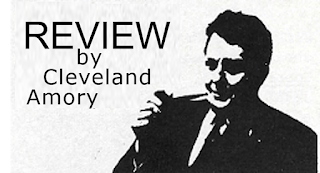
Throughout the 60s and early 70s, TV Guide's weekly reviews were written by the witty and acerbic Cleveland Amory. Whenever we get the chance, we'll look at Cleve's latest take on the shows of the era.
It always happens, when Cleveland Amory reviews a show that's one of my favorites, that I begin things with a mixture of anticipation and dread. The man, as I say, is superbly witty and acerbic—unless he's skewering a show I happen to like. It just goes to show that life poses its share of risks, even if you're just getting out of bed.
"If we have a millionaire President and a millionaire governor, why not a millionaire cop?" For you youths out there, the millionaires are, in order, John F. Kennedy, California governor Pat Brown, and Amos Burke, played delightfully and with delight by Gene Barry in ABC's comedy-mystery Burke's Law. The first good sign comes when Amory refers to the show as "ABC's new corpus delectable," and it's true: every show is packed to the gills with big-name stars in cameo roles, and occasionally lead roles as well. The premiere episode, "Who Killed Holly Howard?", features Suzy Parker, William Bendix, Sir Cedric Hardwicke, Rod Cameron, Bruce Cabot, Will Rogers Jr., and ZaSu Pitts. The victims are, invariably, over-the-top versions of vaguely familiar personages; Howard Hughes here, Ernest Hemingway there. The emphasis is frequently on female beauty, with the beauties all having an eye for the suave, tuxedoed Burke, even when he's investigating them for murder. By the end of the episode, they'll wind up either with a date for dinner, or court.
Amory has praise for Burke's supporting cast: Gary Conway as the young detective thrown off balance by Burke's unorthodox style, and Regis Toomey as the veteran, who's worked with Burke for years and is one of the few who will chance to call him "Amos." And though Amory doesn't mention it (it probably hasn't become apparent yet), one of the best aspects of this very good show is that while there's charm and humor aplenty, Burke and his men are all business when it comes to the business of murder; they know that death is no laughing matter, and there's an honest seriousness behind the investigation and apprehending of the killer.
If there's one nit to pick, Cleve will find it; in this case, he does find it a bit tiring that Burke has to spend so much of each episode fighting off the glamour girls. Nevertheless, he concludes, "we do get a lot for our money in this show, and millions of millionaire viewers should enjoy it." Or non-millionaires, as the case may be.
t t t
![]() |
| The real Ranger Smith and the impostor. Which is which? |
Updated on the situation, Smith jumped right into the role, answering questions about the fictional bear and signing his name to everything from stuffed bears to road maps to plaster casts. He takes it all in stride, and with good humor; "Yogi's fans are all pleasant people," he says. He also takes a ribbing from his fellow rangers (one assistant loved to add growling bear sounds to Smith's Ranger Smith portrayal), and when the park closes for the season in October, the ribbing continues to the sixth graders that Smith teaches back home in Kent, Washington. He adds that his own children (Kurt, 5, and Kathy, 2) are Yogi fans.
One thing that he particularly appreciates is that the Yogi phenomenon has given him the opportunity to remind campers that real bears are not as friendly as Yogi and Boo-Boo. "Yogi just plays funny tricks, but these bears don't know the difference between funny and ferocious!"
t t t
The World Series started last week—October 2, to be exact—but you're not going to see much of it this week. The Series pits those old and bitter rivals, the Yankees and Dodgers, for the eighth time, and the first since the Dodgers' traumatic move from Brooklyn to Los Angeles. Ah, yes, how times change: in the first game, at Yankee Stadium, Sandy Koufax (right) broke the single-game World Series strikeout record, with 15,* and the Yankees crowd was cheering him! Now, you can argue that the game was already a lost cause so why not, but still, I can't believe they would have cheered for a Brooklyn pitcher.*Later broken by Bob Gibson in 1968; you know, that Series where Feliciano sang the National Anthem.
Anyway, by the time we pick up the Series on Saturday afternoon (1:45 p.m. CT, NBC), the Dodgers already have a 2-0 lead, and Los Angeles goes up by three after a 1-0 victory, in which Don Drystale bests Jim Bouton. Koufax brings it all to an end on Sunday afternoon (same Bat time and channel) with a 2-1 triumph, giving the Dodgers only their second-ever Series victory over the Yanks, and the first time a Yankees team had ever been swept in four games. In the closing innings of the final game, Yankees announcer Mel Allen, an institution on NBC's World Series coverage loses his voice, and has to turn the mic over to Dodgers play-by-play man Vin Scully. The ugly rumor, with no basis in truth, is that Allen had become so broken up about the Yankees being swept by the Dodgers that he couldn't bring himself to announce those final innings. It would be his last appearance announcing the Series.
Oh, and by the way, that fourth game came in in a tidy one hour and fifty minutes. That wouldn't even get you through the third inning today.
t t t
Some interesting things on this week; I'm glad we've got time for them. (Although it is my blog; I suppose I can make as much time as I want.)
Henry Harding reports that Jerry Lewis spent $40,000 of his own money on a party at the Beverly Hilton Hotel to celebrate the premiere of his new ABC series. More than 800 showed up in evening dress to watch the broadcast on the big screen, followed by a lavish dinner and flaming cherries jubilee desert, brought in by 40 waiters marching in single file. Lewis arrived late to the party and stayed for about 20 minutes, perhaps already anticipating the roasting the show will get from the critics. This is all a lead-in to Saturday's third episode (ABC, 8:30 p.m.), with David Susskind, Count Basie and his orchestra, Mort Sahl, Kay Stevens and Jack Jones.
Two of the biggest stars in their respective industries headline Sunday's specials. At 9:00 p.m., CBS takes the headlines with Elizabeth Taylor in London, taking viewers on a tour of London "as Liz remembers it," even though she was only seven when her family moved to the United States. Taylor views all the must-see signts, from Parliament to Big Ben, Scotland Yard, the Tower, and the Globe Theater, where Liz does a reading from Hamlet. The script is co-written by humorist S.J. Perelman, which should make for very interesting viewing. But to see it, you'll have to pass up NBC's World Series tie-in, the documentary, "A Man Named Mays," a profile of the remarkable career of the San Francisco Giants' great, produced and directed by Lee Mendelson, who goes on to great fame with the Peanuts animated specials. Unfortunately for Mays, the Giants didn't make the Series this year; unfortunately for NBC and the ratings, the Series ended this afternoon.
The World Series is over by Monday, but of course that doesn't affect the primetime schedule at all, since the games were played in the afternoon. NBC's Monday Night at the Movies (6:30 p.m., and isn't it odd to see a network movie on that early in the evening, with another show to follow) has The Wreck of the Mary Deare, with a cast headed by Gary Cooper, Charlton Heston, and Michael Redgrave. Opposite that, ABC has an episode of The Outer Limits featuring the fine British actor Donald Pleasence as a meek and mild-mannered college professor who has the power to destroy the world. I'll have to go back and watch this; I've seen it, but I don't remember how it ends. And at 7:30 p.m., ABC follows with Wagon Train, with Carol Lawrence playing Princess Mei Ling. There's a photoshoot story inside, showing Lawrence in Asian makeup (right), and that's something we likely wouldn't see nowadays.
PTSD—before we understood what it was—is the topic of Tuesday's Richard Boone Show (8:00 p.m., NBC), the bold (and ultimately unsuccessful) attempt by the former Palladin to form a television repertory company. Tonight, Warren Stevens plays a Korean War vet "planning a 'Wall to Wall War'—in the insurance office where he works. He's holding his frightened co-workers at bay with a machine gun." An eerie precursor to modern times, don't you think? That's followed by a much more pleasant hour, as The Bell Telephone Hour kicks off its new season; Mr. Music Man Robert Preston hosts, with opera stars Richard Tucker and Anna Moffo, dancers Rudolf Nureyev and Svetlana Beriosova, pianist Grant Johannesen, and the folksinging Chad Mitchell Trio. (9:00 p.m., NBC)
Broderick Crawford, who's made a successful career out of both good guys and bad guys, is on the wrong side of the law Wednesday in The Virginian (6:30 p.m., NBC), playing a bounty hunter convinced that Trampas (Doug McClure) has a price on his head. And here's one to give you pause; one of Johnny Carson's guests on The Tonight Show (10:30 p.m., NBC) is attorney Melvin "King of Torts" Belli, who in just over a month will acquire his most famous client: Jack Ruby.
On Thursday, it's the debut of one of the better anthology series of the '60s, Kraft Suspense Theatre (9:00 p.m., NBC), with a two-part thriller, "The Case Against Paul Ryker." The all-star cast features Lee Marvin as Ryker, a GI on trial for his life after being accused of treason in Korea, Bradford Dillman and Peter Graves as officers in the JAG office, Vera Miles as Ryker's wife, and Lloyd Nolan, Murray Hamilton, and Walter Brooke. The episode also serves as the pilot for the 1966 series Court Martial, with Dillman and Graves reprising their roles as Captain David Young and Major Frank Whitaker, respectively.
But we've saved the best for last. On Friday. it's the Twilight Zone episode "Nightmare at 20,000 Feet" (8:30 p.m., CBS) with Shatner, the gremlin, and the plane's wing. You know it, you love it, you can't live without it—but for those reading this issue, it's just another episode of another series. Who would have imagined it?
Now that's the way to end a week. TV
October 4, 2019
Around the dial
At Cult TV Blog, John reviews an episode of Nigel Keene's mid-'70s horror series Beasts, and by looking at the ways in which an episode can be interpreted, correctly mentions that "one of the hallmarks of quality TV is that it can be read in several different ways." Amen to that!
Garroway at Large focuses on another of what Jodie refers to as "Lost Garroway," in this case the 1971 summer replacement series The CBS Newcomers, featuring Dave as MC of a talent show searching for "new and younger talent." How did it go? We'll have to wait for part two to find out.
The Twilight Zone turns 60, and The Twilight Zone Vortex celebrates the occasion with a look at the series' mileposts, as covered in some of Jordan's past articles. It brings back a lot of fine memories to read about the birth of one of television's greatest.
I often mutter about the quality of today's television, but there can be no doubting that we've been fortunate to see the definitive portrayals of two of literature's great characters: Sherlock Holmes and Hercule Poirot. At Classic Film & TV Café, Rick looks back at the great David Suchet in the 1992 Poirot classic Death in the Clouds.
The 1961 season of The Many Loves of Dobie Gillis is the focus of the latest in-depth review at Television's New Frontier: the 1960s. The year covers the end of season two and the start of season three, a time when the boys join (and are discharged from) the Army, and Dobie continues to wonder about what to do with his life.
I've been thoroughly enjoying the day-by-day look at TV Guide's prime-time program listings for the 1964-65 season, as seen in Television Obscurities. Here's a link to Saturday, October 3, but you can't go wrong by making this a daily part of your internet surfing. TV
October 2, 2019
José and the National Anthem
What with baseball's postseason staring yesterday, how about we take a moment and talk a little sports?
Regular readers know that I have a longtime interest in the year 1968, one of the most tumultuous twelve months in American history, a year that featured a combination of forces all conspiring to come to a head, frequently in ugly ways. If it didn’t happen in 1968, you can bet the roots grew deeply during that year. And most of it played out right before our eyes, on television.
Much as it is case today, it seems as if nothing was immune from controversy, not even sports. And, then as now, one of the year’s biggest controversies surrounded the National Anthem. It wasn’t the athletes causing it, though, but the performer.
It was Monday, October 7th, the fifth game of the World Series, played in Detroit, between the Tigers and the St. Louis Cardinals. It might not have happened at all had Detroit not won Game 2; as it was, the Cardinals took at 3-1 lead into Game 5. Ernie Harwell, the legendary Tigers radio announcer (who was also a songwriter, albeit an unsuccessful one; “As a songwriter, I’ve got a no-hitter going,” he used to joke), was asked by Tigers general manager Jim Campbell to select the singers for the games to be played in Detroit. (I imagine something like that would be done in the league offices today.) Harwell chose Detroit native Margaret Whiting for the third game, and Motown star Marvin Gaye for Game 4 (more on him later), but he had something different in mind for Monday’s Game 5, a young singer he liked, who’d scored some hits, including a cover of The Doors’ “Light My Fire”: José Feliciano. And, well—
As you can hear from the live broadcast, fan reaction to Feliciano’s folk-blues rendition was muted, and you can hear what sounds like some jeering starting as NBC goes to a commercial break. Down on the field, there was no mistake. “Well, I heard some cheers, but they were very sparse,” Feliciano said. “And I heard a lot of boos. And I said, ‘Who, what did I do? Why are they booing me?” The players, too, were taken aback. Tigers pitcher John Hiller remembered thinking, “Oh, my God, Ernie—what did you do?” Cardinals star Roger Maris said, “I don’t think it was the proper place for that kind of treatment. Maybe I’m a conservative.” Pitcher Dick Hughes added, “Thumbs down all the way. That’s a conformist’s song and should be sung the way it was written.” Cardinals catcher Tim McCarver, who went on to have a long and successful career as an announce himself, was one of the rendition’s few fans. “Why not that way?” he said. “People go through a routine when they play the anthem. They stand up and yawn and almost fall asleep. This way, at least they listened.”
NBC, broadcasting the Series, was flooded with thousands of angry letters and calls, as were the Tigers offices; editorial writers had their say as well. One Detroit resident accused Harwell of being a communist for recommending such a performance.
In retrospect, and without context, it can be hard to understand it was all about. Listening to Feliciano’s rendition, it occurs to me that there’s something in it that speaks to the vastness of the land and the history of the country. Although it’s certainly an unorthodox arrangement, it doesn’t trade in on the inherent dignity of the song’s meaning; more than anything else, it called to mind “This Land is Your Land,” a song which, no matter how you feel about Woody Guthrie’s motives, wears the dust of America on its hands. So does Feliciano’s version; one can discern an almost wistful meditation on what America had been and still could be. (Your mileage may vary, of course.)
It is the irony of ironies that Marvin Gaye sang the Anthem prior to Game 4, since the performance to which Feliciano’s version has most frequently been compared has been Gaye's assassination of the song at the 1983 NBA All-Star Game. Gaye's 1968 rendition was an honest and straightforward rendition; he admitted later that he'd been encouraged to tone it down a bit, and Tigers catcher Bill Freehan said that Feliciano's version made Gaye "sound like a square."
So what is the difference between Feliciano in 1968 and Gaye in 1983? For one thing, I think it's the word performance. Gaye's rendition is just that, a performance for art's sake, in which the actual intent of the song as the "National Anthem" is lost, a kind of ersatz "Sexual Healing" that hardly calls to mind Francis Scott Key and the bombing of Fort McHenry. Watch any soccer match at the World Cup, for example, and you'll see players standing together, arms linked around each other, belting out their own anthems with a gusto that bespeaks a pride in their nation.
It may well be that "The Star-Spangled Banner" is not a particularly good choice for the National Anthem (I'd choose "America, the Beautiful" myself), and it's notoriously difficult to sing, but even if it weren't, it would be hard to imagine those same players trying to sing along to Gaye's 1983 version with any sense of national pride. Put it this way—could you see Colin Kaepernick kneeling to it? People would be wondering what he had against Gaye's version; "What are you, some kind of right-winger?" Gaye's version, great though it may be, isn't the National Anthem; it doesn't have the dignity or gravity that is rightly due a national anthem, You can protest what it does to the anthem, but you can't protest it as the anthem, because as an anthem it doesn't stand for anything.
It's since become somewhat common to view the National Anthem as a sort of performance art, and at most sporting events it's done a capella, possibly because so many of today's singers don't know how to sing with normal accompaniment. What with the anthem having become a proximate cause of protest for people, not to mention the somewhat unholy alliance between professional sports and professional patriotism, the best thing to do would probably be to drop it from the telecast altogether.
All's well that ends well, though. The controversy died down eventually, after a year or so. Despite the many thousands of letters (and even death threat), Ernie Harwell kept his job (until 2002, in fact), and although José Feliciano thinks it took until his theme for Chico and the Man for his career to truly recover, he wound having a pretty successful one. His recording of the anthem went on to become a hit, and today it plays as a continuous loop at the Baseball Hall of Fame. It didn't hurt, of course, that the Tigers went on to win that World Series, making everyone in Detroit happy. As a matter of fact, they didn't lose a game after Feliciano sang the anthem, which makes one wonder why such superstitious people as athletes didn't embrace it immediately. He has performed it since, though, at playoff games and the World Series, and when Harwell learned he had terminal cancer, one of his final wishes was to invite Feliciano back to Detroit to perform the national anthem. Feliciano did on May 10, 2010, six days after Harwell’s death.
As I say, a happy ending for everyone, except perhaps the St. Louis Cardinals. But that's another story. TV
Subscribe to:
Posts (Atom)


