October 8, 2022

This week in TV Guide: October 5, 1968


As you have no doubt noticed over the years, we occasionally dip a toe into the world of high fashion—especially when it involves an attractive Hollywood actress, although that part of it is purely coincidental. 

This week, however, high fashion demands our attention, as a panel of experts looks at the design habits of some of television's biggest female stars in a fascinating roundtable discussion moderated by TV Guide's Dick Hobson. The experts: Cardinali, a high-priced Beverly Hills couturier who designs for That Girl's Marlo Thomas; Mr. Blackwell, chronicler of the infamous 10 Worst Dressed list; Edith Head, longtime studio designer and winner of eight Academy Awards (seven at the time of this writing); George Whittaker, head of wardrobe for CBS in Hollywood; and Bill Theiss, designer for Star Trek. Their observations are occasionally catty but often insightful, and frequently delve into the reasons behind certain fashion looks. Naturally, we can't replicate the entire article, but hopefully these excerpts will give you a glimpse into their thinking.

There's general agreement that Mission: Impossible's Barbara Bain stands at the top of the current fashion pyramid; Cardinali calls her "terribly well-groomed. She's pure woman on that show." Head says her look is "Beautiful, elegant and sexy," and Theiss adds that "She's sure as hell the best-looking thing that comes into most people's homes." Whittaker makes a very accurate comment: "You're always left with the impression that she was dressed correctly." Cardinali says that "[photographer Richard] Avedon would die to have that kind of model, she's so agile!"

About Lucille Ball, the group is divided. Cardinali sees her look as "ageless!" but Theiss counters that "she's anachronistic. Her taste in clothes reflects a past era—and not a fashionable past era. She subconsciously remembers the Forties as her best period and wears the styles she wore then." Blackwell is astute in saying that "People who adore Lucy are relating back. She makes them feel younger. She moves back 25 years of their lives." Theiss suggests that Lucy "apparently thinks that the only way for her to be contemporary is to be funny and campy, like playing a hippie or something, and she doesn't realize she could do it straight and be marvelous."

Carol Burnett gets mixed reviews as well; Head says, "I don't think Carol Burnett is interested in projecting a fashion image, more in projecting her own inimitable brand of humor." Whittaker describes her as "like an overgrown little girl with her two long gawky legs. But I see a Fun Girl who can look glamorous if she really wants to try." Blackwell is bluntly descriptive: "She looks like the farmer girl who came to the big city and overdressed!" 

What can you possibly say about Zsa Zsa Gabor? Head recognizes Zsa Zsa's dressing as her "signature," and Whittaker says that with her strong personality, "there is nothing you can put on this woman that is going to overpower her." Theiss thinks she "tends to overemphasize her sexual appeal because that's the only thing she's confident of." Blackwell says "Mae West plays satire and admits it. Zsa Zsa thinks she's for real—there's the difference." 

Nancy Sinatra gets mostly good reviews; Head calls her appearance "as carefully worked out as you work out a piece of theater—thoroughly professional," and Blackwell praises her boots-and-miniskirts look "because she has marvelously clean legs." On the other hand, Theiss isn't so positive, calling her a "product" who's "playing it younger than she is. I remember when I was a teen-ager being very annoyed at actors playing teen-agers who I knew were 10 or 15 years older." 

Since Cardinali works with Marlo Thomas, you can expect she's bullish on the look: "Marlo is a clothes horse! . . she's really lots of fashion1 Kicky! Wonderful!" But Blackwell ain't buying it: "I don't mind a woman trying to look as youthful as possible in her own age bracket. But Marlo's playing a girl os 22 or 23, yet her appearance has a sub-teen look! It's pre-brains!" Theiss adds that "Nancy Sinatra makes it work; Marlo doesn't."
In other commends, Jayne Meadows gets a thumbs-down (Whittaker: "Jayne Meadows is so overly dressed it's not funny! She puts everything on but the kitchen sink."), as does daytime talk show host Gypsy Rose Lee (Cardinali says "What a clothes hanger she is! Just outrageously marvelous," while Whittaker calls her "the most horribly dressed woman I know!"

It is, as I say, a very interesting analysis, and it's obvious that our experts all understand the psychology of dressing as much as the visual aspect. Unfortunately, there are no pictures of any of the women in question. But, being that you're reading this courtesy of the internet, I'm sure you'll have no problem making up the difference.

l  l  l

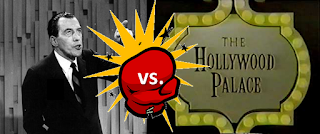
During the 60s, the Ed Sullivan Show and The Hollywood Palace were the premiere variety shows on television. Whenever they appear in TV Guide together, we'll match them up and see who has the best lineup.

Sullivan: Tentatively scheduled: Tony Bennett, performing with Woody Herman and his orchestra; singers Dionne Warwick and Tiny Tim; comedian Flip Wilson; the Kessler Twins, singer-dancers; and unicyclist Goetchie. Also: the cast of the off-Broadway musical "You're a Good Man, Charlie Brown."
Palace: Host Jimmy Durante presents Joey Heatherton, Don Ho and the Allis, the Lennon Sisters, the comedy team of Lewis and Christy, and six finalists in the Olympic tryouts for the U.S. gymnastic team.

This week's choice is, when you come down to it, pretty easy. The Palace looks to me like a tryout for next season's Jimmy Durante Presents the Lennon Sisters, and I can't see Joey Heatherton's name without thinking of Lola Heatherton. Ed's holding all the cards tonight, starting with Tony Bennett and Woody Herman, so there's no doubt about the outcome: Ed's the winner, hands down.

l  l  l

Throughout the 60s and early 70s, TV Guide's weekly reviews were written by the witty and acerbic Cleveland Amory. Whenever we get the chance, we'll look at Cleve's latest take on the shows of the era. 
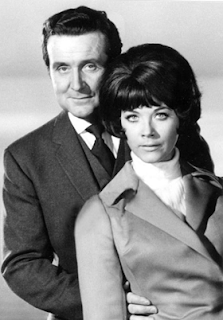
We've had just about every kind of cop show on television, so Cleveland Amory isn't surprised that ABC has finally turned to "the teen-agent, or bop cop. Not even a quiz kid, nor even a whiz kid, but a genuine fuzz kid." Furthermore, Cleve adds, "you have three of them—a white boy, a black boy and a white girl. This is, of course, in keeping with the black-and-white trend in color shows this season." There can be only one show we're talking about: The Mod Squad.

For the uninitiated, our three heroes are young people, in trouble with the law, who are given a choice: "pay their debt to society or join the boys in blue." They don't go all the way, of course: they don't carry guns, they don't arrest people, and they don't fink on their friends. Instead, their mission is to try and turn them away from trouble before it's too late, for both them and society. As Amory points out, most of the crimes in the show occur as the result of "seemingly bad-guy young fry" being used as pawns by evil adults. "And what could be better TV than half-bad, half-cop kids vs. all-bad, anti-kid adults?"

Despite all these word games, Amory likes The Mod Squad. While the excess violence bothers him, there's a depth to the characters that is unexpected, and welcome. "On the surface these kids may seem to have chosen just to cop in instead of copping out. But underneath, they are searching not only for desperate criminals but also, sometimes equally desperately, for their own identities." It's sure to appeal to those young viewers who find themselves in a similar search. The acting is equally good; Clarence Williams III and Michael Cole are no threat to Bill Cosby and Robert Culp, but they have more integrity. And while Peggy Lipton could be a bit more expressive, "remember, she's playing it the way kids are—not the way you evil adults wish they were." Amory gives it a B for the show and an A for effort; The Mod Squad lasts for five successful and influential seasons.

l  l  l

And now I'm hoping you'll indulge my interest in classic sports one more time to look at another World Series, although in fact you have no choice, other than to stop reading altogether and come back next week in hopes that I've moved on to something else. The simple truth, though, is that whenever you're dealing with television in early October, at least in this time period, you're going to run into the Series, and the 1968 edition is notable for several reasons. It's the last World Series to take place prior to the start of divisional play (and playoffs), which means it's the last Series to be played this early in the month. It is, I think, an underappreciated Series for several reasons, but today we're going to take a look at its most famous moment, perhaps one of the most famous in baseball history—and it takes place before the game's first pitch is even thrown.

It happens on Monday, October 7th, before the fifth game, played in Detroit, between the Tigers and the St. Louis Cardinals. (12:30 p.m. ET, NBC) Ernie Harwell, the legendary Tigers radio announcer (who was also a songwriter, albeit an unsuccessful one; "As a songwriter, I’ve got a no-hitter going," he used to joke), had been asked by Tigers general manager Jim Campbell to select the singers for the games to be played in Detroit. (I imagine something like that is done by the commissioner's office today.) Harwell chose Detroit native Margaret Whiting for the third game, and Motown star Marvin Gaye for Game 4 (more on him later), but he had something different in mind for Monday’s Game 5, a young singer he liked, who’d scored some hits, including a cover of The Doors’ "Light My Fire": José Feliciano. And, well—


As you can hear from the live broadcast, fan reaction to Feliciano’s folk-blues rendition is muted, and you can hear what sounds like some jeering starting as NBC goes to a commercial break. Down on the field, there is no mistake. "Well, I heard some cheers, but they were very sparse," Feliciano says. "And I heard a lot of boos. And I said, 'Who, what did I do? Why are they booing me?'" NBC is flooded with thousands of angry letters and calls, as are the Tigers offices; editorial writers have their say as well. One Detroit resident accuses Harwell of being a communist for recommending such a performance.

It's hard to see, from today's vantage point, what all the fuss is about. Certainly I've heard much worse versions of the National Anthem, both in quality and performance. Although it’s certainly an unorthodox arrangement, it doesn’t trade in on the inherent dignity of the song’s meaning. It is, however, a controversy of its time, of the awful year of unrest and violence engulfing the country, and I suppose this was inevitable.

I mentioned Marvin Gaye earlier, and the irony is that Gaye's rendition the day before was an honest and straightforward one; he admitted later that he'd been encouraged to tone it down a bit, and Tigers catcher Bill Freehan said that Feliciano's version made Gaye "sound like a square." Gaye would later perform the Anthem at the 1983 NBA All-Star Game, a performance in which the actual intent of the song as the "National Anthem" is lost amidst a kind of ersatz "Sexual Healing" that hardly calls to mind Francis Scott Key and the bombing of Fort McHenry. Feliciano may have made Gaye sound like a square in 1968, but in 1983 Gaye made Feliciano's sound like the Mormon Tabernacle Choir by comparison. 

Anyway, the Tigers win that fifth game, 5-3; stay tuned for how it all ends.

l  l  l

Highlights: There's an interesting article about the varying approaches that Nixon and Humphrey are taking to television in this jet age, but I don't have the stomach for politics at the moment (you'd probably think, looking at me, that it's the only thing I don't have in the stomach). Therefore, we'll talk for a moment about politics and movies, at least on TV. This week, ABC's Wednesday night movie presents the television premiere of the 1964 black comedy Dr. Strangelove (9:00 p.m.). Judith Crist calls Stanley Kubrick's masterpiece "Swiftian satire at its best, a scathing survey of the human and his propensity for self-destruction." With "unique" performances by Peter Sellers, George C. Scott, Sterling Hayden, and others, Crist says Strangelove is "undoubtedly the most significant American film of the past 20 years." 

Crist also has kind words for Khartoum (Saturday, 9:00 p.m., NBC) a masterful and literate epic on the 1833 siege of Khartoum, with Charlton Heston in "his best performance to date" as General Gordon, and Laurence Olivier "simply stunning" as the fanatic leader of the dervishes. I've meant to check that movie out, but now I'll have to get more serious. Sunday sees the Beatles star on The Smothers Brothers Show (9:00 p.m., CBS) in the first of two taped performances; other guests include Nancy Sinatra, and I wonder if she displays the clean legs that Mr. Blackwell so appreciated. 

Monday
's episode of The Avengers (7:30 p.m., ABC) hits perhaps a little too close to our times, as Steed and Tara investigate a mysterious epidemic that's killed one doctor after another. They suspect the bug is man-made, and investigate "a hypochondriac millionaire, a sinister nursing home, and a 'cold cure' clinic." (If only we'd had them on the case the last couple of years.) On Tuesday, the musical-comedy series That's Life (10:00 p.m., ABC) presents us with another "very special wedding" episode, as Robert and Gloria (Robert Morse and E.J. Peaker) finally tie the knot. (That this episode doesn't appear in many famous-TV-wedding lists attests to how this show was perhaps the Cop Rock of its time.) Thursday, Dragnet (9:30 p.m., NBC) has a fact-based episode detailing the measures taken by the LAPD to maintain peace in the wake of the assassination of Martin Luther King., Jr. 

Thursday marks the seventh and final game of the World Series (1:30 p.m., NBC), with the showdown between the two pitching aces of the Series: Bob Gibson from the Cardinals, and Mickey Lolich of the Tigers. A misplay of a fly ball by St. Louis's usually-dependable center fielder Curt Flood in the seventh inning leads to a two-run triple that breaks up a scoreless tie, and Detroit goes on to a 4-1 victory. Lolich, the Series MVP, becomes the last pitcher to-date to start and win a seventh game on two days' rest.

As you know, I'm not a big fan of "message" episodes, but the consistently-good Judd for the Defense (Friday, 10:00 p.m., ABC) puts Judd in a difficult place; his client, a black mechanic named Jady Crews (Bernie Hamilton), has been falsely convicted of murder. Does he follow Judd's maneuvering to reverse his life sentence, or does he go along with his militant son (the always-excellent Georg Stanford Brown), who wants him to use the occasion to denounce the "sick white society" and its discriminatory system of justice? Paul Lambert and Dabney Coleman make up a good supporting cast and Carl Betz, once again, is the eloquent spokesman for a justice that may never have existed and probably doesn't now, but one to which we should always aspire. 

l  l  l

Last but certainly not least, on Friday it's the launch of Apollo VII, the first American manned spaceflight since the Apollo 1 fire that claimed the lives of Gus Grissom, Ed White and Roger Chaffee on January 27, 1967. Apollo VII represents perhaps the most important American space mission since John Glenn's orbital flight, and for NASA to have any chance of meeting JFK's goal of putting a man on the moon by the end of the decade, it is vital for this flight to succeed.

Underlining the criticality of the mission, NASA has put veteran astronaut Wally Schirra in command, with Donn Eisele and Walter Cunningham as the other members of the crew. Network coverage is expected to begin at 10:00 a.m., with the launch scheduled for 11:00 a.m. and updates throughout the day. If all goes well, daily television transmissions from the spacecraft—another first for an American spaceflight—are slated to begin Saturday at 11:00 a.m.

Despite some tense moments—the crew becomes congested from head colds; and the tough-as-nails Schirra, flying his last mission before retiring from NASA (he'll work as a space analyst with Cronkite at CBS), is constantly battling with Mission Control—the mission is a rousing success, and soon NASA makes the stunning announcement that Apollo VIII, will orbit the moon before the end of the year. And the beginning of another great adventure. TV  

October 7, 2022

Around the dial


Before we get to the good stuff, a couple of PSAs to start things off. First, I've got one copy of The Electronic Mirror left—who wants it? All it costs is postage and handling; email me today! 

Next, it's that time again, when I start planning for next year's TV Guide articles. You never know whether or not it's the last year for the blog—even I don't know—so if you have a TV Guide or two you'd like me to write about, let me know. I always return all issues timely and in the same condition in which I got them.

Now that I've got that out of the way, let's see what's new. We'll start at bare-bones e-zine, where Jack's Hitchcock Project takes us to David Goodis's lone contribution to the series, "An Out for Oscar," an adaptation of Henry Kane's novel My Darlin' Evangeline, with the late Henry Silva, Larry Storch (!), and Linda Christian. 

At Cult TV Blog, John makes a trio of visits to Hammer House of Horror this week: the ambiguous, multi-layered episode "Witching Time," the superb, dark mystery "The Thirteenth Reunion," and a personal favorite of John's, "Rude Awakening." They're all highly recommended pieces, so head over there.

It's really kind of hard to avoid talking about a movie called Weird Women, since I've known a few of them myself (and many weird men as well), so you'll want to visit Classic Film & TV Cafe and read Rick's review of this 1944 thriller with Lon Chaney Jr., three mysterious ladies, and witchcraft. Afterwards, go watch the movie. 

At the Secret Sanctum of Captain Video, it's a look back at the delightful "Lizard's Leg & Owlet's Wing" episode of Route 66, with the aforementioned Lon Chaney Jr., Boris Karloff and Peter Lorre. Route 66 was not a show known for a lot of laughs, but this is a warm, affectionate tribute to three legends and the roles they made famous.

Here's the kind of rabbit hole I enjoy: at Shadow & Substance, Paul looks at "Temporalia," a spoken-word cut from the Alan Parsons Project album The Time Machine, featuring words by Oxford professor and particle physicist Frank Close, who asks the TZish question: "Which of those two is 'now'?" It's a great application of that line to a show that certainly asks those kinds of questions.

You know how we seem to be doing theme nights in the Hadley household when it comes to our classic TV lineup. Having dispensed with the very enjoyable Garrison's Gorillas, we've now moved on to one of television's grittiest dramas, Combat! Fortuitous that at A Shroud of Thoughts, Terence should turn his attention to this series on the 60th anniversary of its premiere. And if you like that, stay tuned; I'm working on a story right now about The Gallant Men. Watching these, it's much easier to understand what a terrible, terrible thing war is. TV  

October 5, 2022

Over the Transom: Emily Hartley visits Ironside

by Stephen Taylor

Just got done watching an episode of Ironside called "But When She Was Bad..." The episode was routine in every way but redeemed by some fine acting by Suzanne Pleshette. She’s a B-girl from Dallas up to no good in San Francisco, and she’s good in the role.

Pleshette was a stunningly beautiful woman, but she had the acting chops to go along with a pretty face. I first remember seeing her in an episode of Alfred Hitchcock Presents in 1960; she was good in the role, and I suspect her work in that episode got her the role of doomed schoolteacher Annie Hayworth in The Birds. In The Bob Newhart Show she was able to show us she was also a pretty fair comedienne, but in between those two she did television. Lots and lots of television. This episode is from 1971, she was less than a year out from Emily Hartley.

In this one she plays a prostitute from Dallas named Shelly Kingman who’s come to San Francisco to kill Chief Ironside; she doesn’t want to murder him, but she’s being blackmailed. Nothing much else to say about the plot; this is all about Pleshette’s acting. Being a prostitute has made Shelly Kingman hard; she’s been hurt so many times by so many people, especially men, that an offer of friendship from Ironside and the gang makes her uneasy and conflicted.

(This part of the episode felt odd; why would a group of hardened cops want to take a out-of-town prostitute under their wing?) Shelly doesn’t want their friendship, as she’ll only get hurt.

And that Ironside. He seems able to read her mind, and to see deep inside her. She begins to like Ironside and is tormented by the thought of killing him. She’s in a lot of pain, and numbs the pain by drinking; she flees, only to end up passed out in a cheap hotel room. It’s her milieu; she’s well acquainted with cheap hotel rooms, and her bottle is always good company.

And Pleshette makes it all work. She’s absolutely believable as the B-girl who’s fallen so low that she’s trying to murder someone who’s treated her with decency and respect. Her face shows the day-in and day-out misery that Shelly Kingman endures. And while screaming at Ironside she begins to weep; her life, what there is of it, is crashing down around her. Shelly Kingman is in a world of hurt in more ways than one, and Pleshette shows us every corner of her misery. She’s a bright spot in an otherwise forgettable episode.

Dane Clark plays the bad guy; he was menacing, but not much else. Len Lesser is a hitman with not a single line. The episode did have some good music; existing cues were used in some different contexts, and worked well. Quincy Jones had by this time written a jazz version of the main theme, and part of it was played in Act One. It’s good stuff; the full version of this piece was released on his album “Smackwater Jack” that same year.

And my estimation of Fran Belding may have just gone up a bit. She immediately senses that something is wrong with Shelly, telling the others that “I don’t like her”. She couldn’t articulate why, but her judgment is borne out when the report from the Dallas police comes in. 

Routine, but still fun. TV  

October 3, 2022

What's on TV? Wednesday, October 6, 1965


Another year, another week, another World Series. Nowadays, one can say that all the way to Halloween, but back then baseball had the decency to finish its affairs early in the month and then get out of the way for football. But I digress. You'll notice some unique things if you take the trouble to go through all of the listings. First, we have a pair of twin stations, probably due to common ownership. WWLP and WRLP have the same lineup, as do the WHNP channels 30 and 79, so don't get the idea that I've copied myself. As well, WATR, channel 20, does not colorcast, and the handful of ABC color shows are listed accordingly. I'm sure you'll find other items of interest below.

October 1, 2022

This week in TV Guide: October 2, 1965


Pope Paul VI is in New York on Monday to speak at the United Nations, followed by a Mass at Yankee Stadium. It's the first time any pontiff has ever appeared in the Western Hemisphere, so the trip is kind of a big deal. Nowadays most of the coverage would probably be on your favorite cable news channel, but we're a long way from that yet, so prepare for plenty of preemptions to your daytime and primetime schedule.

Coverage begins early Monday morning with the Pope's departure from Rome at 1:00 a.m. ET, live via Early Bird satellite, and picks up with his arrival at Kennedy Airport at 9:30 a.m., followed by a meeting with President Johnson, his speech (in French) before the UN, a meeting with dignitaries, the Mass at Yankee Stadium (televised in color!), and his departure at 11:00 p.m. A whirlwind day in the Big Apple; I'll bet he didn't even get to the Empire State Building. 

What I find interesting about the Close Up is the amount of behind-the-scenes information we're given. Not only are we told about the network commentators (Revs. Edwards L. Heston and William Tobin on ABC; Fr. Robert O'Donnell on NBC; and Archbishop Fulton J. Sheen on CBS), we're also given the producers: Sid Darion on ABC, Chet Hagen on NBC, and Don Hewitt on CBS. Hewitt, we know, will become famous for his work with Walter Cronkite and later for 60 Minutes, but Hagen had won Emmys and a Peabody for previous specials, and had been in charge of NBC's coverage of JFK's assassination and funeral. Sid Darion had done year-end specials for ABC and would later work on the religious series Directions. Would viewers have known about these men back then, or cared? I mean, I think it's interesting, but then, I'm not sure I'm the typical viewer. 

Pope Paul VI's trip is headlined as the "Pilgrimage for Peace; the last pope to visit New York, Francis, will make a stop for an ecumenical service at the 9/11 Memorial. Proof that we're still praying for peace.

l  l  l

During the 60s, the Ed Sullivan Show and The Hollywood Palace were the premiere variety shows on television. Whenever they appear in TV Guide together, we'll match them up and see who has the best lineup.

Sullivan: In Hollywood, Ed's scheduled guests are Judy Garland; Sophie Tucker; comic Jackie Vernon; rock 'n' roller Tom Jones; puppet Topo Gigio; the Marquis Chimps; Leyte Filipiana, a Filipino dance group; and the Swinging Lads, a vocal instrumental group.

Palace: Host Fred Astaire introduces ballet stars Rudolf Nureyev and Dame Margot Fonteyn of London's Royal Ballet Company. Astaire also presents comedian Paul Lynde and actress Carmen Phillips in a sketch about a girl who wants to end it all; the Andrew Tahon Puppets, featuring Fuzzy the Caterpillar; jazz organist Jimmy Smith, comic Jackie Mason; the rock 'n' rolling We Five; and the acrobatic Suns Family, making their U.S. debut.

One of the reasons variety shows like these don't exist anymore is due to their dependence on vaudeville acts. Tumblers, animal acts, puppet shows. I'm not against them, mind you, but would today's viewers dig them? The kids might, and of course these shows were meant to have something for all members of the family. But when you look at shows like those hosted by Dean Martin or Carol Burnett (or Tom Jones himself), you often see, in place of such acts, performances and skits featuring the host, with guests or alone (one reason why singers and comedians make the best hosts). If you figure that this week's vaudevillians cancel each other out, you're left with a legendary trio of dancers on the Palace, and in that case nobody's going to beat out Astaire, Nureyev and Fonteyn. This week, the Palace dances off with the honors.

l  l  l

Throughout the 60s and early 70s, TV Guide's weekly reviews were written by the witty and acerbic Cleveland Amory. Whenever we get the chance, we'll look at Cleve's latest take on the shows of the era. 

This week, Cleveland Amory visits the South of William Faulkner, a world seething with suppressed passions, generational grudges, gothic sensibilities, and co-dependent family members. In other words, your typical soap opera.

You'd expect Cleve to be all over this one, as in, "over the top," and he is. But, surprise, surprise, even though "all this sounds as if it's been, if not wedded and bedded, at least watched and botched many times before, the fact remains that The Long, Hot Summer, which made a strong movie, is also strong TV." Its production values are top notch, from the teaser preceding the opening credits on down. It's also comprised of "really strong principal characters," and a stellar cast, featuring Roy Thinnes ("certain to be one of the new season's finest attractions"), Edmond O'Brien (who plays Will Varner "in masterful fashion"), and Ruth Roman, whom he describes simply as "excellent." In fact, he reserves judgment only on Nancy Malone, just as her character reserves judgment on Thinnes's.

And—well, that's about all. Amory's review ends abruptly, as if he needs more time to draw his conclusions. His description of the plot line, with the various seething and suppressed emotions, is very funny, similar to other soap reviews we've read from him, but in the end things don't really go anywhere. So we'll fill in the blanks: The Long, Hot Summer lasts but one season, running 26 episodes; Edmond O'Brien leaves halfway through in a dispute over the show's focus, to be replaced by Dan O'Herlihy; Roy Thinnes becomes far better-known for his next series, The Invaders; and Nancy Malone remains far better-known for her previous series, Naked City. Whether or not any or all of this would surprise Cleveland Amory is anyone's, or everyone's guess. But it's fair to say that The Long, Hot Summer is one series that failed to make it through the long, cold winter.

l  l  l

Lloyd Bridges is The Loner  
It is, as Henry Harding says, "high noon" for Rod Serling's new Western, The Loner, airing on CBS. The source of the imagery is a showdown between Serling and Michael Dann, CBS's head of programming. Serling asserts that Dann told him the show needed more violence, saying, "You're in trouble—the audience doesn't like your show." "That's interesting, Mike," Serling says he responded, "considering the fact that it isn't even on the air yet." Apparently, Dann was basing his opinion on a focus group of 100 viewers who'd seen the opening episode and found it too unconventional. Says Serling, "I told Dann that if the network wanted a conventional Western with emphasis on violence and action, it should have gotten a conventional Western writer and producer." 

Dann denies that he asked for more violence—he prefers to call it "action"—and says he wants a show with more "movement" and is less "cerebral." (Perhaps less Loner and more Lone Ranger?) As of now, production of the show has been suspended after 15 episodes. It eventually returns to production, with a total of 26 episodes appearing during the single season of the show. Which begs the question Serling asked in the beginning—if you want an ordinary Western, why Serling? The man's reputation ought to have been well-known enough by then. As the always-reliable Wikipedia points out, Cleveland Amory will write that Serling "obviously intended The Loner to be a realistic, adult Western," but it was "either too real for a public grown used to the unreal Western or too adult for juvenile Easterners."  

Serling would frequently talk of his dissatisfaction with The Loner,. and it's hard to disagree. The few episodes I've seen have been pretty good; certainly, more thought-provoking than the average Western. Perhaps, as is so often the case, The Loner is simply a show ahead of its time. It would have been interesting to see what would have happened had it come along later in the 1960s, when the existential loner is more in vogue.

l  l  l

The Loner isn't the only Western worth talking about this week. Wednesday is Western night on The Danny Kaye Show (10:00 p.m., CBS), as Danny welcomes Buddy Ebsen of The Beverly Hillbillies, Clint Eastwood of Rawhide, Fess Parker of Daniel Boone, and. . . Charo. I'm still trying to figure out a clever retort for that one, but in the meantime there's an article by Arnold Hano about the death and rebirth of Rawhide. The series, in the midst of falling ratings, was, more or less, cancelled at the end of last season by CBS honcho James Aubrey. Not long afterward, Aubrey himself was cancelled by William Paley and Dr. Frank Stanton, and voila! Rawhide was back on the schedule.

Granted, this came with a few changes. Eric Fleming, the show's lead, was sacked, "because they were paying me a million dollars a year" according to Fleming, even though he was actually only making $220,000. Eastwood, the show's co-star, was elevated to star, and most of the existing cast members were done away with. Brought in "to fill the gaps" were veteran actor John Ireland ("'He will add dramatic strength,' executive producer Ben Brady says. "He will play what is obviously a man his own age—touching 40." Ireland is actually 51); Shakespearian actor Raymond St. Jacques and Brit David Watson, who as a boy soprano soloed at Queen Elizabeth's coronation. 

For all the changes, Rawhide only buys a few additional weeks on the trail; its last episode will air on January 4, 1966. Fleming, who'd ruffled many feathers during his time on the show, drowns in a boating accident less than a year after this article. Meanwhile, Clint Eastwood has been spending some time in Italy making a couple of movies: A Fistful of Dollars (originally turned down by Eric Fleming) and For a Few Dollars More. Just after Rawhide's cancellation, he'll head back begin work on The Good, the Bad and the Ugly. Say no more.

l  l  l

Back in the day, a week like this would have been like Christmas for sports fans, as America's three most popular spectator sports are on display. Leading things off (and that's a pretty appropriate term) is the 62nd World Series, as the National League champion Los Angeles Dodgers* take on the American League champion Minnesota Twins. Game one takes place on Wednesday (3:00 p.m. ET, NBC); it's also Yom Kippur, and Dodgers star pitcher Sandy Koufax, who is Jewish, has said he will not pitch on the holiest day of the Jewish year. Don Drysdale, hardly a slouch, pitches the first game for the Dodgers, losing to Mudcat Grant and the Twins 8-2. This will play out a week later when, with the Series tied at three games apiece, Koufax pitches the seventh game on only two days rest; though he doesn't have his best stuff, he shuts out the Twins on three hits and the Dodgers take the game, and the Series, 2-0.

*TV Guide wasn't sure who the National League representative would be, since the pennant race was undecided at press time. Had a playoff been necessary, all games would have been on ABC.

College football, which has always aroused passions in sports fans, is off and running, and Saturday's game of the week features the perennial Big 10 powerhouse Ohio State Buckeyes travelling to Seattle to take on the Washington Huskies. (4:00 p.m., NBC) Ohio State wins the game, 23-21, but even though finishing the season with a 7-2 record, Ohio State stays home during the bowl season; as was the case at the time, only the Big 10 champion, in this case Michigan State, gets to go bowling. 

Then as now, Sunday belongs to pro football, and as the pros surpass baseball as Ameria's sport (according to Gallup, it happens sometime around now), the NFL and AFL are both in action. CBS is on hand for the New York Giants vs. Pittsburgh Steelers (1:15 p.m.), while NBC counters with the Boston Patriots vs. Kansas City Chiefs. Between Saturday and Sunday, there are only four football games on TV (including the big college game between Williams and Springfield on WWLP); today, just on the networks, it would be—what, maybe 15?

l  l  l

What else is interesting this week? Well, NBC is introducing their new Saturday morning schedules, and among the new cartoons are Atom Ant (9:30 a.m.) and Secret Squirrel (10:00 a.m.). Remember those Hanna-Barbera classics? And on WHCT in Hartford, which provides pay-TV movies, it's the 1963 comedy classic It's a Mad, Mad, Mad, Mad World (6:30 p.m.) On Sunday, the syndicated special "October Madness" (4:30 p.m. channel 5, 8:30 p.m. WWLP/WRLP), reviews the history recalling the great moments of the World Series, narrated by Gene Kelly. 

If it's not preempted by the Pope, Monday night has one of those coincidences that makes me wonder if it's really a coincidence: at 10:00 p.m., NBC's Run for Your Life goes up against an episode of ABC's Ben Casey entitled "Run for Your Lives, Dr. Galanos Practices Here." Both episodes boast fine guest casts (Telly Savalas, Gia Scala and Jeremy Slate on the former; Nehemiah Persoff and Michael Ansara on the latter), but do you really think that Casey episode title just came out of thin air?

Dr. Richard Kimble continues to run for his life on The Fugitive (Tuesday, 10:00 p.m., ABC), and don't forget this tie-in:


Thursday starts on The Today Show (7:00 a.m., NBC) when the entire two-hour show is devoted to "Cole Porter. . . A Remembrance," a taped program honoring Porter, who'd died a year ago. Ethel Merman, Abe Burrows, William Walker, Sally Ann Howes, and the Skitch Henderson orchestra lead the way. As a totally useless footnote, Cole Porter was born about a half hour from where we live today. In the evening, 1960 Olympic decathlon gold medalist Rafer Johnson is a guest star on Daniel Boone (7:30 p.m., NBC); later, it's an Andy Griffith Show reunion of sorts—The Andy Griffith, Don Knotts, Jim Nabors Special, starring, well, do I really need to spell it out? (8:00 p.m, CBS) You can see the opening number here. Here's a commercial for the show:


Finally, as you know, it's part of my mission here to point out any sightings in the wild of movies that wind up on Mystery Science Theater 3000. This week's entrant is Bloodlust! (Friday, 1:00 a.m, WWLP/WRLP), starring Wilton Graff as a mad doctor on a tropical island, hunting a pair of young couples as if they were wild animals. The movie was made in 1959 but not released until 1961; one of the four hunted youngsters is played by Robert Reed, who, three days after the movie is released, debuts in The Defenders with E.G. Marshall. 

If you don't want to stay up that late, you can opt for the WNHC movie at 11:25 p.m. Citizen Kane. I hear that's pretty good, too. TV