December 23, 2022

Around the dial


I've used this photo before at this time of the year; it's not me, but it could have been: cat, TV, Christmas cards, presents. What more could you ask for? Anyway, I think it's just a great picture. 

Let's stay on that Christmas theme for a bit, starting with this look at Comet Over Hollywood at 75 years and five versions of Miracle on 34th Street, which includes the rare fifth version that stars Ed Wynn as Kris. I knew about that one, but I'd really like to see it someday.

At The Epoch Times, Jeffrey Tucker writes about the lessons we can learn from Rudolph the Red-Nosed Reindeer. I think there's a temptation to read articles like this tongue-in-cheek, but not this one: his conclusion is very serious, especially considering the times we live in today.

You'll recall that last week I wrote an article on the many things that are wrong with "holiday" movies on networks like Hallmark, Netflix and the like. This week, The Babylon Bee comes up with the natural headline: Hallmark Researchers Close to Developing a Second Movie Plot.

Meanwhile, over at Comfort TV, David looks back at That Girl's first Christmas episode, and how his opinion of it has changed upon second viewing. Sometimes things don't always turn out the way you planned, and that's a rare message for TV at Christmastime.

At Garroway at Large, Jodie reminds us of Dave Garroway's appearance as Santa Claus in the 1954 and 1955 productions of Babes in Toyland, as well as a link to the 1954 broadcast. We watched this last week, and it's absolutely charming; Dave is exactly what you'd expect as Santa. Well worth it!

And Silver Scenes has a look at another Christmas special we've got, although we didn't watch it this year (we like to rotate the Bing Crosby specials, since there are so many of them)—Mary Costa singing the Ukranian Carol on Bing's 1970 show, which also features Robert Goulet, as well as the Crosby clan. 

TV Guides from the mid-70s often referred to Boris Karloff Presents Thriller, which always puzzled me, there being only one version of a show called Thriller that I was aware of, until I learned about the British show of the same name. Today at Cult TV Blog, John talks about that version, and the episode "Kill Two Birds." 

For those of you already looking forward to the New Year's weekend, Shadow & Substance has the lowdown on Syfy's Twilight Zone marathon. It's hard for me to watch the edited versions, especially when I have it on DVD, but if you turn over for a few minutes, you might be there for a couple of hours.

Diane McBain, who was one of the last stars from the golden age of WB detective shows in the late-50s and early-60s, died this week at age 81. She was always enjoyable on these shows; she was criminally underutilized on Surfside 6, but I've complained about that before. I'll be we'll be seeing some tributes to her on the blogosphere over the next couple of weeks.

Finally, congratulations to Aurora on the 11th anniversary of Once Upon a Screen. Here's hoping to many more!

For those of you who may not be checking in here until after the weekend, be safe if you're facing the heavy weather as we are here in Indiana, and my wishes for a very Merry Christmas! TV  

December 21, 2022

Who's Wonderful Life is it, anyway?


A few years ago, I got into the habit of writing vaguely humorous, Christmas-themed pieces that were even more eccentric than the usual content here. One year, it was imagining "A Christmas Carol" as an episode of The Twilight Zone; another time I speculated on recasting It's a Wonderful Life with various comedy teams in the roles of George Bailey and his guardian angel, Clarence; I got two stories out of Miracle on 34th Street, beginning with Fred Gailey as the Mystery Guest on What's My Line; and a few years later looking at proposals for various series concepts based on Fred's life after Miracle.

This year, it's a return to the world of Bedford Falls. Believe it or not, although it's almost impossible to imagine anyone else as George Bailey, the always-reliable Wikipedia says both Cary Grant and Henry Fonda were, at various times, considered for the role. Needless to say, it would have been quite a different movie with someone else, so we thought it would be interesting to speculate on what a dozen or so alternate versions of It's a Wonderful Life might have looked like, and how they would have appeared in the pages of TV Guide. 

To Catch George Bailey
Having been falsely convicted of theft from the Bailey Savings and Loan, George Bailey (Cary Grant) escapes after the train taking him to prison derails. With the help of his beautiful wife Mary (Grace Kelly), Bailey attempts to recover the money by breaking into the French villa of the real culprit, international thief Le Noir Potter (Martin Landeau) while being relentlessly pursued by the police detective obsessed with his capture (John Williams). Hitchcock cameos as a gargoyle.

Twelve Angry Bankers
When sinister financier H. F. Potter (Orson Welles) attempts a hostile takeover of Bailey S&L following the sudden and unexpected death of the CEO, the CEO's son, George (Henry Fonda), must try to convince the other eleven men on the bank's board of directors to reject Potter's offer. Initially Bailey is the only member to oppose the offer and, one by one, he attempts to sway the votes of the others. Co-stars Milton Berle, Alan Hale Jr., Sid Melton.

Genesee Blvd.
Savings and loan president George Bailey (William Holden) is found floating face down in an icy river, having apparently jumped to his death from the bridge. In flashbacks narrated by Bailey, we see the events that led to his death, involving his wife Mary (Barbara Stanwyck), mistress Violet (Jane Greer), alcoholic partner Bill (Edmund O'Brien) and hedge fund manager Henry Potter (Vincent Price). Meanwhile, Lieutenant Bert (Ray Collins) is determined to get to the truth. 

The Bailey Syndrome: A Space Odyssey
After returning from the first manned mission to Mars, astronaut George Bailey (Keir Dullea) discovers neither his wife (Peggie Castle), mother (Gladys Cooper) or anyone else in his hometown has any memory of who he is. Suspicious that his flight has somehow altered history, he consults astrophysicist Sam Wainwright (Roy Thinnes), who tells Bailey he believes his ship's computer, P.O.T.T.E.R. (voice of James Earl Jones) has something to do with it.

The Best Years of Bedford Falls
Returning from World War II, Army veteran George Bailey (Dana Andrews) finds that everything has changed in his hometown of Bedford Falls. Now being run by the mob, led by gangster Potter (Edward G. Robinson), the town has turned into a haven for brothels and gambling tables. Bailey hopes to clean up the town with the help of his old friend, alcoholic Police Chief William (Dan Duryea), and former flame Mary (Gene Tierney). 

Life at Point Blank Range
After having been imprisoned on trumped-up embezzlement charges, a bitter George Bailey (Lee Marvin) returns to his former home of Bedford Falls, determined to seek revenge against those responsible for putting him in prison: his ex-wife Mary (Jessica Walter), his former partner Bill (Henry Silva), and syndicate head Potter (Richard Widmark). Along the way, he reunites with an ex-con friend (Lee Van Cleef) and his former sister-in-law (Angie Dickinson).

The Manchurian Bailey Brother
Relying on a deathbed confession from an alcoholic pharmacist (Dean Martin), intelligence officer George Bailey (Frank Sinatra) races against time to thwart a plot to assassinate President Henry Potter (Raymond Massey). The assassin? Bailey's brother Harry (Laurence Harvey), a Medal of Honor winner who was unknowingly brainwashed by the Chicoms to kill every time an angel gets its wings. Mary: Janet Leigh. Wo Fat: Victor Buono.

Do Not Forsake Me Oh George Bailey
George Bailey (Gary Cooper) finds himself standing alone against the villainous Hank Potter (Kirk Douglas) for control of Bailey's hometown after the rest of the town's citizens desert him. When even George's wife Mary (Patricia Neal) urges him to give up the fight and let Potter win, Bailey knows he has only one choice left to him and calls out Potter to shoot it out on Genesee Street at high noon. John Wayne makes a cameo appearance as the town's marshal.

Tommy Tune's Wonderful Life
After winning a local dance contest, teens George and Mary (Mickey Rooney, Judy Garland) head to New York, hoping to make it on Broadway with the backing of their friend Sam (Oscar Levant), who's just made a fortune in plastics. Their big break arrives when Potter (Bob Fosse), a famous impresario, takes an interest in them—provided Mary's willing to visit his casting couch. Gwen Verdon, Twiggy. Sammy Davis Jr. appears as himself. Delightful songs by Allan Sherman. 

Die Wonderfully Hard
When his ex-wife Mary (Sigourney Weaver) is taken hostage during a terrorist attack at the Bailey Savings and Loan Christmas party, George Bailey (Bruce Willis) attempts to free those trapped inside from the villainous Potter Meinhof Gang and its leader (Christoph Waltz), unaware that Mary already has the situation under control. With Arnold Schwarzenegger, Mel Gibson, Harrison Ford, Charlize Theron, and Chris Elliot. Fantastic special effects.

The Seventh Day of Christmas
Ingmar Bergman's masterpiece. A weary knight, Sir George of Bedford (Max von Sydow) returns from the Crusades and enters into a chess match with the black-robed Potter (Bo Svenson) for the soul of his village's citizens. The penalty if he loses? Death. Olympic star Sonja Henie appears in the skating scene. Mary: Scarlett Johansson. Clarence: Dolph Lundgren. Violet: Inger Stevens. Uncle Bill: Viggo Mortensen. Shown with subtitles. Viewer discretion advised.

The problem with Hollywood today is that too many decision-makers are afraid to think outside the box. Your mileage may vary, of course, but I think any of these movies would be a cinch to join the Christmas canon. They didn't happen, but they could have, couldn't they?  TV  

December 19, 2022

What's on TV? Saturday, December 17, 1966


You know, I may remember this day, or at least one like it. Football games all day, in all varieties (AFL, college, NFL), and Mr. Magoo's Christmas Carol in the evening. They all ring a bell; I have memories that I can date further back than this, so why not? Saturdays were always my favorite days during the Christmas season, and all that goes to show is that I haven't changed any over the years. Oh, but there's one special program I want you all to take note of! At 4:00 p.m. on KCMT, it's the high school choir from the World's Worst Town™! This was six years before we moved there, but what did I say the other day about a rose by any other name? Anyway, let's not talk about it; I'm having such a good day. We're looking this week at the Minnesota State Edition.

December 17, 2022

This week in TV Guide: December 17, 1966


James Burnham, the midcentury political philosopher, coined a series of ten maxims about the realities of life which his friends collectively referred to as "Burnham's Laws." Number four on the list is "You cannot invest in retrospect," and while that's certainly true, it's also unfortunate, because if you could go back in time and invest in some of the longshots of the 1966-67 television season, you'd be in pretty good shape.

You see, there are viewers out there who believe this is "the 'worst' television season on record." There are critics who agree with them. There are even network executives who—privately, of course—concede this to be the case. They're not talking about news or public affairs shows, specials, or movies; they're specifically referring to how few hits there have been among the new season of weekly shows. The last few seasons have produced at least one or two hits each year, but "Critics, professional and home-style alike, have been keenly disappointed in the series unveiled so hopefully last September. There have been a few raves, much criticism and vast indifference." What do we know?
  • The Rat Patrol is "the only new series anyone could cite immediately as a success of sorts."
  • Family Affair is "no instant hit but frequently touted as a comer for its quality of human warmth."
  • CBS's senior programming vice president, claims critical success for Mission: Impossible, "a view not necessarily shared outside CBS." 
  • Mort Warner, NBC's top programmer, believes "The Monkees would be a hit if the Monday series had more station clearances," but many program movies on Monday nights instead.
  • Warner also thinks "Star Trek could be in for a long run."
  • At ABC, an anonymous executive insisted that the network is changing what the audience doesn't, like, and "insisted that That Girl and Love on a Rooftop will wind up hits. He described The Time Tunnell as an "unsung hero." 
Well, let's see. The Rat Patrol did, indeed, run for two seasons, and spawned product tie-ins and comic books. But Family Affair does indeed strike that warm chord with viewers and lasts five successful seasons. Mission: Impossible does even better, running seven seasons, the first three of which are excellent. The Monkees lasts two seasons, but The Monkees last forever. Star Trek—well, there's no need to go where that series has gone before, is there? That Girl, like Family Affair, runs for five seasons and sets the standard for the single working woman. I don't think I'm exaggerating to say that each of these five shows (we're excluding Rat Patrol) became, in their own way, iconic shows in television history.


As for why the performance of the new shows has been so underwhelming, there are many reasons. Most agree that movies provide the stiffest competition, as there are now five, soon to be six, movie nights a week. Of course, the ironic thing is that if this is true, the networks have only themselves to blame, since they're the ones programming the movies. Herb Brodkin (The Defenders) thinks "the networks would like to improve the quality of their programming, but I don't think they know what to do." Producer Hubbell Robinson thinks it's "getting harder and harder to find something different." How many different ways, he says, can you tell the same story? One network executive says there's no new blood out there; out of 50 scripts for proposed new series, "I liked about three or four. One was sensational."

What do we make of all this? For one thing, you have to give those executives credit for defending their shows; if we'd bet on their success at the odds that must have been offered at the time, we might be able to afford our own network. But the closing comment from one station-group executive seems prescient for our times. "The American public has been spoiled," he says. "It's had too much programming to choose from, from early morning to late night." That was when there were only three networks; what would he say today, according to The Hollywood Reporter, the year 2021 featured 559 English-language scripted shows? To borrow his own words—hanged if I know."

l  l  l
During the 60s, the Ed Sullivan Show and The Hollywood Palace were the premiere variety shows on television. Whenever they appear in TV Guide together, we'll match them up and see who has the best lineup.

Sullivan: Scheduled guests: singer Diahann Carroll, Count Basie and his orchestra, dancer-choreographer Peter Gennaro, comedienne Totie Fields, and the singing duo of Tony Sadler and Ralph Young.

Palace: Host Eddie Fisher presents Agnes Moorhead of Bewitched, who offers a reading from Marcel Proust's Remembrance of Things Past; the singing Young Americans; comedian Joey Foreman; singing dancers Alice and Ellen Kessler; the Canestrelli Family's trampoline act; and the Swordsmen of the Lido.

You probably remember Diahann Carroll from last week's TV Guide, where she was appearing as an actress rather than a singer; I don't know if she's performing with Count Basie or not, but either way that's some top music. Sadler and Young top the Kesslers, and I think we'll be entertained by both Peter Gennaro and Totie Fields. Palace isn't bad, but this week Sullivan takes the title.

l  l  l

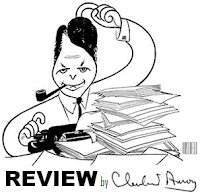
Throughout the 60s and early 70s, TV Guide's weekly reviews were written by the witty and acerbic Cleveland Amory. Whenever we get the chance, we'll look at Cleve's latest take on the shows of the era. 

If you're a fan of The Man from U.N.C.L.E., and you're thinking that twice as many shows would be twice as nice, Cleveland Amory may have you wanting to cry uncle before his review is over. You see, for a spoof like the U.N.C.L.E. franchise to work, "it must surely have, to begin with, something serious to spoof off from. Or, failing that, it must at least be funny enough that you don't care whether you believe it or not." Unfortunately, this spinoff, with Stefanie Powers as April Dancer and Noel Harrison as Mark Slate, "has neither one nor the other. It's about as believable as women's wrestling. And it has about as much wit as a roller derby." That hurts.

The Girl from U.N.C.L.E. came along as The Man from U.N.C.L.E. was going full Batman-style camp, so it's no surprise that it takes, as its inspiration, what was undoubtedly the worst of the three-and-a-half seasons of its predecessor. And it's no surprise that the stories involve the Lost Continent of Atlantis, cheese impregnated with microdots with secret information, and the like. Talented, likeable, charming actors can overcome such pitfalls, or at least make them more palatable. But, Cleve points out, Noel Harrison (son of Rex, singer of "The Windmills of Your Mind") "seems to conceive his role as a combination of court jester and village idiot." As for Stefanie, she "runs [or perhaps he should have said Dancers] charmingly around in leotards, shorts and bathing suits, and she bowls over all her enemies with just one whiff of her secret weapon." And your complaint is? 

Seriously, it's true that all that charm can only get you so far. "Even Napoleon Solo and Illya Kuryakin look bad n their occasional appearances here." Now, I'm a big fan of The Man from U.N.C.L.E., I own the series on DVD, and even I admit that the show was on life support by then, and the final half-season was a case of too little, too late. The Girl never made it to a second season, which is probably for the best. I was wrong about one thing, though. At the end of his review, Cleve says it's enough to make you cry aunt. And here I thought I was being the clever one.

l  l  l

This week's highlight is the premiere of Dr. Seuss's How the Grinch Stole Christmas (Sunday, 6:00 p.m., CBS), one of television's most beloved animated specials. Leslie Raddatz has a background article on the making of The Grinch, which took almost a year to complete, and is the most expensive half-hour animated cartoon ever created for television. Seuss, aka Theodore Geisel, had been reluctant to get involved with the Hollywood "mass-production area," but was assuaged by the assurances of his old friend, Chuck Jones, that he would give the Grinch "the same loving care that Geisel himself would." After all, as Geisel's publisher Bennett Cerf points out, "We have some great names on our list—Faulkner, O'Hara, Capote. But Ted Geisel is the only real genius among them."

But there's more! The festivities actually get started on Saturday, with The Jackie Gleason Show's Honeymooners Christmas episode (6:30 p.m., CBS), in which Ralph (Gleason) thinks that Alice (Sheila MacRae) is expecting, and takes a job as a sidewalk Santa. Opposite that on NBC, it's Mr. Magoo's Christmas Carol (6:30 p.m.), one of the best adaptations of the Dickens story, with Jim Backus unforgettable as Magoo. NBC continues the holiday cheer at 7:30 p.m. with Christmas with Lorne Greene, featuring the UNICEF Children's Choir, a group of 45 youngsters from Long Beach, California; included is an imaginary trip back to Dickens' London, and Greene's recitation of "One Solitary Life," the story of Jesus. NBC then rounds off the evening with the Irving Berlin classic White Christmas (8:00 p.m.), starring Bing Crosby, Danny Kaye, Rosemary Clooney, Vera-Ellen, and Dean Jagger. Judith Crist points out that it has a "soppy plot" and is "low on laughter," but tune in for the wonderful Berlin songs. 

Returning to Sunday, The Grinch unfortunately conflicts with the second half of The Bell Telephone Hour's live "Christmas Through the Ages" (5:30 p.m., NBC), with Florence Henderson hosting "a musical outline of the history and customs of Christmas" with Sherrill Milnes and Gianna d'Angelo of the Metropolitan Opera, and musical theater stars Anita Gillette and Bruce Yarnell, concluding with Mrs. Brady's reading of the Nativity. I own a DVD of this; it's as fine a Christmas special as you'd want to see. How unfortunate that viewers were forced to choose between these two specials back in 1966. The night concludes with The Andy Williams Christmas Show (9:00 p.m., NBC), with the traditional lineup: Andy's wife Claudine Longet, and his parents, the Williams Brothers, and their children. I think you'll agree that this is an easy choice over the Candid Camera Christmas show, as the hidden camera picks up a group of children debating whether or not Santa is real, what to give their teachers for Christmas, and their wishes for the New Year.


And let's not forget Perry Como; Mr. C's Kraft Music Hall Christmas special (Monday, 8:00 p.m., NBC) stars the Met Opera's Anna Moffo, ventriloquist Senor Wences, and Jerry Stiller and Anne Meara. In addition to Christmas music, Stiller and Meara do a North Pole skit, and Perry recites the Nativity story. Skipping ahead to Wednesday, ABC Stage '67 presents Truman Capote's autobiographical story "A Christmas Memory" (9:00 p.m., ABC), starring Geraldine Page and Donnie Melvin, and narrated by Capote himself; the much-acclaimed program will win an Emmy and Peabody the next year. Watch it, and you'll miss The Danny Kaye Show's Christmas episode (9:00 p.m, CBS), with Peggy Lee, Wayne Newton, and the International Children's Choir from Long Beach, Ca—wait a minute. That UNICEF choir on Lorne Greene's show on Saturday was from Long Beach. You don't suppose that these two choirs are one and the same, do you? I see a page for the International Children's Choir, but why would a UNICEF choir be based in Long Beach, instead of, say, Zurich? I wonder if we're looking at a case of rebranding here?

Finally, on Friday it's Merv Griffin's syndicated Christmas show (7:30 p.m.), with Garry Moore reading the Nativity, Merv's sidekick Arthur Treacher, ballet dancers Lupe Serrano and Scott Douglas, singer-actress Patrice Marand, singers Gilbert Price and David Soul, singer-actor Frankie Michaels, and the choir from St. Michael's Orphan Home on Staten Island. 

By the way, you'll notice the place the Nativity story plays in these shows. Garry Moore reads it—as do Perry Como, Lorne Greene, Florence Henderson, and Andy Williams (in the lyrics of his songs). The Nativity didn't used to be controversial on television shows, given that the event Christmas commemorates is, you know, the Nativity. I guess I'm just a little too simple-minded to understand what the problem is. 

l  l  l

Speaking as we were of Danny Kaye, that Christmas show of his will be the last one, at least for the near future. After four "disappointing" seasons, during which the show dropped in the ratings to 77th (out of 100), CBS has decided to pull the plug. According to Richard K. Doan, "Kaye had evidently kept too well his 1963 promise: 'With a weekly show. . . I can take chances. I can afford to be lousy." CBS permitted Kaye to resign, so to speak, rather than get fired, by announcing that Kaye's agent had informed the network Kaye would not return to TV next season. I believe that Danny Kaye and Judy Garland both debuted their variety shows the same season; they were both big stars who had resisted going into weekly television for some time before finally taking the plunge. Of course, Garland had her own problems and really wasn't served well by the network, but (and this isn't an original thought), Some say he was at the height of his popularity, but his last few movies had been bombs; I wonder if Kaye waited too long to make the jump? Or perhaps, as Doan suggests, he was just lousy too often. His replacement? Carol Burnett, who would inherit Harvey Korman from the cast.

On Meet the Press (Sunday, 3:00 p.m., NBC), the guest is Republican governor Dan Evans of Washington, who's asked about the significance of the GOP's gains in last month's midterm elections. I can tell you the answer to that in one sentence: the Republican party just nominated Richard Nixon for the presidency. Let me explain; after LBJ's landslide win over Goldwater in 1964, the Democrats held supermajorities in both houses of Congress (68-32 in the Senate, 295-140 in the House). Nixon campaigned tirelessly for Republican candidates in the midterms, resulting in a gain of two seats in the Senate and 40 in the House. Nixon earned a lot of IOUs through his campaigning, and that would play an important role in his winning the nomination in 1968, especially in keeping conservatives from endorsing Ronald Reagan. The Republicans may not realize it yet, but Nixon is about to make the greatest comeback in American political history.

You remember the family specials I've mentioned that so often made up a part of the holiday season? On Monday night, CBS presents a musical version of Jack and the Beanstalk by New York's Prince Street Players (6:30 p.m.), one in a series of children's musicals the Players did on CBS. You can see that broadcast right here.

As a demonstration of how ambitious local news organizations used to be, WCCO's Phil Jones has just returned from Vietnam, and he reports on servicemen from Minnesota in Our Men in Vietnam (Tuesday, 8:30 p.m.). On Friday at 10:30 p.m., WCCO associate news director Joe Bartelme interviews Jones for further observations on his trip to Vietnam. Here's another WCCO report on Vietnam from 1969. I know KSTP anchors Gene Berry reported from Vietnam as well; I don't know how much of this happened in the Gulf. 

Wednesday night, Maurice Evans►, who was so good in so many Shakespearian dramas on Hallmark Hall of Fame (not to mention Samantha's father in Bewitched) is The Puzzler in Part 1 of Batman (6:30 p.m., ABC). His M.O.: leaving a trail of Shakespearian quotes and puzzles, of course.

In the Teletype, Mike Connors will be playing a detective in the CBS pilot Mannix, filmed by Desilu. That's going to be a big hit for both Connors and the network. Also in the Teletype: "The Girl from U.N.C.L.E. is coming up with its first musical of the year. "The Brublegratz Affair" which will feature a new rock-'n'-roll group, the Daily Flash." That single paragraph goes a long, long way toward explaining Cleveland Amory's review above, and why the show won't be back for another season (and another musical). Fortunately for them, the Daily Flash had a longer career

l  l  l

Finally, this week's MST3K alert: The Lost Missile (Monday, 10:30 a.m., WTCN). 1958. "New Yorkers have little more than an hour left to live as a radioactive missile circles the earth, destroying everything in a 10-mile-wide swath. Robert Loggia, Larry Kerr, Ellen Parker." This is another movie that wasn't on MST3K, but was riffed by Trace Beaulieu and Frank Conniff, the mad scientists from MST3K. Will scientist Robert Loggia save the city before it's too late? A riff by any other name would sound as snarky. TV  

December 16, 2022

Around the dial


I'm not going to ask if you're planning to watch A Charlie Brown Christmas this year, only if you've already watched it. Whether or not you have, you might find this Smithsonian article interesting on the flop that wasn't. 

At bare-bones e-zine, Jack introduces us to the third Jerry Sohl script to air on Hitchcock, "The Doubtful Doctor," a suggestion of what you get when you cross It's a Wonderful Life with The Twilight Zone, with Dick York and Gena Rowlands. It doesn't happen at Christmas, but this is a good time to read about it.

One of the Christmas episodes we watched recently was from Window on Main Street, the single-season series that starred Robert Young in his follow-up to Father Knows Best. It gives you a chance to really appreciate how fine an actor he was, and at Comfort TV, David goes a step further and highlights the elegant prose and poetry read by Young and others during the run of Father Knows Best. They don't write 'em like that anymore.

Gill has been at it again at RealWeegieMidget, with her latest co-host blogathon being on the great Christopher Plummer. Here's the final installment, but you'll want to check out her other entries to see what everyone's had to say. I got to see him perform in person once, doing a reading of Henry V to music by William Walton, performed by the Minnesota Orchestra. Those were the days.

At Classic Film & TV Cafe, Rick rates the Dirty Harry movies of Clint Eastwood from best to worst. I'm including this for three reasons: I like Rick's website, I like Dirty Harry, and I saw all of these movies on television rather than in the theater.

Speaking of watching movies on TV (and Christmas as well), most of you have probably seen both Holiday Inn and White Christmas on television; this week Herbie Pilato compares the two classics. Head over there to see which one comes out on top. 

At Cult TV Blog, John travels back to the 1970 British series Tales of Unease (gotta like that name, right?), which presented supernatural tales of horror—but then, are there any other kind? This week is the episode "The Old Banger," about a discarded car that just won't stay away.

Let's stay with the Brits for a sec more: Classic Film and TV Corner reviews the terrific spy drama Callan, which aired from 1967 to 1972 and starred Edward Woodward in what was probably his best-ever role. If you haven't seen an episode yet, it's worth checking out. 

That should do it for this week—get well soon, Terence! TV