November 9, 2022

What I've been watching: October, 2022


Shows I’ve Watched:
Shows Next on the List:
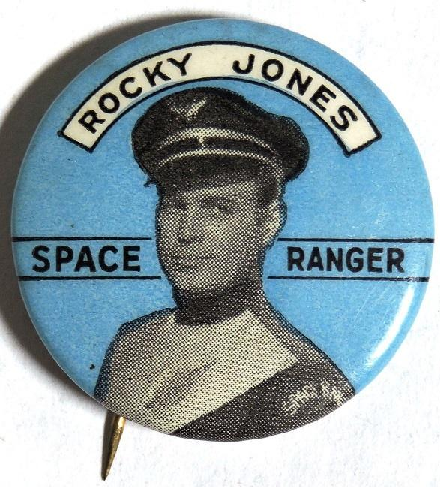
Rocky Jones, Space Ranger
Combat!
Surfside 6
Maverick
Cheyenne


It's often said that the appeal of classic television, at least in part, is due to the desire to recapture the sense of one's youth, whether it be childhood, college years, or some other significant memory. Watching the show takes you back to that time and causes you to release positive endorphins or whatever it is that's supposed to give you that warm feeling all over. And while there's undoubtedly truth to that, I think that explanation tends to be too easy. It doesn't account for the vagaries of human emotions, the environment in which one grows up, the—oh hell, why don't we just admit that everyone's different, and there's no accounting for taste, good or bad.

Take Rocky Jones, Space Ranger, for example. I know I'm old, but even I didn't see Rocky Jones in its original 1954 run. My first experience with the Space Ranger came on Mystery Science Theater 3000, in two compilation movies, Manhunt in Space and Crash of Moons, and while the riffing on both of them was great, it doesn't exactly provide the best platform for determining a show's quality. Fortunately, however, the miracles of technology (and YouTube) allow us to see the entire 39-episode series as it was originally broadcast: 12 three-episode stories, three standalone episodes, and no riffing. Rocky Jones may be for kids, but it holds up for adults as well.

Rocky and Vena
(artist's conception)
Rocky Jones takes place sometime in a vaguely-defined future, when inhabited planets have coalesced, much like Star Trek's United Federation of Planets, into the United Worlds of the Solar System. Responsible for policing the United Worlds is an interplanetary organization called the Space Rangers, the most famous of whom is our hero, Rocky Jones (Richard Crane). Rocky's sidekick is his co-pilot Winky, which, let's face it, is an awful name for a space hero; his replacement in the second series is named Biff, which is much better, especially when you're called on to engage the bad guys in a series of fist fights in every episode. (It's reassuring to see that even in the future, some things don't change!) 

Also as part of Rocky's team is the beautiful navigator Vena, who doesn't fight but does apparently help chart the course; Professor Newton, who in appearance and manor bears a distinct resemblance to William Hartnell, the first Doctor Who; and the professor's young ward Bobby, who's a precocious boy genius and otherwise has no backstory whatsoever. Overseeing Space Ranger operations is Secretary Drake, who has something of a father-son relationship with Rocky. (That's them in the picture in the heading.) 

While I wouldn't put Rocky Jones at the pinnacle of science fiction television, it does have a lot going for it. First, there's Richard Crane, who may not be a great actor but who makes for an ideal space hero. He speaks with authority and confidence (and even sounds like a pilot when he's talking with space control), can fight his way out of difficulty, and—most important, in terms of being a convincing leader—knows exactly how to handle his crew. He looks at Winky as a trusted and valued associate, even when he's often providing comic relief; doesn't condescend to Bobby, who really is smart, even if he's just a kid; and treats Vena with respect and a kind of big-brother affection. One of my complaints with Shatner's Captain Kirk is that, in my opinion, he doesn't always exhibit an intuitive and humane understanding of how to deal with his crew as individuals and has to be reminded of this by Doctor McCoy; it's a trait that supervisors often lack in handling their subordinates. Rocky, on the other hand, seems to know how to do this instinctively.

Keeping with the Star Trek theme, the show also offers an interesting alternative means of space exploration, relying on these small, four-or-five man rockets rather than the gigantic starships, and using manned space stations as hubs for intergalactic travel. The show may not have science on its side—that doesn't always appear to have been important to the writers—but from a practical matter, it strikes me as being both an expedient and economical way to deal with the vastness of space, and even in the future, someone's going to have to foot the bill for all this. 

And since I raised the matter of science, Rocky Jones is no better or worse than most shows, and it's a definite step above the space serials of the 1930s and 40s. (Hey, the rocket in Commando Cody flies through a space populated by blue skies and clouds!) It's true that the planets all seem to have oxygen-based atmospheres, but at least the crew goes through the motions of checking the readings first. And while the exotic aliens they encounter are all humanoid in appearance and speck colloquial English, they do have a universal translator just in case. At least the details weren't ignored completely.
Chief among those exotic aliens are two that bear mentioning: Bovarro, the ruler of Posita, who starts out being hostile to the Federation—I mean the United Worlds—but becomes a trusted ally. He's played by our old friend from Hogan's Heroes, John Banner, and it's always fun to see him turn up in something else. (And thinner!) Rocky's chief nemesis in the first season is the wonderfully snooty Cleolanta (Patsy Parsons), leader of Ophecius. She's always trying to make trouble for the United Worlds (got it right that time), a task complicated by the incompetence of her subordinates; she forever compares them unfavorably to Rocky, so much so that you suspect she'd be much happier with Rocky at her side, both in and out of the office. Whenever her underlings let her down; she all but looks into the camera with a "See what I have to put up with?" expression, and it's hard not to feel some sympathy for her.

One of the advantages of having been introduced to Rocky Jones through MST3K is that it keeps your expectations kind of low, which means you might be pleasantly surprised. The special effects are actually pretty good for the time, the adventures exciting for the most part; the moralizing kept to a reasonable level (unlike, say, some sci-fi shows we could name), and because the violence is limited to fighting—the Rangers carry weapons but they're never used, and nobody is killed—it's safe for kids without being boring for adults.

Would I pay for the Rocky Jones DVD? Well, I'm not sure about that. (On the other hand, I'd really like a model of the Orbit Jet!) But watching it on YouTube is a no-brainer, and I'm glad I did.

l  l  l

Having worked our way through 77 Sunset Strip, Bourbon Street Beat, The Roaring '20s, and Hawaiian Eye, we now come to the last of the Warner Bros. detective shows of the era: Surfside 6. And in this case, last does mean least, since by now the assembly line production of P.I. series with alliterative names set in exotic locations has clearly run dry. 

Lest anyone get the wrong idea, though, I'm not saying that Surfside 6 fails to give me pleasure and enjoyment, because it does. And I'm not sure, given the formula that applies to these series, that we could have done any better. However, as they might say at MST3K, the setup does have a few flaws, beginning with the cast—or perhaps I should say the number of people in the cast. 

(l-r) Cha Cha, Sandy, Dave, Daphne, and Kenny   
Unlike those other shows in the WB stable, Surfside 6 is built around three principals: Dave Thorne and Kenny Madison (Lee Patterson and Van Williams), partners in the Surfside detective agency, and Sandy Winfield II (Troy Donahue), a friend who hangs around the agency helping out on cases in the first season, before graduating to full-fledged detective in season two. They work from a houseboat that's been converted into a handsome office that doubles as living quarters for Dave and Kenny, address: Surfside 6. Berthed next to them in the harbor is the beautiful sociality Daphne Dutton (the criminally underused Diane McBain), who occasionally gets involved in their cases. The dock is across the street from Miami Beach's Fontainebleau Hotel, where the obligatory singer, Cha Cha O'Brien (Margarita Sierra) works out of the Boom Boom Room.

As you might expect, this often results in cast congestion, even given the lead rotation that WB employs in their shows. Lee Patterson and Van Williams are very likeable; they're good at their job, tough when they have to be, and can convince you that you'd hire them. (Kenny came over from the aforementioned Bourbon Street Beat, where he was a law student graduating into the PI business, and it's a nice touch that the writers include the detail that he's now a full-fledged attorney). As an actor, Troy Donahue can often seem stiff, but I'll admit that he has a presence that adds up to being a star; as the least experienced of the trio, Sandy often gets in cases where he has a personal involvement, which sometimes leads to questionable decisions on his part—whether that's because of the writing, or it's meant to reflect that lack of experience, I'm not quite sure. Perhaps a combination of both. I should add that any time a P.I. gets involved with a former flame, it usually means trouble, especially—as was the case with Kenny in one episode—you mistakenly accuse her of murder. 

But then there's Cha Cha, by far the weakest character not only in this series, but perhaps in all the WB detective shows. Her presence compares poorly with Connie Stevens, Dorothy Provine and the Frankie Ortega Trio (the musical talent in the other WB detective shows); and the most she can be said to contribute is very lame comic relief. As far as I'm concerned, she can just cha cha her way right out, and give the extra screen time to Diane McBain; a WB regular, you'd think she'd get more visibility than she does. Daphne's not one of those dumb blonde socialites, even though she could occasionally use better judgements with men. She's not only more fun to watch, she's more fun to look at.

The point, as you may have figured, is that we don't really get enough of anyone (except Cha Cha; any time for her is too much), which means it's harder for the likability of the characters to paper over the holes in the plots. There are too many occasions when A doesn't logically lead to B, and you're left wondering if you might have missed something, even though you're pretty sure you didn't leave the room and you weren't thinking about anything else. Even if the writing wasn't the week spot in shows like this, it would be a problem; here, it's that much more noticeable. 

If this comes across as negative, it's supposed to—kind of. Compared to the rest of the WB stable, it's just not as good. Compared to non-WB shows—well, you might not be watching it if you weren't already into them. And maybe that's the point. If you loved 77 Sunset Strip, you'll probably like Surfside 6. If you liked Hawaiian Eye, you'll likely find Surfside 6 a fun way to pass an hour. And if you're looking for something to really challenge you as a viewer, you'll probably just keep on looking. As for me, it fits perfectly into the time spot I've given it, and that's perfectly fine with me.

l  l  l

We're more than halfway through the first season of Maverick, which means I've watched enough of it that I need to let you know, but not enough to draw a fair conclusion, and I think I'm going to return to it sometime in the future, after I've had a chance to talk about its various iterations.

Our hero, as things begin, is James Garner, impeccable as Bret Maverick, the gambler floating through the West looking for big-stakes games and getting involved in a fair amount of trouble along the way, all the while protesting that he's only interested in making money. He's joined in the eighth episode by Jack Kelly as Bret's brother Bart, after the producers discovered they couldn't keep up the pace of making weekly episodes; by rotating the stars, separate crews could be working on two episodes at once. This becomes a WB trademark, but viewers wouldn't have been used to it at the time, so for Bart's first few appearances, the episodes utilize the framing device of having Bret provide the opening and closing narration, as if to reassure viewers that, yes, he's still part of the series. Still, it goes to show that two Mavericks are better than one, and both Garner and Kelly carry their episodes with an easy charm.

Maverick has always been known for its whimsical and occasionally satirical look at the Western genre in general, and other Western series in particular. However, that was something of an evolutionary process, and we're not quite there yet. At this point, both Bret and Bart are closer to being traditional Western heroes, although as early as the first episode, "War of the Silver Kings," Bret's propensity for outsmarting rather than outgunning his adversary is evident in a convoluted scheme to outsmart the owner of a rival silver mine, something that would become a trademark of the series. "Relic of Fort Tejon," another early episode, is the first overtly comic episode, as Bret has to deal with a camel he won in a poker game, all the while trying to fend off a hired gun. I want to see more of this evolution, though. For instance, we've yet to see the show's famous spoofs of Bonanza and Gunsmoke, and we've only met two of the show's colorful recurring characters, Dandy Jim Buckley (Efrem Zimbalist Jr.) and Samantha Crawford (Diane Brewster), once each. 

James Garner famously left Maverick after three of the show's five seasons, having won a lawsuit against Warner Bros. freeing him from his contract, and the series would try to compensate for Garner's absence by introducing still more Maverick relatives, cousin Beau (Roger Moore) and brother Brent (Robert Colbert). By the final season, Kelly is left to go it as the lone Maverick, with some of Garner's old episodes rerun to fill out the inventory. When you think about it, that's actually not a bad idea, considering that it would have been a year or two since anyone saw them, and you wouldn't have been exposed to them via DVDs or binging back then.

What all this means is that I've done my due diligence by letting you know what I've been watching, but we'll return to Maverick in another season or so, when the series has become what it is, to give you a fuller picture. But as to whether or not you should dive in—by all means! It's enjoyable, whimsical, with two strong and likable leads, and fine performances by guest stars. It may well vie with Sunset Strip as WB's best. TV  

November 7, 2022

What's on TV? Sunday, November 6, 1955


Unless I'm mistaken, I think we have a winner in the contest for the year's best program description: WSTV's 6:00 p.m. listing for Lassie. "Dog Drama." That about says it, doesn't it? Elsewhere, NBC Opera Theater makes its season debut with Lukas Foss' made-for-TV opera Griffelkin, about a young devil residing in Hell's nursery. That's preceded by an interview with former president Herbert Hoover, when he had been out of office for nearly 23 years (2:00 p.m., WTRF). You Are There takes us to the O.K. Corral, as Walter Cronkite and his news team interview the Earps and Clantons, played by Robert Bray, John Larch, John Anderson, DeForest Kelley (who, sadly, doesn't play Doc Holliday), Arthur Reese, and Ernest Baldwin. Not a bad day of broadcasting, as seen in the Pittsburgh Edition.

November 5, 2022

This week in TV Guide: November 5, 1955


I'm not quite sure that "Operation Hush" is the best way to describe the process by which quiz shows like The $64,000 Question (Tuesday, 10:00 p.m., CBS) keep their questions secret from the public and the contestants appearing on their programs. After all, when I hear the word "hush," I think of hush money, which is what you pay in order to keep secret something that you'd rather other people not know about. Often, that something happens to be illegal. Do you suppose my years in politics have made me suspicious, cynical, hard-boiled when it comes to things like this? Or is it just that, nearly 70 years later, all of us benefit from hindsight in knowing that most of these shows were rigged?

Frank De Blois describes how the process works on Question, beginning with the questions themselves, which originate with college professor and TV personality Dr. Bergen Evans. They're then passed through for approval by the production team, after which they're sealed in a box which is locked in a vault at Manufacturers Trust bank. On the night of the broadcast, two bank executives, accompanied by a pair of guards, unlock the vault, remove the sealed box, and take a cab to the studio, arriving just before showtime. Once a contestant enters the famed soundproof "isolation booth," all he can hear is host Hal March's voice, and all he can see is March's face.


De Blois relates the efforts made by other programs, ones that offer considerably less than $64,000: I've Got a Secret, Masquerade Party, What's My Line? They're whimsical enough (how do you get someone to refrain from boasting that they're this week's Mystery Guest?), but it's the big-money quiz shows we're interested in. The scandal didn't start with Question, of course; Dotto and Twenty-One were the first programs to be implicated, but eventually, in September 1958, the truth catches up. 

According to the always-reliable Wikipedia, "The $64,000 Question was closely monitored by its sponsor's CEO, Revlon's Charles Revson, who often interfered with production, especially attempting to bump contestants he himself disliked, regardless of audience reaction. Revson's brother, Martin, was assigned to oversee production, including heavy discussions of feedback the show received." One of the show's gimmicks, an IBM sorting machine that supposedly selected lower-dollar questions at random, was just a prop; all of the cards, with the questions on them, were identical. Teddy Nadler, one of the show's most famous winners, had been shown some of the questions beforehand, but the producers maintained that he already knew the answers.

One of the things you'll see as we go through this week's issue is the importance that sponsors play in 1950s television. Today, sponsors seldom even choose the programs in which their commercials appear*, but at one time it was the sponsors that created the programs themselves, and even if they simply signed up to pay the freight, so to speak, they insinuated themselves into the program in ways we'd probably find completely unacceptable.

*One reason why sponsor boycotts are often of little practical value is that commercial time purchases are often determined by brokers whose jobs are to fill the available slots. A sponsor withdrawing from a particular show might make the broker's job more difficult, but it doesn't necessarily mean the sponsor endorsed the program in question, nor does it always produce the cause-and-effect that the boycott organizers hope for.

In the case of the quiz show scandals, the desire was to manipulate the winners (whether at the sponsor's whim, as with Question, or to attract larger viewing audiences, as was the motive with other programs). In other instances, sponsors tried to manipulate the content of individual programs. I'll get to that in a tick, if you'll just be a little more patient.

l  l  l

A couple of weeks ago, we saw the dramatic entry of Walt Disney into the weekly television business, and while Disney may have been the first major studio to take the plunge, they won't be the only one. This week, the focus turns to two of the giants of Hollywood, Warner Brothers and M-G-M, and their entries into the television sweepstakes (both, incidentally, on ABC). The early verdict: while Warner may know how to make movies for theaters, the studio "still has much to learn about producing movies for TV." Meanwhile, M-G-M may have taken "the easiest way out," they also may have produced "the most entertaining show" of all the movie studios this year.

Warner Bros. Presents
is a "wheel" series, consisting of three hour-long dramas rotating on an every-third-week schedule. All three are based on, and bear the titles of, past WB movie hits: Kings Row, Casablanca, and Cheyenne. Looking at them in order, Kings Row features Jack Kelly (the role played in the movie by Robert Cummings), Nan Leslie (the movie's Ann Sheridan), and Robert Horton (played memorably by Ronald Reagan), in "soap opera-ish stories" about a young psychiatrist battling the superstitions of the early 1900s; Casablanca, which perhaps has the toughest legacy to live up to, has Charles McGraw as Humphrey Bogart (a thankless task), "who seldom has a chance against heavily written scripts"; and Cheyenne, the most loosely based of the three, which stars Clint Walker as a cowboy who gets into "standard scrapes with bad buys, Indians and cattle rustlers in a rather immature Western." 

There's a feeling, expressed elsewhere as well as in this article, that Warner felt all they had to do is show up with their name, and the viewers would follow. Indeed, all three shows are "well-produced and competently acted," and sport both a "lavish budget and technical skill." What they don't have are quality stories; as the review says, "the play's still the thing." That's a lesson that M-G-M seems to take to heart in their offering, M-G-M Parade. Unlike WBP, Parade attempts no new programming, but instead dips into the studio's massive library of hit movies, offering clips and short subjects, along with previews of coming attractions. 

George Murphy (L) interviews Robert Taylor
It's a smart idea; "Most viewers have fond recollections of old movies." So who'd be able to resist, for example, Judy Garland, at 12, singling "You Made My Love You," or clips from past and present stars such as Barrymore, Astaire, or host (and future U.S. senator) George Murphy? Unlike WBP, Parade, for the most part, delivers on its potential. True, the writers haven't given Murphy much to work with as host, sticking him with remarks that are often "deadly dull." He's a pleasant presence, though, well-suited to his role. Having seen some episodes of Parade myself—TCM showed them a few years ago; since we've cut the cord, I don't know if they still do—the most disconcerting thing about it might be seeing the black-and-white clips from those great technicolor movies. It just doesn't look right.

Warner Bros. eventually gets it right, of course. Cheyenne, the only surviving element of Warner Bros. Presents, runs for seven successful seasons, and the studio becomes an assembly line for PI and Western dramas on ABC. M-G-M, meanwhile, has a more checkered history, but has several hits in co-production with other companies, and has its share of successes. It just goes to show, I guess, that television is your friend.

l  l  l

No matter where we turn, stories about sponsors keep coming up, and in the New York Teletype, we learn about a recalcitrant sponsor: Pontiac has withdrawn as sponsor of the upcoming Project 20, an occasional series of documentaries which will run on NBC into the 1960s. According to Bob Stahl, speculation is that "the auto company felt it unwise to be associated with the first in the series, 'Nightmare in Red'—even though the show is anti-Communist." The network has another sponsor lined up, and now the episode is scheduled to air sometime in January. Don't worry; the Cold War isn't going anywhere.

Meanwhile, Dan Jenkins reports that the sponsors would like some changes to the format of none other than: M-G-M Parade. Those elements that TV Guide thought made the show successful—clips of old movies and short subjects—apparently aren't as popular with the sponsors, who want "more new film, less old; more attention to commercials, less to picture plugs." Oh well.

Also in the Teletype, Ernie Kovacs has gotten fine reviews for his recent pinch-hitting on Tonight in place of Steve Allen, and the talk is that television's most creative force may get his on show on NBC as a result. He does, eventually; he hosts a summer replacement series for Sid Caesar next summer, after which he becomes the regular Monday-Tuesday host for Tonight, remaining until Allen leaves the program in 1957. 

And here's something that sponsors are sure to appreciate: NBC and its affiliates now cover "90 percent of the Nation's TV homes with colorcasts, and are doing so with 10 percent of the network's programming schedule." The motive is to push sales of those RCA color televisions. 

l  l  l

We'll continue with our look at sponsors, but first this message about what's on TV this week. (When's the last time you saw a program interrupt a sponsor?) 

Believe it or not, there used to be a time, before it joined the Ivy League, when the University of Pennsylvania used to be a significant player in college football, winning the national championship as recently as 1924. There were even concerns, when television started to affect the sport, that Penn might cut its own TV deal. This, however (and unfortunately for the university), is 1955, not 1924. Nonetheless, the Quakers are on the game of the week this Saturday (1:15 p.m., NBC), although it might be due to their opponent: sixth-ranked Notre Dame. The Fighting Irish rout Penn 46-14, but the news is not all bad: it's the only time this season that Penn scores in double digits, en route to an 0-9 season and a 22-game losing streak. 

Sunday
sees a genuine television first: the American premiere of the British movie The Constant Husband, the first time that a theatrical movie has ever appeared on American television before being shown in theaters. (Due to the distributor's bankruptcy, the movie hadn't even premiered in London until the past April 21.) The farce stars Rex Harrison as an amnesiac who turns out to be married to six different women. (7:30 p.m., NBC, in color.) In the meantime, while we don't have anyone to match up with Ed Sullivan, that doesn't mean we can't check out his lineup: Liberace, Phil Silvers, opera star Rise Stevens, British singer David Whitfield, and Belgian circus clown Linon. (8:00 p.m., CBS)

Abby Mann, who will win an Oscar in 1961 for writing Judgment at Nuremberg (and later on creates the TV series Kojak) is the author of "The World to Nothing," Monday's Robert Montgomery Presents (9:30 p.m., NBC), the story of a movie star (Eddie Albert) who realizes that his movie success has cost him everything important in his personal life. The night's second prestige anthology, Studio One, opens its eighth season with a tense submarine drama, "Shakedown Cruise," starring Richard Kiley, Lee Marvin, and Martin Brooks. (10:00 p.m., CBS)

The new, more refined Milton Berle Show features a musical revue on Tuesday (8:00 p.m., NBC), directed by and starring Uncle Miltie, with the Will Mastin Trio starring Sammy Davis, Jr., Gloria DeHaven, and Gogi Grant. If you want to see it from the beginning, though, you'll have to pass up the last half hour of this week's Warner Bros. Presents, Casablanca, with guest star Maureen O'Sullivan as a woman whose newspaperman husband was recently released from four years in a Soviet labor camp. (7:30 p.m, ABC)

On Wednesday, Lillian Roth makes her television dramatic debut in the U.S. Steel Hour episode "Outcast." (10:00 p.m., CBS). She plays "a once-successful Hollywood writer who is driven to drink by her husband's infidelity and the tragic death of her only child. Her friends try to help her and even get her a chance to resume her career. But she is afraid." Although "Outcast" is based on a story by Frank Gabrielson, the life of Elaine, the character she plays, is remarkably similar to Roth's own life and her battle to come back from alcoholism, which she frankly shared in a memorable appearance on This Is Your Life in 1953, and later detailed in her 1954 autobiography, I'll Cry Tomorrow (turned into a 1955 movie starring Susan Hayward). Roth, one of the first celebrities to publicly discuss struggling with alcoholism, is credited with helping facilitate the public understanding of alcoholism as a disease. As for her performance in "Outcast," the New York Times TV critic Jack Gould calls it "magnificent," and adds that "In its understanding, in its poignancy, in its sensitivity, her performance was one that can only be called memorable."

I mentioned Dr. Bergen Evans in this week's lede, and he hosts the panel show Down You Go* (Thursday, 9:30 p.m., ABC), with panelists Fran Coughlin, Sherl Stern, Patricia Cutts, and John Kiernan, Jr. And your first question might be: who are these people? Well, they were all personalities, having written for or appeared on panel shows in the 1950s. They were probably quick-thinking, witty, conversant, and good conversationalists, essential in the era of live television, and at a time when television has to create its own stars. 

*Down You Go, which someone resembles Wheel of Fortune, ran for five seasons, and is one of only six series to appear on all four broadcast networks—ABC, NBC, CBS, and DuMont. The others: The Arthur Murray Party, Pantomime Quiz, Tom Corbett, Space Cadet, The Ernie Kovacs Show, and The Original Amateur Hour.

If you're feeling lost these days, it could be worse: you could be "The Man Without a Country," the classic by Edward Everett Hale, about an American accused of treason who curses the United States during his trial and is sentenced to live the remainder of his life about ship, never to see or hear of his homeland again. Cliff Robertson played Philip Nolan in the 1973 telemovie, but in this week's Matinee Theater colorcast (Friday, 3:00 p.m., NBC), but in today's presentation he's played by Peter Hansen, who as Peter Hanson will star as Lee Baldwin on General Hospital for nearly 30 years. 

l  l  l

Finally, our look at how sponsors get involved in the content of the shows they broadcast. 

Most of you are familiar with the many stories that Rod Serling has told about sponsor interference, but this week's article, "Why Producers Get Gray," will provide you some additional examples that might make you, in Tom Wolfe's words, shake your head like the Fool Killer, "frustrated by the magnitude of the opportunity." 
  • In Judy Garland’s TV “spectacular,” the New York skyline abruptly underwent a spectacular change. Someone eliminated the familiar Chrysler building, because the show was sponsored by Ford.
  • Publicity pictures for CBS’ Crusader series were hastily scrapped. They showed the hero smoking a cigar. The sponsor is a cigaret company.
  • When Eartha Kitt sang "C’Est Si Bon" on Ed Sullivan’s show, the lyrics were hastily revised, so that Eartha would yearn for a Lincoln (Ed’s sponsor), instead of a "Cadillac car."
  • The CBS daydrama, The Secret Storm, was originally titled "The Storm Within." That title seemed too descriptive of the sponsor's product—Bisodol.
  • Two network newscasters ran the same films of a man being lowered to safety from a bridge. CBS’ Doug Edwards pointed out that the man was given a cigar. NBC’s John Cameron Swayze, whose show is sponsored by a cigaret firm, called it "a smoke."
  • There was confusion last season over a show’s title. Was it Hey, Mulligan! or The Mickey Rooney Show? The first was widely publicized, until one of the sponsors, Green Giant Peas, recalled a competitor's mulligan stew.
  • When Perry Como was ill, Eddie Fisher commented, at the end of one of his Coca-Cola telecasts, "Get well, P.C." His sponsors, constantly vying with Pepsi-Cola, hurriedly advised him never to use those initials again.
I suppose we could just say that they're protecting their turf. Psychiatrists would probably say they're demonstrating a latent insecurity, and prescribe something for them. But first they'd better check to make sure that prescription isn't for a rival pharma company's product. TV  

November 4, 2022

Around the dial


Thanks for indulging me last week when I preempted this feature to participate in the Donald Pleasence blogathon (and if you haven't read my review of the Twilight Zone episode "The Changing of the Guard," you can do so here). This week it's back to normal, and we'll start off at ReelWeegieMidget, co-sponsor of the Pleasence blogathon, with Gill's recap of this year's entries. Read through some very good articles on a very good actor.

Next, it's the latest Hitchcock Project entry by Jack at bare-bones e-zine: "The Baby-Blue Expression," Helen Nielsen's nasty little story about infidelity and foolishness, with Sarah Marshall, Peter Walker and Richard Gaines. The satisfaction factor in this one is high.

David continues his "journey through 1970s TV" at Comfort TV; he's into the second year now, looking at Sunday nights in 1971. Remember The Bold Ones? Bonanza? The Jimmy Stewart Show? They're all there, along with Cade's County, the underrated Glenn Ford contemporary Western that ran for two seasons. Let David bring back some memories. 

At Cult TV Blog, John has been reviewing a number of interesting documentaries, and the latest is "Cromwell Street," about the infamous serial killers Fred and Rose West, and particularly on the role Cromwell Street itself played in the commission of these murders.

At Classic Film & TV Cafe, Rick reviews the 1954 romantic drama Three Coins in the Fountain, which, as I've mentioned before, was based on the novel Coins in the Fountain by future ABC news correspondent and documentarian John Secondari. It's also the only time Frank Sinatra sang the theme for a movie that he didn't appear in. 

We're still thinking about the late, great Angela Lansbury, and since Halloween was just a few days ago, it's appropriate that at Silver Scenes, the Metzingers look back at the 1987 Murder She Wrote episode "Night of the Headless Horseman." And this one isn't in Cabot Cove!

Keeping with that Halloween theme, at A Shroud of Thoughts, Terence takes us back to The Beverly Hillbillies and the show's only Halloween episode, "Trick or Treat," the sixth episode of the show's first season, and the first (of many) to hit #1 in the ratings.

For F Troop Friday at The Horn Section, Hal revisits the first-season episode "Too Many Cooks Spoil the Troop," with O'Rourke and Agarn up to their tricks again, this time taking on guest stars James Gregory and Jamie Farr.

At Shadow & Substance, Paul tells us about the expanded edition of Scott Skelton and Jim Benson's book Rod Serling's Night Gallery: An After-Hours Tour. And when he says "expanded," he means it; check out what he has to say, and you've got until tomorrow to get in on the Kickstarter and get a copy.

Finally, at The Lucky Strike Papers, Andrew shows us what can happen when you're doing live television, with this look at Buddy Holly and the Crickets and their 1957 appearance on The Ed Sullivan Show. We wouldn't have it any other way, though. TV