Showing posts with label Maverick. Show all posts

January 18, 2025

This week in TV Guide: January 17, 1959


We start off the week with Bob Johnson's very amusing article on James Garner and Jack Kelley, the "Maverick Brothers" of ABC's Sunday night series.

The two stars maintain separate lives; Johnson suggests that "the boys don't like to discuss each other," although I'm not sure that there's any particular animosity between them. Certainly Garner, who was the first Maverick, is also first among equals; his episodes have higher ratings, and his appearances outnumber Kelly's through the course of the season (of the 20 episodes so far this season, nine have starred Garner, six for Kelly, and five have featured both of them.

It's not hard to dissect Garner's popularity: his easy-going manner, the implicit humor he brings to the role, are all products of his acting talent—or, as he puts it, his lack of same. He's no actor, he insists, but a personality; in fact, he can't act. "I'll learn if I have to, but I haven't had to yet. I'm playing me. Bret Maverick is lazy. I'm lazy. I like to get the bit over with at the studio and get out of there. I like being lazy." He adds that he's never taken a script home to study, "and I don't plan to."

You might be familiar with the story behind Maverick, of how the first few episodes were played straight—stock Westerns—until bored scriptwriter Marion Hargroves inserted a stage direction that changed the series forever. "Maverick," he wrote, "looks at him with his beady little eyes." Garner loved it. "You can't say that about a star," the research department told Hargroves. Nonsense, replied Hargroves; he'd met Garner, and he does have beady little eyes.

Soon the series had made the transformation to a comedy, and the Maverick boys "have been subjected to more house gags, in stage directions by Hargrove and other writers, than any two other actors living." For example, when Kelly leaves the saloon, he doesn't just leave. "He sees his horse. He smiles. His horse sees him and just nods." Garner is described  as "ahr hero" or "an itinerant clergyman," and when he considers a problem, "we can see his flabby little mind make a small connection." There's even a situation where "His face shows resentment, frustration, anxiety and anything else the director thinks he can get out of him." These directions don't explicitly show up on screen, of course, but it influences the way Garner and Kelly play their roles, and more important it indicates the spirit that has infected the entire show.

Interestingly, Kelly thinks the show can go three more seasons after this one, but "Garner has other ideas." As to what those ideas are, Johnson doesn't really say; instead, he captures Garner talking about the recent satire the show did on Gunsmoke. ("It's a classic.") Garner's other ideas, however, don't include three more seasons of Maverick; he quits the series in 1960 in a dispute with Warner Brothers, a case he wins in court. He's replaced by, at various times, Roger Moore and Robert Colbert; ultimately, in the fifth and final season (as Jack Kelly predicted), reruns of old Garner stories alternate with Kelly's new shows. Maverick ends its run with a secure place in TV history, and a warm spot in viewers' hearts.

l  l  l

One of Ed Sullivan's first great on-air challenges came from Steve Allen, who left Tonight to take over an NBC variety show which, at the beginning, aired opposite Ed. It didn't run as long as Ed's, of course, but then Allen said his goal was never to conquer Ed, but to coexist with him, which he did for three seasons. Let's see who gets the best of the contest this week.

Sullivan: Ed's guests are actress Celeste Holm; French singer Edith Piaf; musical-comedy star Pat Suzuki; operatic soprano Antonietta Stella; musical-comedy writers Betty Comden and Adolph Green, currently appearing on Broadway in a two-man show; comedian Alan Drake; and juggler Francis Brunn.

Allen: Steve's guests are actress Esther Williams and singers Vic Damone and Jennie Smith. A large part of tonight's show takes place in and around a swimming pool located in the studio. Steve dons a bathing suit to join Miss Williams in an aquatic comedy routine.

As far as stars go, it's hard to top Celeste Holm, Edith Piaf, and Comden and Green. As far as entertainment, Steve Allen in a bathing suit with Esther Williams, cavorting in a studio swimming pool—that says it all. It depends on what turns you on, which is why this week is a push.

l  l  l

That man in the baggy blue uniform is Bob Keeshan, aka Captain Kangaroo, whose show stands out "amid the cacophonous carnival of TV attractions for children" featuring broad slapstick comedy and raucous peanut galleries. Instead, the good Captain (his name comes from the enormous pockets on his jacket, vaguely resembling a kangaroo's pouch) treats them to "beautiful music, dancing, unusual games and toys, live animals, amusing cartoons, simple studies of nature, and tips on how to make things." 

Keeshan's entire television career has been about children. For five years he played the voiceless Clarabell the Clown on Howdy Doody, and followed that up with two local kids' shows in New York. Talking about the philosophy behind his series, Keeshan stresses the importance of his "gentle lessions" he presents to his young viewers, which mirror those he's imparted on his own children. "One important lesson I try to teach my own kids is that gentleness in a person doesn't necessarily indicate weakness; and that good manners and thoughtfullness are necessary to a happy life."

He's an ambassador for UNICEF, and creator of the "Trick or Treat" campaign that encouraged kids to collect coins, rather than Halloween candy, for the UN organization. (He's pictured above talking about UNICEF with three of Sir Winston Churchill's grandchildren.) Its success had led him to travel to other countries, including a stop at the Brussels World's Fair, encouraging similar ideas. He has a long-term goal of creating a news show for children, explaining the issues of the day in a way that they can understand. (A forerunner of In the News, perhaps?) Says Keeshan, "Children are an important part of the world—today's world. We owe them an honest explanation of what's happening to it."

Reading this brief article, one sees many of the same qualities and concerns that Fred Rogers would teach to later generations of children, and it's unfortunate, I think, that Captain Kangaroo often gets overlooked amidst the deserved praise that we've lavished on Mister Rogers over the years. Is it because of the Captain's episodes (the show ran on CBS from 1955 to 1984) were, as was too often the case back then, wiped? Or did Mister Rogers' Neighborhood come along at a time when children's programming was even worse, relatively speaking, than it was when Captain Kangaroo started? I'm not sure which, but the two men were great admirers of each other, and the shows themselves were never in competition. I've written about Captain Kangaroo before, noting the irony that the "Love Generation" that viewed his program often displayed attributes directly at odds with those he strove to teach them. Regardless, it's good to remember the genuine concern Bob Keeshan had for his young viewers, and the lessons he worked so hard and so long to teach them.

l  l  l

Lest we get too caught up in the panacea of the 1950s, Wednesday reminds us of the decade's downside, with Edward R. Murrow's The Lost Class of '59 (7:00 p.m, CBS), a report on six high schools in Norfolk, Virginia, that the state ordered closed rather than submit to a federal court order to integrate. Murrow interviews local and state officials, segregation leaders and their opponents, and four local students to get their views on the situation, which affects some 43,000 students, including the "Norfolk 17," 17 black students whose attempt to enroll sparked the crisis. 

The Lost Class of '59
turns a national spotlight on Norfolk, bringing "unwanted" attention to the school crisis. Shortly after the broadcast, a group of 100 business leaders take out ◀ a full-page ad in the Virginian Pilot, urging that the schools reopen; they concede that while they prefer segregated schools, it's time to acknowledge and accept the "new reality." A week later, on February 2, the schools are reopened; by that time, however, many of the affected students had scattered to other schools in other cities and states, while others stayed home, married, or joined the military. On the 50th anniversary, honorary diplomas were awarded to 1,300 seniors who lost the experience of their senior year in high school. 

Murrow and producer Fred Friendly receive a Peabody Award for The Lost Class of '59, "for their concise reporting and compassionate insight into the plight of the group most seriously affected by the struggle for integration.  

l  l  l

On a very quiet Saturday, I'll give the nod to Perry Como's show (7:00 p.m., NBC). Perry's guest stars are Nat King Cole, the McGuire Sisters, and Dick Van Dyke. At 11:30 p.m., KDAL in Duluth has the movie Michael Shayne, Private Detective, starring Lloyd Nolan. It's actually a pretty good movie if you forget both the novels by Brett Halliday and the series starring Richard Denning. Opposite that, on WTCN, is I Led Three Lives, and this week "Herb Philbrick becomes embroiled in a Communist plot to infiltrate a labor union." What a shock.

Returning to the news beat for a moment, Meet the Press expands to an hour on Sunday afternoon (5:00 p.m., NBC) for an appearance by Soviet First Deputy Premier Anastas Mikoyan, next to Khruschev the most powerful man in the Soviet Union. Mikoyan was a survivor if nothing else, serving Lenin, Stalin, Khrushchev and Brezhnev, and was one of the rare top Soviet officals to retire rather than meet a violent death at the hands of a rival; although he was forced out by Brezhnev, he was "allowed" to die of natural causes in 1978. In the great panoply of Communist figures, Mikoyan was thought to be friendlier to the United States than most, one reason why was sent to represent the USSR at the funeral of John F. Kennedy. He's being interviewed here on the occasion of his second trip to America.

The second half of Meet the Press runs into competition from ABC, with the final round of the Binbg Crosby Pro-Am golf tournament from Pebble Beach, California. (4:30 p.m.) Then, as now, the stars are part of the attraction, and this year's batch is expected to include Bob Hope, Phil Harris, Desi Arnaz, James Garner, Bob Crosby, Fred MacMurray, Randolph Scott and Dennis O'Keefe. And then there's Der Bingle, of course. It's as fine a lineup of stars as you'll see anywhere on TV this week.

There are a few stars left over for Sunday evening, though, as Nina Foch stars in a special presentation of Agatha Christie's famed mystery Ten Little Indians. (6:00 p.m., NBC) In today's politically correct times, it would probably be known by its alternate title, "And Then There Were None." Fine with me; the original title of the story is even more problematic. At 8:00 p.m., it's G.E. Theater on CBS, starring Tony Curtis, in the David and Goliath story, "The Stone." (8:00 p.m., CBS)

An ad in this week's issue proclaims CBS's hour-long block of The Danny Thomas Show and The Ann Sothern Show on Monday as the "funniest hour on TV." I wouldn't know about that, not being a particular fan of either one—which leads me to ask whether, aside from us classic TV aficionados, anyone really remembers them anymore. I'm not being sarcastic in asking this question, just wondering what kind of a cultural footprint either of them left. Danny Thomas, of course, is probably best known for St. Jude Children's Hospital, but how many know that at one time he was considered "one of television's greatest comedians"? Just a thought. At any rate, Danny's guest tonight is Tennessee Ernie Ford (8:00 p.m.), which counts for something. Meanwhile, Ann Sothern (8:30 p.m.) resurrects the old question facing women of the time: do you choose a career, or marriage? To find out, though, you'll have to pass up Peter Gunn on NBC and The Voice of Firestone on ABC. 

If one night of Steve Allen (Sunday) is good, two nights must be better, right? Tuesday is the second night, and The Bob Cummings Show* is the occasion (8:30 p.m., NBC). Tonight, Bob tries to get rid of his girlfriend Betty (Joyce Jameson) by telling her that he can get her a job on Steve's show. Have you seen that one, Hal Horn? Even more significant than a second night of Steve, though, is the first night of Alcoa Presents (9:00 p.m., ABC), which you'll probably recognize by its subtitle: One Step Beyond. The much-loved supernatural cult series, presented by John Newland, will stick around for three seasons, joining a panoply that includes The Twilight Zone and The Outer Limits.

*Fun fact: According to the always-reliable Wikipedia, The Bob Cummings Show was the first series to debut as a midseason replacement. There's no citation to prove it, though. 

Lawrence Welk is one of the few stars to enjoy the distinction of two weekly prime time programs running each week; besides his better-known Saturday night extravaganza, he also has an hour each Wednesday. Initially known as Lawrence Welk Presents Top Tunes and New Talent, it now carries the title The Lawrence Welk Plymouth Show (6:30 p.m., ABC), and it has a distinction of its own: according to the always-reliable Wikipedia, the Welk Plymouth Show is the first television program to be aired in stereo; this was accomplished, "by ABC simulcast the show on its radio network, with the TV side airing one audio channel and the radio side airing the other; viewers would tune in both the TV and the radio to achieve the stereophonic effect." As corroboration, the program description notes that viewers watching the show on WTCN, the ABC affiliate in Minneapolis-St. Paul, "can hear this program in stereophonic sound by also tuning to radio station WTCN, operating on 1280 kilocycles." 

On Thursday, Cesar Romero guest stars as "The Gay Caballero" (not to be confused with Guy Caballero) on Zorro (7:00 p.m., ABC). I'll bet he steals the show. At 8:30 p.m., CBS's Playhouse 90 presents "The Velvet Alley," a Rod Serling play about a struggling writer who may have finally gotten his big break when he sells a script to—Playhouse 90. Art Carney makes a rare dramatic appearance as the playwright who has to ask himself whether success is worth selling your soul.

Speaking of show-stealing and meta stories, Phil Silvers is well-positioned to steal Friday in an expanded one-hour edition of his series (8:00 p.m., CBS) which is wonderfully, bizarrely meta. In it, Sydney Chaplin (actor and son of Charlie), playing himself, plans to use Bilko's life story for an Army musical. Bilko travels to Hollywood to meet the actor chosen to play him: Phil Silvers! Diana Dors, also playing herself, guests; later this year, she'll marry an actor who'll do pretty well in an Army sitcom himself—Richard Dawson.

l  l  l

A word about the changing face of television production. While the movie studios have tried, once they realized that television wasn't going anywhere, to enter the TV production industry, the three studios that today dominate television are all independent from the movie moguls: Desilu, Screen Gems, and Revue. Together, as Dan Jenkins reports, the three of them will do an estimated gross of $100 million in this fiscal year, all of it in television. And their output far dwarfs that of their big-screen counterparts.

As an example, the three networks use an average of 36 hours of film in prime time each week, the equivalent of 24 feature films. Over the course of a 39-week television season, that amounts to an equivalent of 936 movies, more than four-and-a-half times the number of movies turned out by studios in 1958. And keep in mind that these figures don't include syndicated series or shows broadcast outside prime time.

Of the three, Screen Gems is the oldest, having started out in 1949 as a subsidiary of Columbia. Desilu represents "the ever-lengthening shadow of one man, Desi Arnaz," who has gone from being virtually shoved down CBS's throat by his wife, Lucille Ball, to become television's most successful producer, with three former motion picture studios and more soundstanges than are owned by MGM.* Revue, the third of the big three, grosses an estimated $40,000 per episode, multiplied by 39 episodes, for each of the series in its stable. Together, the three turn out 32 network and syndicated shows, representing 17 hours of television per week, "more than twice the footage of all the major and indpenedent movie companies combined." 

*And this is how, as the cover notes, Lucy and Desi became "America's Favorite Tycoons." 

There are, however, challenges on the horizon. Warner Bros. currently puts out four hours of television per week on ABC alone, including the aforementioned Maverick. Walt Disney has three film shows of his own on the same network, while other studios, including Ziv, "sausage-grinder of the syndication field," and George Burns' McCadden Productions.

For the most part, Jenkins notes, members from the motion picture industry have had little to do with the rise of television productions. Even when the studios have jumped into TV, they've chosen TV-trained executives, such as Harry Ackerman at Screen Jems, and Martin Manulis at Fox. Even in the case of rising contender Four Star Films, which was founded by movie actors Dick Powell, David Nive, and Charles Boyer, the organization was put together by radio-TV agent-producer Don Sharpe. 

Times will change, though. Remember not that long ago, we read about Lucille Ball selling out Desilu to Paramount. WB will become more and more prominent in television, and Disney will come to control just about everything. But in the meantime there is no question that the big three are part of Hollywood's new elite, in an industry that didn't even exist ten years ago.

l  l  l

And now a moment to mention this week's starlet, 23-year-old Nancy Malone: 23, "red-haired and blue-eyed and freckled and pert." She's been acting since she was 11, and left school at 17 to appear in the Broadway play Time Out for Ginger. Since then she's appeared on many of the New York-based dramatic anthologies (Studio One, Armstrong Circle Theatre, Robert Montgomery Presents, the Hallmark Hall of Fame) and is currently a regular on the CBS sudser The Brighter Day, along with her dog, Miss Madrigal (five years old, half beagle, half dachshund, likes to chase squirels). 

Next year she'll take on her best-known role, that of Libby Kingston, aspiring actress and good-hearted girlfriend of Paul Burke's Detective Adam Flint, in Naked City. She'll remain on Naked City for three seasons; later, she'll be one of the stars on ABC's The Long Hot Summer. After that, she'll work her way up the entertainment ladder, moving into producing and directing (where she wins an Emmy and is nominated for two others), and does a stint as vice-president of television at 20th Century Fox. Always a pleasure to watch, she's an example of a starlet who makes good.

l  l  l

Finally, some notes from the TV Teletype:

Bill Lundigan's new series Moon Flight, which is billed as a "new semidocumentary series abou tman's exploration of space," has gone into production. It will emerge with a new name, Men Into Space, when it airs this September on CBS. You can catch reruns of it on Comet if you're so inclined. And speaking of new series, that guest appearance by Tennessee Ernie Ford on Monday's Danny Thomas Show made an impact on the producer, who liked the character Ernie played on the show and thought it was a great idea for a new sitcom—not for Ernie, but for Andy Griffith. They're working on it now, and when it premieres as The Andy Griffith Show in October 1960, it will find a place in television history.

Dwayne Hickman is leaving the aforementioned The Bob Cummings Show at the end of this season for his own series, The Many Loves of Dobie Gillis, good for four seasons on CBS starting this fall. The detective series Peter Gunn, which debuted last September on NBC, has been picked up for the rest of the year—a full 39 episodes. And Dave Garroway has postponed his trip to Paris from April until early May; there's a funny ancedote about that trip in my interview with Jodie Peeler.

Finally, a note from the local section that Miss America 1959, Carol Ann Mobley, "is in town to crown the North St. Paul Jaycee Queen," and will be appearing with Arle Haeberle on her WCCO afternoon show Around the Town. I don't see any "Carol Ann Mobley" as Miss America, in 1959 or any other year. There is, however, a Mary Ann Mobley, who happens to be Miss America 1959. I hope the Jaycees that were expecting Carol weren't too disappointed. TV  

May 3, 2024

Around the dial


Xt bare-bones e-zine, Jack's Hitchcock Project continues with the second te,leplay from the team of Albert E. Lewin and Burt Styler, "Craig's Will," a rare Hitchcock comedy, with a fitting cast including Dick Van Dyke and Stella Stevens. 

If you've been reading along, you know that David's been going through prime-timebib television of the 1970s at Comfort TV, to see "if it's possible to watch at least one episode" from every series. Well, you can cross off another series, with the discovery of an episode from The Chicago Teddy Bears. Remember that series?

At Realweegiemidget, Gill looks at that rare breed of TV-movie that acts as an anthology, with separate segments (think Trilogy of Terror for example). Rex Harrison Presents Stories of Love was a pilot for an unsold TV series, with a cast including Agnes Moorehead, Bill Bixby, Leonard Nimoy, and Juliet Mills.

John returns to the British anthology series Armchair Theatre (I always enjoy typing that name), and the offbeat "A Bit of a Lift," deeply flawed but still worth watching (isn't that the way with most TV, though?), and including casual sex, rape, thoughts of suicide, and more. What else do you need?

Combine the words "retro" and "TV," and you're likely to get my attention. That's what happens at Silver Scenes, where the Metzingers report on the new FAST channel PBS Retro, featuring 1970s, 80s, and 90s shows, mostly from the network's inventory of children's programming.

I've long-ago given up on the new version of Doctor Who, but I'm still a fan of the original. (Why else would I have shelled out big bucks recently for personally autographed pictures of Tom Baker and Sylvester McCoy?), So you'll want to read Mike's review at A View from the Junkyard, aof the new colorized version of "The Daleks."

As good as Alex Trebek was, Art Fleming has always been my host of Jeopardy!, and if that makes me old, bite me! On this 100th anniversary of Fleming's birth, Travanche looks back on Fleming's career, and how it lead to the Jeopardy! podium.

One of these days I'll get back to watching Maverick (I've only made it through season one so far), but at Television's New Frontier: The 1960s, we're up to 1962, the fifth and final season of the show, with Jack Kelly carrying on as the sole Maverick brother.

Martin Grams has an interesting little article on the "lost" Batman episode featuring the villain Two-Face, which was written by Harlan Ellison and would have been part of the show's third season until it was cancelled; reportedly, Two-Face would have been played by Clint Eastwood. 

I've written about Lawrence Welk several times, including just a couple of years ago, and that's also Paul's subject at Drunk TV. Paul calls himself "a born-again Welk-oholic," and looks at how the show offers a glimpse into a long-gone past.

I've had some really interesting comments the last week or two, and if you've left one of them and you're hoping I'm not ignoring you, I'm not—it's just that between a busy schedule and a bout of lethargy, I've fallen behind again. Hang on, I'll get to you! TV  

May 26, 2023

Around the dial


This week I'm starting with an extended quote from my friend John at Cult TV Blog, who makes a point that I think is worth repeatng. 

There is something spectacularly contrary about the cult TV world. The TV stations wipe all their shows (for Reasons) thinking that we won't ever want to watch them again and we spend decades on the internet locating reel to reel off-air recordings and wipe-shaming the BBC into remaking the shows that they made in the first place. We damn well WILL see those shows again even if it's on an odd reel that somehow made its way to Cape Town—it's almost as if the cult TV world *prefers* TV which has been wiped.

He goes on to point out how missing episodes of Doctor Who have been reconstructed, and missing episodes of The Avengers are recreated through the Big Finish audios. I'm sure that if more of this would happen (especially in the United States), at some point, television networks would find they've spent more money on recreations than it would have cost to preserve the shows in the first place. Very interesting! Anyway, the prompt for this meditation is Hancock's Half Hour, a series from 1959 that's benefitted from the desire to put things back the way they were.

At Comfort TV, David has a very nice mention of yours truly and the blog as a preface to an essay that really cuts to the heart of what comfort TV is and why it's so important these days. It is a nice compliment to his most recent book, When Television Brought Us Together (and if you don't have this book, why?), and it reminds us that no matter what else happens, our memories are one thing they can't take away from us. 

The Broadcasting Archives links to A Word from Our Sponsor for a terrific series of graphics on the general topic, "What is the future of television?" I've linked to the first one, but be sure to click on the home page and look at them all—you'll thank me for it. 

And from Garroway at Large, the news we've been waiting for these last few years: Jodie's book Peace: The Wide, Wide World of Dave Garroway, Television's Original Master Communicator is now a reality! We talked about this way back in 2017, and I couldn't be prouder of her!

At Silver Scenes, a link to an article at ReMind magazine on iconic TV houses that are now being demolished. Which leads me back to David's piece earlier—pretty soon, it seems as if all we will be left with are memories. That's why all of us feel it's important to keep the institutional memory of classic TV alive. If we won't do it, who will?

If you read Wednesday's piece, you'll know that I've been adding a fair number of British programs to our viewing schedule, but Cult TV Lounge looks at one that I haven't yet seen: The Professionals, the late 1970s show that provides a very violent (and prophetic?) look at a counter-terrorist squad that pretty much makes its own law.

Martin Grams has a new book out: Maverick: A History of the Television Series, written with Linda Alexander and Steven Thompson. I'll be getting back to that series before too long, but if the book is as spectacular as the picture on the cover, then it ought to be a winner.

At Shadow & Substance, Paul looks at a less-than-memorable episode of The Twilight Zone: the third season comedy "Cavender is Coming," which starred Carol Burnett and was originally intended as a pilot. Serling wasn't happy with it, and penned an elegant apology to Carol, along with a promise that if he got a second chance (which he didn't), he'd make it up to her.

On the occasion of Leslie Uggams's 80th birthday, Travalanche flashes back to her 1969 variety series The Leslie Uggams Show, a quick fill-in for the cancelled Smothers Brothers, and takes a look at her career and influence.

It's time for another look at The Avengers at The View from the Junkyard, and this week Roger and Mike compare notes on "Two's a Crowd," a fourth-season episode that, as Roger says, is something unusual at this point in the series: "a straight-up spy story."

Speaking of The Avengers, here's a nifty site that you should definitely check out: Alan Hayes's The Avengers Declassified. It's a very good looking site, and the information in it is even better! If you're a fan of Steed and Mrs. Peel (or Mrs. Gale, or Tara King, or David Keel, or Venus Smith), you're going to want to spend a lot of time here. And if you're not a fan, who should be!

Finally, I know that some of you don't read the Saturday material until Monday, so for those of you in the United States, have a safe and restful Memorial Day, and remember what the day is all about. TV  

November 9, 2022

What I've been watching: October, 2022


Shows I’ve Watched:
Shows Next on the List:
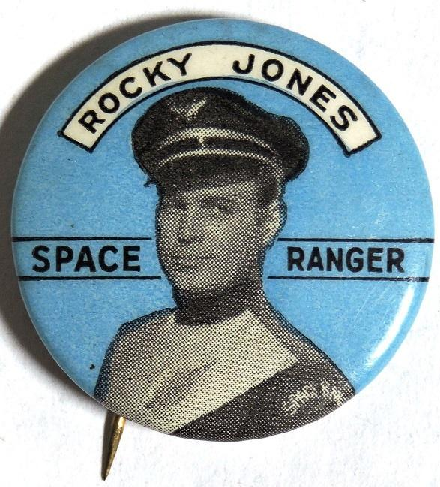
Rocky Jones, Space Ranger
Combat!
Surfside 6
Maverick
Cheyenne


It's often said that the appeal of classic television, at least in part, is due to the desire to recapture the sense of one's youth, whether it be childhood, college years, or some other significant memory. Watching the show takes you back to that time and causes you to release positive endorphins or whatever it is that's supposed to give you that warm feeling all over. And while there's undoubtedly truth to that, I think that explanation tends to be too easy. It doesn't account for the vagaries of human emotions, the environment in which one grows up, the—oh hell, why don't we just admit that everyone's different, and there's no accounting for taste, good or bad.

Take Rocky Jones, Space Ranger, for example. I know I'm old, but even I didn't see Rocky Jones in its original 1954 run. My first experience with the Space Ranger came on Mystery Science Theater 3000, in two compilation movies, Manhunt in Space and Crash of Moons, and while the riffing on both of them was great, it doesn't exactly provide the best platform for determining a show's quality. Fortunately, however, the miracles of technology (and YouTube) allow us to see the entire 39-episode series as it was originally broadcast: 12 three-episode stories, three standalone episodes, and no riffing. Rocky Jones may be for kids, but it holds up for adults as well.

Rocky and Vena
(artist's conception)
Rocky Jones takes place sometime in a vaguely-defined future, when inhabited planets have coalesced, much like Star Trek's United Federation of Planets, into the United Worlds of the Solar System. Responsible for policing the United Worlds is an interplanetary organization called the Space Rangers, the most famous of whom is our hero, Rocky Jones (Richard Crane). Rocky's sidekick is his co-pilot Winky, which, let's face it, is an awful name for a space hero; his replacement in the second series is named Biff, which is much better, especially when you're called on to engage the bad guys in a series of fist fights in every episode. (It's reassuring to see that even in the future, some things don't change!) 

Also as part of Rocky's team is the beautiful navigator Vena, who doesn't fight but does apparently help chart the course; Professor Newton, who in appearance and manor bears a distinct resemblance to William Hartnell, the first Doctor Who; and the professor's young ward Bobby, who's a precocious boy genius and otherwise has no backstory whatsoever. Overseeing Space Ranger operations is Secretary Drake, who has something of a father-son relationship with Rocky. (That's them in the picture in the heading.) 

While I wouldn't put Rocky Jones at the pinnacle of science fiction television, it does have a lot going for it. First, there's Richard Crane, who may not be a great actor but who makes for an ideal space hero. He speaks with authority and confidence (and even sounds like a pilot when he's talking with space control), can fight his way out of difficulty, and—most important, in terms of being a convincing leader—knows exactly how to handle his crew. He looks at Winky as a trusted and valued associate, even when he's often providing comic relief; doesn't condescend to Bobby, who really is smart, even if he's just a kid; and treats Vena with respect and a kind of big-brother affection. One of my complaints with Shatner's Captain Kirk is that, in my opinion, he doesn't always exhibit an intuitive and humane understanding of how to deal with his crew as individuals and has to be reminded of this by Doctor McCoy; it's a trait that supervisors often lack in handling their subordinates. Rocky, on the other hand, seems to know how to do this instinctively.

Keeping with the Star Trek theme, the show also offers an interesting alternative means of space exploration, relying on these small, four-or-five man rockets rather than the gigantic starships, and using manned space stations as hubs for intergalactic travel. The show may not have science on its side—that doesn't always appear to have been important to the writers—but from a practical matter, it strikes me as being both an expedient and economical way to deal with the vastness of space, and even in the future, someone's going to have to foot the bill for all this. 

And since I raised the matter of science, Rocky Jones is no better or worse than most shows, and it's a definite step above the space serials of the 1930s and 40s. (Hey, the rocket in Commando Cody flies through a space populated by blue skies and clouds!) It's true that the planets all seem to have oxygen-based atmospheres, but at least the crew goes through the motions of checking the readings first. And while the exotic aliens they encounter are all humanoid in appearance and speck colloquial English, they do have a universal translator just in case. At least the details weren't ignored completely.

Chief among those exotic aliens are two that bear mentioning: Bovarro, the ruler of Posita, who starts out being hostile to the Federation—I mean the United Worlds—but becomes a trusted ally. He's played by our old friend from Hogan's Heroes, John Banner, and it's always fun to see him turn up in something else. (And thinner!) Rocky's chief nemesis in the first season is the wonderfully snooty Cleolanta (Patsy Parsons), leader of Ophecius. She's always trying to make trouble for the United Worlds (got it right that time), a task complicated by the incompetence of her subordinates; she forever compares them unfavorably to Rocky, so much so that you suspect she'd be much happier with Rocky at her side, both in and out of the office. Whenever her underlings let her down; she all but looks into the camera with a "See what I have to put up with?" expression, and it's hard not to feel some sympathy for her.

One of the advantages of having been introduced to Rocky Jones through MST3K is that it keeps your expectations kind of low, which means you might be pleasantly surprised. The special effects are actually pretty good for the time, the adventures exciting for the most part; the moralizing kept to a reasonable level (unlike, say, some sci-fi shows we could name), and because the violence is limited to fighting—the Rangers carry weapons but they're never used, and nobody is killed—it's safe for kids without being boring for adults.

Would I pay for the Rocky Jones DVD? Well, I'm not sure about that. (On the other hand, I'd really like a model of the Orbit Jet!) But watching it on YouTube is a no-brainer, and I'm glad I did.

l  l  l

Having worked our way through 77 Sunset Strip, Bourbon Street Beat, The Roaring '20s, and Hawaiian Eye, we now come to the last of the Warner Bros. detective shows of the era: Surfside 6. And in this case, last does mean least, since by now the assembly line production of P.I. series with alliterative names set in exotic locations has clearly run dry. 

Lest anyone get the wrong idea, though, I'm not saying that Surfside 6 fails to give me pleasure and enjoyment, because it does. And I'm not sure, given the formula that applies to these series, that we could have done any better. However, as they might say at MST3K, the setup does have a few flaws, beginning with the cast—or perhaps I should say the number of people in the cast. 

(l-r) Cha Cha, Sandy, Dave, Daphne, and Kenny   
Unlike those other shows in the WB stable, Surfside 6 is built around three principals: Dave Thorne and Kenny Madison (Lee Patterson and Van Williams), partners in the Surfside detective agency, and Sandy Winfield II (Troy Donahue), a friend who hangs around the agency helping out on cases in the first season, before graduating to full-fledged detective in season two. They work from a houseboat that's been converted into a handsome office that doubles as living quarters for Dave and Kenny, address: Surfside 6. Berthed next to them in the harbor is the beautiful sociality Daphne Dutton (the criminally underused Diane McBain), who occasionally gets involved in their cases. The dock is across the street from Miami Beach's Fontainebleau Hotel, where the obligatory singer, Cha Cha O'Brien (Margarita Sierra) works out of the Boom Boom Room.

As you might expect, this often results in cast congestion, even given the lead rotation that WB employs in their shows. Lee Patterson and Van Williams are very likeable; they're good at their job, tough when they have to be, and can convince you that you'd hire them. (Kenny came over from the aforementioned Bourbon Street Beat, where he was a law student graduating into the PI business, and it's a nice touch that the writers include the detail that he's now a full-fledged attorney). As an actor, Troy Donahue can often seem stiff, but I'll admit that he has a presence that adds up to being a star; as the least experienced of the trio, Sandy often gets in cases where he has a personal involvement, which sometimes leads to questionable decisions on his part—whether that's because of the writing, or it's meant to reflect that lack of experience, I'm not quite sure. Perhaps a combination of both. I should add that any time a P.I. gets involved with a former flame, it usually means trouble, especially—as was the case with Kenny in one episode—you mistakenly accuse her of murder. 

But then there's Cha Cha, by far the weakest character not only in this series, but perhaps in all the WB detective shows. Her presence compares poorly with Connie Stevens, Dorothy Provine and the Frankie Ortega Trio (the musical talent in the other WB detective shows); and the most she can be said to contribute is very lame comic relief. As far as I'm concerned, she can just cha cha her way right out, and give the extra screen time to Diane McBain; a WB regular, you'd think she'd get more visibility than she does. Daphne's not one of those dumb blonde socialites, even though she could occasionally use better judgements with men. She's not only more fun to watch, she's more fun to look at.

The point, as you may have figured, is that we don't really get enough of anyone (except Cha Cha; any time for her is too much), which means it's harder for the likability of the characters to paper over the holes in the plots. There are too many occasions when A doesn't logically lead to B, and you're left wondering if you might have missed something, even though you're pretty sure you didn't leave the room and you weren't thinking about anything else. Even if the writing wasn't the week spot in shows like this, it would be a problem; here, it's that much more noticeable. 

If this comes across as negative, it's supposed to—kind of. Compared to the rest of the WB stable, it's just not as good. Compared to non-WB shows—well, you might not be watching it if you weren't already into them. And maybe that's the point. If you loved 77 Sunset Strip, you'll probably like Surfside 6. If you liked Hawaiian Eye, you'll likely find Surfside 6 a fun way to pass an hour. And if you're looking for something to really challenge you as a viewer, you'll probably just keep on looking. As for me, it fits perfectly into the time spot I've given it, and that's perfectly fine with me.

l  l  l

We're more than halfway through the first season of Maverick, which means I've watched enough of it that I need to let you know, but not enough to draw a fair conclusion, and I think I'm going to return to it sometime in the future, after I've had a chance to talk about its various iterations.

Our hero, as things begin, is James Garner, impeccable as Bret Maverick, the gambler floating through the West looking for big-stakes games and getting involved in a fair amount of trouble along the way, all the while protesting that he's only interested in making money. He's joined in the eighth episode by Jack Kelly as Bret's brother Bart, after the producers discovered they couldn't keep up the pace of making weekly episodes; by rotating the stars, separate crews could be working on two episodes at once. This becomes a WB trademark, but viewers wouldn't have been used to it at the time, so for Bart's first few appearances, the episodes utilize the framing device of having Bret provide the opening and closing narration, as if to reassure viewers that, yes, he's still part of the series. Still, it goes to show that two Mavericks are better than one, and both Garner and Kelly carry their episodes with an easy charm.

Maverick has always been known for its whimsical and occasionally satirical look at the Western genre in general, and other Western series in particular. However, that was something of an evolutionary process, and we're not quite there yet. At this point, both Bret and Bart are closer to being traditional Western heroes, although as early as the first episode, "War of the Silver Kings," Bret's propensity for outsmarting rather than outgunning his adversary is evident in a convoluted scheme to outsmart the owner of a rival silver mine, something that would become a trademark of the series. "Relic of Fort Tejon," another early episode, is the first overtly comic episode, as Bret has to deal with a camel he won in a poker game, all the while trying to fend off a hired gun. I want to see more of this evolution, though. For instance, we've yet to see the show's famous spoofs of Bonanza and Gunsmoke, and we've only met two of the show's colorful recurring characters, Dandy Jim Buckley (Efrem Zimbalist Jr.) and Samantha Crawford (Diane Brewster), once each. 

James Garner famously left Maverick after three of the show's five seasons, having won a lawsuit against Warner Bros. freeing him from his contract, and the series would try to compensate for Garner's absence by introducing still more Maverick relatives, cousin Beau (Roger Moore) and brother Brent (Robert Colbert). By the final season, Kelly is left to go it as the lone Maverick, with some of Garner's old episodes rerun to fill out the inventory. When you think about it, that's actually not a bad idea, considering that it would have been a year or two since anyone saw them, and you wouldn't have been exposed to them via DVDs or binging back then.

What all this means is that I've done my due diligence by letting you know what I've been watching, but we'll return to Maverick in another season or so, when the series has become what it is, to give you a fuller picture. But as to whether or not you should dive in—by all means! It's enjoyable, whimsical, with two strong and likable leads, and fine performances by guest stars. It may well vie with Sunset Strip as WB's best. TV  

April 22, 2022

Around the dial


We're back after the Good Friday break, and as is usually the case after we take a week off, we have a packed trip Around the Dial in-store, so we'll get right to it.

Part three of the Hitchcock Project look at the television work of Sarett Rudley is up at bare-bones e-zine, and this week Jack is looking at "My Brother, Richard," Rudley's teleplay from 1957. It's a routine story, but with a very nice cast: Royal Dano, Inger Stevens, and Harry Townes.

At Classic Film & TV Cafe, Rick gives us seven things to know about Barbara Eden, the wonderful actress who turns 91 (!) this year. She's more than Jeannie, of course, with a list of credits both before and after the show, but I don't think she needed any of that magic to remain a star for all of us.

I Dream of Jeannie wasn't the only '60s sitcom using magic as a premise, of course, but at Comfort TV, Rick takes a slightly darker look at Bewitched, and Darrin's vow to not take advantage of his wife Samantha's powers. His resolve wavered once, but in the end remained firm; what, he asks, can happen when we're the ones being tempted? Will we ever know for sure how resolute we'll be when temptation comes knocking at the door?

It's an "Escape to Tampico" for a flat-busted Bret Maverick at The Horn Section, as Hal recounts the noirish second-season episode, with the great character actor Gerald Mohr as the Bogartesque casino owner Steve Corbett.

Could you possibly resist an event called the First Nether Wallop International Arts Festival? Especially if you knew it featured Peter Cook, Stephen Fry and Hugh Laurie, Rik Mayall, Billy Connolly, Rowan Atkinson, and others? It happened in 1984 (you can see highlights here), and John has the details at Cult TV Blog.

The top 10 hits of the Doors is a topic that has pretty much nothing to do with television (although they did their share of TV appearances); since I'm a fan of their music though (though I do cringe at some of the lyrics), I couldn't resist linking to this piece over at The Flaming Nose.

At RealWeegieMidget, Gill reviews the television remake of David Lean's classic Brief Encounter, which I believe aired here on the Hallmark Hall of Fame (back when, well, you know). The ill-fated lovers are played by Richard Burton and Sophia Loren; with them as your stars, do you need anyone else?

Nehemiah Persoff must have been one of the last major stars from television's Golden Age; his performances were often intense and frequently memorable, and one role that encompassed both was the Twilight Zone episode "Judgment Night." At Shadow & Substance, Paul looks at what powered Persoff's powerful performance.

Care for some reading? If, like me, you enjoyed the 1960s television version of The Green Hornet, then you'll be drawn to The Green Hornet: How Sweet the Sting, a new novel by Jim Beard. Martin Grams has the lowdown. 

I promised a lot of good stuff today; hopefully, the wait was worth it. TV  

March 25, 2022

Around the dial


Xet's start this week with bare-bones e-zine, as Jack's Hitchcock Project introduces us to a new writer: Sarett Rudley who adapted the magazine story "The Baby Sitter" into a teleplay of the same name for the series' first season. The story stars two greats, Thelma Ritter and Mary Wickes, but still lacks that certain, what, je ne sais quoi

Being a writer myself, I tend to attach a certain importance to how well-written a television show is, and my fellow writer David shares that interest in this week's Comfort TV entry, in which he looks at what may be the best written shows in TV history, as selected by the Writers' Guild. How much did they get right? You be the judge. . .

Great news from Jodie at Garroway at Large: the document has gone to the printer! That means we're that much closer to getting the definitive Dave Garroway biography. And yet, as she points out, there still a lot of work to be done. Pretty exciting!

The Broadcasting Archives links to an NPR piece on the end of the Maury Povich show after a 30-year run. That sound you're hearing is champagne corks popping everywhere, although I don't mean that as a personal slam at Maury, who is probably a great guy. It's just that—well, you know my feelings about reality television.

At Silver Scenes a favorite episode from The Avengers: "You Have Just Been Murdered." It's a terrific story from the Steed and Mrs. Peel era, with a clever, witty script and a great villain in Mr. Needle, played by George Murcell. 

Over at Cult TV Blog, John continues the Orphaned Episodes series with a closer look at "A Woman Sobbing," one of the surviving episodes from the 1972 supernatural anthology Dead of Night on BBC. think Gaslight, and you're on the right track.

Next up, Terence at A Shroud of Thoughts reviews the classic Maverick fourth-season episode "Hadley's Hunters," which includes just about every Western star on a Warner Bros. series. And I'll say one more time, no relation! If you know or have heard of anyone named Hadley, we're not related!

At Drunk TV, Paul undertakes the massive task of looking at Gunsmoke, one of television's most influential shows (of any kind, let alone Westerns), starting with season one (of 20). I really enjoyed reading this piece for a number of reasons.

Finally at Once Upon a Screen, Aurora has a warm, touching tribute to her mother, who passed away last December. Her stories about watching television with mom remind us—and we could use it—that television was always intended to be a communal experience, to be watched and shared with others. That, in large measure, is where it derives its power from, and let's not forget it. TV  

September 17, 2021

Around the dial


A few months ago, I delved into the history of early British television, lighting on the BBC's "first identifiable drama," Murder in the Cathedral, which aired in 1936. This week at Cult TV Blog, John goes back even further, to 1933, and The Crooked Circle: the first film ever broadcast on commercial TV.

The Broadcasting Archives links to this interesting article at Variety on why, with traditional television less important and the schedules more fluid than ever, the Fall Season still matters. I can't remember the last time I checked out the first episode of a series I might be interested in watching, but then I'm different that way.

At The Horn Section, James Garner's Bret Maverick finds himself in "A Flock of Trouble," and Hal is here to tell us how he gets out of it, in this 1960 episode that includes the lovely Myrna Fahey as the best-looking cattle owner around.

Jordan's back to review the July/August 1983 issue of The Twilight Zone Magazine at The Twilight Zone Vortex, including an interview with H.P. Lovecraft (and his short story "Something About Cats," and a review of Natalie Wood's last movie, Brainstorm, with Christopher Walken, Louise Fletcher and Cliff Robertson.

Staying in the Zone for a moment, at Shadow & Substance, Paul looks at the 1962 episode "The Fugitive," and asks why it makes some fans uneasy, and whether they're right to feel that way. It points out, as Paul says, how different things can look when one views them from a 21st century perspective, and why this can be problematic for classic TV.

There's nothing better than discovering a forgotten show, and at Comfort TV, David is back with another installment of "Ten Forgotten Shows I'd Like to Watch." This edition covers the 1970s, and includes four shows I actually remember, though I don't know why. Raymond Burr as Kingston: Confidential? Yes, indeed.

Can it really be 50 years since the premiere of Columbo? You bet it can, and Terence is all over it at A Shroud of Thoughts. I, of all people, should know that television has been around a long time, and yet when you look at how crisp and alive these shows look, it just doesn't seem they could be that old. After all, that would make me even older. TV  

May 14, 2021

Around the dial


We'll start this week with a couple of stories from MeTV—first, ths story on how Roy Huggins, creator of Maverick, was forced to change the pilot episode to keep him from collecting any royalties. Having seen my share of WB shows over the past few years, I can vouch for the familiarity of some of these plots—especially the ones written by W. Hermanos.

Next, and perhaps more disturbingly—well, we know that Jack Webb made Pete Kelly's Blues, and was married to Julie London, but does that qualify him to make an album of jazz standards? Be sure to not leave this story before listening to Jack's rendition of "Try a Little Tenderness." No, really.

Last week, you'll recall I linked to Bob Sassone's review of "The 100 Best Sitcoms of All Time" list by Rolling Stone. Well, this week David looks at that same list over at Comfort TV, and has his own thoughts on the subject. Amid the ones they got wrong, David promises they did get some right.

At Bob Crane: Life & Legacy, Carol and Linda introduce their new Hogan's Heroes podcast. It's going on the sidebar, and you should make it part of your regular podcast schedule as well. It's always fun to go behind the scenes, especially at Stalag 13.

Here's another website you might want to look in at from time to time: The Definitive Guide to Murder, She Wrote, with a hat-tip to the Metzinger Sisters over at Silver Scenes

As you'll recall, we lived in Dallas for a few years, and made it out to the State Fair of Texas most of those years. Therefore, although I prefer the original version of the movie State Fair, I have a soft spot for the Pat Boone-Ann-Margret remake from 1962, because it takes place at that same State Fair. Rick reviews it this week at Classic Film & TV Café. (And yes, Big Tex is still there, even after the fire

One thing I know for sure is that whenever I visit Cult TV Blog, there's a pretty good chance John's going to introduce me to a series I haven't followed, and this week is no exception. It's "A Case of the Stubborns," an episode from Tales From The Darkside, and it includes an informative comment from our very own Mike Doran! TV  

January 9, 2021

This week in TV Guide: January 10, 1959

It's the first month of the final year of the 1950s, and one of those weeks that puts the "classic" in classic TV. 

We'll start on Sunday night, with one of the most famous episodes of Maverick: "Gun-Shy" (6:30 p.m., ABC), a wicked parody of Gunsmoke, with Bret finding himslf in Ellwood, Kansas, a small town presided over by "Marshal Mort Dooley," a lawman who spends the entire episode looking "for somebody to run out of town." The tone is set in the opening scene, a virtual copy of Gunsmoke's premiere episode which found Marshal Matt Dillon in Dodge City's graveyard, reflecting on the grim nature of his job while contemplating the graves before him. "Arguing doesn't fill any graves," he had said then. This episode also opens in a graveyard, but Marshal Dooley has a slightly different outlook on things. "It's a nice place to visit," he says. "I like to come up here sometimes to think and maybe get ahead a grave or two." Marshal Dooley is surrounded by his trusty confidants: gimping deputy Clyde Diefendorfer, crusty old Doc, and Amy, the mistress of the Weeping Willow Saloon, of which Mort is a 37-and-a-half percent owner. 

If all this wasn't enough to let you know what the writers were up to, take a look at this showdown between Dooley and Maverick. Anyone who's ever seen Gunsmoke would instantly recognize the setup on the left, the opening scene in which Matt faces down the bad guy; Maverick hilariously exaggerates it to an absurdity, with Bret standing so far in the distance he shouts out to Dooley asking if he should move a little closer. MeTV helpfully points out where Maverick is standing, little more than a speck on the screen.


I'd love to see this kind of parody of an existing series more often; God knows there are enough shows on TV today that deserve it. The audience obviously approved as well; this episode of Maverick pulls in a 49 share for the night, something most series today can on dream of. The lesson isn't lost on the producers, either; three seasons later, the show will do a wild spoof of Bonanza, with Jack Kelly's Bart dealing with Joe Wheelwright and his three sons, Moose, Henry, and Small Paul. But that's an episode for another day. 

Here's Roy Huggins, Maverick creator, discussing "Gun-Shy."


t  t  t

That's not the only special episode this week. On Friday, The Phil Silvers Show (8:00 p.m., CBS) presents the third airing of "the funniest of all the episodes" of the series: "The Court Martial," in which Bilko somehow finds himself defending a chimp that's been accidentally inducted into the Army. You know about the warning against acting with either kids or animals; well, someone should have let Zippy the chimp know that upstaging Phil Silvers wasn't going to be so easy. The most memorable scene of this memorable episode takes place during the court martial itself, when the chimp, going completely off-script, romps around the courtroom and picks up a telephone, eliciting laughter from everyone but the unflappable Silvers. "What are you doing," he ad-libs, "calling another lawyer?" It's a great moment, not only the funniest Bilko episode, but one of the greatest in sitcom history. No wonder TV Guide notes that "The popularity of this episode has led to this third showing." That's how things worked in this pre-DVR era.

t  t  t

"Gun-Shy" is also not the only parody on TV this week, but you'll have to choose which one you want to watch, because they're both on at the same time. Maverick's competition is The Jack Benny Program (6:30 p.m., CBS), and tonight Barbara Stanwyck guest stars with Jack in "Autolight," a parody of the Charles Boyer/Ingrid Bergman thriller Gaslight. Before "gaslighting" became a term of political deception, it referred to the technique employed by Boyer in this movie, in which he attempts to drive Bergman insane by making her think she's imagining things; one way in which he does this is by manipulating the gas lighting to make it dim and brighten.


There must have been times in which Benny began to doubt his own sanity in his long battle to make "Autolight." Benny had originally satirized the movie on his radio show in 1952, with no problems. Pleased with the results, in 1953 Benny filmed a 15-minute spoof for his television show, and at that point MGM stepped in, claiming the movie couldn't be parodied without its permission. What really concerned the studio was the exclusivity of their entertainment product; remember, back in 1953 television was the hated enemy of the movie studio; MGM felt it had no choice but to take legal action in order to protect the value of its product in the eyes of movie theaters. As Erskine Johnson wrote at the time, "Left unchallenged, it could set a precedent. Left unchallenged by MGM, the studio’s customers, the theater men, would have a nice 'you done us wrong' argument about aiding the TV 'enemy.' The Hollywood winds were blowing in a different direction in 1953 and Jack and his film were caught in the legal gust." 

The case wound up in the United States Supreme Court (CBS v. Loew’s), where in 1958 eight justices* deadlocked 4-4 on the question. By this time the issue of studio exclusivity had become a moot point, since MGM was now leasing their movies for use on television, and profiting greatly in the process. Benny finally wound up buying the rights to put the show on the air (how that woudl have killed his TV persona!), and this Sunday, five years after it was filmed, the controversial parody will finally appear on television, with Benny in the Boyer role, and Stanwyck taking over from Bergman. If you're curious about how it turns out, you can see it here.

*Justice William O. Douglas recused himself to pursue a business opportunity with CBS that never materialized. 

t  t  t

Back a few months ago—or about five years ago, in TV Guide time—the talk was about the "new" Milton Berle: how he was now less outrageous, more restrained, more sophisticated, adapting to the changing demands of the television audience. To which, five years later, Milton Berle says, "What new Milton Berle?"

Berle is back on weekly TV again after an absence of two years, as host of The Kraft Music Hall, and according to Dwight Whitney, "Berle has never been sharper, funnier or more engaging." Critics have described him as, variously, "topically minded," "less explosive," "better attuned," "more mature." Berle himself says, "I haven't changed a bit," although he does allow as to how viewers have become more sophisticated. But after all, Mr. Television reminds Whitney, "I've been in television a long time." Since 1929, in fact, and if you're a bit skeptical about that claim, he explains that back in 1929, while he was working in Chicago, he ran into a fellow named Sanabris from an outfit called American Television Corporation that was doing an experimental closed-circuit broadcast. "He asked me to do the 'experiment," Berle says, and "naturally I said yes." His job was to introduce a performance, which he did, while cracking what he calls "the first TV joke." That was the beginning.

After eight years on the air, five of which were spent as the number one show, Berle took a break. "I needed rest," he says. "I was overexposed and the ratings showed it." He made a "triumphant" return to the nightclub circuit, did a boffo bit on last year's Emmy Awards (his "brassy, brash monolog was the hit of the show."), and here he is back at the grind of weekly television. "Coming back is tough," he acknowledges. "That goes for anybody. If they're thoroughbreds, they'll go to the starting gate with feathers in the stomach." He has no illusions about his gig with Kraft, figuring it will be good for one or two seasons "before the old bug overexposure begins to take hold. Then I'll do spots. Or just relax for awhile and come back later." 

The new Berle of 1953 was loved by the critics, but his ratings steadily dropped until the show ended in 1956. The new Berle of 1959 will fare similarily; this run lasts one season, after which Perry Como becomes the face of Kraft Music Hall, hosting through 1967. Coincidentally, it's in January of 1967 that Milton Berle's final variety show, an attempt to attract the children of his original viewers, ends after a four-month run, slaughtered in the ratings by The Man from U.N.C.L.E. 

t  t  t

Starting in 1954, Steve Allen helmed his own NBC variety show which, at the beginning, aired opposite that of Ed Sullivan. It didn't run as long as Ed's, of course, but then Allen said his goal was never to conquer Ed, just to coexist with him, which he did for several seasons. Let's see who gets the best of the contest this week. 

Sullivan: Ed's guests tonight are Jason Robards, Jr. and George Grizzard, doing a scene from the current Broadway play "The Disenchanted," songstress Teresa Brewer, comedienne Dody Goodman, comedians Alan King and Prof. Backwards, Ireland's Little Gaelic Singers, Victor Julian and his troupe of trained poodles, and the Gutis, European comedy act.

Allen: Steve's guests are British actress Diana Dors, Perez Prado and his orchestra and the Three Stooges—Moe Howard, Larry Fine and Joe DiRita. In comedy sketches, Steve, Don Knotts, Louis Nye and Tom Posten spoof three different types of TV "conversation" shows.

As I was this, I wondered which way I'd be going; Ed's got a pretty good lineup, with that Broadway bit, a good singer, and a couple of funny comedians. On the other hand, Diana Dors, sure, she's OK, but—and then we came to the Stooges. No more entries, we have a winner: it's Steverino, you knuckleheads.

t  t  t

Let's see; there's even more to choose from this week.

Monday at 2:00 p.m., the show Language in Action debuts on NET. That's notable because the host is Dr. S.I. Hayakawa, "internationally-known semanticist." In the '60s, Hayakawa, then president of San Francisco State College, became a conservative folk hero for pulling the wires out of a loudspeaker system being used by radical protestors led by the Third World Liberation Front. He would parlay that support into election to the U.S. Senate in 1976, upsetting incumbent John Tunney.

Tuesday
 has a little something for everyone, On George Gobel's colorcast (7:00 p.m., NBC), George welcomes Myrna Loy, Cesar Romero and the Platters. After that, switch to CBS at 8:00 p.m. for the rest of the evening, starting with Arthur Godfrey and his guests, the legendary songwriting team of ◄ Richard Rodgers (music) and Oscar Hammerstein II (lyrics). Edward Everett Horton (narrator of Bullwinkle's "Fractured Fairy Tales") is Red Skelton's guest at 8:30, and then at 9:00 Garry Moore's guests include Andy Griffith and Ella Fitzgerald. Not a bad night, hmm?

The big attraction on Wednesday is an ad from Kraft with the headline "Win $20,000 acting in Bat Masterson TV Show" and the instructions "See easy contest rules on Kraft Caramels or Kraft Fudgies." Curiosity, of course, demands more information. which I found not on a package of Kraft products, but in a full-page ad running in the St. Louis Post-Dispatch:

Everyone eligible: boys, girls, men, women! As winner, you get an acting part in a Bat Masterson NBC-TV Show! (See Rule 4.) 2 weeks at $10,000.00 a week! All Screen Actors' Guild union dues paid. No acting experience necessary. Plus 2-week vacation in Hollywood for your entire family (residing with you) while you are performing. First-class round-trip transportation by Trans World Airlines. Stay at famous Hollywood Roosevelt Hotel, where the stars stay! All meals plus $500.00 spending money for the family. Or take $20,000, if you want the Grand Prize as cash. Enter now! Enter often! Who knows? You may discover an acting ability in yourselt that can start you on a great career and lead to fame and fortune!

Among the other prizes awarded: 1000 Fourth Prizes Bat Masterson Derby Hats! Genuine felt. Copies of the famous derby that was the "trademark" of the Old West's deadliest gunfighter! I wonder who won, and whether or not they did, in fact, embark on a great career leading to fame and fortune?

On Thursday's Playhouse 90 (8:30 p.m., CBS), "The Blue Men" tells the story of police detective Roy Brenner, a man with a sterling record and a son who's just joined the force, but now he faces an investigation by Internal Affairs over his failure to arrest a robbery suspect. In June, the characters of Roy and his son Ernie will return in the very good weekly series Brenner, with Edward Binns and James Broderick taking over for Edmond O'Brien and Richard LaPore.

If you've already caught Bilko and the chimp, you'll be free to watch Bob Hope's special (Friday, 8:00 p.m., NBC), in which the star shows highlights from his annual Christmas tour of American overseas military bases. With no active conflict at present, Hope and his troupe (including longtime sidekick Jerry Colonna, columnist Hedda Hopper, singers Molly Bee and Randy Sparks, dancer Elaine Dunn, and Les Brown and His Band of Renown) stop over in Madrid (where they're joined by Gina Lollobrigida), Italy, West Germany, and Ireland.

t  t  t


Finally, since a new session of Congress began last week, I thought this might prove interesting: Walter Cronkite hosts a one-hour CBS News special introducing our newest batch of U.S. senators. (Sunday, 2:00 p.m.) It's difficult to think the networks would bother with something like this today, but back in 1959 I suppose we were all naive enough to harbor the thought that amongst this group might be the dynamic leaders of tomorrow, like that young Jack Kennedy back in 1952. And while not all of them went on to become household names, there are a fair number you might have heard of before: a vice presidential nominee and secretary of state, an influential presidential candidate, and other assorted cabinet members and ambassadors. 

One thing to note: as you probably know, only in the most extraordinary of circumstances does a state elect two senators in the same year; their terms are usually staggered so something like that doesn't happen. But I can't think of anything more extraordinary than statehood, which explains the two new senators from the 49th and newest state, Alaska. (Jennings Randolph of West Virginia won a 1958 special election.)

The new senators, and how long they remained in office. 

 
Name
State
Term(s)
Years
 
E.L. “Bob” Bartlett
Alaska
1959-1968 (died)
10
 
Ernest Gruening
Alaska
1959-1969
10
 
Thomas J. Dodd
Connecticut
1959-1971
12
 
Vance Hartke
Indiana
1959-1977
18
 
Edmund S. Muskie
Maine
1959-1980
21
 
Eugene J. McCarthy
Minnesota
1959-1971
12
 
Howard W. Cannon
Nevada
1959-1983
24
 
Kenneth B. Keating
New York
1959-1965
  6
 
Stephen M. Young
Ohio
1959-1971
12
 
Hugh Scott
Pennsylvania
1959-1977
18
 
Frank Moss
Utah
1959-1977
18
 
Robert Byrd
West Virginia
1959-2010 (died)
51
 
Jennings Randolph
West Virginia
1958-1985
26
 
Gale McGee
Wyoming
1959-1977
18
 
Winston Prouty
Vermont
1959-1971
12

Those senators, they just homestead once they get there, don't they? The only reason Ken Keating served a single term is that Robert Kennedy wanted that Senate seat. My favorite is how Utah's Frank Moss was defeated by Orrin Hatch, who ran on the slogan, "What do you call a Senator who’s served in office for 18 years? You call him home." Hatch, of course, holds the seat for the next 42 years. But you know what the song says; How Ya Gonna Keep 'em Down on the Farm After They've Seen Dee Cee? TV