February 28, 2026

This week in TV Guide: February 26, 1966


This week's headline proclaims, "TV's Impact on Our Civilization—A startling appraisal." Well, I'm always up for being startled, and this website is all about television's relationship with culture, so this sounds like a pretty good place to begin.

The author is Louis Kronenberger, Professor of Theatre Arts at Brandeis, author of novels and essays, and former drama critic for Time magazine. This must be understood, Kronenberger says at the outset: "[T]elevision is not just a great new force in modern life, but that it virtually is modern life. What, one might ask, doesn't it do?" It is, he concludes, "a truly stupendous addition to American life—our supreme cultural opportunity." It is, as well, "a supreme cultural commodity," a case of Big Business operating in tandem with Bigger Business. "Business calls—or cuts short, or calls off—the tune." And because of this, nothing else about television and its potential matters; "it makes any other fact about TV and its effect upon our civilization ultimately subsidiary and expendable."

Kronenberger compares television to the menu of a vast banquet; a fair amount on the menu is "unexceptionable" while a good deal more is "harmless entertainment." Some is even very good, but much else is not good, and even more is "truly dreadful." In offering this argument, though, Kronenberger goes beyond the artistic merits of the program itself, whether it is "good" or "bad" in conventional terms. Instead, he refers to the effect that such programs have on the audience. Not only does it pander to the lowest common denominator, it does so in the hopes of keeping that denominator low - hence, making it easier to keep the audience entertained, and available for the messages of its advertisers.

More than that, however, is the corrosive effect the programming has on the, for lack of a better word, dignity of the individual watching it. Take the Quiz Show Scandal, for example: the technical crime, as Kronenberger puts it, was that the shows were being rigged, the immorality being that the networks should and probably did know about it. "But what was really degrading, indecent, uncivilizing was that, rigged or not, the quizzes pandered to the venality of a whole nation, had multitudes glued to their televisions not at all for the fun of the game, but for the size of the stakes. Knowledge had become the grossest, the most uncultural, of commodities." To despoil the purity of knowledge, to turn it into a tool for making ever larger sums of money—aye, there's the rub.

It's not just this, of course—the corruption extends to violence, to "cheap gags and gossipy wisecracks," to an invasion of privacy—"not just in terms of outright gossip, but in the way of candid 'discussion,' or psychiatric 'discovery,' or photographs of the sick, the unhappy, the doomed?" In other words, the kind of exploitation found in everything from the early pity-party Strike it Rich to today's reality television. (Or, as I put it some time ago, trafficking in human misery.) The ratings system encourages "not merit but mass popularity"; by basing the value (and therefore continued existence) of programs on ratings, "it turns any illiterate into a critic; an entrepreneur into a craven; a defeated contestant into a criminal."

And it all surrounds money, money, money, making the offscreen antics just as craven, just as uncivilized, as what happens on the tube: "TV doesn't even wash its dirty linen in public; it merely waves it." The Great Networks are assisted by the Great Advertising Agencies and the Great Artists' Representatives, with the end result that "the alluring daughters and nieces of art—Language and Laughter, Melody and Declamation and Dancing—are constantly bedded and wedded to the paunchy sons and nephews of Mammon. The general effect is often about as civilized as gluttony." There's nothing in the least altruistic about the actions of the network executives responsible for all this; they have absolutely no interest in improving their audience, in enlightening them, in doing anything other than analyzing them not as individuals, as humans, but as statistics on a balance sheet.

It's a pretty harsh assessment, especially for a self-professed fan of television such as yours truly to have to record. And yet while I don't know that I can wholeheartedly agree with everything Kronenberger says—to do so would be to call into question most of the shows that I spend so much time watching and enjoying—I find it difficult to disagree with most of what he says, particularly the idea of how the quest for profit has made television's effect on the public both coarse and profane. "TV," writes Kronenberger, "has consistently either imposed uncivilized elements on American life, or aggravated and intensified those it found there. It has helped destroy respect for privacy, it has helped foster a more rackety publicity."

But herein lies the dilemma. Certainly we can argue about the corrupting influence of advertisers on viewers. Quoting Gore Vidal from some time back, what television could use is "a sense that getting people to buy things they do not need is morally indefensible." As for the coarsening of culture, as my friend Gary used to say, he feared letting his small son watch something as harmless as golf on TV because he didn't want to be asked "What does erectile dysfunction mean?" It's understandable that under these circumstances, networks want the highest ratings they can get in order to attract the advertisers whose dollars keep the network on the air. And since Kronenberger mentions sports in passing, let's take a moment with that as well—it's more than just ED commercials. Look at how TV has gone from covering the games to influencing them—start times, endless commercials stretching game lengths, advertising covering the players and saturating the stadiums, rules changes designed to make the game more exciting, more palatable to targeted demographics. And whereas once upon a time the goal was to win the championship, now it often seems that, as was the case with the quiz shows, winning means being able to get more money in the next contract negotiation.

What's the alternative, though? Sure, there's government subsidy, as you'd see in Britain, but if television is as pervasive in the culture as Kronenberger said it was in 1966 (and, expanding the definition of television to encompass all of today's mass media, it's probably even more so today), do you want the government to be controlling that? Really, do you? But if you go the PBS route, you're going to run into what PBS itself has discovered, namely that you still have to have "popular" programs in order to get viewers to contribute, which means more British series and aging Baby Boomer rockers. Plus, of course, the ever-present fear that if you broadcast something the government doesn't approve of, your funding will suddenly die out. Frankly, I don't have an answer, if indeed one exists, which suggests that perhaps television was doomed from the start.

Kronenberger's conclusion is not optimistic. About television, he says, "There has been nothing too elegant for it to coarsen, too artistic for it to vulgarize, too sacred for it to profane." For whatever good television may have done, truer words have seldom been spoken.

l  l  l

During the 60s, the Ed Sullivan Show and The Hollywood Palace were the premier variety shows on television. Whenever they appear in TV Guide together, we'll match them up and see who has the best lineup..

Sullivan: Scheduled guests are comic Alan King; singer Petula Clark; rock 'n' rollers Gary Lewis and the Playboys; singer Jerry Vale; comic Richard Pryor; the Tokyo Happy Coats, a girls' jazz band; and the Berosini Chimps. (According to the episode guide, Nancy Sinatra was also a guest tonight, taking the place of Pet Clark, and singer Blossom Seely and The Trio Rennos, an aerialists group, also appeared. Jerry Vale was "scheduled," but it sounds as if he might have been a no-show.)

Palace: Host Liberace presents comedian Bob Newhart; singers John Davidson and Marni Nixon; the comedy team of Avery Schreiber and Jack Burns; magician Channing Pollack, and trapeze artist Betty Pasco.

Well, this was easy. Liberace and Newhart start out pretty well, but after that the Palace goes off a cliff. No offense to Marni Nixon, who has a lovely voice and a lovely television presence, but I can't stand John Davidson, and Burns & Schreiber always left me cold. On the other hand, Ed has a strong lineup with King, Pryor, and Gary Lewis, and if Jerry Vale does show up, it's icing on the cake. This week is a comfortable victory for Sullivan.

l  l  l

From 1963 to 1976, TV Guide's weekly reviews were written by the witty and acerbic Cleveland Amory. Whenever they appear, we'll look at Cleve's latest take on the shows of the era.
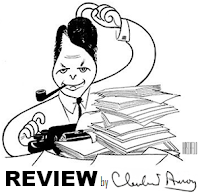
This week we're looking at the original Smothers Brothers show: not the variety show, but the sitcom that preceded it, wherein Tom plays an angel (on probation) who has to do good to earn his wings (quite possibly the most incompetent angel since Clarence, or perhaps Jack Benny in The Horn Blows at Midnight), and Dick is his brother, presumably the beneficiary—or victim, if you prefer—of Tom's good deed-ing. "If you accept it all," says Cleve, "you can have a very good time with this show. If, however, you can't accept it and are on the side not of the angels but the angles, and you even regard the whole thing as a rather "B" switch on Bewitched—you won't have a good time."

Amory is of two minds on the show; sometimes it works, other times, "we have seen another one which was so bad we wouldn't have accepted the fact that there were ,are, or even ever have been, two brothers named Smothers." A different producer has made the show, in Amory's words, character-funny instead of funny-funny, which is an improvement—especially when the writers avoid saddling Tom with hackneyed jokes, such as his telephone calls to his angel-in-chief, Ralph—e.g., "when he takes the telephone off his chest, and says inevitably, 'I've got to get something off my chest'; or. when he says, 'Roger and over,' and then asks, 'I wonder who "Over" is—I know who Roger is.' " Well, I think you get the point there. 

So things are looking up. Under the new regime, the show is, in Amory's opinion, "now developing some very funny character funnies—as, for instance, in the recent Christmas show when the brothers did an inimitable 'There isn’t any Kriss Kringle' routine." (It's possible that this could be due, in part, to Tom's more active participation in the production of the show; his involvement in the details didn't begin with the later Comedy Hour.) But there's one thing they absolutely need to do, according to Cleve, and that's improve the show's beginning. I mean the real beginning—the theme, which is "bad enough," and what follows it, when the brothers come on to tell everyone what's about to happen in the show. "Honestly, it takes strength to handle it when you don't know, but when you do—well, never mind." After one particularly painful beginning, "you could hardly wait for the first commercial." (You can judge it for yourself here.) His final verdict: like the angel Tom, the show needs to do not only good, but better.

l  l  l

As predicted, the resignation of Fred Friendly makes headlines in "For the Record"—right below the item commending the networks for covering the Senate Foreign Relations Committee's hearings into the progress of the Vietnam War. (In particular, author Henry Harding singles out NBC for covering the hearings in their entirety, unlike some other networks we could name but won't, other than their initials are C, B, and S.) As you might recall, on February 15, Friendly "quit his job as president of the CBS News division after John Schneider, newly promoted No. 3 man in the CBS corporate hierarchy, turned down his request that the network telecast a specific session of the Senate Foreign Relations Committee hearings on Vietnam." The network instead scheduled a rerun of I Love Lucy. 

I don't suppose it's an exaggeration to say that these hearings, chaired by powerful Arkansas Senator J. William Fulbright, mark the beginning of the end of majority support for the war, or, as the above article says, they "parted the curtain," allowing the public a view of what was actually going on. Although the clip below shows the appearance of Secretary of State Dean Rusk, it is probably the testimony of General Maxwell Taylor, former Chairman of the Joint Chiefs of Staff, that is the most pivotal; it is Taylor's contention that Hanoi will never agree to negotiate unless they are convinced that the United States is committed to fighting on behalf of the South Vietnamese. Harding calls the broadcast of the hearings "some of the most rewarding, most effective, most important, presentations in the history of network television."


The hearings, according to historian Marc Selverstone, "legitimized public dissent" over the war, creating a story that, along with its fallout (e.g. Watergate), would dominate television—and the nation—for much of the next decade.

l  l  l

On Saturday's episode of Secret Agent (8:30 p.m. PT, CBS), a captured British agent is being tortured to reveal the links in his espionage network. There's nothing new in particular in this episode, but don't you find this title just a bit revealing, considering Patrick McGoohan's follow-up series The Prisoner? It's called "The Man Who Wouldn't Talk," with one of the key lines being, "We all talk. It’s just a question of time." Interesting, hmm? Ironically, NBC's Saturday night movie is a Bob Hope vehicle called My Favorite Spy (9:00 p.m.), about a burlesque comic mistaken for a foreign agent. My suspicion is that he won't be mistaken for John Drake. 

The Twentieth Century (Sunday, 6:00 p.m., CBS) profiles the show's "Man of the Month," Dr. Michael DeBakey, already a renowned cardiovascular surgeon, a pioneer in heart transplants, and already at work on the development of an artificial heart; "We could help many people if we had a truly workable artificial heart, and there is no really basic reason why we cannot," he tells Walter Cronkite. Later, it's a historic airing of Perry Mason (9:00 p.m., CBS). Does Mason finally lose to Hamilton Burger? Don't be ridiculous; that's already happened, and he managed to get his client off any. No, it's series' the first, and only, color episode. Had it continued for another season, every episode would likely have been in color. Personally, I don't think it worked; things just didn't look right, and the series lost whatever noir qualities it still had. A better story might have helped as well. Still, Mason is Mason, and there's a great turn from Victor Buono, so there's that.

On Monday night, Vivian Vance guests on I've Got a Secret (8:00 p.m., CBS), and that's followed (not surprisingly) by The Lucy Show, with guest stars Jay "Dennis the Menace" North and the wonderful character actor Vito Scotti. Meantime, on the music side, Hullabaloo (NBC, 6:30 p.m.) has George Hamilton doing the hosting, with guests Lainie Kazan, Simon and Garfunkel, Mel Carter, and the Young Rascals. Later, at 8:00, NBC preempts Andy Williams for Perry Como's once-a-month Kraft Music Hall, with Judy Garland and Bill Cosby. Big show!

Tuesday's highlight is the first of the two-part episode "Hills Are For Heroes" on Combat! (7:30 p.m., ABC), in which the platoon is given a hopeless assignment: take two entrenched German pillboxes preventing the Americans from advancing. It's a hopeless task, and the story (directed by Vic Morrow) doesn't shy away from the "Knee Deep in the Big Muddy" vibes, fully justifying the two-hour overall length of the story, as well as co-star Rick Jason's comment that it was the greatest anti-war movie ever made. Later, on the IBM-sponsored Town Meeting of the World (9:00 p.m., CBS), the subject for debate is "How to Stop the Spread of Nuclear Weapons." The debaters: Sen. Robert F. Kennedy in New York, French presidential adviser General Pierre Gallois in Paris, former West German Defense Minister Franz Josef Strauss in Munich, and Lord Chalfont, British Foreign Minister, in Geneva. Eric Sevareid is the moderator. Perhaps the best-known of these Town Meetings would come a year later, when RFK debates California Governor Ronald Reagan over the Vietnam War (there's that war again). Alas, it was not to be a preview of coming presidential attractions.

Wednesday has some fun highlights of over-the-top performances, beginning with Cesar Romero as The Joker, the Guest Villain on Batman (7:30 p.m, ABC), and continuing with The Beverly Hillbillies (8:30 p.m., CBS), starring John Carradine as Marvo the Magnificent, an unemployed magician. And it wouldn't be an over-the-top evening without the presence of William Shatner and John Cassavetes, who appear on Bob Hope Presents the Chrysler Theatre  (9:00 p.m., NBC). For a little sanity, we'll go with The Danny Kaye Show, featuring a rare television appearance by Academy Award-winning actress Joanne Woodward, and Robert Goulet, who appeared earlier in the evening on the WWII spy drama Blue Light, seen, as they say, on another network.

Gilligan's Island always was a little surrealistic, but on Thursday's episode (8:00 p.m., CBS), things go a little too far: somehow or other, a lion has wound up on the island. Don't ask me; I just write these things. After that, one of my favorites, Leon "General Burkhalter" Askin, is secret agent U-45 in the short-lived spy spoof The Double Life of Henry Phyfe (8:30 p.m., ABC), starring Red Buttons. Secret Agent it ain't; I'm not even sure it even measures up to My Favorite Spy

On Friday Britt Ekland, aka Mrs. Peter Sellers, makes her U.S. TV debut on Trials of O'Brien (10:00 p.m., CBS). We mentioned a while back that one of O'Brien's low-ratings problems was its lack of clearance on CBS affiliates, and this is a good example: of the four CBS affiliates that appear in the Northern California edition, only one of them carries O'Brien. Meanwhile, The Sammy Davis Jr. Show (8:30 p.m., NBC), a show that ought to have been much, much better than it was, features Jonathan Winters, the Supremes, the Andrews Sisters, and singer Johnny Hartman. And Johnny Carson wraps up yet another week off on The Tonight Show (11:30 p.m., NBC); his guest hosts this week are Bob Barker (Monday), Alan King (Tuesday and Wednesday), Hugh Downs (Thursday) and Henry Morgan (Friday). 

l  l  l

Didn't we just do a profile of Debbie Watson? By golly, you're right; if you're a regular reader, you'll recognize her from just two weeks ago. No matter, here she is in an earlier phase of her career, doing a fashion layout. Apparently, in 1966, women are just panting for pants. Speak for yourself, I say.  


We've also got a profile of Dick Kallman, the young star of NBC's sitcom Hank, who first came to attention in the national touring company of the smash musical "How to Succeed in Business Without Really Trying." Kallman comes across in Michael Fessier Jr.'s article as a good guy with endless energy and ambition, who hopes that someday people will feel about him as a comedian the way he does about Sir Laurence Olivier. Alas, he never quite makes it in showbiz, but becomes a very successful antiques dealer before he and his partner are murdered in a robbery attempt in 1980.

Of course, how can we leave without at least a word about Barbara Stanwyck? Missy, she's called on the set (mostly affectionately) comes across as confident yet insecure, an accomplished actress who feels she still has something to prove, a strong woman who still hasn't found what (or who) she wants in life. A woman of contradictions, a puzzle, but leaving absolutely no doubt that she's a star. And when you're a star the magnitude of Barbara Stanwyck, you don't get that way simply by telling people you're a star, or acting like a star. You just are. Her anthology series of the early '60s was, she hoped, a way to be able to play a strong character on television, and although that failed, I think you can say that as Victoria Barkley, the matriarch of The Big Valley, she's tougher than all of her sons put together. I like that woman.

l  l  l

MST3K alert: The Amazing Transparent Man (1959) A crazed master spy hopes to build an army of invisible men. Marguerite Chapman, Douglas Kennedy (Sunday, 6:00 p.m., KGO in San Francisco). This movie runs only about an hour, and you're really not missing too much. It's very predictable, in a way; stories like this are so transparent. 

I'll show myself out now. TV


If you enjoy the content here and want to support my broader creative work, please consider making a donation at my Ko-fi page. Any amount you contribute helps me continue writing, researching, and sharing these articles and projects. Thank you!

February 27, 2026

Around the dial


Remember the sitcom Angie? I do, although I'd have to be prompted for it; it's not the kind of show I'd think about casually. But David remembers it, and at Comfort TV, he gives us five reasons the show didn't last longer, despite having a lot going for it.

At Cult TV Blog, the Tony Wright Season continues, with John looking at the 1968 Avengers episode "Whoever Shot Poor George Oblique Stroke XR40?" I just saw this episode a couple of weeks ago, in fact; it has some very funny lines about treating a computer like a human.

At RealWeegieMidget Reviews, Gill remembers Catherine O'Hara and Bud Cort with a pair of "cautionary tales with a twist," with O'Hara in "I'll Die Loving," from Really Weird Tales; and Cort in the Twilight Zone revival episode "The Trunk." 

Now, this isn't television related, but you don't think I'm going to pass up a post titled, "Everybody was Kung Fu Fighting...Vampires!" do you? That's the brilliant header for Rick's post on The Legend of the 7 Golden Vampires, aka The Seven Brothers Meet Dracula, at Classic Film & TV Cafe.

Roger continues his look at The A-Team at The View from the Junkyard, with "Trouble on Wheels," which finds our heroes dealing with a stolen car parts ring that quickly escalates into kidnapping, torture, and more. 

Another of our beloved figures from the past has passed on: Lauren Chapin, Kitten from Father Knows Best, who died of cancer aged 80. At A Shroud of Thoughts, Terence looks back at a career that may have been short, but also made her a lot of fans.

Martin Grams looks at the comic book series Sergeant Preston of the Yukon, based on the radio series, which itself wound up moving to television. Ah, for the days of simple adventures like this on television!

The Winter Olympics may be over for another four years, but they're not forgotten: Garry Berman gives us a brief history of the winter games on American television, starting with 1960 and the broadcasts from Squaw Valley. I don't watch them anymore, but back in the day, they were great fun, especially on ABC. TV


If you enjoy the content here and want to support my broader creative work, please consider making a donation at my Ko-fi page. Any amount you contribute helps me continue writing, researching, and sharing these articles and projects. Thank you!

February 25, 2026

Lenny Bruce introduces us to the 1960s

LENNY BRUCE UNDER ARREST—AGAIN

Here's a clip of Lenny Bruce appearing on Steve Allen's show, April 5, 1959—one of only six appearances that Bruce ever made on network television.

You might be wondering why I chose to post this today. It's not that I've been thinking about Lenny Bruce specifically, but I have been thinking about popular culture in general, thanks to a recent conversation I had regarding the differences between the classic TV era and that of today; more precisely, the evolution—or devolution, if you prefer—of that culture. (I'll have more on that conversation at an appropriate time.) And that's what started me thinking about how virtually every aspect of modern entertainment, and all of modern life for that matter, has coarsened significantly over the decades. I'm not going anywhere with this particular point, or trying to prove anything. It's just that thinking about it invariably led me to Lenny Bruce.

I know that there was already a counterculture in the 1950s; Bruce himself was one of its leading lights. But he paved the way for this new brand of comedy—edgy, political, topical, willing to take on sacred cows and taboo subjects—to become a dominant force n the cultural earthquake of the 1960s. (His numerous arrests for obscenity also fit right in.) You can almost feel the tension present in 1959; the established mores of the postwar era trying desperately to hold on against the gathering storm coming from a new generation with a new take on life. The pressure would become unbearable before the dam finally burst, creating a permanent change in our way of life.


Did you catch Bruce's remark about sticking to the script? Yes, such was his reputation that he did have to submit his routine in advance. I can only imagine how even straying slightly from that script must have made the network S&P people very nervous.

Now, from what I understand, Lenny Bruce was a pretty intelligent guy; certainly, smarter than today's "comedians" and their hyperpoliticized "comedy" that seems to be the rule in modern entertainment. And in that context, much of Lenny's material seems pretty tame to us today. But right or wrong, everything has to start somewhere, or with someone. TV


If you enjoy the content here and want to support my broader creative work, please consider making a donation at my Ko-fi page. Any amount you contribute helps me continue writing, researching, and sharing these articles and projects. Thank you!

February 23, 2026

What's on TV? Wednesday, February 22, 1967


The 11:00 p.m. movie on KTVU is The Frightened City, a 1961 filmin which "An accountant organizes a protection racket in London." It stars a pre-James Bond Sean Connery, and a pre-Pink Panther Herbert Lom, and while it's always fun to see actors in roles other than those that made them famous (for instance, I enjoy Lom immensely in the psychiatrist drama The Human Jungle), it's a little disconcerting to see both men going over to the dark side. Oh well, it's only a movie, right? You can find this and more in the Northern California edition.

February 21, 2026

This week in TV Guide: February 18, 1967


What better way to start the week than by spending a day with Dean Martin? That's what Leslie Raddatz is here to tell us!

Fortunately for us, the day happens to be a sunny Sunday in Southern California, the one day a week that Deano spends on his television show. (When you're the highest-paid entertainer on television, as Martin is reported to be, you get little perks like working one day a week.) However, don't think that the day begins and ends at the studio. By 11:00 on this Sunday morning, Martin has already been up for more than four hours, had breakfast, and played nine holes of golf at the Bel-Air Country Club.*

*Don't think that Martin is averse to work, though; this year he will do 30 episodes of the show, plus a pair of engagements in Las Vegas, and still find time to shoot four movies.  

He spends the first couple of hours at the studio running through his musical numbers with music director Les Brown and his orchestra, and now he's watching the run-through of the show on his dressing room monitor, with stand-ins substituting for him in the comedy routines he'll be doing with Marty Allen and Steve Rossi, and Eddie Foy Jr.; Martin works best when he's spontaneous, and often he'll rehearse only his own lines, to keep his reactions fresh. After returning to the set to rehearse a song with Leslie Uggams and his weekly schtick sitting on the piano with Ken Lane, he's back in the dressing room, nursing a Scotch. Someone "close to the show" confides to Raddatz that Martin sips pretty steadily throughout the day, but he's never drunk: "How could a drunk get up at 6 o'clock in the morning, play nine holes of golf and then spend the rest of the day working on a show he’s never even seen before, with music cues, tricky arrangements and all the rest of it?"

Next, we see Martin waiting for a doctor to give him a shot; he's still dealing with the aftereffects of a cold and laryngitis, which has forced some of the guests from previous shows to come in today to do "pickups," accounting for the longer day. (While he complains that "I could have been sleeping," a friend says that Dean is generally an "early-to-bed, early-to-rise guy" who's always up by six, and seldom goes to parties.) Once the doctor has done his duty, Martin is joined by three of his children, and they watch a tape of last week's show. He's not one of those who avoid watching themselves, but he also doesn't study his past performances; he watches purely for entertainment. 

The actual taping of the show begins around 8:00 p.m., when he appears on stage to help warm-up the audience. He generally returns to his dressing room when other performers are on, but he's always watching them on the monitor. Other times, while technical adjustments are being made or sets are changing, he's joking with the audience. And now he actually starts to perform; as another friend says, "In the rehearsal, he just reads the jokes—he doesn’t do them." Radditz notes that some of those jokes, "which he read perfectly at rehearsal, he now pretends he can’t make out and squints at the cards. The audience roars."

By 11:00, the show is done, the pickups concluded, and Martin heads for an Italian restaurant with Mort Viner, his agent and old friend. Often, they'll play some pool afterward, on the table in Deano's house, while he winds down. Not tonight, however; it is now after midnight, and as Raddatz says, "it has been a long day." And, in all likelihood when the show is finally aired, a good one.

l  l  l

During the 60s, the Ed Sullivan Show and The Hollywood Palace were the premier variety shows on television. Whenever they appear in TV Guide together, we'll match them up and see who has the best lineup.

Sullivan: Scheduled guests: Joe E. Lewis; Pearl Bailey; Pat Boone; Met coloratura soprano Gianna D’Angelo; comedian Jackie Mason; the Four Tops; saxophonist Boots Randolph; and the Martys, a teeterboard balancing act. (According to the episode guide, Morey Amsterdam was an additional guest, and Jackie Mason and Gianna D'Angelo did not appear.)

Palace: Host Bing Crosby presents Ella Fitzgerald; Phil Harris and Alice Faye (Mrs. Harris); comedian Dom De Luise; the Nitwits, English music-hall clowns; the acrobatic Medini Brothers; and Hendra and Ullett, an English comedy duo. 

I've always leaned toward Palace when Bing Crosby hosts, and this week is no exception. Besides a Bing and Ella duet, Phil Harris and Alice Faye are always entertaining, and Dom De Luise can be very funny. Over on Sullivan, Morey Amsterdam is a fine substitute for Jackie Mason, and the music lineup is varied enough for everyone. When the shows line up this well, there's no other alternative than to declare the week a Push

l  l  l

From 1963 to 1976, TV Guide's weekly reviews were written by the witty and acerbic Cleveland Amory. Whenever they appear, we'll look at Cleve's latest take on the shows of the era.

Cleveland Amory invades the world of science fiction this week, with ABC's new series The Invaders, and the question is whether or not we can stand more than one invasion. 

It's difficult to tell whether Amory has a real feel for sci-fi or not; he treats the program as something of a joke, an "Us vs. Them" scenario in which Earth is threatened by aliens who look just like Us, talk just like Us, act just like Us. Only one man stands between Us and Them, and that one man is David Vincent, played by Roy Thinnes, which means we're in a fair amount of trouble. You see, Vincent isn't a scientist or military man or anything like that; he's just an architect, which means he's not necessarily a credible authority when it comes to convincing the authorities that the Earth is under attack. And then there's the fact that so many of those authorities are either in the power of Them, or actually are Them. And just to complicate things, "you can’t tell whether one of Them is one of Them or just in the power of Them unless they get headaches and take pills and things; and, even after you do get it all straight, our guess is you’re not even going to trust the commercials."

Cleve's favorite episode so far featured Suzanne Pleshette as a stripper who decides to help Vincent, even though it turns out that she's one of Them too. When Vincent discovers this, he asks, quite sensibly, why he should trust her. "All right,” she says, “I’m an alien. But I am to Them too. Ever since I was little I had this difference. My father had it too." What that difference is, Amory doesn't say, probably so the suspense isn't ruined. The Invaders is a Quinn Martin show, like The Fugitive, which means that Vincent will come under attack each week, will be threatened with capture by the aliens each week, will try (and fail) to convince others of the threat each week, and will escape at the end of the episode to fight another day, or at least another week. See the problem? Amory compares the series, somewhat unflatteringly, to War of the Worlds, and the panic the radio version supposedly started in New Jersey, site of the Martian invasion. What does this have to do with anything? Well, he concludes, The Invaders is "a great show for the kids, but for the rest of you, our advice is to join New Jersey and take to the hills."

l  l  l

Unlike Leslie Raddatz's day in the life story about Dean Martin, Dwight Whitney's look at the post-Ben Casey career of Vince Edwards isn't nearly as flattering, or as satisfying. To begin with, Whitney interjects himself directly into the story, and while this may be a favored style of the day, it's a technique I've never been particularly fond of. I suppose it's unavoidable in this case; Whitney has known, and written about, Edwards for several years, and that gives him an insight into "Vince Baby," as Whitney refers to him, that others might lack. And don't get me started on "Vince Baby" in the first place; it appears in the title of the article ("Vince Baby Plays It Cool"), and it's how Whitney refers to Edwards throughout the article. A little of that goes a very long way. 

Perhaps to compensate for this, Whitney doesn't shy away from Edwards's less attractive qualities. Given what we've read about Edwards in the past, this may have been unavoidable. He's always been portrayed as intense, scowling, difficult to work with. He insists he's changed; "In the early years I was a little hostile, but you grow out of that and realize that everybody’s got a job to do." But it doesn't take long for Whitney to see Vince's "old fierce, scowling self." We learn, for example, that Vince Baby has it set to make it big time in motion pictures. He's signed a "dream" contract with Columbia for two movies, with script and director approval, star billing above the title, snd a minimum budget for each of nearly two million. So far, though, nothing has come of it, and Vince thinks he knows why. "What TV actors have really broken through? Not very many. Know why? It’s pure snobbery. The men who run this town are sitting on a bonanza and they don’t know it! They’re fools. Otherwise they’d be breaking the doors down trying to get TV stars. But, oh, no, they’d rather import something with an accent that covers a multitude of bad acting." 

Whitney acknowledges the difficulties of making the big transition from television to movies, and says"those who did make it—McQueen, Garner, Van Dyke, Marvin—were not exactly Cary Grant. Superstar he would be." In case you're not sure, that would be Oscar nominee Steve McQueen, Oscar nominee James Garner, Oscar winner Lee Marvin, and Dick Van Dyke, who was in the Oscar-winning Mary Poppins. Maybe they're not Cary Grant; nobody else was or is. However, considering that three of these men were considered among the coolest stars ever, and the fourth one of the most beloved, I think Whitney was a little off the mark in this comment. Perhaps he was too focused on his snark to notice. 

But back to Vince Baby. He's done all the right things that a star should do: he's been seen in the right places, with the right people; he's looking at buying a house in the right neighborhood (Bel Air); he gets his hair done with the right stylist (Jay Sebring); and he got a new press agent, a new girlfriend, and a more swinging lifestyle. He turned down plenty of offers for "schlock" movies and television series (including a detective series written by Blake Edwards and produced by Aaron Spelling that came with a two-season guarantee), and made a strong pitch for roles in movies such as King Rat ("it went to George Segal. George Segal!!?), The Chase (Robert Redford got the part), and In Cold Blood and Funny Girl, but missed out both times. 

Still, life is not bad for Vince Baby: he's been accepted by the jet set for doing all those right things, and he remains confident that what he wants will come, if he's patient. "I won't settle for second best," he tells Whitney. "You need a little mozel [luck]. You pray a little. You build excitement with activity.

Night clubs! Records! Publicity! Keep yourself hot. Go. Go. Go. And wait for your best shot..."

l  l  l

We don't have anything from Vince Baby on this week's hits, but that doesn't mean we're without choices. 

You may or may not remember that the success of Mr. Magoo's Christmas Carol spawned a spin-off series, The Famous Adventures of Mr. Magoo, which put our near-sighted hero into various roles from classic literature. A number of those episodes were turned into movies, such as Mr. Magoo in the King's Service (Saturday, 9:00 a.m. PT, KCRA), made up of adaptations of The Three Musketeers, Cyrano de Bergerac, and King Arthur and the Knights of the Round Table

Jack Benny and George Burns guest star on The Smothers Brothers Comedy Hour (Sunday, 9:00 p.m., CBS), and the two oldtimers wonder if they need to create new images for themselves in order to capture the "younger generation." My suspicion is that they're probably still funnier than the Brothers just the way they are. In this week's Doan Report, by the way, Richard K. Doan reports that the latest addition to the CBS lineup is running neck-and-neck with perennial champion Bonanza. For the Tiffany Network, the "all-but-unbelievable" news comes after years of struggling to offer competition for the Cartwrights, with everyone from Judy Garland to Julie Newmar swinging and missing. Might the Smothers Brothers be the ones to finally break NBC's stranglehold on the timeslot? Stay tuned.

Also on Sunday, N.E.T. Opera presents Jack Beeson's 1965 modern opera "Lizzie Borden" (8:00 p.m., NET), a retelling of the legendary (and alleged) axe murderer that focuses on Borden's possible motives. It's a fascinating couple of hours (we've got it on DVD), performed by members of the New York City Center Opera Company, conducted by Anton Coppola, Franis Ford Coppola's uncle. 

If you remember the premise of Run for Your Life, you may also remember that Paul Bryan, the doomed lawyer played by Ben Gazzara, comments that he hasn't had a vacation since law school; thus, with only a couple of years to live, he's decided to cram all the living he can into those years. Sensible, but I've always wondered how it is that he's got so much experience at these various activities if he's never taken any time off. Case in point: this week's episode (Monday, 10:00 p.m., NBC), in which Paul finds himself in Czechoslovakia to compete in an important road race—and, by the way, to help a scientist defect to the West. Amazing how he could find the time to become a competitive auto racer while spending all his time in court, not to mention becoming a spy at the same time. Sounds to me as if he's already crammed a lot of living into his life.

Andy Griffith branches out from Mayberry to try his hand at a variety hour (Tuesday, 8:30 p.m., CBS), with his guests Don Knotts, Tennessee Ernie Ford, the Back Porch Majority folk group, singer Maggie Peterson and the Bruce Davis Quintet. Included during the hour is one of Andy's famous monologues, this one on "a successful small-town boy named William Shakespeare." Also on Tuesday is a rare television appearance by singer Peggy Lee in The Girl from U.N.C.L.E. (7:30 p.m., NBC), in an even-more-absurd-than-usual tale about a three-woman race to gain a mineral that can turn laser light into a death ray. If you're interested in movies, there's the Oscar-winning The War of the Worlds (9:00 p.m., NBC) in its color television premiere, and Patterns (11:00 p.m., KTVU), Rod Serling's adaptation of his own television play that helped launch his illustrious career.

Perry Como celebrates Washington's Birthday with a Kraft Music Hall special (Wednesday, 9:00 p.m., NBC) that features the comedy team of Burns and Schreiber, and singer Frances Langford. I notice that Perry's singing "Lazy River"; I wonder if it's the  thrillerPotomac River, which Washington supposedly threw a coin over (it was actually the Rappahannock), or the Delaware River, which Washington and his troops crossed on Christmas night, 1776? Or am I just reading things into it? That's followed by an intriguing I Spy (10:00 p.m., NBC), featuring Boris Karloff as a scientist whom Kelly and Scott hope to convert to supporting the United States. No word as to whether or not this is the same scientist who defected in Run for Your Life

Leonard Bernstein and the New York Philharmonic take center stage on Thursday with a Young People's Concert salute to the late American composer Charles Ives. (7:30 p.m., CBS) Appropriately enough, two of the Ives pieces performed tonight are "Lincoln, the Great Commoner" and "Washington's Birthday." Later, on Star Trek (8:30 p.m., NBC), Kirk and Company come up against a planet engaged in computer-controlled warfare with a rival planet; casualties are determined by the computer, with the "victims" ordered to report to human disintegration chambers. If this sounds slightly familiar to you, this is one of the stories I wrote about in Darkness in Primetime. And on ABC Stage 67 (10:00 p.m., ABC), Maurice Chevalier and Diahann Carroll team up for an hour of music from France, Broadway, the movies, and popular music.

Movies score big again on Friday, with Breakfast at Tiffany's (9:00 p.m., CBS), starring Audrey Hepburn and George Peppard, and Oscar-winning music from Henry Mancini and Johnny Mercer. That competes against a completely different movie, Roman Polanski's feature film debut, the disturbing 1962 thriller Knife in the Water (9:30 p.m., NET); meanwhile, on N.E.T. Playhouse (9:00 p.m., KQED), singer-actress Lotte Lenya (whom you might remember as one of the heavies in the Bond film From Russia with Love, as well as being in the lyric to Louis Armstrong's rendition of "Mack the Knife") offers a tribute to her late husband, composer Kurt Weill, who wrote "Mack." And speaking of songwriting, ABC's in the game with the music documentary Songmakers (10:00 p.m., ABC), featuring a look at today's biggest stars, including the Mamas and the Papas, Dionne Warwick, Smokey Robinson and the Miracles, Judy Collins, Burt Bacharach, the Byrds, Henry Mancini and others.

l  l  l

MST3K alert: 
Gorgo 
(English; 1961) It might not have been a good idea to bring that live prehistoric monster to London— it has a parent that’s coming after it. Bill Travers, William Sylvester. (Saturday, 1:00 p.m., KTVU in Oakland) Leonard Maltin's memorable cameo as himself, trying to come up with the world's worst movie in order to torture Mike and the Bots, is one of the great bits in the show's history. Asked if this movie was going to "hurt" them, he replies, "Well, that's a matter of opinion, Mike. Now I actually like Gorgo, but when we reviewed it for my number one best-selling Movie and Video Guide, it put two of my assistant editors into intensive care. So who knows?" Need we say more? TV


If you enjoy the content here and want to support my broader creative work, please consider buying me a Diet Coke at my Ko-fi page. Thank you!

February 20, 2026

Around the dial


Ahis week at Cult TV Blog, John continues his "Tony Wright Season" with another of my favorite series, The Persuaders!, starring Roger Moore and Tony Curtis, and, in "Someone Like Me," Tony Wright. If you find you're seeing double after watching it, don't say I didn't warn you.

Speaking of seeing double, at The View from the Junkyard, Roger is reviewing The A-Team episode "Double Heat," in which the Team travel to Marina del Ray to involve themselves in a kidnapping designed to keep a key mob informer from testifying.

Bob Sassone has some nice footage, unseen for 60 years, of the great Vince Guaraldi performing "Linus and Lucy," which was actually written for an unsold Charles Schulz documentary, before it went on to great fame in A Charlie Brown Christmas

My first introduction to Dick Tracy was not through the comic strips, nor the movies, but through the cartoon version that featured Tracy with some animal assistants. I know, sounds like some kind of drug hallucination, doesn't it? Anyway, Martin Grams has a piece about a Tracy adventure novel from 1945, Dick Tracy Meets the Night Crawler.

Daniel Boone is another of those shows I remember from my childhood, but I never really stopped to watch it much. Why? I don't really know—I like Fess Parker and all— even after reading Paul's review of the series at Mavis Movie Madness. Maybe someday.

We throw the word "great" around quite a bit; I did so myself in referring to Vince Guaraldi above. But Robert Duvall truly was great, and at A Shroud of Thoughts, Terence has a fine tribute to his remarkable career; he also shares the TCM Remembers short honoring Duvall.

How about a little more video? At Television Obscurities, Robert has the network promo for ABC's series Room 222, from 1970. Was that series a comedy or a dramedy? I lived in The World's Worst Town™ when it was on, and it aired in our market, as I recall, in a late-afternoon, off-network slot.

And last, but most assuredly not least, I'm back on Eventually Supertrain with Dan to discuss the penultimate (I think) episode of Garrison's Gorillas. And stay tuned for The Yellow Rose and Ghosted; it's another fun show. But how could it not be with that crew? TV


If you enjoy the content here and want to support my broader creative work, please consider making a donation at my Ko-fi page. Any amount you contribute helps me continue writing, researching, and sharing these articles and projects. Thank you!

February 18, 2026

The end of the world as we know it


You may recall that last year, I wrote an entire book about modern society's descent into hell. It rang a bell with a lot of people, who see a deterioration of the world that seems more or less inevitable now. I see more and more people reacting to our current state of being with something close to despair: some of their fears are, I think, greatly exaggerated or misplaced, but others seem to hit a little too close to home for comfort. 

Perhaps you've wondered, during these times, what the end will be like, and if you'll be around to experience it. The thought raises a great many questions, both theological and philosophical. But let's face it: we're here to talk about television, and for our purposes, the major question is this: how will television cover the end times?

When Ted Turner started CNN, way back in 1980, it was with the promise that the network "would stay on until the end of the world." Now, based on the network's increasingly dwindling viewership, you might wonder if the end of the world is a little closer than you'd like to think; personally, I think it's less an indication of an approaching doomsday and more an issue of the network's mismanagement. It seems to me as if CNN lost its way some time ago, and given the uncertainties about its future ownership, it's not wrong to wonder if CNN, as we knew it, remains a viable concern. 

Regardless of how one might feel about it, you can't help but note the irony of it all, especially when considering the video below: the infamous, oft-rumored and apparently confirmed, “Doomsday Video” that Turner had prepared for broadcast at the end of the world.


You may well have seen the video since it first surfaced about a decade ago. The premise is just bizarre—it sounds like something you’d see on The Simpsons, doesn’t it? In fact, it's more than a little unsettling to watch. (Having the band play "Nearer My God to Thee" is a nice touch, though.) It’s also somewhat problematic theologically, whatever your beliefs. My own thought is that the Second Coming probably won't need breaking news to announce it. But who knows? It’s not as if there's any precedent to go by.

Now, CNN is not the only network to have thought about the potential of this story; the late Roger Ailes once mentioned that Fox would be there to provide live coverage when the end comes ("God to World: It’s OVER"), and I suspect MSNow, or whatever the hell it's called nowadays, would be of the same mind ("World to End: Women, minorities affected the most"). No word if they have a similar video locked away in a secret vault.

Whatever—but if CNN still plans to air this tape when the world ends, it would first behoove them to make sure that the network doesn’t end before the world does. TV


If you enjoy the content here and want to support my broader creative work, please consider making a donation at my Ko-fi page. Any amount you contribute helps me continue writing, researching, and sharing these articles and projects. Thank you!

February 16, 2026

What's on TV? Tuesday, February 15, 1966


Pre-empting The Fugitive this week is The Anatomy of Pop: The Music Explosion, a  look at the roots of popular music, with an all-star lineup of performances and interviews including the Supremes, the Temptations, the Dave Clark Five, Marty Robbins, Tex Ritter, Duke Ellington, Gene Krupa, Billy Taylor, Richard Rodgers, and Tony Bennett; the narrator is ABC News anchorman Bob Young. Since it survives on YouTube, it's well worth an hour of your time. That, and more goodies, are in today's listings from the Northern California edition.

February 14, 2026

This week in TV Guide: February 12, 1966


This week's Teletype brings us some news on upcoming projects hoping to make it to the fall schedule. As usual, these items are hit-and-miss, usually miss. For instance. James Farentino and Fabian are part of a proposed series called Sullivan's Place, "about three brothers who search for their missing father (Sullivan) and in the meantime run his trading post on the Amazon River." We're also told that ABC has a possible winner called Silver Springs, starring Kevin Brodie as a youngster who befriends a mermaid, played by Jeri-Lynne Fraser, and there's a pilot in the works for Li'l Abner, featuring Robert Reed as Henry Cabbage Cod. The show didn't make it, but Reed would be back two years later, in The Brady Bunch.*

*Reed was said to be the second choice for the show, after Gene Hackman turned it down. Imagine it for a moment: Mike Brady hunting down the French Connection. Kinda makes you pause, doesn't it?

On the other hand, ABC also has a pilot in the works for a series called The Time Tunnel, starring James Darren and Robert Colbert. That one absolutely did make it, along with its two stars. Also successful was Truman Capote's upcoming adaptation of his short story A Christmas Memory, which wins an Emmy.

Oh, one more thing. King Features Syndicate is hoping to convert the animated Mandrake the Magician into a live-action series made in England. It never came to pass, but in 1979 a made-for-TV version of Mandrake did appear on NBC. It didn't do very well; the critic for The New York Times said that "viewers can try a magic trick of their own. By turning the dial, they can make Mandrake disappear." The plot involves Mandrake coming to the aid of an amusement park owner being terrorized by a psychopath. The owner of the park? None other than Robert Reed.

l  l  l

During the 60s, the Ed Sullivan Show and The Hollywood Palace were the premier variety shows on television. Whenever they appear in TV Guide together, we'll match them up and see who has the best lineup.

Sullivan: Scheduled guests: Ethel Merman, who sings selections from "Annie Get Your Gun"; the rockin' Rolling Stones; singer Wayne Newton; actor Hal Holbrook; José Colé, a balancer; comic Eddie Schaffer; and the Rumanian Folk Ballet. (According to the episode guide, comedian Sandy Baron was on in place of José Colé.)

Palace: Song-and-dance man Donald O'Connor introduces actor Edward G. Robinson, who reads an excerpt from Aaron Copland’s "A Lincoln Portrait"; pianist Roger Williams; singers Jane Morgan and Paul Anka; comedian Shecky Greene; and two acrobatic acts: the Three Bragazzis and the See Hee Troupe of Formosa. 

It's dueling tributes to Abraham Lincoln this week; while Eddie G recites "A Lincoln Portrait" on Palace, Sullivan has Hal Holbrook reading Lincoln's second Inaugural Address, the famous "With Malice Toward None" speech. (I wonder if youngsters today even know who Lincoln was?) And while Palace has a fine lineup overall, I'm afraid the Merm and the Stones make it very difficult to go any other way. This week, Sullivan is presidential in the win.

l  l  l

From 1963 to 1976, TV Guide's weekly reviews were written by the witty and acerbic Cleveland Amory. Whenever they appear, we'll look at Cleve's latest take on the shows of the era.

Nowadays, Cleveland Amory says, "we not only have good guys and bad guys, we also have bat guys." And if that isn't a tip that this week's review is of ABC's new sensation, Batman, I don't know what else I can do. And Cleve seems not quite sure what to do about Batman, either. "It is, after all, trying to be all things to all men. Still, it is the season’s most talked about offering. Children, bless their evil little hearts, are apparently supposed to take it at face value, while us old folks are supposed to like it because it’s so far “out” it’s “in,” and also—sort of the way we go to bat for old movies—for its nostalgic value."

The show's strengths are obvious: it is, says Amory, "technically superior" to any of the Bond imitators currently on television: in color, pace, and direction. The technology is ingenious, "all the way from the batmobile to the batzooka and the batarang (boomerang, of course. Are you OK in the belfry?)." The writing is also superior, guaranteed to appeal to both young and old, and the off-screen announcer ("What foul trickery are the fiendish Riddler and his evil Molehill Mob up to now?" and "Oh, the irony of it! The horror!") adds to the fun.

You'll recall, however, that I mentioned Cleve didn't know quite what to make of it all, which suggests that, after all this praise, there has to be a downside. And that would be the acting. "Adam West may be excused by the fact that it isn’t easy to be convincing as millionaire Bruce Wayne and Batman—and at the same time convince half the viewers you’re for real and the other half you’re for fun." No such excuses exist for Burt Ward as the Boy Wonder, who has a far easier role and "is far less easy to excuse." Neil Hamilton, as Commissioner Gordon, and Madge Blake, as Aunt Harriet, are old pros who help bolster the show. And then there are the guest villains, "possibly the best thing about this show." Amory thinks that Frank Gorshin plays The Riddler "as if he had done one too many impersonations," but Burgess Meredith is "superb" as The Penguin, and the other various villains are in fine form. That leaves but one concern in Amory's eyes: TV executive Hubbell Robinson said that the history of television could be written as, "What's New, Copycat?" "If this is so, can’t you just see those "creators" at CBS and NBC now that the word has gone out? Not just copycat, of course—but copybat."

l  l  l

Something you don't much see anymore is the telethon. While Jerry Lewis' Labor Day extravaganza was the best-known, there were others, both nationally and locally, throughout the first few decades of television, and we get an example of the latter on Saturday, with the start of the March of Dimes Telethon, live from the California State Fair Grounds in Sacramento (11:00 p.m., KCRA). The show, which runs until 4:00 p.m. Sunday, boasts quite the lineup, including James Drury (The Virginian); Michael Landon (Bonanza); Philip Carey, Peter Brown and William Smith (Laredo); Ed Ames and Patricia Blair (Daniel Boone); Bill Burrud (Traventure Theatre); and Jackie Coogan, state chairman, and Brenda Benet, teen-age chairman, March of Dimes Foundation.

I've never been ashamed of admitting that I enjoy Voyage to the Bottom of the Sea, despite the show's descent (no pun intended) into fantasy and monster horror after a first season that was mostly dedicated to Cold War drama. Sunday presents a typical episode that's sure to give you that sinking feeling, as the crew of the Seaview go back in time and find themselves victims of a pirate curse, with Albert Salmi as the chief pirate. Aargh, me buccos (7:30 p.m., ABC). 

Monday
gives us plenty of entertainment, beginning with The Andy Williams Show (9:00 p.m., NBC), and the guest lineup is a singular testament to how agents jockey to get billing for their clients. The show "stars" singer Nancy Wilson, with "special guests" Peter, Paul and Mary, and "added attraction" Bob Newhart. I'd like to think this is all tongue-in-cheek, but one can never know. That's followed by Gene Kelly's song-and-dance tribute to New York, New York (10:00 p.m., CBS). The city's legendary landmarks form the backdrop for performances by Woody Allen, Tommy Steele, singer Damita Jo, and dancer Gower Champion. (No word on whether they were all guest stars or if some were special featured added attractions.) Kelly himself is responsible for the choreography.

How times have changed: CBS Reports takes an in-depth look at "The Divorce Dilemma" (Tuesday, 10:00 p.m.), described as "one of the major social problems in the U.S., where one out of every four marriages will end in the courts." The current divorce rate is about 40 percent, which is actually down from the commonly-cited 50 percent rate in the 1980s. Part of the reason for that, of course, is that there are fewer marriages in the first place. The program, hosted by Walter Cronkite, also takes a look at the rising trend toward "no-fault" divorce in some states, as opposed to New York state, where adultery is the only ground. 

Bob Hope is back with one of his comedy specials on Wednesday, with an all-star lineup that includes Martha Raye, just back from entertaining the troops in her own tour of Vietnam; the Righteous Brothers, Jill St. John, and "special guest" Danny Thomas. (9:00 p.m., NBC) You can get a double-dose of the lovely Miss St. John, as she's also on The Big Valley (9:00 p.m., ABC), as "Barbary Red," a waterfront saloonkeeper who plays a role in Nick (Peter Breck) being drugged and kidnapped. George Kennedy and John Hoyt are part of the conspiracy.

A fascinating time-capsule episode of David Susskind's Open End (Thursday, 9:00 p.m., KVIE), where Gore Vidal and Washington columnist Max Freedman discuss "Is There a White House in Robert Kennedy's Future?" The speculation centers on the 1972 presidential election; in February of 1966, the assumption is, of course, that President Johnson will routinely be nominated for a second full term. And that's the power that history has to crush those who become caught it its trap; scarcely two years later, Johnson will have announced that he's not running for reelection, and Robert Kennedy will be dead.

One of the main reasons that Johnson and Kennedy find themselves caught in that trap can be seen on Friday, in an NBC special report on the Vietnam crisis (7:30 p.m.), with David Brinkley, Elie Abel, and Sander Vanocur reporting on the peace conference in Geneva, Switzerland. And on a lighter note, Carol Channing hosts her first television special, appropriately called, An Evening with Carol Channing (8:30 p.m., CBS), with George Burns and David McCallum guesting, and Carol performing songs from some of her Broadway hits, including "Hello, Dolly." 

l  l  l

Care for a starlet? How about two? Neither are exactly unknown; each is a regular on a current show. First up is Debbie Watson, 16-years-old and the titular star of ABC's sitcom Tammy. It's a role that's been played on the big screen by Debbie Reynolds and Sandra Dee, but, says Jane Wilkie, Debbie Watson hasn't let it all go to her head. 

Not that people haven't been waiting for it to happen. Debbie started out in the Long Beach Community Playhouse, appearing in Bye Bye Birdie and Brigadoon, and from there graduated to Karen, the only segment of NBC's ill-fated 90 Bristol Court to survive the entire season. There was no second season for Karen, but Debbie had another gig waiting for her. It's been bittersweet for her parents; while they're proud of her, mom Kittie has to accompany her on the one-hour drive to the studio (due to her age), where Debbie alternates between acting and attending school on the lot, while her mother literally has nothing to do. And after a long day, and a longer drive home, there's dad Eugene, home from work and waiting for his dinner, joined occasionally by Debbie's dates, "who are also waiting." 

It seems to work, and Debbie takes it all in stride, but, as Wilkie writes, "there has been a change, subtle and unsettling. It is not easy for a parent to tell any 16-year-old what to do; it is an age of emerging independence, and this is compounded when the daughter is working at a full-time job in a world completely alien to her parents and earning more each week than most adults do in a month." It's not easy, and Debbie herself knows what she's missing at Buena Park High School (she continues to hang out with her friends, who look to "mature" Debbie for advice). On the other hand, a couple of months ago she became engaged to 21-year-old Richard Orshoff, a student at USC.

What lies ahead for Debbie Watson? Wilkie cynically speculates on when Debbie eventually moves into her own apartment, closer to the studio, and "the cynics say the apartment will be in posh Bel-Air, that Debbie will soon drip with sables and eventually will even hire a press agent. And Kittie and Eugene Watson, although they will not admit it, must have some second thoughts." In fact, Tammy, like Karen, runs for only one season; Watson continues her acting career until 1971, including taking on the role of Marilyn Munster in the movie Munster, Go Home! in 1966. She married young Richard Orshoff later in 1966. She's still with us, at age 77; according to Wikipedia, so is Richard. And later this year, they will have been married for 60 years.

l  l  l

I mentioned another starlet this week, and that's Nina Wayne, who can be seen in NBC's sitcom Camp Runamuck, and who is the younger sister of Carol Wayne, the Tea-Time Lady on the Art Fern skits that Johnny Carson does. The Wayne sisters began their career as figure skaters with the Ice Capades. It's interesting that when you watch the footage of Carol's first appearance on The Tonight Show, Johnny mentions that her sister has been on the show several times in the past, so at this point Nina is probably the better-known of the two.

And there's good reason for her to be known here, with this display of the latest in terrycloth fashions. It's a pleasant thought on these cold winter days.


l  l  l

MST3K alert: The Leech Woman 
(1959) Bay Area TV Debut. A woman discovers that she is to be the guinea pig for her husband’s weird experiments. Coleen Gray, Grant Williams, Gloria Talbott, Philip Terry. (Wednesday, 5:00 p.m., KGO in San Francisco). As Crow has said many, many times, this really isn't a very good movie, although Grant Williams is fine. And this isn't the only time you'll see him this week; he's also in the much-better movie, The Incredible Shrinking Man, 90 minutes earlier, on KHSL. TV


If you enjoy the content here and want to support my broader creative work, please consider making a donation at my Ko-fi page. Any amount you contribute helps me continue writing, researching, and sharing these articles and projects. Thank you!