Showing posts with label The Time Tunnel. Show all posts

February 14, 2026

This week in TV Guide: February 12, 1966


This week's Teletype brings us some news on upcoming projects hoping to make it to the fall schedule. As usual, these items are hit-and-miss, usually miss. For instance. James Farentino and Fabian are part of a proposed series called Sullivan's Place, "about three brothers who search for their missing father (Sullivan) and in the meantime run his trading post on the Amazon River." We're also told that ABC has a possible winner called Silver Springs, starring Kevin Brodie as a youngster who befriends a mermaid, played by Jeri-Lynne Fraser, and there's a pilot in the works for Li'l Abner, featuring Robert Reed as Henry Cabbage Cod. The show didn't make it, but Reed would be back two years later, in The Brady Bunch.*

*Reed was said to be the second choice for the show, after Gene Hackman turned it down. Imagine it for a moment: Mike Brady hunting down the French Connection. Kinda makes you pause, doesn't it?

On the other hand, ABC also has a pilot in the works for a series called The Time Tunnel, starring James Darren and Robert Colbert. That one absolutely did make it, along with its two stars. Also successful was Truman Capote's upcoming adaptation of his short story A Christmas Memory, which wins an Emmy.

Oh, one more thing. King Features Syndicate is hoping to convert the animated Mandrake the Magician into a live-action series made in England. It never came to pass, but in 1979 a made-for-TV version of Mandrake did appear on NBC. It didn't do very well; the critic for The New York Times said that "viewers can try a magic trick of their own. By turning the dial, they can make Mandrake disappear." The plot involves Mandrake coming to the aid of an amusement park owner being terrorized by a psychopath. The owner of the park? None other than Robert Reed.

l  l  l

During the 60s, the Ed Sullivan Show and The Hollywood Palace were the premier variety shows on television. Whenever they appear in TV Guide together, we'll match them up and see who has the best lineup.

Sullivan: Scheduled guests: Ethel Merman, who sings selections from "Annie Get Your Gun"; the rockin' Rolling Stones; singer Wayne Newton; actor Hal Holbrook; José Colé, a balancer; comic Eddie Schaffer; and the Rumanian Folk Ballet. (According to the episode guide, comedian Sandy Baron was on in place of José Colé.)

Palace: Song-and-dance man Donald O'Connor introduces actor Edward G. Robinson, who reads an excerpt from Aaron Copland’s "A Lincoln Portrait"; pianist Roger Williams; singers Jane Morgan and Paul Anka; comedian Shecky Greene; and two acrobatic acts: the Three Bragazzis and the See Hee Troupe of Formosa. 

It's dueling tributes to Abraham Lincoln this week; while Eddie G recites "A Lincoln Portrait" on Palace, Sullivan has Hal Holbrook reading Lincoln's second Inaugural Address, the famous "With Malice Toward None" speech. (I wonder if youngsters today even know who Lincoln was?) And while Palace has a fine lineup overall, I'm afraid the Merm and the Stones make it very difficult to go any other way. This week, Sullivan is presidential in the win.

l  l  l

From 1963 to 1976, TV Guide's weekly reviews were written by the witty and acerbic Cleveland Amory. Whenever they appear, we'll look at Cleve's latest take on the shows of the era.
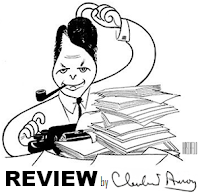
Nowadays, Cleveland Amory says, "we not only have good guys and bad guys, we also have bat guys." And if that isn't a tip that this week's review is of ABC's new sensation, Batman, I don't know what else I can do. And Cleve seems not quite sure what to do about Batman, either. "It is, after all, trying to be all things to all men. Still, it is the season’s most talked about offering. Children, bless their evil little hearts, are apparently supposed to take it at face value, while us old folks are supposed to like it because it’s so far “out” it’s “in,” and also—sort of the way we go to bat for old movies—for its nostalgic value."

The show's strengths are obvious: it is, says Amory, "technically superior" to any of the Bond imitators currently on television: in color, pace, and direction. The technology is ingenious, "all the way from the batmobile to the batzooka and the batarang (boomerang, of course. Are you OK in the belfry?)." The writing is also superior, guaranteed to appeal to both young and old, and the off-screen announcer ("What foul trickery are the fiendish Riddler and his evil Molehill Mob up to now?" and "Oh, the irony of it! The horror!") adds to the fun.

You'll recall, however, that I mentioned Cleve didn't know quite what to make of it all, which suggests that, after all this praise, there has to be a downside. And that would be the acting. "Adam West may be excused by the fact that it isn’t easy to be convincing as millionaire Bruce Wayne and Batman—and at the same time convince half the viewers you’re for real and the other half you’re for fun." No such excuses exist for Burt Ward as the Boy Wonder, who has a far easier role and "is far less easy to excuse." Neil Hamilton, as Commissioner Gordon, and Madge Blake, as Aunt Harriet, are old pros who help bolster the show. And then there are the guest villains, "possibly the best thing about this show." Amory thinks that Frank Gorshin plays The Riddler "as if he had done one too many impersonations," but Burgess Meredith is "superb" as The Penguin, and the other various villains are in fine form. That leaves but one concern in Amory's eyes: TV executive Hubbell Robinson said that the history of television could be written as, "What's New, Copycat?" "If this is so, can’t you just see those "creators" at CBS and NBC now that the word has gone out? Not just copycat, of course—but copybat."

l  l  l

Something you don't much see anymore is the telethon. While Jerry Lewis' Labor Day extravaganza was the best-known, there were others, both nationally and locally, throughout the first few decades of television, and we get an example of the latter on Saturday, with the start of the March of Dimes Telethon, live from the California State Fair Grounds in Sacramento (11:00 p.m., KCRA). The show, which runs until 4:00 p.m. Sunday, boasts quite the lineup, including James Drury (The Virginian); Michael Landon (Bonanza); Philip Carey, Peter Brown and William Smith (Laredo); Ed Ames and Patricia Blair (Daniel Boone); Bill Burrud (Traventure Theatre); and Jackie Coogan, state chairman, and Brenda Benet, teen-age chairman, March of Dimes Foundation.

I've never been ashamed of admitting that I enjoy Voyage to the Bottom of the Sea, despite the show's descent (no pun intended) into fantasy and monster horror after a first season that was mostly dedicated to Cold War drama. Sunday presents a typical episode that's sure to give you that sinking feeling, as the crew of the Seaview go back in time and find themselves victims of a pirate curse, with Albert Salmi as the chief pirate. Aargh, me buccos (7:30 p.m., ABC). 

Monday
gives us plenty of entertainment, beginning with The Andy Williams Show (9:00 p.m., NBC), and the guest lineup is a singular testament to how agents jockey to get billing for their clients. The show "stars" singer Nancy Wilson, with "special guests" Peter, Paul and Mary, and "added attraction" Bob Newhart. I'd like to think this is all tongue-in-cheek, but one can never know. That's followed by Gene Kelly's song-and-dance tribute to New York, New York (10:00 p.m., CBS). The city's legendary landmarks form the backdrop for performances by Woody Allen, Tommy Steele, singer Damita Jo, and dancer Gower Champion. (No word on whether they were all guest stars or if some were special featured added attractions.) Kelly himself is responsible for the choreography.

How times have changed: CBS Reports takes an in-depth look at "The Divorce Dilemma" (Tuesday, 10:00 p.m.), described as "one of the major social problems in the U.S., where one out of every four marriages will end in the courts." The current divorce rate is about 40 percent, which is actually down from the commonly-cited 50 percent rate in the 1980s. Part of the reason for that, of course, is that there are fewer marriages in the first place. The program, hosted by Walter Cronkite, also takes a look at the rising trend toward "no-fault" divorce in some states, as opposed to New York state, where adultery is the only ground. 

Bob Hope is back with one of his comedy specials on Wednesday, with an all-star lineup that includes Martha Raye, just back from entertaining the troops in her own tour of Vietnam; the Righteous Brothers, Jill St. John, and "special guest" Danny Thomas. (9:00 p.m., NBC) You can get a double-dose of the lovely Miss St. John, as she's also on The Big Valley (9:00 p.m., ABC), as "Barbary Red," a waterfront saloonkeeper who plays a role in Nick (Peter Breck) being drugged and kidnapped. George Kennedy and John Hoyt are part of the conspiracy.

A fascinating time-capsule episode of David Susskind's Open End (Thursday, 9:00 p.m., KVIE), where Gore Vidal and Washington columnist Max Freedman discuss "Is There a White House in Robert Kennedy's Future?" The speculation centers on the 1972 presidential election; in February of 1966, the assumption is, of course, that President Johnson will routinely be nominated for a second full term. And that's the power that history has to crush those who become caught it its trap; scarcely two years later, Johnson will have announced that he's not running for reelection, and Robert Kennedy will be dead.

One of the main reasons that Johnson and Kennedy find themselves caught in that trap can be seen on Friday, in an NBC special report on the Vietnam crisis (7:30 p.m.), with David Brinkley, Elie Abel, and Sander Vanocur reporting on the peace conference in Geneva, Switzerland. And on a lighter note, Carol Channing hosts her first television special, appropriately called, An Evening with Carol Channing (8:30 p.m., CBS), with George Burns and David McCallum guesting, and Carol performing songs from some of her Broadway hits, including "Hello, Dolly." 

l  l  l

Care for a starlet? How about two? Neither are exactly unknown; each is a regular on a current show. First up is Debbie Watson, 16-years-old and the titular star of ABC's sitcom Tammy. It's a role that's been played on the big screen by Debbie Reynolds and Sandra Dee, but, says Jane Wilkie, Debbie Watson hasn't let it all go to her head. 

Not that people haven't been waiting for it to happen. Debbie started out in the Long Beach Community Playhouse, appearing in Bye Bye Birdie and Brigadoon, and from there graduated to Karen, the only segment of NBC's ill-fated 90 Bristol Court to survive the entire season. There was no second season for Karen, but Debbie had another gig waiting for her. It's been bittersweet for her parents; while they're proud of her, mom Kittie has to accompany her on the one-hour drive to the studio (due to her age), where Debbie alternates between acting and attending school on the lot, while her mother literally has nothing to do. And after a long day, and a longer drive home, there's dad Eugene, home from work and waiting for his dinner, joined occasionally by Debbie's dates, "who are also waiting." 

It seems to work, and Debbie takes it all in stride, but, as Wilkie writes, "there has been a change, subtle and unsettling. It is not easy for a parent to tell any 16-year-old what to do; it is an age of emerging independence, and this is compounded when the daughter is working at a full-time job in a world completely alien to her parents and earning more each week than most adults do in a month." It's not easy, and Debbie herself knows what she's missing at Buena Park High School (she continues to hang out with her friends, who look to "mature" Debbie for advice). On the other hand, a couple of months ago she became engaged to 21-year-old Richard Orshoff, a student at USC.

What lies ahead for Debbie Watson? Wilkie cynically speculates on when Debbie eventually moves into her own apartment, closer to the studio, and "the cynics say the apartment will be in posh Bel-Air, that Debbie will soon drip with sables and eventually will even hire a press agent. And Kittie and Eugene Watson, although they will not admit it, must have some second thoughts." In fact, Tammy, like Karen, runs for only one season; Watson continues her acting career until 1971, including taking on the role of Marilyn Munster in the movie Munster, Go Home! in 1966. She married young Richard Orshoff later in 1966. She's still with us, at age 77; according to Wikipedia, so is Richard. And later this year, they will have been married for 60 years.

l  l  l

I mentioned another starlet this week, and that's Nina Wayne, who can be seen in NBC's sitcom Camp Runamuck, and who is the younger sister of Carol Wayne, the Tea-Time Lady on the Art Fern skits that Johnny Carson does. The Wayne sisters began their career as figure skaters with the Ice Capades. It's interesting that when you watch the footage of Carol's first appearance on The Tonight Show, Johnny mentions that her sister has been on the show several times in the past, so at this point Nina is probably the better-known of the two.

And there's good reason for her to be known here, with this display of the latest in terrycloth fashions. It's a pleasant thought on these cold winter days.


l  l  l

MST3K alert: The Leech Woman 
(1959) Bay Area TV Debut. A woman discovers that she is to be the guinea pig for her husband’s weird experiments. Coleen Gray, Grant Williams, Gloria Talbott, Philip Terry. (Wednesday, 5:00 p.m., KGO in San Francisco). As Crow has said many, many times, this really isn't a very good movie, although Grant Williams is fine. And this isn't the only time you'll see him this week; he's also in the much-better movie, The Incredible Shrinking Man, 90 minutes earlier, on KHSL. TV


If you enjoy the content here and want to support my broader creative work, please consider making a donation at my Ko-fi page. Any amount you contribute helps me continue writing, researching, and sharing these articles and projects. Thank you!

October 28, 2023

This week in TV Guide: October 29, 1966


We've read so many articles in the pages of TV Guide about the future of pay-TV, it's hard to keep track of them. It always seems to be just over the horizon, waiting for whatever it is that is sure to unlock its potential. And now, in this week's As We See It, we learn that pay television is dead.

The editors take no pleasure in writing this, for it's clear that commercial, over-the-air television could use some competition to force it to provide a greater variety of programming, and pay-TV has always promised big movies, sporting events, and cultural fare. But it's been tried, over the years, in city after city, and in each and every case it has failed. It became evident, say the editors, that pay-TV viewers weren't interested in "but movies and the most important sporting events" 

After all, educational television now answers the call for lectures, symphonies, and cultural programming. Furthermore, "[n]o one needs a pay-television system for sports any more. There may be a couple of big events a year that aren’t on free television." And as for movies, "ABC and CBS have just contracted for another $92.3 million worth of them. That just about clears the vaults of movies that haven’t been offered to free television." The conclusion: "There may have been a reason for pay television once, but not now. It’s all over."

We have to make some allowances here for the idea that pay-TV often was used to describe what would later be referred to as pay-per-view. And if you want to limit it to that, then the editors were mostly right; more on that in a minute. If, however, you take the term "pay-TV" literally—as in "TV you pay to watch"—then the editors were way off the mark. Pay-TV, not only in the form of HBO but in cable (and later streaming) packages, has come to define television—so much so that free television came to be seen as an anachronism. "Prestige television" was almost exclusively seen on services we paid to watch, cable and streaming shows dominated the Emmys, and every time we turned around, another studio was starting up its own streaming service. And as for public television answering the call for cultural and educational programming—that was a laugh.

Now, however, things have changed again, leaving television in a state of what could charitably be called "flux." Cable-TV is on the verge (so we're told) of total collapse, while streaming hasn't taken off as predicted. And while many people still watch their local stations via antennas, "FAST" (Free Ad-Supported Television) services such as Pluto, Roku, Tubi, Xumo, and the like are what many people mean when they talk about free television.  

Which brings us back to that pay-per-view discussion I started a couple of paragraphs ago. Contrary to what the editors thought, PPV did survive, but it was—and continues to be—driven mostly by sports. Many media analysts say that many of those who continue to subscribe to cable TV do so in order to watch sports. Streamers, from Amazon to Apple to WB-Discovery, look to sports to add the value they need to continue. Virtually all of the top 100 programs on television the past season were sports, mostly football. Sports is the only type of programming that is consumed live anymore; virtually everything else is on-demand, a term that would have utterly thrown the editors back in 1966. I'm watching a football game right now as I write this.

"No one needs a pay-television system for sports any more," the editors wrote. And yet today the only league that continues to broadcast the majority of its games on free television is the NFL. The college football playoffs are on cable. The World Series may be on Fox, but the majority of playoff games are not; neither are those in hockey and basketball, and college basketball's Final Four is on cable every other year. It's almost easier to list the major sporting events that aren't on pay-TV. (Well, that might be an exaggeration, but only slightly.)

The whole thing is kind of hard to summarize. The editors were way off-the-mark in predicting that pay-TV was dead. They were, kind-of, correct in thinking that pay-per-view wasn't the answer. And they were absolutely right in their assessment that sports would drive pay-TV, although they were wrong in thinking that major sporting events wouldn't migrate to pay-TV. It's easy to see that, almost 60 years later. Nowadays, you'd be a fool to predict what the television landscape will look like 60 days from now.   

l  l  l

During the 60s, the Ed Sullivan Show and The Hollywood Palace were the premiere variety shows on television. Whenever they appear in TV Guide together, we'll match them up and see who has the best lineup.

Sullivan: Ed's guests are George Jessel; rock 'n' rollers James Brown and Nancy Sinatra; "singing" grandmother Elva Miller; comedians Arthur Hynes and Rich Little; and the tumbling Rudas Dancers.

Palace: Herb Alpert and the Tijuana Brass host this week, with comedian Shelley Berman; French vocalist Gilbert Becaud; the rock ‘n’ rolling Supremes; Ullett and Hendra, comedy team; the Sorreletis, musical-comedy quartet; and the Santos, low-wire act.

I'm not positive, but this could be the only time we ever see James Brown and Nancy Sinatra mentioned in the same sentence as performers in the same genre. I just never thought of them that way; no imagination, I guess. Anyway, when you have hosts like Herb Alpert and the TJB, you can bet they're going to be the featured act of the night, and such is the case, as they perform their hits, including "The Lonely Bull," "Zorba the Greek," "Mame," "Spanish Flea," "Whipped Cream," "A Taste of Honey," and "The Mexican Shuffle Work Song." No one else on either show can match that, and when you throw in the Supremes, singing "Somewhere" and "Keep Me Hanging On," that pretty much settles things. This week, Palace hits the high notes.

l  l  l

Throughout the 60s and early 70s, TV Guide's weekly reviews were written by the witty and acerbic Cleveland Amory. Whenever we get the chance, we'll look at Cleve's latest take on the shows of the era. 

The Time Tunnel, ABC's new sci-fi adventure series, aims to take us back to the Good Old Days, says Cleveland Amory. "You remember those carefree happy times—Dunkirk, Appomattox, Valley Forge . . ." And Cleve really liked—well, the first scene of the very first episode was terrific. We got to see a U.S. senator whisked from the desert to a huge underground lab where 12,000 people, including Whit Bissell, John Zaremba, and Lee Meriwether are spending billions to send man into time. And to prove how important this secret project is, scientist Tony Newman (James Darren) dashes into the time tunnel before it's even known how to bring him back!

In that first episode, Tony finds himself on the deck of the Titanic, trying futilely to warn Captain Smith of the ship's impending disaster. It doesn't work, of course; these things never work in time travel stories. The scientists back at the other end of the tunnel send Tony's partner Doug Phillips (Robert Colbert) back after him, but even with a copy of the newspaper showing what happened, they're powerless to prevent it. They are able to escape before going down with the ship, though, and soon they find themselves in Honolulu, at the Japanese consulate, on December 6, 1941. You can see where this is going, can't you? Of course, they aren't able to change this any more than they were the Titanic. Obviously, they haven't read the documentation that states time travelers can't change history.

It's no wonder that Cleve finds The Time Tunnel "one of the most annoying shows we've seen." The gimmickry and photography are inventive, but the acting is "stilted and unbelievable, the dialog is soap-operaish." Not to mention how ridiculous it is to have bombs coming up the tunnel, when they can't do the same for Tony and Doug. By the time they encounter Halley's Comet, one of the scientists says, "I think the time has come to rethink this whole project." Concludes Amory, "We couldn’t have agreed more."

l  l  l

I've been a fan of Van Williams ever since I saw him in Bourbon Street Beat a few years ago. His character in BSB, Ken Madison, then transferred to Surfside 6, where he hung out for a couple of seasons, and while the show's quality let him down, I thought Williams himself was pretty good. From there he moved on to the show that probably brought him the most fame, as well as an appearance on this week's cover, The Green Hornet. And for Van Williams, a man who acts not because he needs the money—he's co-owner of a bank (along with his business manager and James Garner!), a ranch, a shopping center, and a downtown building in Fort Worth, Texas—but because he enjoys it, playing the Hornet suits him just fine. 

Raddatz makes the point, and I think we can see it as well, that Williams—VanZandt Jarvis Williams, to be exact, from a family whose Texas roots go back to "when Fort Worth was really a fort"—is a change from the usual celebrity profile we read in these pages. He has "none of the tortured self-seeking or the need for love or escape from a deprived childhood which traditionally mark so many of his contemporaries." He has no pretentions about being a thespian; he's objected to two Hornet scripts because they had too much dialogue and not enough action. "The Green Hornet is a pretty dead-pan guy," he tells Leslie Raddatz. "Lots of action—that's what makes a show." In fact, he'd never planned to be an actor; he was intending to be a rancher in his home of Fort Worth, but fate intervened during a vacation in Hawaii, when he met the late Mike Todd, who gave him the acting bug. Warner Bros. picked him up after a role in G.E. Theater, and that's where BSB came in. 

On the set he's charming and likable; the only time his charm ran out was on the Surfside 6 set when he lost his patience with an actress (I'm betting it was Margarita Sierra) who was perennially late on the set. "After some weeks, an observer recalls, 'Van just blew up. One day when she came in late, he gave her a kick in the derriére—not a hard kick but an impressive one— and said, "If I can be here on time, you can, too."" He's an admitted tightwad who keeps a close eye on spending and only bought a new car after signing for Hornet. And as far as his acting career, "I’d like to be a success, but I’d never count on it —it’s too harum-scarum." But, Raddatz concludes, "he is also, at 32, still kid enough to enjoy running around in that silly mask." In other words, just a good guy.

l  l  l

This week's Mission: Impossible (Saturday, 9:00 p.m., CBS) features a story that bothered me the first time I saw it, and has stayed with me since: "A Free World country may become a dictatorship unless IMF can insure an honest election and get the frightened populace to the polls." IMF's way of doing the former is to tamper with the voting machines themselves, to override the tampering that's already been done by the ruling junta. In other words, a quasi-official government agency is directly involving itself in the internal affairs of an independent nation in order to guarantee the election of a government that will be friendly to the United States. I know it's only a TV show (and a favorite of mine), and this episode is just as entertaining as any of them, but still—there's a message here that doesn't pass the smell test, and today I imagine it looks much worse than it did back then.

Sunday has always been a prime night for variety shows, and I'm not just talking about Ed Sullivan; the Tiffany Network will team Ed with The Smothers Brothers Comedy Hour and The Glen Campbell Goodtime Hour in the years to come, and this year Ed is followed by The Garry Moore Show (9:00 p.m., CBS); Garry's regulars in this second incarnation of his prime-time show are Durward Kirby, Jackie Vernon, and John Byner, and his guests tonight are Dick Van Dyke, Connie Francis, and Jim Kweskin and his jug band. After that, switch over to NBC for The Andy Williams Show (10:00 p.m.), with a cast that would probably top both Sullivan and The Palace this week: Bing Crosby, Kate Smith, Tennessee Ernie Ford, and the Young Americans. If you're looking for a different type of variety, look no further than The Play of the Week (8:00 p.m., NET) and part one of 1960's two-part "The Iceman Cometh," with Jason Robards, Myron McCormick, and Robert Redford, directed by Sidney Lumet.

Carol Burnett stars in part one of a two-part Lucy Show on Monday (8:30 p.m., CBS). Carol plays a librarian who answers Lucy's ad for a quiet roommate. I wonder what David Stewart, of Agincourt, Ontario, thinks of this? In this week's Letters, he writes of the recent special Carol & Company that it "was so unbelievably bad I was so fascinated I couldn't turn it off," and wonders, "Was this show deliberately unprofessional and humorless as a stunt to discover what the public could be made to endure?" I guess he won't be watching it, then. Instead, check out one of the early tests of Monday Night Football, as the Chicago Bears take on the St. Louis Cardinals. (9:30 p.m., CBS, taped from a live telecast earlier in the evening) The game's being played in St. Louis, of course, as Wrigley Field, the Bears' home stadium, still lacks lights.

Tuesday's syndicated episode of The Outer Limits (9:00 p.m., KTVU) is a personal favorite of mine: "O.B.I.T.," a disturbing story about a secret government project involving a machine that "allows the observation of anyone, anywhere, at any time," and the courageous U.S. senator (Peter Breck) determined to discover the truth about the machine's existence. It's both dark and prophetic, the kind of story that Outer Limits does so well.

On Wednesday, Don Adams hosts the 30th annual Shipstads and Johnson Ice Follies, from San Francisco. (9:00 p.m., NBC) We've seen these shows in the pages of TV Guide many times over the years, and they're always crowd pleasers. Adams was obviously chosen in order to promote Get Smart; he's kind of an unusual choice, I think, since past hosts, such as Ed Ames, Arthur Godfrey, and Jimmy Dean were also singers who could provide a tune or two. I'd expect jokes from Adams, who'll probably be comic relief for the skaters, such as Follies favorite Richard Dwyer (who was still skating last year at age 87!), former world champion Don Jackson (the first man to perform a triple Lutz in international competition, seen here on Wide World of Sports), and West German champion Ina Bauer (would you believe she actually has a figure skating move named after her?).

The set-up on this shot is a faithful reproduction    
 of Chet and David's convention layout. As for    
the mayhem — perhaps a preview of Chicago '68?   
On Thursday's highlight is "Dizzoner the Penguin," part two of the Batman story that began yesterday, a very funny satire on politics that lines up well with next week's elections. (7:30 p.m., ABC) Aside from the obvious jab at politics itself—Batman, campaigning against The Penguin for mayor of Gotham City, confidently says that "I’m convinced the American electorate is too mature to be taken in by cheap vaudeville trickery. After all, if our national leaders were elected on the basis of tricky slogans, brass bands, and pretty girls, our country would be in a terrible mess, wouldn’t it?"—the episode's highlights include the clever wordplay used for the names of the episode's characters: Gotham City mayor Lindseed (New York mayor John Lindsay), third-place candidate Harry Goldwinner (Barry Goldwater), and the pollsters Gallus, Rooper, and Trendek (Gallup, Roper, and Trendex); and the obligatory brawl that breaks out during a jewelry store robbery, with cameos by TV personalities playing reporters covering the story as if it was a political convention: Dennis James as Chet Chumley, Allen Ludden as David Dooley, Don Wilson as Walter Klondike, and Jack Bailey as the moderator of a debate interrupted by the robbery. I think you can guess who they're supposed to be. Oh, and there's also Paul Revere and the Raiders!

Friday features a pair of movies for the whole family, beginning with the ABC special Hans Christian Anderson (7:30 p.m.), the 1952 musical starring Danny Kaye, and featuring classic Frank Loesser songs including "Thumbelina" and "The Inchworm." Jeanmarie and Farley Granger co-star. Later in the evening, the CBS Friday Night Movie is 1964's First Men in the Moon (9:00 p.m.), with a cameo appearance by Peter Finch, and special effects by the great Ray Harryhausen. Perhaps it's not quite the way it plays out for Apollo 11 in three years, but with H.G. Wells, it's hard to go wrong.

l  l  l

At The Doan Report, NBC president Julian Goodman says the network may introduce a prime evening hour each week, starting next fall, that will be dedicated exclusively to news, public affairs, and cultural programming. (You know, the kind you don't need pay-per-view to watch.) It would reduce the number of specials aired by the network each year; they've already cut back to about a dozen this year, as opposed to the 40 or more that they aired a few years ago. Pat Weaver must be spinning in his grave hearing that.

Meanwhile, ABC's thinking about devoting not one but two movies on Wednesday nights beginning in January. Under this plan, Batman would be followed by Off to See the Wizard, a Disney knockoff featuring movies from MGM. (This would include movies such as Flipper, Tarzan, and Clarence, the Cross-eyed Lion, all of which have been turned into weekly series on other networks.) Wizard would be followed by The ABC Wednesday Night Movie. In the end, Wizard doesn't premiere until the fall of 1967, on Friday night rather than Wednesday.

Speaking of movies, Chevrolet denies rumors that they offered the producers of the James Bond movies $3.5 million for the television rights in an attempt to "get back at Ford for knocking Bonanza off its top ratings perch with the ABC showing of The Bridge on the River Kwai." I guess such machinations aren't restricted to politics. 

And remember that article from a couple of weeks ago on television's coverage of Vietnam? Well, CBS News president Dick Salant made a trip to Saigon earlier this month. His conclusion: "If the public will tolerate it, we’ve got to tell more in words and less in pictures."

l  l  l

MST3K alert: Night of the Blood Beast (1958) An alien entity takes control of an astronaut’s body. Michael Emmet, Angela Greene, Ed Nelson, Tyler McVey, Ross Sturlin. (Saturday, 1:15 a.m., KCRA in Sacramento) You have to imagine what the prospect of manned space travel was like in the late 1950s—a total unknown, when we didn't even know if the human body could survive the stress, let alone what might happen to him once he made it into outer space. It's a trope that stretches from B-movies like this to The Twilight Zone, and everywhere in-between. And I hope it never goes away. The MST3K version is combined with a really bad short, "Once Upon a Honeymoon," which features Virginia Gibson before she wound up on ABC's Discovery. Well, I guess everybody has to start somewhere. TV  

February 11, 2017

This week in TV Guide: February 12, 1966

I'll be honest with you here - not that I'm not always honest with you, of course. For the first time in the history of this blog, I've been forced to simply reprint a "This week in TV Guide" feature. Yes, I've done multiple reviews of a few issues, but this one is the same, word for word, as it was when it was originally printed five years ago. That's not to say it isn't good, just that it isn't new. The reason for this egregious offense is twofold: 1) I didn't have a new issue for this week, and 2) All the TV Guides are still packed in boxes, so I wasn't able to do a "Take Two" on this one, It is, however, notable in that it's the very first appearance of "This week in TV Guide" as a regular feature. I make no promises that I'll have tracked down this issue by Monday; if I haven't, you'll just have to put up with listings courtesy of the archives of the Chicago Tribune. It's still all good, though. 


One of the ways I justify my modest TV Guide collection is to cite it as "research," that is, to take what is in reality a relaxing diversion and turn it into a scholarly enterprise.  But of course there is something to it: as I've mentioned before, one can do far worse than use TV Guide to provide a snapshot of popular culture at any given time.  Since I started this blog, I've been intending to take an issue from my collection every week, and just open it at random: see what's inside, whether or not there was anything important going on, and whether or not something in it wound up being pretty special.  So let's take a look at this week in TV Guide from 46 years ago, the week of February 12, 1966.  And since TV Guide always started the week on a Saturday, we'll do the same.

***

On the cover are two of the stars of Peyton Place, Ryan O' Neal and Barbara Parkins.  O'Neal, of course, went on to have a pretty successful career, highlighted by his Oscar-nominated role in Love Story.  Parkins was big in the late 60s and early 70s, with her starring roles in PP and Valley of the Dolls.

Inside we have a profile of James Drury, star of The Virginian, by that up-and-coming young writer Peter Bogdanovich, five years before writing and directing The Last Picture Show.  There's also a teaser for an upcoming National Geographic* special, The World of Jacques Cousteau.  The TV critic Cleveland Amory reviews Batman.  ("The whole show, on first impression, may not be as great.  It is, after all, trying to be all things to all men.  Still, it is the season's most talked-about offering.")

*Apparently National Geographic wasn't extreme enough back in those days to be called "NatGeo."

There was a section in the front and back of TV Guide issues, printed on yellow paper, called "TV Teletype."  The front usually covered TV news from Hollywood, the back from New York.  The Teletype often referenced shows that were never made, underwent name and/or cast changes, or wound up in substantially different shape from original plans. The New York version carries a note on an upcoming pilot for a show called The Time Tunnel.  That show did made it, as did its two stars, James Darren and Robert Colbert.  There's also an announcement that Truman Capote's short story "A Christmas Memory" is going to appear on ABC next season - it did, and won an Emmy.  On the other hand, Hollywood reports on a pilot for Li'l Abner, featuring Robert Reed.  The show didn't make it, but Reed would be back two years later, in The Brady Bunch.*

*Reed was said to be the second choice for the show, after Gene Hackman turned it down.  Imagine it for a moment: Mike Brady hunting down the French Connection.  Kinda makes you pause, doesn't it?

Inside, in the program listings, there's not  a whole lot to talk about.  CBS Reports features "The Divorce Dilemma," wherein we learn of "one of the major social problems in the U.S." - the divorce rate having hit an unthinkable 25%.  It's a bit higher now.  Bob Hope has a comedy special on NBC, and CBS has "An Evening with Carol Channing."  There's also a teaser for next week's TV Guide, featuring a profile of Lee Majors.  "Seven years from now . . . I'll be getting an Academy Award nomination," Majors is quoted as saying.  Well, he didn't - but he did go on to a long and pretty successful career in television.*  The Rolling Stones and Wayne Newton appear with Ed Sullivan, and ABC's Hollywood Palace counters with Donald O'Connor and Paul Anka.  

*A bit of irony there, if you're looking for it.  Consecutive issues of TV Guide presenting us with Ryan O'Neal and Lee Majors, the future companion and husband (respectively) of Farrah Fawcett.  What, I wonder, are the odds?

There's really nothing that jumps off the page though, no hockey or basketball game that everyone talked about the next day, no show that went on to set a viewing record or introduced us to a new star or caused the controversy of the season.  In short, it was a perfectly ordinary week in television, the kind that gives one a snapshot of how things were, the week of February 12, 1966. TV  

July 22, 2016

Around the dial

Another Friday, another tour of the classic TV blogosphere. Let's see what we can come up with this week!

Ever think of worms as being dangerous? After you read The Last Drive-In's life lesson from Barney Fife, you won't be able to stop thinking about it.

Another episode of Alfred Hitchcock Presents on tap at bare-bones e-zine - this time it's the ironic "Touché," from the show's fourth season, with a twist ending you'll appreciate. 

Ah, Truffaut. I've only seen his films on television, which is why it's appropriate to include this panel discussion on the famed director, courtesy of Classic Film and TV Cafe.

I remember "The Midnight Sun," a classic Twilight Zone episode, from the first time I saw it in syndication. The title, the sense of foreboding - it all worked, as recapped by The Twilight Zone Vortex.

Speaking of the sun as we were, Heat of the Sun is a 1998 Brit detective series that's the latest to undergo the microscope at British TV Detectives.

And speaking of British TV, Cult TV Blog has been silent for a bit, but this post explains it all, and I can't blame him a bit - doesn't that look more fun than blogging?

The DVD release of the seminal 1960s legal drama The Defenders has been hailed by many, and Classic TV History Blog has a very good description of the acclaimed series. I have my copy of course, but I call this a "keep the package" moment - will the show's liberal slant obscure its excellent writing and acting? Time will tell.

I've missed Classic Television Showbiz' long form interviews, many of which were (I suspect) part of his research for his book on comedy, but he's back with a continuation of his interview with the comic Jack Carter.

What do you think? Should I invest in the DVD of The Time Tunnel someday? And would this review of a tie-in novel based on the series, found at Television Obscurities, help me make up my mind? TV