Showing posts with label Pay TV. Show all posts

December 2, 2023

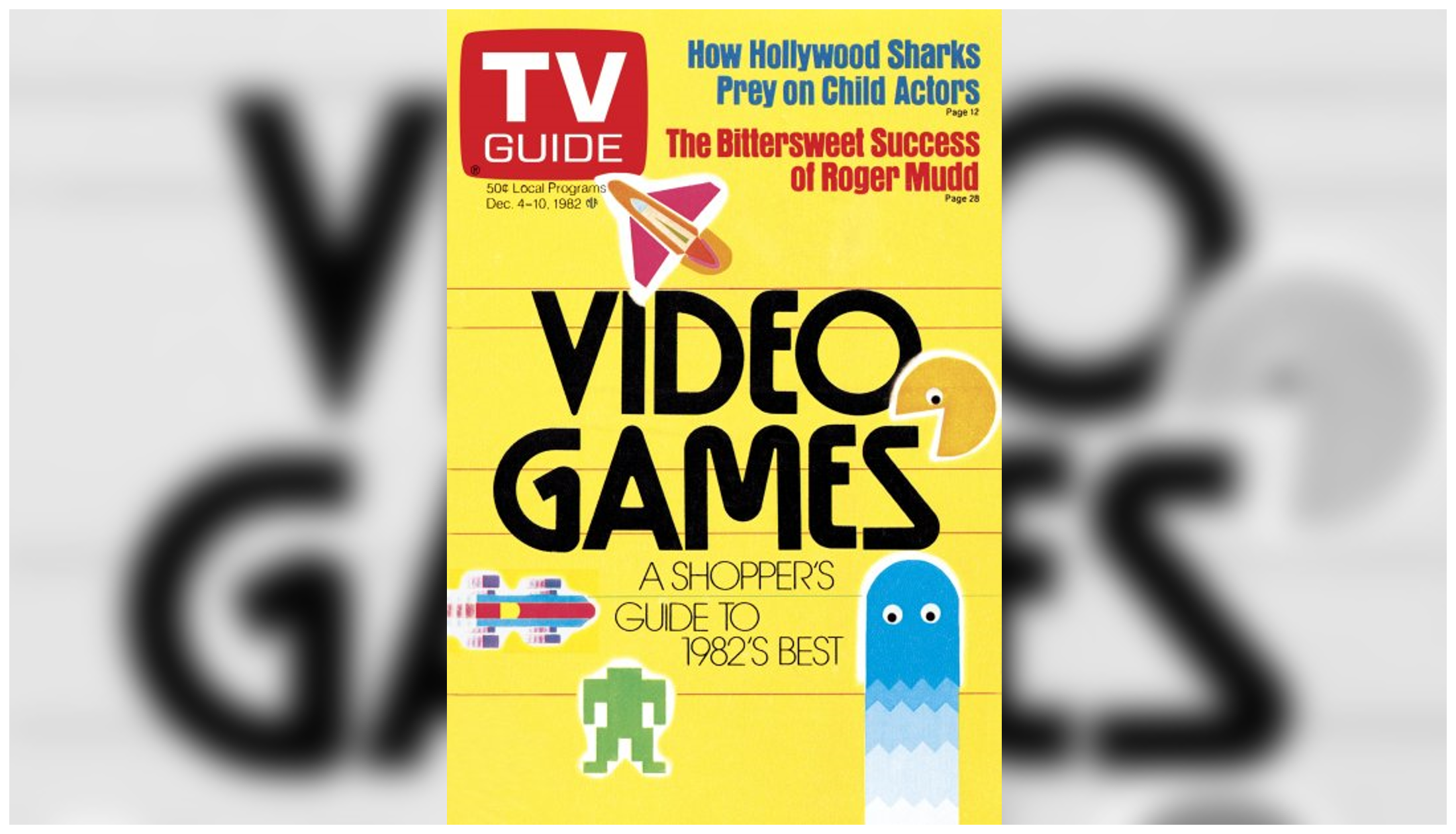
This week in TV Guide: December 4, 1982


I thought we'd try a little experiment this week. Last week, I pointed out in passing that TV's Christmas season seemed to start earlier and earlier every year; today, it pushes right up against Thanksgiving. (Excluding Christmas movies; I'm pretty sure some FAST network is already showing next year's movies, while this year's movies started somewhere around Halloween—or was it Labor Day?) 

Now, where was I? Oh yes; in order to prove this hypothesis, we'll take a look at two other issues of TV Guide in addition to this week's issue from 1982. They're from similar points in the month: one from December 4, 1953, the other from December 3, 1966. Is there a difference in how television programmed Christmas back then, or is it all just my imagination? Let's see just what each issue tells us.

We'll start with 1953, and the tale of the tape is pretty easy: there is no Christmas programming this week. Now, that doesn't mean there isn't anything Christmassy on, but most of what you see concerns cooking or decorating ideas for the holidays—how to make a Christmas mobile, for instance, or a table centerpiece with a Christmas motif. The singers on Bob Crosby's daytime variety show (2:30 p.m. CT, CBS) offer a Christmas tune or two, and Omnibus (Sunday, 4:00 p.m., CBS) gives viewers a look at the Christmas windows in NYC's Lord and Taylor department store. Otherwise, that's it. 

There's a logical explanation for some of this; as of 1953, there are no animated Christmas specials, and most of the weekly variety shows will air their special episodes closer to Christmas itself. We know that the shopping season is in full swing; there's an article about how toys based on television characters are a hot thing this year, and there's a note in the Teletype that RCA-Victor is putting out a record of Dragnet's complete Christmas episode ("The Big Little Jesus"), which I'm sure would make a fine gift for those who want to relive the moving story over and over. So my bet is that there are plenty of Christmas commercials on the the air, but nothing yet as far as specials.

Fast-forward thirteen years to 1966, and we can see right away that times have changed. On Sunday (5:30 p.m. PT, NBC), it's the second showing of Rudolph, the Red-Nosed Reindeer, with all kinds of commercials featuring General Electric's suggestions as to what would make good gifts. ABC's special The Saga of Western Man (Wednesday, 8:00 p.m.) has a show with an explicitly Christmas theme: "Christ Is Born," a recreation of The Nativity and the history surrounding it. It's sponsored by B.F. Goodrich; I'll bet at least one commercial will be for Goodrich's "For a Musical Merry Christmas," the third volume in their annual Christmas series. On Friday, CBS reruns Tchaikovsky's "The Nutcracker" (7:30 p.m.), narrated by Eddie Albert, with Edward Villella, Patricia McBride, and Melissa Hayden. 

There are also specials that are non-Christmas but function as outstanding vehicles for Christmas advertising: Wednesday's Hallmark Hall of Fame presentation of "Blithe Spirit" will  have a slew of commercials for Christmas cards—Hallmark always coordinates its shows to align with major card-sending holidays, and after all, it wouldn't do any good to advertise them once it became too late to mail them, would it? There's also a Frank Sinatra special Wednesday on CBS, and that same network's "The Glass Menagerie," with Shirley Booth, Hal Holbrook, and Barbara Loden, on Thursday. But in total we have only three holiday specials and, once again, there are no variety specials. 

Now look at how things are in 1982. We start on Saturday, with the acerbically funny movie The Man Who Came to Dinner (7:00 p.m., WGBH in Boston), and A Disney Christmas Gift, scenes with holiday themes from Disney cartoons and animated features. (8:00 p.m., CBS) Monday evening, with a CBS doubleheader: A Charlie Brown Christmas at 8:00 p.m. ET, followed by Bugs Bunny's Looney Christmas Tales at 8:30; opposite them, it's Rudolph's Shiny New Year (8:00 p.m., ABC) On Tuesday, it's another CBS doubleheader, and now we're seeing the variety specials: Johnny Cash's Merry Memphis Christmas, with June Carter Cash, Rosanne Cash (no relation), Crystal Gayle, and Eddie Rabbitt (9:00 p.m.), followed by Andy Williams' Early New England Christmas, with Dorothy Hamill, Aileen Quinn, James Galway, and Dick Van Patten. (10:00 p.m.) 

On Thursday, we've got a pair of movies: White Christmas (8:00 p.m., WLVI in Boston), and It's a Wonderful Life. (9:05 p.m., WENH in Durham, NH, repeated Friday on WMEB in Orono, ME) But that's not all; HBO is running Laurel and Hardy's March of the Wooden Soldiers and Rich Little: A Christmas Carol throughout the month, including this week; the same goes for Hans Christen Andersen's The Snow Queen, seen several times this week on various PBS stations. Inexplicably, Cinemax also has an Easter movie, Quo Vadis, throughout the week. Quite a difference from years past, don't you think? And in case you're wondering, Rudolph was already on last week; December 1, solidifying its standing as the first Christmas special of the year. 

Obviously, one of the reasons for the plethora of programs we're seeing here is simply that there are more of them than in years past, and that's even taking into consideration that the first animated special, Mr. Magoo's Christmas Carol, went into syndication in 1970, while the first program of any kind to become an annual Christmas special, Gian Carlo Menotti's opera Amahl and the Night Visitors, hadn't appeared on TV since the late 1970s. In addition, any variety specials are going to come early in the season (for the convenience of advertisers) since there aren't any weekly variety shows anymore.

Now, before we go too far with this, let me stress that I'm not against Christmas programs; from December 1 on, that's pretty much all we watch in the evenings, unless there's something else going on. I say the more programs, the merrier. And I don't mind Christmas commercials, either—who doesn't get a warm feeling remembering the Norelco Santa, or Ed Herlihy talking about Kraft recipes. (And that's not to mention the General Electric elves in the original commercials that ran during Rudolph.) For those of an age, those memories are as much a part of the Christmas season as the programs themselves.

What I don't like is showing all your holiday inventory in the first two weeks of the season, as if the only reason for them to exist at all is as a vehicle for commerce. I particularly don't like the cartoons that don't tell any story at all, but are around as a tie-in to the product they're trying to sell. (The Santa Bear animated special, for instance.) Leave at least a little something for Christmas week itself, even if everyone's already done their shopping. (Remember, they have to spend those gift cards they receive!)

Fortunately, thanks to the plethora of viewing options out there, from FAST stations to on-demand services to the good old-fashioned cable stations, there are options right up to Christmas Day and beyond (I mean, look at them!), and while a lot of them aren't particularly to my taste, beggars can't be choosers. Anyway, we've got our DVDs to keep us warm. 

l  l  l

I don't want you to think that it's all about Christmas this week; far from it. One of the feature programs of the week is the Hallmark Hall of Fame's presentation of "Witness for the Prosecution" (Saturday, 9:00 p.m., CBS), a remake of the classic Agatha Christie courtroom drama, one of the greatest ever made, starring Sir Ralph Richardson as barrister Sir Wilfred Robarts (played in the movie by Charles Laughton), Beau Bridges as Leonard Vole, the defendant (formerly Tyrone Power), Diana Rigg as Vole's wife (Marlene Dietrich), and Deborah Kerr as Sir Wilfred's nurse (Elsa Lanchester). Judith Crist praises the remake and the performances (while finding Bridges a bit lacking), even though she questions the need for such a remake in the first place. It would be a pity if it was because audiences won't watch a black-and-white movie, whether in 1982 or today.

Sunday is a night of specials on CBS, starting at 8:00 p.m. with An All Star Party for Carol Burnett. CBS took more than a little criticism a while back when they didn't take a flyer on the 90th birthday celebration for Carol (it wound up on NBC instead); it's nice to see them honoring her here. Among the guests are Steve Lawrence, Jimmy Stewart, Vicki Lawrence, Tim Conway, Tom Sellick, and Beverly Sills; there are also tributes from Lucille Ball, Bette Davis, Sammy Davis Jr., Monty Hall, Glenda Jackson, Jim Nabors, Jack Paar, and Burt Reynolds. I mention them all here to show that in this instance, "All Star" wasn't just hyperbole. There are also a few stars on hand for the seventh annual Circus of the Stars (9:00 p.m., CBS), although there are a few more examples of "stars" in this case. Mickey Rooney is the ringmaster, assisted by Scott Baio, Morgan Fairchild, Vincent Price, Martha Raye, Debbie Reynolds, and Isabel Sanford; among the performers the bigger names include Robert Culp, Roddy McDowall, Bob Newhart, Jean Marsh, and Brooke Shields.

NBC's blockbuster movie for the week is the made-for-TV Remembrance of Love (Monday, 9:00 p.m.), a somber reflection on the Holocaust (as timely now as it was back then, alas), with Kirk Douglas as a survivor of Auschwitz, traveling to Tel Aviv for the World Gathering of Holocaust Survivors—and to search for the girl he loved and lost during the war. Pam Dawber co-stars as Douglas's daughter, and Robert Clary appears as himself. Judith Crist gives it a guarded recommendation, saying that the recreation of the Holocaust Survivors event "overpowers the contrived plotting." 

Now here's a series I have absolutely no memory of. It's called Gavilan (Tuesday, 9:00 p.m., NBC), and perhaps I don't remember it because it's just another one of the many series that Robert Urich starred in; only 10 of the 13 episodes that were made were ever aired before it left the air in March. If I had seen it, it likely would only have been because of the presence of Patrick Macnee as one of Gavilan's sidekicks. I never saw Bruce Boxleitner's Bring 'Em Back Alive (8:00 p.m., CBS) either, but at least I'd heard of it; it's based on the life of big-game hunter Frank Buck. Well, I guess I can't remember everything.

Speaking of shows that weren't, shall we say, memorable, there are a couple more on Wednesday; Tales of the Gold Monkey (8:00 p.m., ABC), starring Stephen Collins, is, like Bring 'Em Back Alive, an obvious attempt to cash in on the excitement generated by Raiders of the Lost Ark; like Bring 'Em Back, it doesn't last very long; 17 episodes for the former, and 22 for the latter. This reminds me of the fad that started in the wake of Animal House; there were three shows based on that, and none of them did very well either. The other little-known series on Wednesday is Seven Brides for Seven Brothers (8:00 p.m., CBS), based "loosely" on the movie of the same name, and starring Richard Dean Anderson. It, too, lasts for 22 episodes, but Richard Dean Anderson will make out just fine. I tell you, though, these series made no impression on me; frankly, I was surprised to find out they lasted as long as they did.

After all that, it was a relief to come to Thursday's listings and see some familiar names: Magnum, P.I., Simon & Simon, and Knots Landing on CBS; Fame, Cheers, Taxi, and Hill Street Blues on NBC; and Joanie Loves Chachi, Star of the Family, Too Close for Comfort, It Takes Two, and 20/20 on ABC. Okay, Star of the Family (10 episodes) and It Takes Two (22 episodes) weren't smash hits; still, you can see what a blockbuster night of television it was on all three networks. 

One of the things I miss about television today is that it's so hard to go over the top nowadays. Take Friday's episode of Dallas (9:00 p.m., CBS), in which "J.R. and Sue Ellen's wedding party is interrupted by a brawl between Cliff and the Ewing brothers." Now that was exciting television back then, but today it's just another episode of Real Housewives or one of those other reality shows. Back then you could watch Dallas and enjoy it guilt-free; today, you just shake your head at what the world has come to—a real-life comic book. 

l  l  l

It's been awhile since a regular-season college basketball game drew much attention. After all, even the best teams usually wind up losing several games a year, and they're all getting into the post-season tournament anyway, so the stakes aren't very impressive. It wasn't always that way, though, as we see in William Gildea's article about how Ted Turner's cable superstation, WTBS, outbid the networks for coverage of next Saturday night's highly-anticipated game between Ralph Sampson's Virginia Cavaliers and Patrick Ewing's Georgetown Hoyas. "The game," Gildea says, "has stirred the imagination of fans across the country like no other since 1968, when [Kareem] Abdul-Jabbar's UCLA Bruins took on the Elvin Hayes-led University of Houston in the Astrodome." That game, college basketball's Game of the Century, drew a then-crowd of more than 52,000, and was the first regular season college basketball game ever broadcast nationwide in prime time, on the syndicated TVS network. 

The game isn't quite a cable exclusive; with only 34 percent of homes nationwide having access to basic cable, and with the demand for the game far outstripping the supply so to speak, WTBS winds up brokering agreements with local stations in major markets to show the game on broadcast TV. Nevertheless, WTBS's victory represents not only a landmark for television—the first time a cable network has outbid the legacy networks for a major sporting event other than boxing—it's a harbinger of things to come. TBS and its sister station, TNT, will eventually add the NBA, the NHL, the NFL (for a time), and the Final Four to its stable of programming, while more and more major games—not just "niche" sports like tennis and golf—move to cable stations such as ESPN and USA. Today, finding a big game on regular television seems to be the exception rather than the rule; except for the NFL, which might explain why it continues to be the top sport on television, and in every other way of life.

As for the game in question (which you can see here), it's a good-but-not-great game, won by Virginia 68-63.

l  l  l

Speaking of which, Jefferson Graham says that "the hot new approach in pay-TV is charging a fee for special events," known as pay-per-view, and he asks if "Paying to see the Super Bowl" is what's next. Graham discusses the recent history of PPV events, such as a recent special airing of Star Wars that earned $2.43 million without even appearing in the theater, thanks to 324,000 people who paid an average of $7.50 to watch it on television. The Rolling Stones broadcast the final concert of last year's American tour to about 25 percent of the total PPV audience, earning $3.7 million, and The Who's "farewell" concert (yeah, right) from Toronto in a couple of weeks will be looking to do the same. And a special showing of the Broadway show The Pirates of Penzance, with Linda Ronstadt, Rex Smith, and Kevin Kline, will be debuting in theaters and PPV the same day.

Studios admit to being worried about the competition, and there are whispers that some might boycott some releases in protest of PPV. Meanwhile, the networks are taking the long view, but concede that competition from pay-cable, and particularly PPV, will hurt them. John Severino, president of ABC, worries that there will be less of an audience for theatrical films by the time they show up on free TV. On the flip side, the studios are enthusiastic, to say the least. "There is no question in my mind," says MGM/UA chairman Frank Rothman, "that the ultimate release pattern is PPV as the first source before theatrical." And so on and so on.

Well, just what did wind up happening here? It's kind of hard to say; PPV on TV has, for the most part, been confined to sports, particularly wrestling, boxing, and MMA; plays, musicals, and other special events have wound up in the theaters, thanks to Fathom Events and similar services. And as for the movie industry, during the virus scare there was a moment where it appeared on-demand streaming would take the place of the theater experience completely, with Warner Bros. and Universal releasing movies in theaters and streaming simultaneously, but by 2022 it was already proclaimed a "dead" practice. Still, the amount of time movies spend in the theater shrinks by the day, with some of them making only a cursory appearance in your neighborhood metroplex. As is so often the case, we know what doesn't work anymore, but we have yet to find out for sure what does. We just know that the Super Bowl isn't headed for PPV—at least, not yet.

l  l  l

You know that I consider myself second to none when it comes to admiring classic television. At that, I don't think it's ever occurred to me to compare television's sitcoms to the classic French farces of Victorien Sardou and other artists of the Gilded Age. And yet that's precisely the question being asked by Sam Toperoff, professor of art at Hofstra University. Sardou, a master of the comédie de boulevard, or boulevard comedy, in which "all the characters would have a chance to display just about every frailty and foible known to man." Dialogue is crisp and witty, with fast-paced action, misunderstandings, and Toperoff calls it "a beautifully crafted piece of machinery." 

Which brings us to 1980s sitcoms, as Toperoff wonders if we have anything like boulevard comedy today. He concedes that "[a]t first glance, the comparison may seem absurd," but then begins to build his case. Like boulevard comedy, today's sitcoms feature ordinary people—"waitresses, cops, entrepreneurs, taxi drivers, maids, schoolteachers, secretaries and soldiers." Like good theater, the best sitcoms are built around a standard set, be it the home living room or the workplace office. Dramatic tension exists, in the conflict between, for example, Judd Hirsh and Danny DeVito's characters in Taxi. Characterizations of human weaknesses abound, but not too much exaggeration, lest the character become a caricature, "not really worth caring about as a human being." Toperoff cites Archie Bunker as an example of this "delicate balance," through which "we learn something about inadequacy in the process—Archie's and our own." 

"Just read any of the plot lines to the dozens of situation comedies listed each week," Toperoff says, "and you'll discover the heart of the old boulevard play." "George Jefferson discovers that Louise has taken a job at his competitor's cleaning establishment." On 9 to 5, "Judy is fired and throws the office into a buzz by posing as a man to regain her job." Laverne & Shirley is a "beautiful" example of the boulevard play staple: "a pair of friends—one wise, the other dissolute—[who] set about trying for a day or two to be something they are not." On the other hand, there's Bosom Buddies. "It wasn't unusual, in a Sardou farce, for a young man to spend the latter part of the evening in drag—that was often the comic peak. In Bosom Buddies, it was the comic premise, and a remarkably narrow one. So the show became a predictable, one-note exercise."

I'm not sure how I feel about Toperoff's analysis, whether he's reading too much into all this, or if I've underestimated some of the shows he mentions. And he worries that some of the best examples, shows like Barney Miller and WKRP in Cincinnati, have gone off the air recently, while broader caricatures such Too Close for Comfort and Three's Company, continue on. But then he tunes into an old episode of The Honeymooners, a classic comedy theater done "not for 600 ladies and gentlemen on a glittering Parisian stage once a season, but for the masses every week." It is with that realization that, "maligned as the sitcom may have been over the years, if is, at its best, a superb piece of work. It not only tickles the funny bone; it can touch the heart." And maybe that's what we all need nowadays, n'est-ce pas? TV  

October 28, 2023

This week in TV Guide: October 29, 1966


We've read so many articles in the pages of TV Guide about the future of pay-TV, it's hard to keep track of them. It always seems to be just over the horizon, waiting for whatever it is that is sure to unlock its potential. And now, in this week's As We See It, we learn that pay television is dead.

The editors take no pleasure in writing this, for it's clear that commercial, over-the-air television could use some competition to force it to provide a greater variety of programming, and pay-TV has always promised big movies, sporting events, and cultural fare. But it's been tried, over the years, in city after city, and in each and every case it has failed. It became evident, say the editors, that pay-TV viewers weren't interested in "but movies and the most important sporting events" 

After all, educational television now answers the call for lectures, symphonies, and cultural programming. Furthermore, "[n]o one needs a pay-television system for sports any more. There may be a couple of big events a year that aren’t on free television." And as for movies, "ABC and CBS have just contracted for another $92.3 million worth of them. That just about clears the vaults of movies that haven’t been offered to free television." The conclusion: "There may have been a reason for pay television once, but not now. It’s all over."

We have to make some allowances here for the idea that pay-TV often was used to describe what would later be referred to as pay-per-view. And if you want to limit it to that, then the editors were mostly right; more on that in a minute. If, however, you take the term "pay-TV" literally—as in "TV you pay to watch"—then the editors were way off the mark. Pay-TV, not only in the form of HBO but in cable (and later streaming) packages, has come to define television—so much so that free television came to be seen as an anachronism. "Prestige television" was almost exclusively seen on services we paid to watch, cable and streaming shows dominated the Emmys, and every time we turned around, another studio was starting up its own streaming service. And as for public television answering the call for cultural and educational programming—that was a laugh.

Now, however, things have changed again, leaving television in a state of what could charitably be called "flux." Cable-TV is on the verge (so we're told) of total collapse, while streaming hasn't taken off as predicted. And while many people still watch their local stations via antennas, "FAST" (Free Ad-Supported Television) services such as Pluto, Roku, Tubi, Xumo, and the like are what many people mean when they talk about free television.  

Which brings us back to that pay-per-view discussion I started a couple of paragraphs ago. Contrary to what the editors thought, PPV did survive, but it was—and continues to be—driven mostly by sports. Many media analysts say that many of those who continue to subscribe to cable TV do so in order to watch sports. Streamers, from Amazon to Apple to WB-Discovery, look to sports to add the value they need to continue. Virtually all of the top 100 programs on television the past season were sports, mostly football. Sports is the only type of programming that is consumed live anymore; virtually everything else is on-demand, a term that would have utterly thrown the editors back in 1966. I'm watching a football game right now as I write this.

"No one needs a pay-television system for sports any more," the editors wrote. And yet today the only league that continues to broadcast the majority of its games on free television is the NFL. The college football playoffs are on cable. The World Series may be on Fox, but the majority of playoff games are not; neither are those in hockey and basketball, and college basketball's Final Four is on cable every other year. It's almost easier to list the major sporting events that aren't on pay-TV. (Well, that might be an exaggeration, but only slightly.)

The whole thing is kind of hard to summarize. The editors were way off-the-mark in predicting that pay-TV was dead. They were, kind-of, correct in thinking that pay-per-view wasn't the answer. And they were absolutely right in their assessment that sports would drive pay-TV, although they were wrong in thinking that major sporting events wouldn't migrate to pay-TV. It's easy to see that, almost 60 years later. Nowadays, you'd be a fool to predict what the television landscape will look like 60 days from now.   

l  l  l

During the 60s, the Ed Sullivan Show and The Hollywood Palace were the premiere variety shows on television. Whenever they appear in TV Guide together, we'll match them up and see who has the best lineup.

Sullivan: Ed's guests are George Jessel; rock 'n' rollers James Brown and Nancy Sinatra; "singing" grandmother Elva Miller; comedians Arthur Hynes and Rich Little; and the tumbling Rudas Dancers.

Palace: Herb Alpert and the Tijuana Brass host this week, with comedian Shelley Berman; French vocalist Gilbert Becaud; the rock ‘n’ rolling Supremes; Ullett and Hendra, comedy team; the Sorreletis, musical-comedy quartet; and the Santos, low-wire act.

I'm not positive, but this could be the only time we ever see James Brown and Nancy Sinatra mentioned in the same sentence as performers in the same genre. I just never thought of them that way; no imagination, I guess. Anyway, when you have hosts like Herb Alpert and the TJB, you can bet they're going to be the featured act of the night, and such is the case, as they perform their hits, including "The Lonely Bull," "Zorba the Greek," "Mame," "Spanish Flea," "Whipped Cream," "A Taste of Honey," and "The Mexican Shuffle Work Song." No one else on either show can match that, and when you throw in the Supremes, singing "Somewhere" and "Keep Me Hanging On," that pretty much settles things. This week, Palace hits the high notes.

l  l  l

Throughout the 60s and early 70s, TV Guide's weekly reviews were written by the witty and acerbic Cleveland Amory. Whenever we get the chance, we'll look at Cleve's latest take on the shows of the era. 

The Time Tunnel, ABC's new sci-fi adventure series, aims to take us back to the Good Old Days, says Cleveland Amory. "You remember those carefree happy times—Dunkirk, Appomattox, Valley Forge . . ." And Cleve really liked—well, the first scene of the very first episode was terrific. We got to see a U.S. senator whisked from the desert to a huge underground lab where 12,000 people, including Whit Bissell, John Zaremba, and Lee Meriwether are spending billions to send man into time. And to prove how important this secret project is, scientist Tony Newman (James Darren) dashes into the time tunnel before it's even known how to bring him back!

In that first episode, Tony finds himself on the deck of the Titanic, trying futilely to warn Captain Smith of the ship's impending disaster. It doesn't work, of course; these things never work in time travel stories. The scientists back at the other end of the tunnel send Tony's partner Doug Phillips (Robert Colbert) back after him, but even with a copy of the newspaper showing what happened, they're powerless to prevent it. They are able to escape before going down with the ship, though, and soon they find themselves in Honolulu, at the Japanese consulate, on December 6, 1941. You can see where this is going, can't you? Of course, they aren't able to change this any more than they were the Titanic. Obviously, they haven't read the documentation that states time travelers can't change history.

It's no wonder that Cleve finds The Time Tunnel "one of the most annoying shows we've seen." The gimmickry and photography are inventive, but the acting is "stilted and unbelievable, the dialog is soap-operaish." Not to mention how ridiculous it is to have bombs coming up the tunnel, when they can't do the same for Tony and Doug. By the time they encounter Halley's Comet, one of the scientists says, "I think the time has come to rethink this whole project." Concludes Amory, "We couldn’t have agreed more."

l  l  l

I've been a fan of Van Williams ever since I saw him in Bourbon Street Beat a few years ago. His character in BSB, Ken Madison, then transferred to Surfside 6, where he hung out for a couple of seasons, and while the show's quality let him down, I thought Williams himself was pretty good. From there he moved on to the show that probably brought him the most fame, as well as an appearance on this week's cover, The Green Hornet. And for Van Williams, a man who acts not because he needs the money—he's co-owner of a bank (along with his business manager and James Garner!), a ranch, a shopping center, and a downtown building in Fort Worth, Texas—but because he enjoys it, playing the Hornet suits him just fine. 

Raddatz makes the point, and I think we can see it as well, that Williams—VanZandt Jarvis Williams, to be exact, from a family whose Texas roots go back to "when Fort Worth was really a fort"—is a change from the usual celebrity profile we read in these pages. He has "none of the tortured self-seeking or the need for love or escape from a deprived childhood which traditionally mark so many of his contemporaries." He has no pretentions about being a thespian; he's objected to two Hornet scripts because they had too much dialogue and not enough action. "The Green Hornet is a pretty dead-pan guy," he tells Leslie Raddatz. "Lots of action—that's what makes a show." In fact, he'd never planned to be an actor; he was intending to be a rancher in his home of Fort Worth, but fate intervened during a vacation in Hawaii, when he met the late Mike Todd, who gave him the acting bug. Warner Bros. picked him up after a role in G.E. Theater, and that's where BSB came in. 

On the set he's charming and likable; the only time his charm ran out was on the Surfside 6 set when he lost his patience with an actress (I'm betting it was Margarita Sierra) who was perennially late on the set. "After some weeks, an observer recalls, 'Van just blew up. One day when she came in late, he gave her a kick in the derriére—not a hard kick but an impressive one— and said, "If I can be here on time, you can, too."" He's an admitted tightwad who keeps a close eye on spending and only bought a new car after signing for Hornet. And as far as his acting career, "I’d like to be a success, but I’d never count on it —it’s too harum-scarum." But, Raddatz concludes, "he is also, at 32, still kid enough to enjoy running around in that silly mask." In other words, just a good guy.

l  l  l

This week's Mission: Impossible (Saturday, 9:00 p.m., CBS) features a story that bothered me the first time I saw it, and has stayed with me since: "A Free World country may become a dictatorship unless IMF can insure an honest election and get the frightened populace to the polls." IMF's way of doing the former is to tamper with the voting machines themselves, to override the tampering that's already been done by the ruling junta. In other words, a quasi-official government agency is directly involving itself in the internal affairs of an independent nation in order to guarantee the election of a government that will be friendly to the United States. I know it's only a TV show (and a favorite of mine), and this episode is just as entertaining as any of them, but still—there's a message here that doesn't pass the smell test, and today I imagine it looks much worse than it did back then.

Sunday has always been a prime night for variety shows, and I'm not just talking about Ed Sullivan; the Tiffany Network will team Ed with The Smothers Brothers Comedy Hour and The Glen Campbell Goodtime Hour in the years to come, and this year Ed is followed by The Garry Moore Show (9:00 p.m., CBS); Garry's regulars in this second incarnation of his prime-time show are Durward Kirby, Jackie Vernon, and John Byner, and his guests tonight are Dick Van Dyke, Connie Francis, and Jim Kweskin and his jug band. After that, switch over to NBC for The Andy Williams Show (10:00 p.m.), with a cast that would probably top both Sullivan and The Palace this week: Bing Crosby, Kate Smith, Tennessee Ernie Ford, and the Young Americans. If you're looking for a different type of variety, look no further than The Play of the Week (8:00 p.m., NET) and part one of 1960's two-part "The Iceman Cometh," with Jason Robards, Myron McCormick, and Robert Redford, directed by Sidney Lumet.

Carol Burnett stars in part one of a two-part Lucy Show on Monday (8:30 p.m., CBS). Carol plays a librarian who answers Lucy's ad for a quiet roommate. I wonder what David Stewart, of Agincourt, Ontario, thinks of this? In this week's Letters, he writes of the recent special Carol & Company that it "was so unbelievably bad I was so fascinated I couldn't turn it off," and wonders, "Was this show deliberately unprofessional and humorless as a stunt to discover what the public could be made to endure?" I guess he won't be watching it, then. Instead, check out one of the early tests of Monday Night Football, as the Chicago Bears take on the St. Louis Cardinals. (9:30 p.m., CBS, taped from a live telecast earlier in the evening) The game's being played in St. Louis, of course, as Wrigley Field, the Bears' home stadium, still lacks lights.

Tuesday's syndicated episode of The Outer Limits (9:00 p.m., KTVU) is a personal favorite of mine: "O.B.I.T.," a disturbing story about a secret government project involving a machine that "allows the observation of anyone, anywhere, at any time," and the courageous U.S. senator (Peter Breck) determined to discover the truth about the machine's existence. It's both dark and prophetic, the kind of story that Outer Limits does so well.

On Wednesday, Don Adams hosts the 30th annual Shipstads and Johnson Ice Follies, from San Francisco. (9:00 p.m., NBC) We've seen these shows in the pages of TV Guide many times over the years, and they're always crowd pleasers. Adams was obviously chosen in order to promote Get Smart; he's kind of an unusual choice, I think, since past hosts, such as Ed Ames, Arthur Godfrey, and Jimmy Dean were also singers who could provide a tune or two. I'd expect jokes from Adams, who'll probably be comic relief for the skaters, such as Follies favorite Richard Dwyer (who was still skating last year at age 87!), former world champion Don Jackson (the first man to perform a triple Lutz in international competition, seen here on Wide World of Sports), and West German champion Ina Bauer (would you believe she actually has a figure skating move named after her?).

The set-up on this shot is a faithful reproduction    
 of Chet and David's convention layout. As for    
the mayhem — perhaps a preview of Chicago '68?   
On Thursday's highlight is "Dizzoner the Penguin," part two of the Batman story that began yesterday, a very funny satire on politics that lines up well with next week's elections. (7:30 p.m., ABC) Aside from the obvious jab at politics itself—Batman, campaigning against The Penguin for mayor of Gotham City, confidently says that "I’m convinced the American electorate is too mature to be taken in by cheap vaudeville trickery. After all, if our national leaders were elected on the basis of tricky slogans, brass bands, and pretty girls, our country would be in a terrible mess, wouldn’t it?"—the episode's highlights include the clever wordplay used for the names of the episode's characters: Gotham City mayor Lindseed (New York mayor John Lindsay), third-place candidate Harry Goldwinner (Barry Goldwater), and the pollsters Gallus, Rooper, and Trendek (Gallup, Roper, and Trendex); and the obligatory brawl that breaks out during a jewelry store robbery, with cameos by TV personalities playing reporters covering the story as if it was a political convention: Dennis James as Chet Chumley, Allen Ludden as David Dooley, Don Wilson as Walter Klondike, and Jack Bailey as the moderator of a debate interrupted by the robbery. I think you can guess who they're supposed to be. Oh, and there's also Paul Revere and the Raiders!

Friday features a pair of movies for the whole family, beginning with the ABC special Hans Christian Anderson (7:30 p.m.), the 1952 musical starring Danny Kaye, and featuring classic Frank Loesser songs including "Thumbelina" and "The Inchworm." Jeanmarie and Farley Granger co-star. Later in the evening, the CBS Friday Night Movie is 1964's First Men in the Moon (9:00 p.m.), with a cameo appearance by Peter Finch, and special effects by the great Ray Harryhausen. Perhaps it's not quite the way it plays out for Apollo 11 in three years, but with H.G. Wells, it's hard to go wrong.

l  l  l

At The Doan Report, NBC president Julian Goodman says the network may introduce a prime evening hour each week, starting next fall, that will be dedicated exclusively to news, public affairs, and cultural programming. (You know, the kind you don't need pay-per-view to watch.) It would reduce the number of specials aired by the network each year; they've already cut back to about a dozen this year, as opposed to the 40 or more that they aired a few years ago. Pat Weaver must be spinning in his grave hearing that.

Meanwhile, ABC's thinking about devoting not one but two movies on Wednesday nights beginning in January. Under this plan, Batman would be followed by Off to See the Wizard, a Disney knockoff featuring movies from MGM. (This would include movies such as Flipper, Tarzan, and Clarence, the Cross-eyed Lion, all of which have been turned into weekly series on other networks.) Wizard would be followed by The ABC Wednesday Night Movie. In the end, Wizard doesn't premiere until the fall of 1967, on Friday night rather than Wednesday.

Speaking of movies, Chevrolet denies rumors that they offered the producers of the James Bond movies $3.5 million for the television rights in an attempt to "get back at Ford for knocking Bonanza off its top ratings perch with the ABC showing of The Bridge on the River Kwai." I guess such machinations aren't restricted to politics. 

And remember that article from a couple of weeks ago on television's coverage of Vietnam? Well, CBS News president Dick Salant made a trip to Saigon earlier this month. His conclusion: "If the public will tolerate it, we’ve got to tell more in words and less in pictures."

l  l  l

MST3K alert: Night of the Blood Beast (1958) An alien entity takes control of an astronaut’s body. Michael Emmet, Angela Greene, Ed Nelson, Tyler McVey, Ross Sturlin. (Saturday, 1:15 a.m., KCRA in Sacramento) You have to imagine what the prospect of manned space travel was like in the late 1950s—a total unknown, when we didn't even know if the human body could survive the stress, let alone what might happen to him once he made it into outer space. It's a trope that stretches from B-movies like this to The Twilight Zone, and everywhere in-between. And I hope it never goes away. The MST3K version is combined with a really bad short, "Once Upon a Honeymoon," which features Virginia Gibson before she wound up on ABC's Discovery. Well, I guess everybody has to start somewhere. TV  

July 16, 2022

This week in TV Guide: July 16, 1955


When last we visited the Olympic Club in San Francisco, Jack Fleck was in the process of executing a shocking upset victory over Ben Hogan at the U.S. Open Golf Championship—only NBC, as you'll recall, signed off before the final round concluded, proclaiming Hogan the probable winner, and in the process missing Fleck's tying birdie on 18. Having declined the option to cover the playoff the following day, the network also failed to bring us Fleck's improbable victory. 

This didn't escape the notice of Merrill Panitt, who chose to use the broadcast as an example of the pros and cons of "subscription television"—what today we'd call pay-per-view, and which Panitt calls "Tollvision." Suppose, Panitt mused, the Open had been carried on such an arrangement: "We'd have seen all of the tournament, there would have been no commercials at crucial times, and we'd have really seen Fleck win, instead of being cut off in the middle of the thing." 

On the other hand—and there always is another hand—Panitt looks at another major sporting event held a few days later, the light-heavyweight championship bout between champion Archie Moore and challenger Bobo Olson, which lasted a mere three rounds (less than 10 minutes) before Moore left Olson sprawled on the canvas. What, Panitt wondered, if that had been on pay TV? "Three rounds of the championship and four rounds of a couple of guys named 'Joe' is all we'd have had for our money. Tollvision? No, thanks."

Meanwhile, in the New York Teletype, Bob Stahl has his mind on "pay-as-you-see TV" as well, with news that NBC plans to televise the American premieres of two recent British movies before they hit American movie theaters: The Constant Husband, with Rex Harrison, had its world premiere in London on April 21 and is planned to debut on the network October 9; and Sir Laurence Olivier's Richard III, which is scheduled for a January 1 broadcast.* Says the network's program chief Richard Pinkham, "Here's what we can offer viewers for free. Let's see the pay-TV crowd top this."

*Richard III had its world premiere on December 13; its American TV debut, on Sunday afternoon, March 11, 1956 (the same date it opens in American theaters, a first), is credited with having "done more to popularise [sic] Shakespeare than any other single work."

In retrospect, we can take a couple of things from these two stories. First, we see how early the development of pay-TV comes in the history of the medium. Less than five years since it's become a popular form of entertainment in America (the first home pay-per-view system had been developed by Zenith in 1951), with many homes still without a set, and already they're trying to figure out how to make a buck.  

Speaking of which is the second lesson, one we should all know by now. When it comes to pay-per-view, whether sports or movies or anything else, you pays your money and you takes your chances.

l  l  l

The must-see event of the week is unquestionably Sunday's tour of Walt Disney's brand-new theme park Disneyland, which is unveiled to television viewers in a live 90-minute spectacular co-hosted by Art Linkletter, with appearances by Danny Thomas, Irene Dunne, Fess Parker, and Buddy Ebsen (and an unlisted appearance by Ronald Reagan). (5:30 p.m. CT, ABC) According to Neal Gabler, a television audience estimated at 70 million (in a country of 165 million) tuned in to see the show.* One would have to say ABC's investment in the construction of Disneyland paid off.

Side note: I wonder if that was the largest audience ever to see a show on ABC up to that time?

As is so often the case, the story behind the scenes is at least as interesting as the main event. This article from the History Channel tells about the various glitches, some small and some not-so-small, that plagued the park's opening, and The Atlantic notes that "the 17th, a Sunday, was intended to be an 'international press preview,' limited to selected invitees who could ride the attractions, witness the parades, and take part in the televised dedication of the park. However, many counterfeit invitations were distributed, and more than 20,000 eager guests showed up, overwhelming many areas of the 160-acre park." The official opening took place on Monday, and within a few weeks, Disney reported that more than a million people had already visited.

There are some wonderful pictures at that Atlantic article, but if you want to see the actual show, you can watch it here. 

l  l  l

I don't know if you still see local festivals on national television, but when Dave Garroway hosted Today, one of the things I think he was committed to was taking the show on the road to give viewers a slice of what live is like in these Unted States. And this Monday (5:00 a.m., NBC), even though Dave is on vacation, Today is in Minneapolis to cover the Aquatennial festival. Jack Lescoulie and J. Fred Muggs appear at Theodore Wirth Park, with highlights of Saturday's Grande Day parade, an interview with Minnesota governor Orville Freeman, an appearance by the Navy's Blue Angels precision flying team, and more.

And that's not all; CBS's The Big Payoff quiz show will be broadcasting from Minneapolis all week (1:00 p.m.), with hometown boy Randy Merriman (who got his start at KSTP, and will return to the Twin Cities in 1958 with WCCO radio) and Bess Myerson. They're also on Saturday night at 8:00 p.m., choosing the five "Payoff Princesses*" that will model various items on the show during the week.  As far as local coverage goes, both KSTP and KEYD have live coverage of the parade (9:00 a.m.). There's also the Torchlight parade on Wednesday night, but the technology isn't there for live nighttime coverage yet; it will be on TV in the 1960s, though.

*Also referred to as the "Curvy Quintet."

I've written about the Aquatennial before; celebrities like Bob Hope, Arthur Godfrey, Colonel Sanders, and even Isaac Hayes (!) used to appear in the parade, and it served as the backdrop for an episode of Route 66 in its final season. Today, however, things are different. The festival has been cut from nine days to four, the Grande Day parade is no longer, nor is the milk carton boat race (don't ask), and this year the block party has been cancelled. The Torchlight parade isn't on commercial television (it might be on public access), and it's been reduced in length from 40 blocks to just over a mile. Frankly, considering the combat zone that downtown Minneapolis has been the last couple of years, I'd be afraid to go down there at night, parade or not. The Aquatennial is a mere shadow of what it once was, but then, so is the Twin Cities. Unfortunately, neither one is likely to change.

l  l  l

It was a special night indeed when Marilyn Monroe made a rare television appearance April 8 on Edward R. Murrow's Person to Person. You can see the video of that interview here, but what made it an even more special night, according to TV Guide, was what happened after the show. 

As you can tell from the video, the premise of Person to Person is that Murrow, sitting in an easy chair in his studio, interviews his subject via a remote hookup in their home; the Monroe interview took place in the Connecticut home of Monroe's associate Milton Greene. When the red light blinked off for the last time, the crew asked if it might be possible to take some pictures for their own collection. So, for the next two hours, Marilyn assumed "a succession of beguiling poses" and told them to click away.

While the article features some of the pictures taken by various crew members, I rather like this photo from Bobby Ellerbee's Eyes of a Generation site, which shows Marilyn and the entire crew. I really don't know how good an actress she was, but she looks as if she's enjoying the effect she has on them, doesn't she?


l  l  l

Some quick hits from the rest of the week:

On Saturday, And Here's the Show (8:00 p.m., NBC), billed as an "off-beat variety show," features "veteran humorist" Ransom Sherman, paired up with an "upcoming comedian" named Jonathan Winters. I had to look up who Ransom Sherman was; I didn't have to do the same with Jonathan Winters.

Toast of the Town (Sunday, 6:00 p.m., CBS), which we all know and love as The Ed Sullivan Show, has Ethel Merman subbing for the vacationing Ed; in addition to some songs from the Merm, her guests are Russell Nype (her partner from Call Me Madam); operatic singer Gloria Lane, who starred on Broadway in Gian-CarIo Menotti's The Saint of Bleecker Street; "Prof. Backwards," Jimmy Edmondson; the Peiro Brothers, jugglers; and the Rhythmettes, a precision-dance group.

One of the reasons given for the decline of boxing on prime-time network television (there were once as many as four fights a week) is that oversaturation eventually led to inferior fighters being pushed into the spotlight. This Monday's Boxing from St. Nicholas Arena     (7:00 p.m., DuMont) might be an example: a fight between two unranked welterweights, Milo Savage (record: 34 wins, 30 losses, 8 draws) and Sammy Walker (36 wins, 34 losses, 4 draws). I've always enjoyed boxing, but this is a hard, hard sell.

Here's Claude Dauphin with Burgess Meredith (L)   
and Philip Bourneuf (R) in
A Salute to France   
Erle Stanley Gardner wrote more than just Perry Mason books. Ellery Queen wrote stories that didn't feature a character named Ellery Queen, and Sir Arthur Conan Doyle wrote about characters other than Sherlock Holmes. One of those stories, "How the Brigadier Won His Medal," starring Claude Dauphin, is tonight's story on Koda Request Performance (Tuesday, 6:30 p.m., NBC). If this encourages anyone to broaden their reading horizons by checking out this story, then I've done my job.

The award for most convoluted description of the week goes to Wednesday's I've Got a Secret (7:30 p.m., CBS), which goes as follows: "Henry Morgan is off on vacation and Jayne Meadows and Faye Emerson have returned from the West Coast. Bill Cullen is still on hand, but not for long. He'll be off the show next week when Henry returns." It may not be important, but it amused me.

Thursday's Ford Theatre (7:30 p.m., NBC) stars Donna Reed in "Portrait of Lydia." When you talk classic television and Donna Reed, your first thought is The Donna Reed Show, but. of course, she'd already proven her dramatic chops on the big screen, winning hearts in It's a Wonderful Life and an Academy Award for From Here to Eternity, and she'd go on to do a season on Dallas, so we shouldn't be surprised.

Speaking of actors and Oscars, Oscar-winner Dean Jagger is on Playhouse of Stars (Friday, 7:00 p.m., CBS). I always liked Dean Jagger, whether in 12 O'clock High (the movie for which he won his Oscar), White Christmas, or Mr. Novak. Whether he was opposite Gregory Peck, Bing Crosby, or James Franciscus, he always seemed to steal the scene. And speaking of boxing, we've got a better fight on NBC's Cavalcade of Sports (8:00 p.m.), with the great Sugar Ray Robinson continuing his comeback, this time against #2 ranked Rocky Castellani. Sugar Ray wins a decision over Castellain; he'll regain the middleweight title by the end of the year.

l  l  l

Finally, we sometimes forget that many famous brands started out as names of actual people, and the aforementioned Walt Disney is a prime example of that. Here's another one, perhaps less well-known as a name than a brand: "Channel 4's Arle Haeberle introduces gastronomic guru, Duncan Hines, to her Around the Town audience July 22."

There are more recent logos, but the one at the right is the one that I remember best. And there may be more famous names that became famous brands, but this one was pretty delicious. TV  

June 24, 2017

This week in TV Guide: June 24, 1961

It's time once again for a look at pay-TV. It seems as if every few months we read another article about how pay-TV - or, as we'd call it today, pay-per-view - is an inevitability, and for years we'll be hearing about how it's "just around the corner." I'll admit, though, this is one of the earliest articles we've run across, and it sets the tone for much of the discussion to come.

For example: Former Florida Governor LeRoy Collins, president of the National Association of Broadcasters, says that "if pay-TV seriously takes hold in this country, it can mean the elimination of free TV as we know it," with the American people as the "real losers." Theater owners, alarmed by the prospect of box office revenue shifting from the theater to the living room, vows to fight pay-TV, in court if necessary. Ad agencies are against it because they have nothing to gain from commercial-free programming. On the other hand, sports promoters see the prospect of pay-per-view as a potential monetary windfall, and people hoping to see drama, opera, ballet, and symphony concerts look forward to the possibility of more cultural programming being provided through pay-TV.

Some pay programming has already been tested out - viewers living in the Toronto suburb of Etobicoke have had a chance to purchase hockey games, Gian Carlo Menotti's opera The Consul (a broadcast which was released on DVD a few years ago), a Bob Newhart performance, and Carol Channing's musical "Show Girl," the first Broadway play ever broadcast live directly from a theater - all for $1.50 each. Experiments in three U.S. cities - Little Rock, somewhere near New York City, and a site in the far West - will be rolled out sometime during the year. Another system will be tried out in Hartford, broadcast over a UHF station via a scrambled signal.

There's speculation over which system will prove the most effective, which broadcaster will be the big winner, how quickly this might spread to other areas. As we know, pay-per-view never really does take off for the long term, except for special sporting events (mostly boxing and MMA) - it's another kind of pay-TV, cable/satellite, which emerges as the big winner. However, there's a point made which I think bears repeating, because it's a pretty fair description of just how things have panned out. "Although broadcasters fear that pay-TV might kill free TV, there are those who believe successful pay-TV will merely change free TV into a source of standard entertainment and information programs. Pay-TV then would take over top sports events and other outstanding programs of general appeal and might also offer cultural programs that would have minority appeal, such as opera, symphony and ballet."

In fact, I think there is a widespread perception that "quality" TV has migrated to cable, with network programming appealing to more of a mass audience (or, as some critics might put it, pandering to the lowest common denominator). Many, though not all, of the major sporting events referenced in the quote (the college football and basketball championships, and selected playoff games in all of the major sports) have settled on cable, with the major one-off events winding up on PPV. Though cultural programming has mostly disappeared from home television (both broadcast and cable), the Metropolitan Opera has succeeded in putting live broadcasts into movie theaters, and other events - from ballet and symphony to art exhibits - have followed suit. So while the prognosticators get some of the details wrong, I'd say their predictions are more hit than miss.

◊ ◊ ◊

If you've been reading this site for any length of time, you'll remember the TV Guide Awards, which we've mentioned from time to time. This year's edition, the second annual, was held on June 13, and this week we have the write-up on the winners. NBC and CBS each win four; the Peacock Network wins for Sing Along with Mitch (Best Musical or Variety Show), Election Night Coverage (Best News or Information Program), The Huntley-Brinkley Report (Best News or Information Series), and Hallmark Hall of Fame's "Macbeth" (Best Dramatic Program). CBS counters with The Andy Griffith Show (Best New Series), Perry Mason (Favorite Series), Raymond Burr (Favorite Male), and Carol Burnett (Favorite Female). The winners rejoiced, like Burnett, who "sobbed joyfully for at least five minutes," while the losers all said the right things. (The Untouchables' Robert Stack: "[I]t's still a great honor to be voted among the five most popular performers on the air.")

Here's the program as broadcast; even though I just told you the winners, it's well worth taking a few minutes out to view this rare footage - proof that this awards show really existed!


◊ ◊ ◊

SOURCE: HADLEY TV GUIDE COLLECTION
This week's starlet is Natalie Trundy, who may only be 19 but "speaks four languages and has played in 125 television shows." She's also appeared in three Broadway plays, done two movies, and been married and divorced. (No wonder; when would she have had time for her husband?) Great story about how young Natalie got the acting bug: when she was 11 and going to school in Rome (!), she met a Mrs. Rossellini, who made an impression on her. Several months later while at the movies, she gaped: there was Mrs. Rossellini right there on the big screen! The movie was Casablanca, and of course Mrs. Rossellini was Ingrid Bergman. "It was at that instant," she says, "that I knew I was going to be an actress."

While taking dancing lessons, she was discovered by a man whose name she can't remember, but the next thing she knew she was doing Fred Waring's television show, then found herself on the Hallmark Hall of Fame, and since then she's done just about every live television show in New York. She's also become one of the top teenage models in the business. She's acted with Shelley Winters, Dean Stockwell, and Marlene Dietrich. And, taking the advice of a family friend, she's stayed away from drama classes - the best experience is working with all kinds of actors, good and bad. The name of that friend? Helen Hayes.

Natalie Trundy's acting career takes a slight detour in 1963 as the result of an auto accident, but once recovered she continues to act in a wide variety of roles in both television and movies. She never becomes a big star, but works steadily through the '70s. Her second husband is movie producer Arthur Jacobs, responsible for Doctor Doolittle and Planet of the Apes, among others; after his death she takes over his production company. Later on she works for several years in Calcutta with Mother Teresa. There's even an official website about her.

◊ ◊ ◊

We have yet another reminder, as if we needed one, of the star appear of Lawrence Welk, in Robert de Roos' profile of the business side of the Champagne Music Maker. He has a weekly television audience of 30,000,000, a world-wide radio audience of 90,000,000. He's a shrewd judge of music, moreso than most people think; last year he produced a record with a new, different beat from what most people expect from him - that record, "Calcutta," has sold over a million copies. He's also been a long-time champion of a form of Dixieland, something that critics rarely stop to remember. The bread-and-butter remains Champagne music, though, and that brought in a gross of $3.5 million last year (although the frugal Welk points out that "there were lots of expenses").

This isn't any particular surprise to anyone who's read these Welk pieces over the years, and I might have skipped over the story completely were it not for this (perhaps) unintentionally amusing description of Welk's fans. He has many, as you might imagine, who write to Welk and tell him they won't come to his shows unless they can dance with him. "A third of the dancers at the Aragon [ballroom] did not dance at all. They stood in front of the bandstand, breathing deeply and gazing at their idol. 'Oh I wonder if we can get close enough to touch him,' and elderly lady murmured, her eyes fixed on Welk's smiling face. 'Oh, if he would just dance with me.'"

We laugh, but how many celebrities would give anything to provoke that kind of reaction from their fans.

◊ ◊ ◊

Let's get to this week's programs and see what - make that who - looks interesting.

Saturday has a little something for everyone. Nina Foch is the client on Checkmate (7:30 p.m. CT, CBS), a detective series that suffers from too much Anthony George and Doug McClure, and way too little Sebastian Cabot. Claude Akins is among the guest stars on the Henry Fonda Western The Deputy (8:00 p.m., NBC), which really doesn't stand much of a chance up against that Champagne Music Man on ABC. And on Critic's Award Theater (10:30 p.m., WCCO), Peter Finch and Kay Kendall are "Simon and Laura," a popular TV couple who "are all sweetness and light while on the air, but never stop bickering in private."

On Sunday, Ronald Reagan makes one of his occasional starring appearances on G.E. Theater (8:00 p.m., CBS) as a man whose marriage is in jeopardy due to his inability to forget his late first wife. Meanwhile, it's the final episode of The Dinah Shore Chevy Show (8:00 p.m., NBC), and her guest on this last show is Nanette Fabray. Dinah presents clips of her ten-year run, and sings "It's De-Lovely," her first song on television. The two also do a series of skits about "Telephone TV" of the future. Now that I'd like to see. If you don't touch that dial, you'll also be able to catch Darryl Hickman and the delightful character actor Vito Scotti, who pops up in so many episodes of Columbo as everything from a tailor to a maitre d', on The Loretta Young Show at 9:00 p.m. After that, it's a rerun of This Is Your Life, with Jayne Mansfield among those honoring radio personality Johnny Grant.

A couple of programs on latenight, if you're a night owl. At 11:45 p.m., WTCN presents the syndicated Oscar Levant Show, with the irascible hypochondriac welcoming Sammy Davis Jr. and Hans Conreid as his guests. And at midnight on KMSP, the program whose innocuous title hides the monstrous story behind it: Eichmann on Trial. You can see what I mean here.

Monday's programs are filled with both stars and character actors. The star is Jack Lord, who guests in NBC's The Americans at 6:30 p.m. That's up against Cheyenne on ABC, and one of the members of the cast is the aforementioned Vito Scotti. A few years later Scotti would play the Italian Major Bonacelli on Hogan's Heroes, but he wasn't the first actor to play the role. That honor would go to - you guessed it - Hans Conreid, who coincidentally plays Uncle Tonoose on The Danny Thomas Show (8:00 p.m., CBS).  And if you can stay up long enough, Orson Bean begins a week as guest host on The Jack Paar Program. (10:30 p.m., NBC).

Tuesday's Thriller (8:00 p.m., NBC), "The Ordeal of Dr. Cordell," is one of those episodes that highlights the challenge this series faced. The story, of a young doctor trying to find a cure for nerve gas only to become a victim of his own experiment - sounds as if it could be The Outer Limits, or Alfred Hitchcock Presents, and I don't think Thriller ever did figure out whether it wanted to be a horror show, a mystery, science fiction, or something in-between. This episode stars Robert Vaughn as the doctor, Kathleen Crowley as his fiancée, and in a small role, Marlo Thomas. The cast is more interesting than the episode, according to the Thriller a Day website. You're probably better off catching the always-catchable Ruta Lee in Stagecoach West (8:00 p.m., ABC), or Dick Haymes, his wife Fran Jeffries, and Alan King on The Garry Moore Show (9:00 p.m., CBS).

If you're intellectually minded, however (or just curious), you might want to tune to NBC at 9:00, for the documentary Doctor B., which presents a day in the life of a family doctor, described as "more than a medical man - he's a community adviser, confidante and friend." And he makes house calls! Burgess Meredith is the narrator.

Wednesday gives us some interesting programs indeed, starting at 6:30 p.m. on NBC's Wagon Train, "The Jeremy Dow Story," starring Leslie Nielsen. Today we're so accustomed to seeing Nielsen as a comedian that we forget for most of his career he was a straight dramatic actor, and a pretty good one at that.* At 8:00 p.m., NBC's Kraft Mystery Theater presents "Account Rendered," with a cast that includes Honor Blackman, who next year will become far-better known (at least in England) as Mrs. Cathy Gale in The Avengers. At 8:30 p.m., it's I've Got a Secret on CBS, and one of the people with a secret tonight is none other than Jerry Lewis. And at 9:00 p.m. it's CBS's prestige drama The U.S. Steel Hour, tonight with Oscar-winner Shirley Booth in a rare TV appearance (i.e. pre-Hazel), starring in Pulitzer-winner Tad Mosel's play "The Haven."

*Although it turns out his heart was always with comedy.

CBS Sports Spectacular is normally a weekend show, but during the summer it moves into primetime as Summer Sports Spectacular, and Thursday presents an intriguing sports matchup. Dow Finsterwald, one of the top golfers of the time, teams up with Arnold Palmer to take on two of the best women golfers, Mickey Wright and Barbara Romack, in "a no-handicap match" on a special par-3 course at the Desert Inn Country Club in Las Vegas. It took a little while to track down the results of this "Golfing Battle of the Sexes," but it does say here that Wright and Romack came out the winners, and that Palmer "threatened not to go to the following week’s Tour event, the Colonial, for fear of being laughed out of Fort Worth."

On Friday, Anne Francis guests on Route 66 (7:30 p.m., CBS) , and David Wayne stars as a thoroughly unlikable character on The Twilight Zone (9:00 p.m., CBS). Charles Collingwood interviews two "rising young stars" on Person to Person (9:30 p.m., CBS). Horst Buchholz, "the German James Dean," is coming off his performance in The Magnificent Seven and will feature in many other movies over a long career, but you probably recognize the other have of the duo a little better - it's Carol Burnett, whom as we know, won a TV Guide Award earlier this month. At this point, she's already succeeded on Broadway in "Once Upon a Mattress" and currently appears on The Garry Moore Show, but for her the best is yet to come. Yes, I'd say their careers panned out pretty well.

Later that night, on KSTP, Channel 9, Hugh Hefner's guests on  Playboy's Penthouse are singers Mae Barnes and Della Reese, guitarist Will Holt, comedian Dick Gautier (later Hymie the Robot in Get Smart), jazz critic and lecturer Dr. Marshall Stearns, who discusses the history of jazz, the dance team of Al Minns and Leon James, and former royal chef Art Carter. It's easy to have contempt for Hefner, as I do, but the man does know his jazz, and offers a more serious program than you're apt to see on most TV shows. TV