Showing posts with label Hawaii Five-O. Show all posts

December 6, 2025

This week in TV Guide: December 7, 1968


One of the fun things about looking through these old issues of TV Guide is running across the aftermath from a notable television event. Often, we aren't aware of the significance of these events until after they happen, and in such cases, it's always nice to be able to read about what people thought at the time, rather than after they've had a chance to think things over. And that is most certainly the case this week, as we lead off with a look at the "Letters to the Editor" section, and the fallout from an incident in November that has come to be known as the "Heidi Game." I've talked about this before, and most of you probably know about it, so there's no real sense in rehashing the details; besides, I think you'll get the gist of it from what our letter-writers have to say.

 Most of the letters are brief and to the point: Paul Hudimatch, of Ridgefield, Connecticut, speaks for many of them when he writes, "Thanks a lot, NBC, for cutting off the Jets-Raiders football game with a minute left to play. I hope your peacock dies of feather rot." Now, that is a little harsh, I'll admit, but understandable. Jo-Ann Malanga, of East Orange, New Jersey, asks a reasonable question: "Who wants to see two touchdowns in nine seconds anyway? Especially when you can see Heidi." Good point, Ms. Malanga. Another good question comes from John Brace, in Neptune, New Jersey, wonders: "I would like to know if Heidi received that Lamonica pass," referring to the Oakland Raiders quarterback. Meanwhile, Michael Heslin, of Hopewell Junction, New York, tries (and fails) to put a positive spin on it. "Thanks to NBC’s intelligent thoughtfulness, I was magically whisked from that dull football game (with a minute to play) to a wonderful goat farm in the Alps!"   

Of course, there's always one in every crowd, and a Karen named Marie Donnelly, of West Haverstraw, New York, happens to be the one. "My sincerest and heartfelt sympathy to those poor males left crying in their beer because they missed the end of a football game. Did they ever stop to think of the poor mothers and children left high and dry when a Laurel and Hardy movie or a cartoon festival was canceled due to a sports televised overrun? Try explaining that to a wailing 2- or 4-year-old. Heidi was great." To that, one can only note: 1) I wonder how Jo-Ann Malanga would feel being categorized as a "poor male"? 2) An editor's note following her letter says that "Our heavy mail on this ran three to one against NBC’s action." 

l  l  l

During the 60s, the Ed Sullivan Show and The Hollywood Palace were the premier variety shows on television. Whenever they appear in TV Guide together, we'll match them up and see who has the best lineup..

Sullivan: Ed’s scheduled guests are opera star Joan Sutherland; Liza Minnelli; comedians Jack E, Leonard and Richard Pryor; the rocking Association; and the Veterans, comedy-acrobatic group. (The episode guide includes Ray Charles and the Venezuelan Folk Ballet.)

Palace: Host Sammy Davis Jr. speaks in cadence to a drum beat. Guests: singers Carmen McRae and Lola Falana, comics Jo Anne Worley of Laugh-In and Jack Carter, the Ike and Tina Turner Revue, and Sammy's discovery, singer-pianist Bobby Doyle. Sammy and Jack mix impressions of show business personalities with a rendition of "Without You."

Obviously, Ray Charles elevates the quality of a Sullivan lineup that already includes Liza Minnelli, Richard Pryor, and the great opera star Joan Sutherland, and that changes things completely. You all know by now that I consider Sammy Davis Jr. probably the most talented entertainer who ever lived, and perhaps without Charles that would have been enough. But the Palace lacks the overall depth this week, so I'm afraid Ed takes the title, with Charles playing the tune.
l  l  l

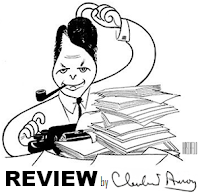
From 1963 to 1976, TV Guide's weekly reviews were written by the witty and acerbic Cleveland Amory. Whenever they appear, we'll look at Cleve's latest take on the shows of the era

The original (the only!) Hawaii-Five-O ran for twelve seasons, from 1968 to 1980, and was the last television show premiering in the 1960s to go off the air. Jack Lord's Steve McGarrett remains one of the most iconic characters in television history, and among people of a certain age, "Book 'em, Danno" and "Be there. Aloha" are still catch phrases. And so, with all that, we can share Cleveland Amory's puzzlement that the show "hasn't made more of a dent" in the ratings. 

It has much going for it, as Cleve points out. Hawaii is, for one thing, a striking visual location for a television series, and the series takes advantage of that in ways that shows like, for instance, Hawaiian Eye, never did. The fictional state police have their headquarters in the very real Iolani Palace, the only royal palace in the United States, and the location shooting makes it clear that we are, in fact, in the nation's 50th state. For another, Hawaii is apparently a hotbed of crime, judging by each week's episode; "There is so much crime abounding in Hawaii Five-O that the average viewer gets. the distinct impression that, compared with present-day Hawaii, old-time Chicago was the Tournament of Roses." And then there are the characters themselves: Lord, as Five-O boss McGarrett, is, "if he’s a bit one-dimensional, has at least the virtue of not being either so grim or so true-blue that he’s not believable." His number two, Danny Williams (James MacArthur), is earnest, eager to learn, "and yet has a. couple of other expressions too." There are native Hawaiians in the cast as well, Chin Ho Kelly (Kam Fong) and Kono (Zulu), and they're interesting, far from stereotypical, characters.

So what seems to be the problem? It is, says Amory, "that old bugaboo, the plots." There was one story, for example, featuring a couple who preyed on wealthy widows, "And it was all very exciting too—right up to the very end, when it all became so ridiculous you couldn't believe you'd ever believed it." Having seen that episode myself, I can agree with that. However, a subsequent episode in which Danny himself was arrested featured fine performances, not only by Lord and MacArthur, but Gavin MacLeod as a dope peddler. Unfortunately, Amory concludes, without more episodes like this, the half time score is "Hawaii Five-O, viewers 49."

l  l  l

Pinocchio isn't what you would call a "Christmas" program, but as Sunday's presentation on Hallmark Hall of Fame (7:00 p.m., NBC), it's the kind of family show that fits very comfortably in the season This musical verison has a very appealing cast, including Peter Noone of Herman's Hermits, who maks an ideal Pinocchio, and Burl Ives as Gepetto. Anita Gillette and Charlotte Rae are also part of the cast. In an accompanying feature on the show, producer Richard Lewine discusses some of the challenges presented by the story. "The scene of Geépetto inside the whale’s belly worried me. Everything had to happen at once: the interior of the whale had to look convincing, the whale had to sway, the stove had to spout smoke and the whale’s sneezing had to be heard. And when Gepetto and Pinocchio stage their whale escape, things got even more tricky." 

And then there was the matter of Pinocchio's nose; "We didn't want to cheat the audience out of seeing it grow," Lewine says, so puppeteer Bil Baird was brought in to help solve the problem. "Bil stood behind Pinocchio, out of camera range, holding the end of a rod that attached to the nose. When he pushed the rod, the nose, made from expandable material, lengthened. It worked beautifully," even though it required about two hours of make-up work to hide the separation between Noone's real nose and the fake probecius. 

Lewine says that Pinocchio remains a relevant story for today's world: the generation gap, for instance. "There’s the breakdown in communication between father and son," he says, with Gepetto pushing for Pinocchio to go to school and be a success. And in running away, Pinocchio finds out that "'dropping out' isn’t the answer." I wish this production was available somewhere. 

l  l  l

On Saturday, it's the sports special O.J. (9:30 p.m., KNEW in San Francisco), a profile of the player "considered by many football experts to be one of the greatest runners ever to play college football." Through interviews with his wife Marguerite, parents Eunice and James, and sisters Carmelita and Shirley, we learn about Simpson the man, who majored in public administration at USC and "wants to work in the City in depressed areas." We see interviews with his high school and college coaches, including USC's John McKay, and fellow competitors and Heisman Trophy winners. And we also hear from O.J. himself, who talks about his hopes for the future. "I plan on breaking a few records, and then going into television and commercials, where I expect to make a killing. Or two."* On a tangentially related note, don't miss the late movie, the excellent Anatomy of a Murder (11:00 p.m., KHSL in Chico), starring James Stewart (in his last Oscar-nominated role), Arthur O'Connell, Lee Remick, and Ben Gazzara.

*That's just a joke, everyone. At least I think so.

We've already looked at Pinocchio as one of Sunday's highlights, but earlier in the day we encounter a provocative topic on William F. Buckley Jr., Firing Line (8:00 a.m., KXTV in Sacramento): "Does TV Decide Who Runs America?" Buckley's guests are Alistair Cooke, BBC correspondent and formerly host of Omnibus; Robert MacNeil, also from the BBC and formerly with NBC; and F. Clifton White, public-relations advisor to Barry Goldwater and Ronald Reagan. YouTube has the broadcast here

Here's another special that's sure to liven up your Monday: an hour of music featuring two of the biggest groups in pop music, the Supremes and the Temptations. (8:00 p.m., NBC) It's called TCB, which stands for "Taking Care of Business," and according to the always-reliable Wikipedia, it is "the first musical TV special of the rock era to air on American broadcast television." It's also, according to YouTube, "the first US national TV special to star an all-black line-up of artists." It goes on to become the top-rated variety show of 1968. And, speaking of YouTube, you can see the broadcast, commercials and all, here.

Let's keep it going here, with more specials. On Tuesday, Joey Bishop moves into primetime with the ABC special "A Guide to the Swinging Bachelor" (8:30 p.m.), billed as "an educational hour for students seeking a bachelor’s degree." (Which just goes to show: don't try this kind of humor at home, folks.) Joey's guests include Shelley Berman, Noel Harrison, Ann Morgan Guilbert, Larry Storch, Dean Jones, and Emmaline Henry, with "Special decorative effects by 12 Playboy Playmates." Unlike Sunday and Monday's broadcasts, this is not available on YouTube; sorry about that.

Wednesday's NET Festival (8:00 p.m.) is a look at today's cinema scene, which includes interviews and excerpts from a variety of movies that demonstrate "the trend  toward treating films as a personal form of artistic expression, not as an industry." Among the films being discussed is a prize-winning film with "no plot, dialogue or characters in the conventional sense." It's called TXH-1138-4EB, and it was made as a thesis by a USC student named George Lucas. Wonder if he ever made it in movies? If music is more your style, then let's go with Kraft Music Hall (9:00 p.m., NBC), hosted this week by Herb Alpert and the Tijuana Brass, with Louis Armstrong, Jackie Vernon, and Robin Wilson. And then we have perhaps the best film adaptation of Mickey Spillane's iconic Mike Hammer, the movie Kiss Me Deadly (11:00 p.m., KTVU in Oakland), with Ralph Meeker brilliant as an almost-psychotic Hammer, as well as one of the most spectacular endings in film noir history.

Speaking of spectacular, one of the most famous exits from Hollywood ever seen was that of actress Dolores Hart, who, after making ten films in the course of five years, including two with Elvis Presley (Loving You and King Creole), gave it all up to become a Roman Catholic nun at the Benedictine Abbey of Regina Laudis in Bethlehem, Connecticut, where she remains, as Mother Dolores Hart, to this day.* On Thursday, we see her in her penultimate movie, Lisa (9:00 p.m., CBS), as an Auschwitz survivor attempting to escape to British Palestine in 1946, with the help of Stephen Boyd.

*Fun fact: Dolores Hart is the only nun to also be a member of the Academy of Motion Picture Arts and Sciences.

The Wild Wild West remains a personal favorite, and Friday brings us the return of one of television's great characters, the evil Dr. Miguelito Loveless, played so very memorably by the great Michael Dunn. Tonight (7:30 p.m., CBS), in an episode that sees Charles Aidman filling in for Ross Martin as West's partner (Martin is still recovering from a heart attack), Loveless unleashes an evil scheme to ensnare West by kidnapping seven people, and offering West the clue, "Thursday's child has far to go." Don't you just wonder what that means? By the way, Loveless frequently has a female accomplice, and in this episode she's played by the lovely future soap icon Susan Seaforth.

l  l  l

This week's highlight is the Christmas special of all specials, A Charlie Brown Christmas (Sunday, 7:30 p.m., CBS). It's really a shame that it's scheduled against Pinocchio, considering how few options there are for this kind of family entertainment. Elsewhere, on Sunday, actress Jeanne Crain introduces a dramatization of Mary’s life in Nazareth. (6:00 p.m., KLOC in Modesto). NET has perhaps one of the more interesting programs of the season on International Magazine (Wednesday, 10:00 p.m.), tracing the national heritage of the three kings who came to see the Christ Child. On Friday, it's A King Family Christmas (7:00 p.m., KNEW), with the entire family providing Yuletide cheer, and on The Magic of Christmas (7:30 p.m., KCRA), Howard Keel and Ann Miller welcome Randy Sparks and the Back Porch Majority. And for your movie entertainment, it's the farcical comedy Christmas in Connecticut, with Barbara Stanwyck, Dennis Morgan, Sidney Greenstreet, and a show-stealing performance from S.Z. Sakall as Uncle Felix.

l  l  l

A couple of additional Christmas notes that bear mention: in the Teletype, Joseph Finnigan notes that Dean Martin gives away $200,000 worth of toys to orphanages and hospitals on his December 19 Christmas show. Bob Hope, Frank Sinatra, Lucille Ball, Jack Benny, Bing Crosby, and Jackie Gleason help pass out the gifts donated by a toy company." Dean did this for two or three years, I thnk, at the end of his Christmas shows, and if you've never seen that segment before, it's pretty neat; YouTube has it here, but of course I'd recommend you watch the whole show, with Dean and his special guests.

And the Doan Report tells us that there's another holiday treat in store, if everything goes according to plan. NASA says that if the Apollo 8 flight is on schedule, it plans a live broadcast on Christmas Eve, as the command module flies just 60 or 70 miles above the surface of the moon. As we all know, things do indeed go as intended, and the Christmas Eve "moon show," including the dramatic and moving reading of the Creation Story from the book of Genesis, will become one of the most famous moments ever seen on television. CBS Sunday Morning remembers it well.  TV


If you enjoy the content here and want to support my broader creative work, please consider making a donation at my Ko-fi page. Any amount you contribute helps me continue writing, researching, and sharing these articles and projects. Thank you!

May 11, 2016

Giving a series the (re)boot

I've been sitting here the last couple of weeks wondering what I was going to write for today. Well, not literally - it isn't as if I've done nothing for fourteen days but sit here witlessly, waiting for my fingers to come up with some miraculous combination of letters forming words you'd be interested in reading. There's going to the bathroom, for one thing. But you know what I mean.

It's not that I don't have topics on my to-do list. There's a perfectly good post on the early '60s series The Rebel and how, both on- and off-camera, it epitomizes the existential quandary of America, and when I finally do finish it I'm sure it will be to my satisfaction, but it's become so rambling and disjointed that, rather than tighten it up and finish it, I just keep pushing it out from Wednesday to Wednesday. It must be scheduled for sometime in October by now; on the other hand, you could be reading it next week. That's just how it goes sometimes. If you're a fellow blogger, then you understand.

Anyway, I was making my own rounds of sites I read, looking for equal parts inspiration and amusement, when I came across this quote from Lileks, discussing how he's rewatching the last rebooted Star Trek movie in preparation for the new one when it comes out. He has no problems with the new set of movies, which means he's a better man than I - I never really got into the Star Trek sequels beyond the first couple of years of ST: TNG, when the show's overt liberalism finally got the best of me, and I never bothered with the rest, including the latest series of films. I don't mock those who have watched them and either loved or hated them; this is just my opinion. But I digress: to Lileks:

This is why I hate "Mission Impossible" movies on general principle: the first one broke faith with the story in a way that poisoned everything else. It's like learning that Bond was always working for an offshoot of SMERSH. There are some things you shouldn't do just for the sake of "revitalizing" a "franchise," and while the second New Star Trek movie did not give us a convincing Khan - he lacked that musky scent of rich Corinthian leather - it carried me along as it happened. 

He is, of course, talking about the first Mission: Impossible movie from 1996, in which it was discovered at the end of the movie that Jim Phelps, that stalwart all-American spy so ably played on TV by Peter Graves, was in actuality a traitor who'd sold out his country. As far as shock value goes it was effective, and because an entire generation of television viewers had lived with Phelps as the hero, there perhaps wasn't the level of suspicion that would have normally surrounded the Man Above Suspicion in a run-of-the-mill spy thriller.

But for all that, there was something extremely distasteful about it all. Lileks is right; there are just some things you don't do, because they don't make sense. Why reboot Mission: Impossible, using the Jim Phelps character, if you don't intend to include some continuity from the series? And if that's what you want, than you don't make that rebooted character do something so completely at odds with the existing character that it stretches credulity beyond the breaking point. It would have been more plausible to have Tom Cruise's character flap his arms and fly under his own power than to have Jim Phelps sell out his country. Why not just have Phelps hand things over to a new boss, who turns out to be a traitor? But then, Brian DePalma makes millions of dollars thinking up that kind of thing, while I provide you with sage television insight four times a week for free.*

*Mission: Impossible, of course, rebooted itself as a TV series in 1988, complete with Peter Graves as Jim Phelps and Greg Morris' son, Phil, succeeding his father. It suffered from many of the weaknesses of shows from that era, but it is certainly acceptable as a continuation of the original.

It got me thinking about reboots, though, which was a good thing since the new Bates Motel had an apparently earth-shattering moment on Monday night; I won't reveal it if you're watching the series and haven't seen this episode yet, but let's just say it's brought the series (a prequel to the movie Psycho set in current times) full circle to the movie. I've never seen Bates Motel, but I've read enough of the weekly reviews at the AV Club to get the gist of it, and if the new series has changed some of the canonical detail, it's gotten enough of it right that it seems to have pleased most Psycho fans. One of the things the creators did which was absolutely spot-on was to update the series to modern day; by doing this, viewers were tipped off right away that they were not to expect a seamless transition between the series and the movie, that there were things that would, by definition, be different between the two. It's a neat way of disarming would-be critics from the get-go, and from everything I've read, it's proven to be quite effective.

Not all reboots can boast such success, though. Again, this is just my opinion, but the new Hawaii Five-0 has little in common with its illustrious predecessor. Whereas Jack Lord's Five-O men solved their cases through hard work and a bit of good fortune, the new series is pretty much indistinguishable from other procedurals/action shoot 'em ups that grace CBS' schedule these days. In particular, an episode that involved the new McGarrett journeying to North Korea (!) to exact revenge for the death of a former colleague reeked of the kind of "lone cowboy" adventure that the classic McGarrett would never have countenanced, either from himself or any members of the team. Aside from cashing in on the good name of Hawaii's best-known and most-loved police drama, I can't really see any reason for its resurrection.

One of the trademarks of a reboot seems to be the introduction of "depth" to characters that previously might have been seen as one-dimensional by today's standards. I've made this point many times in the past, but dramatic programs of the '50s and '60s (and early '70s) were often free from the soap opera elements that their heavily serialized offspring seem to love. On the face of it this can make sense; the cops from those classic shows, for example, seldom seem to show any residual effect from killing so many bad guys, and unless you're Mike Hammer, this kind of sounds doubtful. However, when you mix it in with the "sensitive, introspective" characterizations that themselves have become stereotypical today, you start to lose track of the fact that the characters exist in the first place to serve the investigative element of the show. I'd contend it's like the difference between Ben Casey and General Hospital. They're both set in hospitals, both feature doctors, and that's about where the similarity ends.

A show that for the most part has balanced the old and the new effectively is the BBC's revival of Doctor Who. Note that I use the word "revival" rather than "reboot," because the new series is in fact a continuation, rather than a reimagination, of the classic version. The entire history of the old show has been incorporated into the new, up to and including flashbacks to old episodes and the appearance of old and familiar characters, played by the original actors. Unlike Hawaii Five-0, it's not just borrowed the name of the series and characters; unlike Mission: Impossible, it hasn't violated the integrity of the existing characters; unlike Bates Motel it hasn't made a timeshift or otherwise altered things. No, it's tried to do the most difficult thing of all: it expects you to be able to watch the entire series, from the debut in 1963, through the TV movie of 1996 and to the new series starting in 2005, and see it all as part of the same creation, with one storyline that has run interrupted for more than 50 years. While the new Who has dramatically upgraded its special effects and has given The Doctor some of those very elements that I've just criticized, it's managed to do it all within the spirit of the original series. There are some things about it that I don't like, and I'll always prefer the original, but some of the new episodes have been outstanding, many more have been riveting, and I'm much happier having the new stories than having had the series end way back in 1988. I think I can speak for most Whovians in that regard.

This kind of thing isn't easy, though; for every movie like Harrison Ford's big screen version of The Fugitive that succeeds spectacularly in bringing the original TV series to life in a new and bold way, there must be a hundred small-screen to big-screen adaptations that stink. (Remember Ralph Fiennes and Uma Thurman in The Avengers?) Attempts to resurrect successful series of the past in a present day format are just as problematic, as reboots of Perry MasonSea Hunt and Route 66 will testify. The rebirth of The Prisoner as a limited series was a disappointing attempt to explain the unexplainable to most viewers; fans didn't think it measured up to the original, and newcomers probably wouldn't have been attracted to it in the first place.* The new Untouchables was really more a TV version of the Kevin Costner movie** than it was a reboot of the Robert Stack classic. Even the movie versions of Perry Mason starring Raymond Burr and Barbara Hale were far from an unqualified success; many Mason fans don't consider them part of the series canon despite having two of the original stars, and I'm inclined to agree.

*Although Sir Ian McKellen did make a dandy Number Two, I thought.

**And there's that name again, Brian DePalma. But the movie version of The Untouchables really didn't try to link itself with the TV series, except for the title and the lead cop and criminals. It succeeds very well on its own merits, apart from the original series.

Of all the TV series that sought to be resurrected, the Star Trek sequels are probably the most successful; my dislike of them shouldn't be construed as anything other than personal preference. Reboots of anthology series from The Twilight Zone to The Outer Limits are hit-and-miss themselves, with good episodes and bad; at least the new version of Alfred Hitchcock Presents had the advantage of the original Hitchcock introductions, colorized though they might have been. For shows like these, you're simply going to have to argue out whether or not the writing and acting of the past is superior or inferior to that of the present, and if you can have Zone without Rod Serling.

But most of the time it seems to me that a reboot of a classic show is really one of two things: 1) an attempt to cash in on a venerable, proven name; or 2) a sign of laziness on the part of those who are paid to come up with new ideas. And in such cases, I think it's probably best to paraphrase that old cliche about sleeping dogs: let old TV classics lie, or at least leave them to be reborn on DVD, rather than remaking them altogether. For that you will have my eternal gratitude.

March 7, 2016

"Book 'em, Danno!" Why Hawaii Five-O 's Danny Williams is the perfect sidekick for Steve McGarrett

McGARRETT (JACK LORD) AND WILLIAMS (JAMES MacARTHUR): THE LEADERSHIP OF HAWAII FIVE-O


First things first. We're not talking about the new Hawaii Five-0 here, the one with the younger, hotter, more "reckless" cast. No, this is New Coke vs. Classic, Clear Beer vs. Miller, Edra furniture vs. Ikea.  Back when real men didn't eat quiche, cops were indestructible, and every suspect had the right to be shot while evading capture. In other words, the good old days. From here on in, don't even think about the new show.

I've long argued that Steve McGarrett should not be viewed as a "realistic" character. Yes, it's true that when he's shot he (usually) bleeds, and I've even seen a couple of instances when his hair moves. But, all joking aside, Hawaii's top cop is best appreciated when you think of him as an archetype, a metaphor for law enforcement, rather than a flesh-and-blood cop. I first came to this conclusion while watching an episode in which some fool criminal trying to evade the long arm of the law splashed McGarrett in the face with gasoline as he raced past as gas pump. McGarrett was slowed, but only for a minute, continuing his hot pursuit as he wiped his face. There was no burning skin, no long-term eye damage; McGarrett barely missed a beat as he closed in and eventually captured the killer.

Rather than rendering this scene laughable, however, I chose to look at it differently. If you accept the idea of the metaphorical McGarrett, then you see him as the indestructible, incorruptible lawman, one who takes even the thought of crime on the islands as a personal affront. It's symbolic not only of blind justice in that McGarrett is just as determined to right wrongs as he is to apprehend suspects, but also the inexorable beat of the law, which criminals may be able to evade for a time but from which they can never escape. It doesn't really make McGarrett that much different from other lawmen of the time - think of Matt Dillon, for example - but as we seem to demand more and more "realism" in television*, it makes watching a series like Five-O easier if you manage your expectations. Besides, why let those kinds of small details get in the way of what are usually pretty good stories?

*That is, assuming combat-scale shootouts and exploding vehicles are part of daily life in Honolulu, or any other city outside of Baghdad.

And that brings me to the real focus of this piece - McGarrett's number-two man, Danny Williams. Danno for short. Played by James MacArthur - in real life, son of playwright Charles MacArthur (The Front Page), adopted son of Oscar winner Helen Hayes, godson of legendary actress Lillian Gish, It is a testament to Danno's effectiveness as a sidekick that it's taken me four full paragraphs to get around to mentioning him. Even in the "TV Sidekick Blogathon," a blogathon dedicated to role players like him, he's overshadowed by his boss.

That, however, is what makes him a good sidekick. He has all the necessary qualities:

  • He doesn't overshadow his boss. You won't see him making any mistakes because he's dreaming of his name in the headlines.
  • He's dependable and reliable; Five-O isn't going to fall apart on those days when Steve's out of the office.
  • And yet, he's no threat to Steve. McGarrett can go about his business knowing he's not about to star in a remake of All About Eve, or see the point of a knife sticking out of his chest - the knife that Danny plunged in his back when he wasn't looking.
  • Best of all, he's motivated and highly competent, but not so ambitious that he has a lean and hungry look about him. 
  • He doesn't eat much and doesn't take up much room. By that, I mean his life is largely void of drama. Oh sure, there are a couple of times when he's falsely accused of murder, and then there's the time when he becomes obsessed with revenging the death of his girlfriend, but that's to be expected. No, Steve doesn't have to worry about him showing up late after an all-night bender, or sneaking out of the office to meet his pusher, or dealing with a half-dozen accusations that he failed to read someone their rights before booking him.

All these things mean that Danny is not just good, but the perfect sidekick. Perhaps he'd like a number one job himself, but he has no illusions about being as good as McGarrett, and for eleven seasons he was perfectly content to be the number two man in one of the best police forces anywhere.

There's another role he plays, however, and that's where I come back to the foundation I laid at the start. Because, in my opinion, if Steve McGarrett is the archetype, Danny Williams is the human face that allows the viewer to identify with the series. It is Danny who has the perspective that Steve sometimes lacks, not only in the crimefighting world, but as a connection to the larger world around them. 

Filer (Hume Cronyn) and his infamous phone
An example: "Odd Man In," a season four episode featuring Hume Cronyn reprising his season three role as bank robber Lewis Avery Filer. Filer has just broken out of prison utilizing a number of ingenious tricks including rewiring the phone system. McGarrett notes that there was enough phone equipment missing for Filer to start his own phone company, to which Danny drolly replies, "He probably will." Later, when McGarrett lists the various disguises Filer might be employing, Danny notes, "Wouldn't it be simpler to put an APB out on anybody?" In a story filled with gently humorous moments, it's Danny who, with those two lines, demonstrates his sense of the absurd, his ability to put even crime in perspective. Of course Filer will start his own phone company, Danny is thinking - and it'll probably be successful, too! Even in the most stressful of situations, life provides its own glimpses of humor, and Danny is the one who will see them. If McGarrett is the face of the relentless pursuit of justice, Williams is a reminder that policemen are men, not machines.

For all of his competence though, the viewer is never tempted to see Williams as a replacement for McGarrett. Every once in a while star Jack Lord will be virtually missing from an episode - usually this means McGarrett is "in Washington" attending hearings or meeting with top Justice Department leaders. At times such as this, it's up to Williams to take charge of the week's case. He doesn't always solve it himself, though - Steve might be just as apt to fly back for the episode's conclusion, taking the investigation Danny has headed and seeing it through to a successful end. Danny's work has been perfectly good, at times even brilliant, but we're never tempted to forget McGarrett's importance to Five-O. Just as Star Trek's Spock could never undermine Kirk's authority, Danny Williams will never suggest to us that Steve McGarrett is replaceable. 

Storywise, he also takes the burden off of McGarrett. As is the case with most sidekicks, Danno gets his own episode every once in awhile, one that allows the plotline to be about him. He may face allegations about his honesty, or he may be struggling with having possibly shot an innocent young man. It might be that he's lost his true love (see: Cartwrights, sons of Ben, for further examples), or it could be the aforementioned holding down the fort while McGarrett is away. On these occasions, Danny's more that up to the task, even if it's Steve who often solves the case. In real life, when James MacArthur leaves Hawaii Five-O after eleven seasons, it's not because he wanted more money, top billing in his own show, or even a movie career: it was because he felt the show had lost its edge, had become boring. Right to the end, he was the perfect second banana.

Is Danny Williams a conventional sidekick, in the same mold as many of the others we're reading about in this entertaining blogathon? I suppose not, but as we saw, when one lists the qualities needed to be a good sidekick, he ticks them all off. It's unusual in that Danny is just one of three "sidekicks" for McGarrett, but clearly he's first among equals. That means that in the world of sidekicks, he bears an extra burden, one that Chin, or Kono, or Al or Duke don't have. He has to be the not-quite star, the one who remains almost, but not quite. It's not everyone who can successfully manage that obstacle course, but Danny Williams, aka James MacArthur, does it quite well, thank you very much.


The TV Sidekick Blogathon is hosted by the Classic Film & TV Cafe. Please check out the rest of wonderful entries by clicking here.

October 17, 2013

Around the dial

There's more than a hint of fall in the air this week here in Texas, which has nothing to do with the following links, but, hey - TV and fall just kind of go together, don't they?

Scott Carpenter, one of the original seven Mercury astronauts, died earlier this week, and Television Obscurities has a nice piece on how television covered his Aurora 7 flight, one of the most dramatic of the early space shots.

A couple of fun pieces on the original Hawaii Five-O (which I'll be watching here in about 20 minutes as Thursday's DVD theater night: at The Hits Just Keep on Comin,, jb points out how the show's self-contained format differs from today's serialized programs (and that doesn't begin to cover the show's disco flavor), while at Classic Film and TV Cafe, Rick goes all the way back to the beginning with a look at the pilot and first episode.

I've seen many of Gilbert Seldes' reviews in older (i.e. pre-Cleveland Amory) issues of TV Guide, but I'd never seen him until I ran across this great ad courtesy of the Broadcasting Archives at the University of Maryland.

Can't remember if I've linked to this before, but this article by Billy at TVParty shows why a telethon (remember them?) should never announce their goal ahead of time.

That's all for tonight, boys and girls, but be back here on Saturday for a look at another classic TV Guide! TV  

September 12, 2013

Around the dial

Occasionally reading other blogs can be not only illuminating, but sobering; there's so much good writing out there that for a writer like me, it's kind of daunting. But, hoping that after reading them you won't forget about me, here are some of the past week's highlights.

Stephen Bowie's Classic TV History Blog was one of the first and best TV blogs I started reading, and it's still one of my favorites. Here's a very funny sight gag that explains Hawaii Five-O for all of us; on a more serious note, while at The Onion AV Club, Stephen has a rundown on The Fugitive, a show which you'll recall I covered a few weeks ago as part of my Top Ten. I have to disagree with him slightly in his assessment of Gerard; while he could often act like an ass, I do think he understood Kimble better than anyone else, including the unlikelihood of Kimble committing further crimes. But a great piece!

I always liked Dick Powell, but unlike many movie buffs I'm more familiar with him as a dramatic actor rather than the musicals in which he started out, and I've probably seen him more through television than on the big screen. At Classic Film and TV Cafe, Rick has a typically good offering of six things to know about Dick Powell. Two things you can add: Powell played Richard Diamond on radio (David Janssen, from the aforementioned Fugitive, played him on TV), and he also originated the role of Amos Burke on TV as part of Dick Powell Theater; that role went to Gene Barry in the series.

Be sure to check out Comfort TV this week, as David lists the seven least intimidating TV villains. I probably still wouldn't have wanted to tangle with any of them.

Hopefully, most classic-TV buffs know that Gunsmoke was a radio drama before appearing on television. I had the chance to hear some of the radio episodes a couple of years ago, and they're remarkable in their detail. Glad to see that Embarrassing Treasures is giaving some time to it - take the advantage to listen to those five favorite episodes.

It's back to the 60s again in this week's TV Guide - we'll see you back here again on Saturday! TV