Showing posts with label Media. Show all posts

February 7, 2026

This week in TV Guide: February 8, 1969


For media analysts, the 1968 Democratic Convention is the gift that keeps on giving. I know a lot of you are probably tired of me writing about it as often as I do, but I don't generally go looking for it; it comes to me. And TV Guide has written about it at least as often as everyone else. It is, in fact, a seminal event when it comes to looking at how the news media presented events, how it became a participant in those events, and the public's perception of those events.

In this first of a four-part series, Neil Hickey looks at the decisive questions raised by last year's convention: "How well did the networks discharge their responsibilities? Was coverage slanted? Were viewers fully and fairly informed? Did many of them deliberately refuse to believe their eyes?" The issue, Hickey says, "appears destined neither to die nor fade away, but to linger in some morose corner of the public mind for generations to come."  The answer will influence the future course of television news coverage."  

What is truly remarkable about this preamble to the series is how these questions about the media are not only still being asked today but also appear to arise with greater frequency, greater intensity, and greater scope. If news coverage of the convention raised eyebrows back then—if viewers truly were shocked by what had hitherto been, in Hickey's words, a "20-year romance which television has enjoyed with American families" that had achieved iconic status with the coverage of President Kennedy's assassination—then today, many of these accusations are simply assumed as a given by most viewers, who would claim that the media doesn't even make a token effort to hide their bias. 

Coverage of the convention—it's estimated that almost 90 percent of American households were tuned in to the events, and 92 percent of all television homes in the free world—makes this kind of discussion inevitable, one supposes. In an era when you still had to make an effort to write a letter—unlike today's social media instant-reaction environment—the three networks and the Federal Communications Commission were flooded with "tens of thousands of letters" complaining about the media's coverage. Among those complaints were that coverage was biased against President Johnson and Vice President Humphrey; that news footage focused on violent acts by the police against the protestorss "but never the provocation which led up to it"; that reports and anchors "engaged in too much editorializing (at the expense of straight news) without labeling it as such"; and that newsmen "were too generous and affectionate in their coverage of the hippies, Yippies and radical leftists who had come to Chicago with the announced purpose of disrupting the convention and creating havoc in the streets." One of the specific allegations was that the media inflated the number of protestors; in the weeks leading up to the convention, the news floated estimates of between 100,000 and one million, but "the best estimates now indicate that the demonstrators’ recruitment was an almost total flop, and that no more than 5000 of them came to the city from points outside Illinois."

And look at some of these comments: Columnist Jenkin Lloyd Jones wrote: "It should now be obvious that television, as it is now used, is the enemy, not the servant, of the political convention. It has become so, not out of malice, but because TV is a medium that prefers drama to uplift, and where both are present it will go for drama every time." Sen. Everett Dirksen (R-lll.), called it "an outrage against the democratic process" and "a clear and outrageous attempt at editorializing and bias." You can read variations of this quote pretty much any time you want today. 

In an extraordinary series of reports by Drew Pearson and Jack Anderson, the columnists claimed that a House Commerce Committe study confirmed that "some of the networks deliberately went out to slant the news; that TV directors purposefully photographed Vice President Humphrey and Mayor Daley in unflattering poses, even resorting to distorting the TV color; that speeches favorable to the Johnson regime were forsaken repeatedly by the cameras to focus on some dissident eager for publicity," and that the networks, "perhaps in their eagerness to generate high ratings for TV sponsors, encouraged dissidents to make inflammatory statements and helped to stir up controversies." This was far from a universal opinion, mind you; even some of the papers that ran the columns by Pearson and Anderson felt compelled to offer disclaimers about the content; the New York Post wrote that "The notion that the labors of conscientious TV men under fire were exploited in a network plot to discredit the Democrats is absurd." 

Since there are three other installments in the series, I haven't done an in-depth presentation of everything involved in Hickey's investigation; instead, I've pulled some quotes that point to the disturbing similarities between the era I'm writing about and that in which we live today. Perhaps someday I'll write about the entire series. But for now, I just want to look at this as, if you will, one of those "canary in the coal mine" moments, that also proves how the more things change, the more they stay the same. With only a little tweaking, most of what we see here could have been written today.

What I find interesting is that you'll often read comments, mostly by people lamenting the state of today's news coverage, pointing to the "classic" era of television news, the days of Cronkite, Huntley and Brinkley, and others, when the news was "fair and objective," as opposed to today's slanted opinions and outright bias. In fact, the argument we're having today is nothing new. It may have intensified, it may be more available to more people, making them more aware of the controversy. But to suggest that everything was fine and dandy back in "the good old days" is simply not true, and the borderline-obsessive coverage of Chicago proves that.

This all happened nearly sixty years ago; most Americans of today weren't born then, and many of those who were alive don't have a clear memory of it anymore. I do remember it well; I remember what a terrible time it was for everyone. If we look back on these as the "good old days," how much worse does that mean things are in our modern age? One of the most disturbing quotes I found in this article comes from columnist Max Lerner, who talked of "a kind of 'social dynamite' in the spreading suspicion among both liberals and conservatives that the wells of communication in the U.S. are poisoned." Can there be any better description of the state of America today? 

l  l  l

During the 60s, the Ed Sullivan Show and The Hollywood Palace were the premier variety shows on television. Whenever they appear in TV Guide together, we'll match them up and see who has the best lineup.

Sullivan: Tentatively scheduled guests: Leslie Uggams; comic Bill Dana; singer Roslyn Kind, Barbra Streisand’s half-sister; Joan Rivers; Barbara Eden of I Dream of Jeannie; Peter Gennaro; and the acrobatic Schaller Brothers. (If there were any changes, they're not reflected in the episode guide.)

Palace: Robert Goulet’s guests: the Mills Brothers; Kay Thompson; singer Dusty Springfield; comics Hendra and Ullett, and Jack Wakefield; and Nina Logatsheva, low-wire ballerina from the Moscow State Circus.

You want singers? Sullivan has Leslie Uggams and Roslyn Kind; the Palace is hosted by a singer, Robert Goulet, and has the Mills Brothers, Kay Thompson, and Dusty Springfield. You want comics? Sullivan has Bill Dana and Joan Rivers, the Palace has Hendra and Ullet and Jack Wakefield. Sullivan has acrobats, the Palace has a low-wire ballerina. So what does all this prove? Well, the Mills Brothers are unbeatable, Dusty Springfield (singing "Son of a Preacher Man") is undeniable, and Mr. G himself is as smooth as they come. This week, Palace wins with a song in its heart.

l  l  l

From 1963 to 1976, TV Guide's weekly reviews were written by the witty and acerbic Cleveland Amory. Whenever they appear, we'll look at Cleve's latest take on the shows of the era.
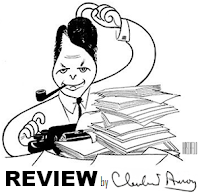
Back in the day, you often heard it said that "there outta be a law." And Cleveland Amory has an idea for a perfect law: television should be prohibited from "laying its blood-stained hands on the classics—particularly on children’s classics." That includes NBC's new series, The New Adventures of Huckleberry Finn. "And make no mistake —which you already have if you've sat through an episode—this particular series is not content to murder just one classic." 

I think it's pretty clear where we're going from here, but it's our good fortune that our Cleve is leading the way, for the more he piles it on, the more entertaining he gets. Borrowing from Johnny Mercer's lyrics to Moon River, "Your Huckleberry friend who is waiting round the bend is only the take-off point here. Each program moves on from there to fire at will on "Don Quixote," "The Arabian Nights," "Gulliver's Travels," etc., etc.—until you end with a full-scale massacre. Watch it and we guarantee that your Huckleberry friend won’t have to wait at all. You too will be around the bend." (I don't normally quote at such length, but, unlike the series itself, this was simply too good to pass up.) You see, one of the conceits of this series is that episodes often involve Mark Twain's favorite characters in fanciful adventures that take place between the covers of other classics: "Huck of La Mancha," for example, in which Huck, Tom, and Becky find themselves rescuing Don Quixote and Sancho from Don Jose D'Indio, who is none other than—of course—Injun Joe. You might think that, well, at least this episode has good source material to work with; however, "it was really shocking to find that there was, in the concept and rendition of the character of Don Quixote, not one single whit of pathos, understanding or even point." Another episode takes our trio to the stories of the Arabian Knights: Ali Baba, Scheherazade, Sinbad. It takes them, and does nothing to them. In other words, the show is so much a product of today's values—"the self-centered, self-serving world the modern child today faces"—that it makes no attempt to present the values and morals that were integral parts of the original stories.

If you've never seen the show before (consider yourself fortunate), it blends live action and animation, not unlike Song of the South, although to much worse effect. In fact, Amory says, the animated characters are generally better actors. Of them, the best is Ted Cassidy, who voices Injun Joe. He appears in the prologue as a live character, then morphs into the animated villain of the story. Smart thinking, Lurch. Amory concludes at the beginning, with a look at that prologue. Speaking of Injun Joe, Huck says, "I had a funny feeling that we'd see him again." Says Cleve, "We had a feeling too—but it wasn’t funny."

l  l  l

It is hard to imagine that there was a time, as late as 1969, when people had not heard of Stella Stevens. I say this not just as a normal, red-blooded American male with an appreciation for such things, but as a student of pop culture. She appeared with Elvis in Girls, Girls, Girls. She appeared with Jerry Lewis in The Nutty Professor. She appeared with Dean Martin in The Silencers. She appeared with Rosalind Russell in Where Angels Go, Trouble Follows. She appeared with a smile and nothing else as the January 1960 centerfold in Playboy. I rest my case.

And yet, as Joe McGinniss* writes this week, that's exactly where we are. "Stella Stevens has not really failed. It’s just that she has not succeeded," McGinniss writes. "She has worked hard at her career since moving West from Memphis in 1958. She has made lots and lots of movies. She has done some very good television work. Yet nobody knows who she is." You'll forgive me if I have trouble believing this, and yet, there it is. She is, by all accounts, "warm and sincere," besides which, as we've mentioned, she's a knockout. But she's "too versatile," the knock is, moving from comedy to drama, from the big screen to television, never quite landing the part that would make her a star. 

*The same Joe McGinniss who would later write non-fiction books such as The Selling of the President and Fatal Vision. 

She's overcome a lot to make it this far, including a marriage at age 15, a son (Andrew Stevens, who would go on to become an actor in his own right) at 16, a divorce at 17. And her career is far from being what one would consider a failure. She has, McGinniss says, "adjusted to worse things. She will be able to proceed quite nicely through her 30's without being on the covers of magazines." And she believes the best is still to come. "I feel like my career is just beginning,” she says. "I've put in my apprenticeship. Now people are finally beginning to realize that I’m serious and I'm good." A lot of people say that she's very good, "a genuine comedienne who can handle straight roles, too." 

You can only remember so many names, though, and there are a lot of them out there. They're getting younger all the time, too (Stella is all of 29, virtually over the hill), and her chances of hitting the jackpot diminish. And yet, all these years later, the name "Stella Stevens" has yet to be forgotten. She appeared on television almost constantly, appeared as a regular in Flamingo Road and Santa Barbara, and remained active up to 2010. As a 2012 article noted, she was, in the 1960s, "one of the most photographed women in the world." Apparently, some people had heard of her. Of her layouts in Playboy (three in all), she said, "If you've got ten million people seeing you in a layout like that ... and half of them remember the name 'Stella Stevens', they'll buy tickets for your movies."

Joe McGinniss was a very good writer, but maybe he didn't know everything. Otherwise, all I can say is that it's a sad commentary on American manhood.

l  l  l

Here's a movie that definitely should have made it to Mystery Science Theater 3000: Billy the Kid vs. Dracula (Saturday, 9:00 a.m. PT, KTVU). I suppose it had something to do with rights, but listen to the description: "Billy discovers that his fiancee's uncle is a vampire." And it features John Carradine! What more can anyone ask for?

Sunday
's highlight is the special Man and His Universe (7:00 p.m., ABC), a look at space exploration, specifically last December's flight of Apollo 8. "As earth's unrolled stunning blue-and-white carpet is_ across the screen, viewers hear from Apollo 8 heroes Frank Borman and James A. Lovell Jr.; Col. Edwin Aldrin Jr., named to this summer’s scheduled Apollo 11 moon-landing team; and Dr. Harrison H. (Jack) Schmitt, who plans to make geological studies on the moon." George C. Scott narrates the hour, which I really would like to have seen. I think the Paley Center has a copy of it; it might as well be on the moon. That's one of three specials that make Sunday night special, including a presentation of A Midsummer Night's Dream (9:00 p.m., CBS) by the Royal Shakespeare Company, with a cast including David Warner, Diana Rigg, Helen Mirren, Judi Dench, Ian Holm, and Ian Richardson. And NBC presents a rerun of last year's Fred Astaire special (10:00 p.m.), with Barrie Chase, Simon and Garfunkel, Sergio Mendes and Brasil '66, the Young-Holt Trio, Neal Hefti's orchestra and the Gordian Knot.

Twenty-four years before Schindler's List, Monday's installment of the ABC Evening News with Frank Reynolds (5:30 or 6:00 p.m. depending on the market) features a special report on Oskar Schindler: "Although he was a Nazi, Schindler saved 1300 Jews by having them transferred from death camps to his factory, and later gave them weapons so they could overcome Gestapo guards and escape to freedom." You don't often see a special report on the evening news that's featured in TV Guide, but as I recall, this is something that ABC did from time to time to try and boost their news by giving it a different feel. In primetime, Ella Fitzgerald is joined by Duke Ellington for an hour of music (7:30 p.m., KOVR), Davy Jones guests on a Valentine's celebration on Rowan & Martin's Laugh-In (8:00 p.m., NBC), and Carol Burnett is joined by a stellar lineup including Lucille Ball, Eddie Albert, and Nancy Wilson (10:00 p.m., CBS)

Speaking of guest stars, Jimmy Stewart makes a cameo appearance on Julia (Tuesday, 8:30 p.m., NBC), while James Earl Jones (currently starring in the Broadway production of "The Great White Hope") stars on N.Y.P.D. (9:30 p.m., ABC), a really fine half-hour police drama. And on The Tonight Show (11:30 p.m., NBC), Johnny's scheduled guests are Jack Benny, choreographer George Ballanchine (perhaps the premier classical choreographer of the time), ballet dancers Suzanne Farrell and Arthur Mitchell, and author and Discovery host Frank Buxton.

Wednesday 
is Lincoln's Birthday, which used to be a fairly big deal, at least back when I was in school, and Aaron Copland conducts the National Symphony in a Lincoln Day concert (8:30 p.m., NET), including one of Copland's most famous works, "Lincoln Portrait," narrated by Coretta Scott King, MLK's widow. Meantime, NBC repeats last year's highly acclaimed special with Herb Alpert and the Tijuana Brass (9:00 p.m.). The most interesting item on Tuesday, though, is what we didn't see: the never-aired second episode of ABC's infamous disaster Turn-On (scheduled for 8:30 p.m.), which would have featured as hosts Robert Culp and his wife, France Nuyen. 

As a sign of the times, I'm intrigued by this episode of I Dream of Jeannie (Thursday, 7:00 p.m., KHSL), in which Jeannie, in an attempt to free Tony from house fix-up projects, redoes the house into a mansion sold for $60,000 to a NASA VIP. Now, the idea of a $60,000 "mansion" intrigued me; I'm not sure you can buy a mobile home for $60,000 anymore, so I decided to see what that $60,000 house would be worth today. The answer? Approximately $558,831.03, an increase of 831.39 percent. Does that qualify as a mansion under today's home prices? Given that the median U.S. home price hovers around $400,000–$450,000, and that "luxury" homes start at about $1.3 million, Zillow estimates that a mansion would run around $1.4 million; in Miami, the price would be closer to $2 million. For $560,000, you would get a home classified as "nice" or upper-middle-class in many places; to call it a "mansion" would probably be treated with skepticism. (In case you're wondering, in 1969 a mansion would have run over $100,000.) Thus endeth our economics lesson for today.

Davy Jones, who was on Laugh-In on Monday night, is one of the guest stars on This is Tom Jones (Friday, 7:30 p.m., ABC), along with Nancy Wilson, who was on The Carol Burnett Show on Monday night, Rich Litte, Mireille Mathieu, and Herman's Hermits, who weren't on anything else this week. On The Name of the Game (8:30 p.m., NBC), Robert Goulet and his then-wife Carol Lawrence star as Tony Franciosa's investigative reporter looks into the case of a famous doctor (Goulet) who's "an absolute whiz at hospital fund-raising—but totally incompetent as a surgeon." In the late-night movie slot, check out The Outrage (11:30 p.m., KOVR), an Old West version of Rashomon starring Paul Newman as a bandit executed for murder, even though nobody knows for certain what the facts were. Claire Bloom, Laurence Harvey, Edward G. Robinson, and Howard Da Silva fill out a tremendous supporting cast, as well as William Shatner as a preacher—made to order for the Shat's overacting. 

l  l  l

Finally, as a dedicated MST3K fan, I can't ignore Robert de Roos's feature story on Peter Graves, who appeared on Beginning of the End, It Conquered the World, and Parts: The Clonus Horror, as well as the Rifftrax feature Killers from Space. Graves is now starring in Mission: Impossible, but according to de Roos, he still can't escape the shadow of big brother James Arness. 

"I don’t know why Peter wants to be a star so badly," says George Santoro, a producer at Universal. "He's already recognized by more people than most stars."  Graves insists that this doesn't bother him, although he does admit that he wishes he came across as a star whose fans hold him in awe, rather than those who come up to him and treat him like a long-lost friend. Some think it has to do with the squeaky wheel getting the attention; producer Norman Macdonnell says, "You never hear much about Pete." Others, including Graves, say that his television work has effectively kept him from making the movies that could elevate his profile. 

This could be changing, though. CBS vice president Perry Lafferty says of Graves that "The quiet strength of this man has contributed to the smash hit of Mission: Impossible." It could have been awkward stepping into the lead that had originally been held by Steven Hill, but "there was never a hint
of trouble. I can think of a half dozen other leading men who would have been bitterly resented by the cast. I just wish I had 15 more like him." (This jibes with other descriptions from costars and crew who speak highly of Graves' professionalism and quiet sense of humor.) Graves himself says, "Some bloom early, and some take a little longer. I have a deep sense that I am ready for the big push." Indeed, Peter Graves becomes the face of M:I, notwithstanding the show's gradual decline in the years after Barbara Bain and Martin Landau left the show. Perhaps his greatest hit comes in his deadpan role as Captain Oveur in Airplane. Like Stella Stevens, maybe it just took a little patience. TV


If you enjoy the content here and want to support my broader creative work, please consider buying me a Diet Coke at my Ko-fi page. Thank you!

February 24, 2024

This week in TV Guide: February 22, 1969


I think most of us are aware of the secret life of Raymond Burr, how he constructed a life's story that was almost entirely false, not out of any particular malice, but in order to keep his private life private. His homosexuality, to be sure, but I think the creation of his alternate life's story went far beyond what was necessary to simply keep quiet that part of his life. For years, until after his death, this story was accepted almost without question by so many news sources, but in part two of a two-part profile of Burr, Edith Efron takes a very close look at the actor, and finds some things that hint at the mystery of the man, and how not everything is what it appears.

There's her conversation with Linda Galloway, wife of Ironside co-star Don, who offers this view of him: "Ray is the most variable, individual man I know. He changes from minute to minute. He is like a lot of different men. Sometimes he is sharp, sometimes he is dull. He can say the same words on different days and they'll mean a hundred different things. Sometimes they'll be a caress, at other times an insult or a snub. He is so... complicated!" Like a lot of different men—isn't that an interesting description?

Burr, one of America's most popular actors, has often come across, Efron says, as "a combination of Falstaff and St. Francis of Assisi," a mixture of jollity and benevolence. But, she says, these are "scarcely the essence of Raymond Burr. They are his disguise." Underneath that disguise, he is solitary, remote, a man of "both massive strengths and massive weaknesses," an "unstable, darkly tense man who constantly reveals signs of inner torment." His many compulsions range from eating to tidying, working, and do-gooding. Most are, she says, more subtle; "He is locked up in repressive defenses and finds it virtually impossible to open up emotionally." Disguises, repressive defenses. "His own complex identity weighs heavily on Burr’s mind—he is often in an introverted, brooding state of selfinspection. But mainly he attempts to escape his inner anxiety." And most of his escapes, she says, are "creative." That may come across as a lot of psychobabble, but it also kind of strikes close to home, don't you think?

Efron notes his apparent disconnection during a dinner given by civic leaders to acknowledge his humanitarianism. He frankly admits his boredom with such events. But, he acknowledges, "The fun isn't there for them if you’re not a little available. So you go through with it. But it’s a terrible drain, a terrible drag." He's left tolerating people, but, he says, "Behind the social façade, I'm remote." There's that word façade. 

     Looking over his shoulder?
Why the inner conflicts? One friend says he feels Burr, a man of strong emotions, values, and convictions, "doesn't feel he should express them openly. He seems to feel there is something wrong about it. Almost as if it's guilt." Another calls him "a violently self-=assertive man who thinks self-assertion is wrong. . . Now he feels he should crucify himself for the world. But he doesn't want to. He's really greedy for life. He’s spent his life submissively climbing onto crosses, hating it, and hating himself for hating it." The result is a man who "exists in a state of virtually nonstop tension, alienation and self-condemnation," a man "with a brilliant capacity for life who can’t permit himself to live it."

It's all very interesting, but at the end, are we really any closer to understanding why Burr chose to create a fake life to tell the world? Perhaps not, although the hints of shame, guilt and and self-abnegation that pepper these snippets might give us a tantalizing clue. He names Socrates, Gandhi and Schweitzer as his moral ideals; perhaps he couldn't stand to have had a life that was, by comparison, so ordinary. In the end, though, I think it might just be that Raymond Burr couldn't have done it any other way, that his desire to create barriers and shields made it imperative, inevitable, that he would have done it. And maybe, in some odd way, he had something of a last laugh after all; maybe all this, too, was an illusion, one that allowed him to live a life that nobody knew about. Perhaps not, but maybe.
 
l  l  l

During the 60s, the Ed Sullivan Show and The Hollywood Palace were the premiere variety shows on television. Whenever they appear in TV Guide together, we'll match them up and see who has the best lineup.

Sullivan: Broadway takes a bow as Ed presents stars and other cast members from three current musical hits: Fiddler on the Roof, Cabaret, and Zorba. Also: the 5th Dimension, Glenn Yarbrough, Michele Lee, comedians Myron Cohen and Dickie Henderson, and Hugh Forgie’s Novelty act.

Palace: An all-comedy potpourri is hosted by Laugh-In’s Dan Rowan and Dick Martin, who offer their own brand of enlightenment about old songs and charades. Sharing the spotlight are fellow farceurs Ron Gaylord and Burt Holiday; banjo-playing pantomimist Gene Sheldon; double-talking Simmy Bow; telephone gossip Betty Walker; and stand-up comics Jackie Gayle and Irwin C. Watson. 

The Broadway stars appearing with Ed tonight aren't necessarily the names people associate from the original casts or the movie adaptations—Harry Goz is Tevye in Fiddler, Anita Gillette and Martin Ross in Cabaret—it's still a star-studded lineup, more than enough to overcome the all-comedy presentation on Palace. This week Sullivan takes the bows, and that's no laughing matter.

l  l  l

Throughout the 60s and early 70s, TV Guide's weekly reviews were written by the witty and acerbic Cleveland Amory. Whenever we get the chance, we'll look at Cleve's latest take on the shows of the era. 

Every once in awhile you run across one of those shows that simply leaves no impression, like the smallest of kittens walking across a bedspread. It could just as easily have been from the 1950s or the 1990s for all you know; it doesn't even ring a bell from having been in TV Guide. It's the opposite of total recall; there's no recall at all. Such a series, at least for me, is My Friend Tony. Had I not run across it on YouTube a few years back, I would have been like the man at his high school reunion who has no idea who his friend Tony is. There must be a good reason for this, so we turn to Cleveland Amory for encouragement that we didn't miss some hidden gem. As usual, he doesn't let us down.

My Friend Tony is, says Cleve, "one more show which starts out-with high promise and reasonable premise and promptly falls flat on its console." NBC has had too many of these "fallen soufflés," he continues; "It's time they either got a new chef in charge of locking at what's cooking or else a new Vice President in Charge of Believability." Sheldon Leonard, the producer who's developed much better series than this, terms the show a "mystery-comedy," which leaves something to be desired; "Mystery loves comedy all right these days, but whether or not they should get married is, judging by this show, an entirely different matter." Tony, the eponymous friend in question, is a young Italian (played by Enzo Cerusico) serving as the "fun-loving legman" for John Woodruff (James Whitmore), one of those professor/detectives (James Whitmore) that populate TV. John met Tony (a "street urchin") in Italy during the war, and later on Tony became one of his students. 

The mysteries, such as they are, are contrived and overly complicated; in one episode, Brooke Bundy plays a young woman who is, incredibly, not only the good girl, but the girlfriend of the crooked crime commissioner, and the sister of a murderer who kills someone she fingers, before he's killed himself. Not only that, she manages to fall for Tony, for whom the feeling is mutual. As Tony leaves, she says, ""Most girls cry at a time like this.' We couldn't have agreed more, except for one thing—she was almost at the end of the script and should have been happy as a clam." Cerusico is actually both good and likable in the role; what he isn't is believable. Whitmore is another example of what we've seen too many times this season, "a fine actor in a phony part." Perhaps Tony has the last laugh, after all. One of the reasons he has such a good time is because his English isn't very good, "and in a show like this, that's a big advantage."

l  l  l

Looking through these issues of the late 1960s and early 1970s, it's impossible to overstate how traumatized news organizations were by the experience of Chicago, 1968. No matter how hard I might want to avoid it, it just keeps coming up, even though we're now almost six months after the fact. 

This week we lead off with the third of a four-part series by Neil Hickey entitled "How the Networks Stubbed Their Toes," which examines aspects of how the media covered the Democratic National Convention in Chicago, and suggests that, just maybe, things weren't quite as bad as people made it out to be. The popular conception—certainly the one I've always read—is that the coverage was one-sided, "a straight-out contest of good versus evil: the good dissenters (both inside and outside the hall) versus the bad Establishment." But Hickey finds that there was, from the very beginning, an attempt by journalists to set a balance between the demonstrators and Mayor Richard Daley's police. 

Roger Mudd of CBS, for instance, took a harsh view of those delegates who favored the Vietnam peace plank that was defeated on the floor. "It occurs to me that we're suffering at this convention from a massive case of political bad manners," he said, "and the special goat became Mayor Daley." Did the dissidents, he continued, really think the convention could have been conducted without security? As far as his observations on what came to be called the "police riot" conducted against demonstrators in Grant Park, "I talked to reporters last night who were there who said that the police were right. I don't know that we're absolutely correct in calling it unprovoked." Hickey cites several similar comments by ABC's Howard K. Smith and NBC's Chet Huntley, calling out demonstrators for "being quite purposeful in their baiting of the police." 

According to William Wood professor at the Columbia School of Journalism, the strong feelings which many have regarding the events in Chicago may color their perceptions of how the story was handled. Nonetheless, he acknowledged that the reporters occasionally let their private feelings come through, when they're supposed to be "absolutely impervious" to such lapses. He also believed that at times the networks latched on to more sensational stories, ones lacking in substance, while saying to themselves, consciously or unconsciously, "Let's keep this thing going." He urges the FCC to be judicious with any demands they make of the networks to defend their coverage, but overall stresses a need for "quiet self-examination" by the news departments. Penn Kimball, a professor at the Columbia School, thinks that there might have been a benefit for reporters to have done "an old-fashioned news-gathering job on foot," feeding the information to the anchors, rather than reporting from the scene with cameras and microphones. 

One story that swept the convention was a rumor that Massachusetts Senator Edward Kennedy might make himself available as a last-minute compromise candidate. The rumor swept through the convention hall like wildfire, but there's never been any real evidence that such a rumor was true. Says Kimball, "There was indeed something to the story, but the boom was never real, and TV—and everybody else inflated it." CBS's Eric Sevareid wondered aloud if the rumors "were not, at least, in part, the creation of TV reporters looking for an intriguing story."

Demonstrators aren't fools; they know that reporters and cameramen are watching them, and they know how to stage events for their benefit. Kurt Lang, a sociology professor at SUNY Stony Brook, says that the journalists on the scene "inadvertently contributed to the uproar in their search for interesting interludes." That's not, however, the same thing as slanting the news, he stresses. He adds that the problem wasn't too much coverage, but not enough of the right kind of coverage. Television had an ideal opportunity to look at "what these demonstrations and these young people really meant," he says. "Who were they? Where did they all come from? Why, in fact, did they come to Chicago at all? What does it say about our institutions? Why should young Americans walk around waving a Vietcong flag? What moves them to shout, 'I want to destroy the whole Establishment and see it come tumbling down'?"

I've commented in the past that I see a lot of disturbing parallels between 1968 and what we're experiencing today, and while I think the experts in this article made some excellent points, the larger question still remains. The demonstrators in Chicago and elsewhere, protesting the war and the establishment—they're not much different from the young people of today, protesting on campuses and in the streets, with their anti-American slogans and chants. I don't suggest that they're representative of all young people, or all Americans; I'm just suggesting that those questions Lang mentions, the ones that weren't being asked in Chicago, aren't being asked today, either. The media may or may not be biased, but are they doing a good job covering the story? More important, are they even letting the public know there is a story? Lang concludes by saying, "Nobody I know in TV has attempted seriously to answer these questions. The networks were covering the violence, all right, but not what it means to all of us for now and the future.” Hickey adds, and I agree, that this is the better story.

l  l  l

It's kind of a lean week, TV-wise, but here's a program that caught my eye: "The Experiment," an episode of CBS Playhouse, a kind of attempt to resurrect the old Playhouse 90 quality-drama idea (Tuesday, 9:30 p.m.) It distills almost every issue of the 1960s into one story: youth rebelling against the establishment, premarital sex, racial conflict. About the only thing missing, as far as I can tell without actually watching it, is drug use, but that might have been worked in there as well.

What's really notable about this is the casting. M.K. Douglas stars as Wilson Evans, the young scientist who sells his soul to corporate America in order to further his studies, while Tisha Sterling is Tess Hayes, a student activist and M.K.'s lover, who agrees to pose as his wife in order to further his career. M.K. Douglas, complete with scraggly beard, is, as we might have guessed, Michael Douglas (and a note in the listing helpfully identifies him as Kirk Douglas's son), while Tisha Sterling is the daughter of Ann Sothern and Robert Sterling. Was this stunt casting, especially playing up the generation gap? I don't think so; Sterling had a very capable career, particularly in the movies, while we all know the success that Douglas has achieved over the years. They're surrounded by a very strong supporting cast, including John Astin, Barry Sullivan, and Susan Strasberg. Ellen Violett talks here about her experience writing the teleplay.

l  l  l

With De Gaulle in Paris
The networks are paying a lot of attention to President Nixon's trip to Europe this week; understandable, given that this is the first European trip by an American president since John F. Kennedy in 1963 (the famed "Ich bin ein Berliner" speech). Planned stops include Brussels, London, Bonn, Berlin, and Paris; considering that it's only been a month since the inauguration, one can appreciate the importance to which Nixon himself must have attached this visit. Networks plan coverage of the President's departure from Washington on Sunday, as well as mid-morning and late-evening reports and expanded news coverage. In addition, CBS has prime-time specials on Thursday (8:00 p.m.) and Friday (7:30 p.m.). I mention this partly to show how extensively television covered the news back then, and partly to show how, well, indifferent we've become to overseas travel through the years. It sometimes seems as if the president flies over to Europe every six weeks or so for something or other, and if I exaggerate on that, my point is that it's become so routine, so common, that we hardly consider it an event anymore—and technology, especially things like air travel and television, has made the world much, much smaller. And it could have felt even smaller; original plans called for the Apollo 9 launch on Friday morning, but colds for all three astronauts pushed the mission start back to March 3.

l  l  l

Good news if you're a fan of CBS; according to the latest from Richard K. Doan, the network has such a comfortable lead in the ratings race that, with only scattered exceptions, they'll be sticking with their current lineup. At present, only The Jonathan Winters Show, Gomer Pyle, U.S.M.C.*, and The Queen and I appear to be definite cancellations; while it's possible that Hawaii Five-0 and The Wild Wild West could be in trouble "as too action-oriented in the present antiviolence climate," but only if "something hot comes up." Whether they're referring to something hot being a hot news event or a hot potential show isn't clear, but in the event, while Five-0 will survive and thrive until 1980, the network gives West its cancellation notice by the time this issue hits the newsstands; producer Bruce Lansbury will call the show "a sacrificial lamb … It went off with a 32 or 33 share which in those days was virtually break-even but it always won its time period."

*Gomer Pyle was, in fact, number two in the ratings, behind only Laugh-In, but left the air in favor of Jim Nabors' variety program.

Elsewhere in the industry, Rod Serling remains in the spotlight, despite his comments a few months ago in which he "swore off writing for TV presumably forever." Not only has he been working on a proposed new ABC series, The New People, he's "engaged also in writing a two-hour World Premiere movie for NBC in which he'll appear as a plot-explaining host." The premise: three "slightly related" suspense tales, with a different star in each. The movie's referred to as "Night Gallery," with Joan Crawford, Roddy McDowall and Sam Jaffe among those scheduled.

l  l  l

MST3K alert: The Eye Creatures
(1945) The strange inhabitants from a flying saucer terrify a lovers' lane. John Ashley, Cynthia Hull, Warren Hammack, Chet Davis, Bill Peck. (Saturday, 11:30 p.m., KCRA in Sacramento) As you can see from the picture at the left, the original title was rendered in a stylized logo. When the movie was re-released as Attack of the Eye Creatures, whoever was in charge of graphic embellishments inexplicably added "Attack of the" to the title, meaning that it reads literally as, well, Attack of the The Eye Creatures. No fan of MST3K would ever refer to it any other way. And I think that tells you just about everything you need to know about this movie.  TV  

October 7, 2020

PBL: The Whole World is Watching, 1968


One of the issues that keeps returning frequently over the years is the question of media bias on television. I don't know precisely when this debate first started; certainly Spiro Agnew brought it to the fore during his vice presidency, but while accusations of a liberal bias had been around since the beginning of television, I think middle America may have first become conscious of it during the Vietnam War, particularly with the 1968 Democratic Convntion riots in Chicago. As protestors and police clashed, the crowd chanted over and over, "The whole world is watching."

Appropriately, NET's live Sunday night newsmagazine PBL takes that warning for the title of its in-depth look at the question of media bias and its implications. Thanks to the excellent YouTube channel btm0815ma, we can now see this rare documentary as it aired on December 22, 1968. The host is Robert MacNeil, formerly of NBC and later to be host of The MacNeil Report, which morphed into the long-running MacNeil/Lehrer Report. 


TV  

March 14, 2020

This week in TV Guide: March 14, 1970

To fully appreciate Eric Sevareid's interview with Neil Hickey about bias in television news, it needs to be put in proper context, and that's going to require a little bit of work from yours truly.

It starts with Vice President Spiro Agnew's famous speech in Des Moines, Iowa on November 13, 1969, in which he lays out the argument that a liberal media bias exists. The network news divisions, according to Agnew, dominate the political debate, with the power to "make or break" policies, reputations and campaigns, through their coverage and commentary. He charges the media with operating in an echo chamber; they "read the same newspapers, and draw their political and social views from the same sources. Worse, they talk constantly to one another, thereby providing artificial reinforcement of their own viewpoints." The result is "a narrow and distorted picture of America often emerges from the televised news. A single dramatic piece of the mosaic becomes, in the minds of millions, the entire picture." In the end, "For millions of Americans, the network reporter who covers a continuing issue. . . becomes, in effect, the presiding judge in a national trial by jury." To say that Agnew's speech stirs up a hornet's nest is an understatement. His charges are hotly rebutted by members of the media; meanwhile, NBC reports that more than 85 percent of those contacting the network support Agnew's views.

Fast forward three months, to the February 28, 1970 issue of TV Guide, and Edith Efron's interview with Howard K. Smith. Entitled "There Is a Network News Bias," Smith asserts that the news bias is, indeed, real, beginning with the liberal political composition of the staff. Liberals, says Smith, by definition have "a strong leftward bias"—"Our tradition since FDR, has been leftward." He denounces the "conformism" of network newsmen: "They react the way political cartoonists do—with oversimplification. Oversimplify. Be sure to please your fellows, because that’s what’s 'good.' They're conventional, they’re conformists. They're pleasing Walter Lippman, they're pleasing the Washington Post , they're pleasing the editors of The New York Times, and they're pleasing one another.” To say that the media is out of touch with the middle class is an understatement: "Joseph Kraft did a column in which he said: Let’s face it, we reporters have very little to do with middle America. They’re not our kind of people . . . Well, I resent that. I’m from middle America!" Smith, who in fact considers himself a liberal, nonetheless says that conservatives get the short shrift from his colleagues, who respond with party-line, "automatic reactions." "If Agnew says something, it’s bad, regardless of what he says. . . "I'm unwilling to condemn an idea because a particular man said it. Most of my colleagues do just that."

Provocative, eh? This week's letters section is devoted entirely to responses to Smith's comments, which editor Merrill Panitt says "is running about 15-1 in favor of Smith's position." A typical missive says "It takes a great deal of courage and integrity to reprimand publicly one's colleagues. If we had more network newsmen of his stature we wouldn't have to worry about bias and fair coverage." One writer asks, tongue-slightly-in-cheek, "Is he interested in being President?"

With this established, it's now time to turn to Eric Sevareid, who is equally adamant that there is no bias in the media. In an interview with Neil Hickey, Sevareid discusses the difference between news values and judgments and personal biases. While acknowledging that "we have fallen into at least some shallow ruts," he insists that for the most part, stories are selected based on "ingrained reflexes on what is news and what isn't." Why, then, do so many people believe in the existence of a liberal bias in the news? "I don't know what the word liberal means," replies Sevareid, "except a kind of open-mindedness, a basic humanitarian view of life and concern for people." He has, in fact, been accused many times of being too conservative, by youth groups, protester groups, radical groups. "A lot of people say a lot of things," Sevareid concludes.

He also dismisses Smith's claim that the media operate in an echo chamber. "I haven't had a serious conversation with Howard K. Smith, I suppose, in 10 years. I haven't run into Huntley or Brinkley in two or three years. It's ridiculous." Agnew's accusations, which stirred up so much of the controversy in the first place, are "demagoguery," the "conspiracy theory of history." It's easy to whip the public into believing in this kind of argument once it's made public; "Joe McCarthy had a majority of Americans convinced that this government was crawling with Communists. It simply was not so."

Much of the discussion, as has been the case all along, surrounds the Vietnam War. "[T]he war has torn up a lot of things here," Sevareid says; the economy, the nation's youth, the draft, and the relationship between the media and the Nixon administration. He feels that Agnew's, and by extension Nixon's, criticism of the media has simply stirred things up. "This Administration was not doing that badly with the press. But this attack has exacerbated things, made lots of people angry. It's scapegoat politics."  Even so, he feels that Nixon has had "very decent treatment" from the press.

Finally, he reiterates his belief that there is no media bias. "Every letter I've ever received in my life that accused me of bias was simply someone who disagreed with me. I have never had a letter yet from anybody who says, 'I agree with you but you were not fair to the other side.' Never. Never."

Once again, this is not the end of the story. In the April 4 issue, the letters section features this response from a reader who rebuts Sevareid: "The suggestion is not that the networks are filled with liars but rather with liberals, not that they conspire to slant news but that they all share a point of view, and consequently cannot help but bias their presentations by their very honesty." Once again, Merrill Panitt notes on the number of letters TV Guide has received; they're running 37% pro-Sevareid, 63% anti-Sevareid. Either Sevareid is right that the public can be stampeded, or Smith is right that there's the media's of touch with the middle class. I suspect each of these sentiments would have a large segment of support today, which might explain why we're so divided today. Or not.

t  t  t

.Throughout the 60s and early 70s, TV Guide's weekly reviews were written by the witty and acerbic Cleveland Amory. Whenever we get the chance, we'll look at Cleve's latest take on the series of the era. 

One of life's eternal mysteries has to be why some actors are natural-born stars, while others, with evidently more talent, wind up as supporting players. (Perhaps it's not right up there with why I never seem to win the Publishers Clearing House sweepstakes, but it's a mystery nonetheless.) And so it is with Tim Conway, who was easily the funniest man in any studio he was in, but only found success as a guest on someone else's show. This week, Our Cleve takes a look at Conway's sitcom follow-up to McHale's Navy, entitled—appropriately enough—The Tim Conway Show.*

*Wikipedia's typically understated description of Conway's 1980 comedy series: "The show should not be confused with the spring 1970 sitcom also called The Tim Conway Show or with The Tim Conway Comedy Hour, a comedy-variety series which aired in the fall of the same year, both also on CBS." Besides Conway's name, the other thing that all three shows had in common was that they were all ratings failures.

This version of The Tim Conway Show reunites Conway with his old McHale co-star, Joe Flynn. The two of them play owners of a one-plane airline that barely stays aloft. It perhaps says something about the success of this premise that Amory reserves the first half of his review commenting on the show's laugh track. And no wonder, since the laugh track has to do all the heavy lifting in this series. "A lesser laugh track might have found it hard going. But not this track." Typical scenario: the door to the plane won't open, when it does it hits Flynn in the head, after which the two try to get through the open doorway at the same time. "The laugh track holds its sides. Mr. Conway and Mr Flynn fall down. The laugh track rolls in the aisles." See what I mean?\

One reason why Cleve spends so much time writing about the laugh track is that it's currently a topic of debate due to what many viewers feel is its intrusiveness. Of course, the other reason is that there just isn't that much to say about The Tim Conway Show. The cast, as he points out, is not to blame for the show's inadequacies; "few of the troubles here are of their origination." It's just that—well, it's never a good thing when a show is so dependent on one star to carry the mail. The laugh track performs heroic work, but even it has to run out of steam sometime. Tim Conway is a smash hit on The Carol Burnett Show, just as he is every time he guests on someone else's program. It is, as I say, a mystery.

t  t  t

Artis Gilmore (L) takes on Lew Alcindor
Sports, anyone? College basketball is the big story this week, with the NCAA and NIT tournaments both going strong. We've been over this terrain a few times, so I'll try not to be redundant, but in this day when we've become accustomed to everyone—and I do mean everyone—having a bracket, some of this still bears repeating.

The 1970 NCAA tournament started out with 25 teams, and ran over three weekends. This Saturday, two of the four regional finals are televised, beginning at 2:00 p.m. ET on NBC; the double-header you get depends on where you live. Since we're looking at the New York Metropolitan edition this week, the two games are the East Region final from Columbia, South Carolina, where St. Bonaventure, led by Bob Lanier, heads for its only appearance in the Final Four by beating Villanova 97-74; and the Mideast Region final from Lawrence, Kansas, with Jacksonville (and Artis Gilmore) besting Kentucky in a magnificent game, 106-100, for their only Final Four trip. (Meanwhile, New Mexico State defeats Drake in the Midwest, and UCLA beats Utah State in the West). NBC's back on Thursday night at 7:30 p.m. for one of the two national semifinals, St. Bonaventure vs. Jacksonville, played at College Park, Maryland (home of the University of Maryland; capacity of Cole Field House is about 14,000 with standing room). The national championship game is scheduled for the following Saturday afternoon; UCLA wins again, defeating Jacksonville 80-69. You'll agree that this is a far, far cry from today's NCAAs.

t  t  t

There's a show on Saturday night on NBC (7:30 p.m.), one of those that redefines the concept of "something for everyone." It's called The Switched On Symphony, and the starting point is Zubin Mehta and the Los Angeles Philharmonic.* The idea, explains Mehta, is that a good deal of today's pop music "has its roots in the classics." To prove his point, he's created a "musical college" of pop and classical performers for this one-hour special. The pop stars include Ray Charles, Bobby Sherman, Santana, and Jethro Tull. From the classical side, pianist Joao Martins, violinist Pinchas Zuckerman, and guitarist Christopher Parkening.** I don't think even the Boston Pops ever had that eclectic a lineup. And of course, the Philharmonic tops it all off with the theme from 2001, also known as "Thus Sprach Zarathustra" by Strauss.

*Fun fact: Zubin Mehta has been married, since 1969, to former actress Nancy Kovack.
**Fun fact #2: Pinchas Zuckerman was married to Tuesday Weld from 1985 to 1998.

L-R: Bolger, Haley, Hamilton
I know that's going to be tough to top, and to be honest I'm not sure we're going to be able to do it this week, though it's not for lack of trying. On Sunday evening at 6:00 p.m., it's NBC again, this time with the 17th annual presentation of The Wizard of Oz, which ties in nicely with a story featuring three of the movies stars, Ray Bolger (The Scarecrow), Jack Haley (The Tin Man), and Margaret Hamilton (The Wicked Witch) as they reminisce about the making of the movie, 31 years ago. What's shocking about it, in a way, is that none of them are that old—Bolger is 66, Haley and Hamilton 68—and yet, along with 83-year-old Billie Burke, who played The Good Witch, they're the only principles still living.

Tuesday is St. Patrick's Day, and WPIX celebrates with four hours of coverage of New York's 208th parade (12:30 p.m.), with 120,000 marchers, clans from all of Ireland's 32 counties, and more. If, like me, you're not into that kind of thing, you could watch WABC's morning movie, The L-Shaped Room (9:30 a.m.), with an Oscar-nominated, non-singing performance from Leslie Caron. And since I just watched a YouTube clip with Ernie and Cookie Monster, you'll forgive me for mentioning Sesame Street (9:30 a.m., WPIX), with Ethel Kennedy reading a story. Later that evening, WNBC carries a special, A Choice of Destinies (7:30 p.m.), a portrait of America reflected by five recent assassinations: John and Robert Kennedy, Martin Luther King, Malcolm X, and Medgar Evers. You could also choose Julia (8:30 p.m., NBC), with star Diahann Carroll, who in this week's cover story tells Carolyn See that her success is due, in part, to being "a black woman with a white image." See asks Carroll about accusations from the black community that she's a "sellout." "Of course," she replies sharply. "What else would I be? I've sold my talents for a job I'm not particularly crazy about. Isn't that what you do? Isn't that what most people do? I've been operating in the white world for 15 years." She's worked hard to get where she has, and when asked why, she replies, "For exposure. For an audience, for a reputation, for a wider public. You can't do very much without these things. And the gamble, too. Because if the series goes a third year, there's real money in it." Yes, in 1970 it was something to be a black person succeeding in the white world. How have things changed since then, I wonder?

On Wednesday afternoon at 3:30 p.m., it's coverage of the 21st annual Pillsbury Bake-Off, hosted by Bob Barker and June Lockhart. I don't know if this even exists anymore, and as a former Pillsbury employee I suppose I should know things like that, but it was a long, long time ago that I worked there, and things change. Speaking of change, the celebrities appearing on the program—not just the hosts, but Mike Minor, Anne Lockhart, and June Lockhart Jr., are all associated one way or another with CBS, so the network is obviously responsible for the program, but since it's on Hartford's WTIC but not New York's WCBS, I'm guessing it might have been taped the previous week. Or maybe not; at this point who really cares? At 7:30 p.m., it's a program that's definitely on CBS: Hee Haw, with guests Faron Young and Dolly Parton. I was never a big fan of Hee Haw (or of country music in general), but I have to hand it to them that they always had the biggest stars in the industry. No pun intended, of course.

Friday, it's another episode of Here Come the Brides (9:00 p.m., ABC), and that's the reason for Leslie Raddatz's article on the show's resident heavy, Mark Lenard. He says he's never considers himself to be the villain, and always presents his characters as fully-formed and well-rounded, and I think he always transmitted an elegance and gravitas in his portrayals. And, you know, Mark Lenard had a long and successful career as an actor, on stage, in the movies, and on television. But his most famous role—and, I daresay, the one you first thought of when you saw his name here—gets barely a sentence in Raddatz's article. After Lenard's appearance in the movie epic The Greatest Story Ever Told, "West Coast television appearances followed, most notably, before Here Come the Brides, the role of Mr. Spock's father in Star Trek," Sarek. He also played a Romulan and a Klingon, which pretty much covers it all.

t  t  t

I generally like to end on a light note, and this week's topic comes from a feature called "Second Look" by Scott MacDonough, which is a kind of retrospective look at shows from the last few weeks. I admit that the utility of this somewhat escapes me; after all, in this pre-VCR era, unless you catch something in reruns, what good is it to know whether or not a show was any good? It's not as if you recorded it for playback later. And if it does show in reruns, you're probably likely to have forgotten what Scott said about it, anyway.

Be that as it may, he likes Ed Sullivan's tribute to the Beatles, "The Beatles' Songbook," shown March 1 on Sullivan's regular show, even though some of the covers were a bit iffy. "Steve Lawrence and Eydie Gorme belted out a fiery "Can't Buy Me Love" but massacred the lovely "Michele," while Peggy Lee's renditions of "Something" and "Maxwell's Silver Hammer" were flawless.

On the other hand, when a review begins with the phrase "Speaking of garbage," I doubt that there's anything flawless about what's to come, except perhaps for the insults. Such is the case with The Don Adams Special: Hooray for Hollywood, which aired February 26 on CBS and "desecrated our fondest memories of many a movie classic. Don Adams got Charlton Heston to host and Edie Adams (who should know better) and Don Rickles to guest in this ersatz satire of the movies. Heston narrated as if he were delivering Commandments 11 through 20, while Adams' ribs at the flicks accented leers and sneers."  Ah, but what, you may ask, did he really think? "[I]n co-writing, co-producing and co-starring in this fiasco, Mr. Adams didn't accomplish much. He merely showed how a little talent can go a short way." Let's hope you feel more kindly toward the rest of this issue. TV 


September 21, 2019

This week in TV Guide: September 21, 1968

In last week's review, we looked at the 1963 Fall Preview; we don't have the 1968 Fall Preview here, but with most of the new shows starting this week, we probably ought to look at ones you undoubtedly recognize.

NBC, "The Full Color Network," kicks off Saturday with the premiere of Adam-12, the new police series from Jack Webb, starring Martin Milner as a veteran cop breaking in new partner Kent McCord (6:30 p.m. CT). Later Saturday, it's The Ghost and Mrs. Muir, based on the movie classic with Gene Tierney and Rex Harrison; the TV version has Hope Lange and Edward Mulhare (and we can't forget Charles Nelson Reilly). Sunday, ABC presents the new Irwin Allen adventure series Land of the Giants (6:00 p.m.), which takes place in a 1983 that was not quite like real life—no suborbital flights to London on the schedule yet.

Monday belongs to CBS; first, it's Lucille Ball's new sitcom, Here's Lucy (7:30 p.m.), followed by Mayberry R.F.D. (8:00 p.m.), the reconstituted Andy Griffith Show, and while Ken Berry is the star going forward, the debut episode bids a last, long farewell to the past as Sheriff Andy finally ties the knot with Helen Crump, with Don Knotts returning as best man. I imagine a few tears were shed during that episode.

Tuesday's probably the most significant night of the week, staring with ABC's breakout hit of the season, The Mod Squad (6:30 p.m.), which opens with a 90-minute "world premiere" pilot about "a trio of youthful offenders who infiltrate the crime scene." NBC has the debut of Julia (7:30 p.m.), the first weekly series to star a black woman since Beulah in the 1950s, with Diahann Carroll interviewing for a job with the "cantankerous" Dr. Chesney, played by Lloyd Nolan. Over at CBS, Doris Day makes her long-anticipated TV series debut with The Doris Day Show, which has some trouble settling on a format but still runs for five seasons; at 9:00 p.m. it's the inaugural episode of a new magazine series: 60 Minutes, with Mike Wallace and Harry Reasoner, which starts out alternating with The CBS News Hour but eventually finds a home on Sunday nights, where it remains to this day.

Some of you may have fond memories of Wednesday's Here Come the Brides (ABC, 6:30 p.m.), with David Soul responsible for bringing the aforementioned brides to Seattle. ay, but on Thursday (CBS, 7:00 p.m.) one of the longest-running police dramas begins its 12-season run: Hawaii Five-O, with Jack Lord (whose hair didn't move in 12 seasons either), whose beat is "the whole state" of Hawaii. And Friday sees the 90-minute The Name of the Game (7:30 p.m.), a wheel show with rotating stars Tony Franciosa, Gene Barry, and Robert Stack.

Let's add to all of this some of the returning favorites. CBS brings back Lassie, The Ed Sullivan Show, Mission: Impossible, Gunsmoke, Carol Burnett, The Beverly Hillbillies, Green Acres, The Wild Wild West, The Jackie Gleason Show, My Three Sons, Hogan's Heroes, and Mannix. NBC has Get Smart, Mutual of Omaha's Wild Kingdom, Walt Disney, Bonanza, I Dream of Jeannie, Laugh-In, The Virginian, Daniel Boone, Ironside, Dragnet, and Star Trek. And ABC renews The FBI, Peyton Place, The Big Valley, The Flying Nun, Bewitched, That Girl, The Dating Game, The Newlywed Game, Lawrence Welk, and The Hollywood Palace. And that's leaving some shows out, both new and returning, for which some of you might have a great affection.

The point is that this is one of the most memorable televisions seasons of the era, with a number of shows that do more than just bridge the gap into transition of the 1970s; Hawaii Five-O airs its last episode in 1980, and 60 Minutes—well, just tune in tomorrow night and you'll see how that's going. I know there are some of you out there who think the word "iconic" is overused, but taken as it is, to mean something that is "widely recognized and well-established," there's no question that the fall of 1968 sees more than its share of iconic television shows. Look at how many of them have been released in DVD—in large part due to public demand, rather that simply a rote release as we have today, whether people want them or not. Between broadcast, cable, and streaming, we've got probably ten times the number of television programs available for viewing today: are there that many iconic programs among them?

t  t  t

During the 60s, the Ed Sullivan Show and The Hollywood Palace were the premiere variety shows on television. Whenever they appear in TV Guide together, we'll match them up and see who has the best lineup..

Sullivan: From Caesars Palace in Las Vegas, Ed's guests are actor-folk singer Theodore Bikel, who performs a scene from Fiddler on the Roof; Liza Minnelli; comedians Jack Carter, and Allen and Rossi; the 5th Dimension; the McGuire Sisters; and the Canestrellis, trampoline act.

Palace: Don "Get Smart" Adams hosts an hour of music and comedy, with singers Nancy Sinatra, Lee Hazelwood, Hal Frazier, and the King Family; comedians Kaye Ballard of The Mothers-in-Law and Joey Forman; and heavyweight boxer Jerry Quarry and his sister Diana in a vocal duet.

Even before I got to Jerry Quarry's name, the Palace had the feel of a boxing night: Frazier (as in Joe), King (as in Don), and Forman (as in George, with an e in his last name). I was hoping there might somewhere be a clip of Quarry and his sister, but my (admittedly brief) search didn't turn anything up.

Never mind, though; we have fun with the Palace, but it's really a fine lineup. Not as good as Sullivan's, though; Bikel is a very good actor who's also a singer; Liza Minnelli is a very good singer who's also an actor, the 5th Dimension is hot, and the McGuire Sisters make sure your parents don't feel left out. It's a good contest, but Sullivan wins by a knockout.

t  t  t

One of the things that used to be fun about the opening of the fall season, in addition to checking out all the new shows and getting to see new episodes of the old ones, is how the networks used to roll out big-ticket movies and specials, as a sampling of what's in store for the rest of the year. This week, as you may have figured out with that prologue (although it could just be another case of me blithering), is no exception.

Our first example comes right away, as NBC's Saturday Night at the Movies debuts Becket (8:00 p.m.), the Oscar-nominated film based on the Jean Anouilh play, starring Richard Burton and Peter O'Toole star in the towering story of the conflict between church and state, Beckett. Judith Crist calls it "that rare thing, a spectacular of content and character, faithful to its source and a powerful and fascinating film in its own right." It's even better than that: magnificent in scope, an example of how victory can be found even in death. as good as (but not better than) T.S. Eliot's Murder in the Cathedral. Shows what you can do when your story is timeless, as the truth always is.

Sunday presents dueling features: Anthony Quinn stars in the sprawling Zorba the Greek on ABC's Sunday Night Movie (8:00 p.m.) Crist appreciates the "brilliant" performance of Quinn, as well as Lila Kedrova's Supporting Actress Oscar-winning turn as the aging cocotte reliving the glories of her past. You might not be in the mood for Zorba though, in which case you'll probably welcome Vladimir Horowitz, arguably the world's greatest pianist, in a recital from Carnegie Hall in New York taped last February and shown here without commercial interruption. (8:00 p.m., CBS)


Returning shows like to make a splash as well, with special guests and storylines. Monday night (CBS, 9:00 p.m.), Carol Burnett begins her second season, with Jim Nabors, Carol's traditional opening night good luck charm for the entire run of the series. Tuesday, Red Skelton kicks off his 18th season (CBS, 7:30 p.m.), with Boris Karloff and Vincent Price on hand for the fun. Wednesday brings us Bob Hope's first comedy special of the season (NBC, 8:00 p.m.), an hour-long spoof of politics with Hope as presidential candidate Gaylord Goodfellow, who like most politicians is fond of making promises: in this case, marriage proposals to Carroll Baker, Vikki Carr, Cyd Charisse, Angie Dickinson, Zsa Zsa Gabor, and Jill St. John. Thursday, Ironside's season premiere (NBC, 6:30 p.m.) is a two-hour special that presents the Chief with an opportunity: due to a spinal injury during a robbery, he has the possibility of an operation that may enable him to walk again—or it could kill him. Friday, Harvey Korman makes a rare dramatic—of sorts—appearance as a scheming diplomat (is there any other kind?) on the season opener of The Wild Wild West (CBS, 6:30 p.m.), and Robert Stack makes his debut on The Name of the Game (NBC, 7:30 p.m.), with a guest cast including Joan Hackett, Victor Jory, Ruth Roman, Joseph Campanella, and Jack Carter.

t  t  t

When last we visited Chicago, in the summer of 1968, the Democratic National Convention was in town and the city was aflame with protesters, rioters, tear gas, and actual flames. (Giving new meaning to Chicago as "That Toddlin' Town," one supposes.) This week's Doan Report focuses on the fallout from network coverage of the "Battle of Chicago," in which viewers were treated to scenes of police and protesters clashing in Grant Park, while inside the International Amphitheatre, reporters were being roughed up by Chicago's Finest. After CBS's Dan Rather was popped in the stomach during a scuffle in the aisles, Walter Cronkite angrily replied, "I think we've got a bunch of thugs here, Dan."

The focus, however, is not on the claims of a "police riot," or the treatment of reporters; in fact, the media is quickly becoming the big loser in the whole affair. A federal judge in Chicago has ordered a grand jury to investigate rumors that some of the networks "engaged in an interstate conspiracy to unduly influence the convention by television," while in Washington, Utah Senator Frank Moss wants the "entire question of television influence on Presidential election procedures" investigated; other Congressional inquiries into the fairness of the media's coverage are being proposed. And while the networks have been reluctant to engage in conversations with Chicago's Mayor Richard Daley, many individual stations are volunteering to show what is called "the police version" of the events.

This is, I think, a watershed moment for the media, which may in part explain their doggedness in reporting on Watergate, and their activity to this day. As Godfrey Hodgson writes in his provocative history of the times, America in Our Time: From World War II to Nixon—What Happened and Why, the backlash against media coverage of the Chicago riots was a profound shock to the guardians of the Fifth Estate: "Almost to a man, the journalists had been shocked by what the police did. To their astonishment, the polls showed that a large majority in the country were shocked by the demonstrators, and sympathetic to the police," Hodgson wrote. "Here they were, supposedly experts on the state of public opinion. They had been united, as rarely before, by their anger at Mayor Daley. Now they learned that the great majority of Americans sided with Daley, and against them. It was not only the humiliation of discovering that they had been wrong; there was also alarm at the discovery of their new unpopularity. Bosses and cops, everyone knew, were hated: it seemed that newspapers and television were hated even more." The media caved in to the criticism; their self-confidence rocked, they immediately backpedaled. I think that they were determined to never let that happen again.

t  t  t

How about a new television set for watching all those new shows? TV Guide's resident technical expert, David Lachenbruch, is back with a look at the 1969 models, and the big news is portability and longer warranties—with prices remaining about the same. The new portables are 14 to 15 inches in diagonal measurement, as opposed to the "big-screen" 23-inch TVs, and they average about $300.00. Don't think that you can't go smaller, though: Sears and Toshiba have models running 11-inches, and Sony's promising one at about 7-inches, for $300 or more. (How big is the picture on our phones?) As far as the warranty, most have doubled to two years in length, important when a new 23-inch replacement tube can cost as much as $200.

A solid-state color console chassis, available from Quasar or RCA, will run you close to $900. Not all sets have incorporated this technology, but it's on the way, as it promises increased reliability. Also here is AFC, or Automatic Frequency Control (also known as Automatic Fine-Tuning Control). Lachenbruch calls this "the most important development in tuning since the introduction of color television." It not only "virtually eliminate[s] the fine-tuning operation, it does a better job by electronics than you could do by eye," also helping to eliminate drift. There's improved technology when it comes to UHF channel selection, as these stations are becoming more and more popular throughout the country; Zenith allows you to pre-tune up to six UHF channels, "making them as easy to tune as VHF."

And Sylvania has come up with the "Scanner Color Slide Theater," which combines your 23-inch color set with a Kodak Carousel automatic slide changer and a cassette tape recorder. Now you can "load your regular 35-millimeter home color slides into the changer and record a taped commentary"; your slides will play on your TV screen, automatically advanced in synch with your commentary." It's a great way to show those vacation slides; your neighbors will be thrilled.

t  t  t

Finally, in a week that's been top-heavy with programming (sorry, Rowan & Martin! Sorry, Art Carney! Sorry, Anthony Quinn and Fred Rogers!), I'd be remiss if I didn't mention that Saturday night features the enigmatic final episode of one of the most enigmatic television series of all time, The Prisoner. (6:30 p.m., CBS) It promises to be, according to the listing, "a razzle-dazzle display of metaphysical observations and quick-silver imagery," and that's an understatement.

Television has never seen anything like it, before or since. Christine Neibert, of Englewood, Ohio, has the last word in this week's Letters section, "And so, as The Prisoner sinks slowly into the murky depths of Situation Sea, we leave the bright land of Imaginative TV, and with a heartfelt farewell to that rare and wonderful No. 6, we can only say, "We knew he was too good to last." We couldn't have said it better. TV