January 8, 2022

This week in TV Guide: January 9, 1971


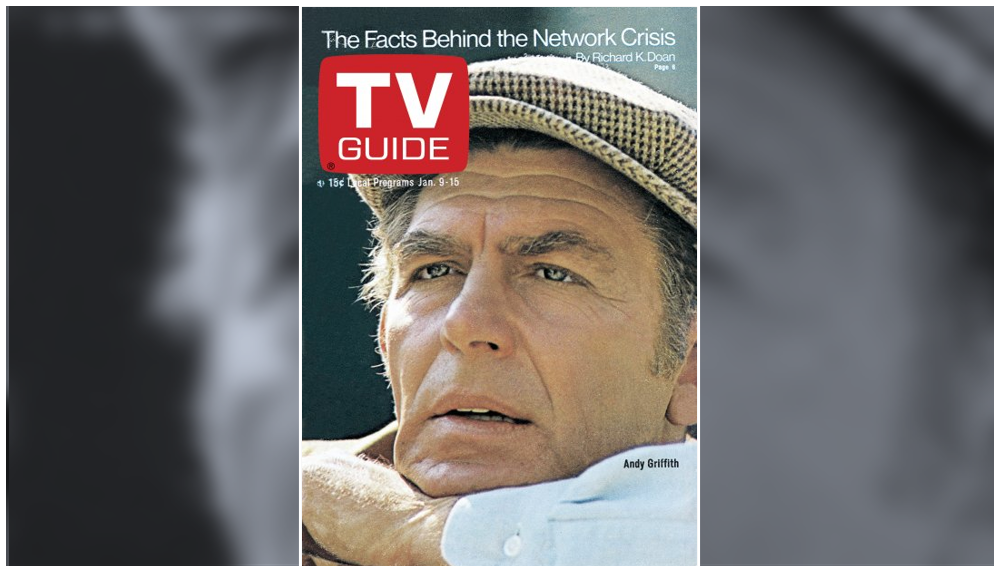
It's long been a contention of mine that the early years of the 1960s are really an extension of the '50s, and that the '60s as cultural phenomenon reach into the early '70s. However, as is the case with most theories, there are exceptions, and one of the clearest examples of how the decades differ is Andy Griffith. If this was a Matlock mystery, it might be called "The Case of the $3,500,000 Misunderstanding."

Bill Davidson's cover story does indeed tell a story, that of the beloved television star finding out you can't go home again, but if we're honest about it, that story really dates back to 1957, when Andy Griffith made a great movie called A Face in the Crowd, after which nothing would ever be the same. The movie made Griffith a star, but it left a deep scar in him as well; critics began to refer to him as "another Jimmy Stewart," and whether you agree with that assessment or not the fact remains that Jimmy Stewart never was sheriff of Mayberry (although he could be as homespun as anyone), and while The Andy Griffith Show made Griffith a millionaire and the undisputed star of CBS, it also left him craving another bite of that dramatic apple—a bite it seems he'll never get.

This would seem to explain his decision in 1968 to abandon Mayberry in favor of a five-year contract to star in at least ten movies for Universal, where they assured him he'd "be another Jimmy Stewart or Hank Fonda." The deal lasted but one year, and produced one movie (Angel in My Pocket), and when the studio asked him to do a comedy with Don Knotts, "That cut it," Griffith says. "I love Don, but teaming up with him again would be like going backwards."

And so his next step was, if not backwards, at least lateral—back to television, thanks to his longtime agent Dick Linke, in a dramedy called Headmaster. CBS was so excited at the prospect of getting their star back that they signed on to a series without a script, or even a scenario, for $3.5 million. Headmaster called for him to play "a stern but just high school principal," with the comedy left to others, but the Andy that audiences knew and loved clashed with the new Andy, the one "pompously moralizing with minsermons on such maxitopics as drug addiction and freedom of academic expression." The show was a bomb, and though Griffith's stature alone could probably have gotten the series a second season, both he and the network agreed to scrap it in favor of The New Andy Griffith Show, in which he returned to his rural roots as mayor of a small Southern town. There are hopes for the series as this issue goes to press, but alas, the new new Griffith show does even worse than the old new Griffith show, and before the year is out CBS is back to running reruns of Headmaster in the timeslot.

It's just one of several setbacks which will come Griffith's way: Adams of Eagle Lake, Salvage 1, and The Yeagers are all short-run series, and he'll make at least as many failed pilots. He remains popular and in the public eye due to his numerous TV-movie appearances, including some of those darker roles he craved. Finally, in 1986, he hits the jackpot again with Matlock, where he plays the down-home Southern lawyer, but with a sharp edge that had been missing with Sheriff Andy Taylor. The series runs for nine seasons, even longer than the original Andy Griffith Show.

But while it's always nice to go out on top, one can't help but think of his words when describing A Face in the Crowd. "I wish I could get a role like that again," he says in this article. "It'll come along." Success may return to Andy Griffith, but that one role he craves, that second bite of the apple, never does.

l  l  l

Throughout the 60s and early 70s, TV Guide's weekly reviews were written by the witty and acerbic Cleveland Amory. Whenever we get the chance, we'll look at Cleve's latest take on the shows of the era. 

It may only be January, but Cleveland Amory's already looking toward August—Dan August, that is, Burt Reynolds' new police drama that premiered on ABC just last September. And although the show seems to be of two minds about just about everything, Amory is single-minded in his verdict: no matter what the producers try, this series falls short. It is, in many ways, a prime example of television cynicism at its worst.

The problem plaguing August, according to Amory, is that "they want it both ways. A tough, hard-hitting, violent, beat-'em-up—but, of course, mustn't have too much violence, so, in at least two episodes so far, they give you, in the station house, a kind of second-degree third degree." Anti-establishment enough to attract "the kids," but not so anti that it turns the elders off. Stories that invariably feature two sides. And so on. Even the setting—large enough for big-city crime, small-enough that cases still involve August's friends.

Lest you think the producers are merely covering all the bases, Amory notes, "like every other show that ever set out to have it both ways, Dan August hasn't got it either way." The result is an unreal mishmash that usually leaves you with nobody to root for, or even identify with. As for Reynolds, "[t]hey are so careful to make him not one thing or another—not too superhero, for example, nor too bumbly—that they end up not making him anything. He is all wood and a yard wide." His co-stars "just trail around after Dan, trying to pick up the pieces of the plots and expositions." That is, those who aren't either invisible or irritating.

In fairness, Amory does find the good in Dan August, in that the show takes on, as we noted, difficult themes, ones that present both sides of an issue. "It does not do them particularly well, mind you, but it does undertake them." Alas, the old adage that the person who walks in the middle of the road winds up getting hit from both directions holds true for TV series as well: Dan August never sees August, going off in April 1971. It reappears in reruns only after Burt Reynolds' career takes off later in the '70s. Proving, I suppose, that no good deed goes unpunished.

l  l  l

On Sunday, the NBA and NHL seasons get underway on ABC and CBS. Now, if you're a sports fan, you might have thought the seasons actually began in October. But, you see, those games don't count—like the internet today, nothing happens unless it's seen on television. Back in the days before sports saturated the tube, the networks didn't pick up on hockey and basketball until after the football season had ended, and so with football all but over, it's time to move on to other sports. On Saturday, ABC kicks off the tenth season of the Professional Bowlers Tour with the St. Paul Open, televised live from St. Paul, Minnesota (3:00 p.m. ET), while the PGA tees off on CBS with coverage of the Glen Campbell Los Angeles Open (5:00 p.m. Saturday, 4:30 p.m. Sunday).

The Juice and Jill St. John
I said that football was all but over: there is, in fact, one game yet to be played, but that one game is the Super Bowl, to be played on January 17 in Miami. It will be a game of firsts: the first Super Bowl since the AFL-NFL merger, and the first to be played on artificial turf. But that's next Sunday; this Sunday evening at 8:00 p.m. CBS warms us up for the big game with something called The Super Comedy Bowl, a one-hour variety special featuring an odd combination of celebrities and sports figures, including Lucille Ball, Jack Lemmon, John Wayne, Charlton Heston, Jill St. John, and Charles Nelson Reilly from the Hollywood side, and Ben Davidson, O.J. Simpson, Joe Namath, Roman Gabriel, Deacon Jones, and Dick Butkus on the jock side. This is the first in a series of Super Bowl tie-in variety specials over the next few years, most of which would be broadcast the night before the game with titles such as Super Night at the Super Bowl, as networks began to appreciate the capitalize on the growing hype value of the game and the consequent opportunities for cross-promotion.

This provides us with a nice segue to some of the week's variety shows. We're past the era of The Hollywood Palace, and Ed Sullivan is preempted tonight by the Super Bowl show, but that doesn't mean we're without variety. Glen Campbell is enjoying Sunday evening success with his Glen Campbell Goodtime Hour on CBS (9:00 p.m.), and tonight his guests include Liberace, Neil Diamond, Larry Storch, Linda Ronstadt, and the winner of the aforementioned Glen Campbell Los Angeles Open. That's followed by Jackie Gleason's show (10:00 p.m., CBS); tonight's rerun stars Bing Crosby, Maureen O'Hara and Bert Parks in a Honeymooners-goes-to-Hollywood musical.

On Monday night Rowan and Martin (8:00 p.m., NBC) welcome Johnny Carson, Gore Vidal, and Los Angeles mayor Sam Yorty (an odd collection if ever there was one), and on Carol Burnett (10:00 p.m., CBS) the guests are Jerry Lewis and Leslie Uggams. Tuesday features The Don Knotts Show (7:30 p.m., NBC) with Lloyd Bridges, his sons Jeff and Beau, Nancy Wilson, and Tommy Roe (but no Andy Griffith, we might add.) The second half of the Knotts show overlaps with Hee Haw (7:00 p.m,. CBS), still on its network run, with Roger Miller, Peggy Little, and New York Yankees outfielder Bobby Murcer (?) leading the way. And we've got dueling shows at 9:00 p.m. on Wednesday, with NBC's Kraft Music Hall going up against ABC's Johnny Cash Show. On the former, "Alan King Plays the Games People Play" with James Coco, Anne Meara, and Mary Ann Mobely; the latter features Jane Morgan, Homer and Jethro, Bill Anderson, Gordon Lightfoot, and Jan Howard.

Thursday night features Flip Wilson (NBC, 7:30 p.m.), and an eclectic guest cast of Zero Mostel, Steve Lawrence and Roberta Flack. Meanwhile, do you remember that Jim Nabors left Gomer Pyle to host his own variety series? (Probably, except for some of you youngsters out there.) It ran for a couple of seasons and did very well, but it was included in the rural purge that claimed so many of CBS's other successful series. Anyway, Jim's special guest this week is Robert Goulet, along with Jim's regulars Ronnie Schell and Frank Sutton (8:00 p.m.). Of course, the crown jewel of Thursday's shows is always Dean Martin (10:00 p.m., NBC), and this week Deano has something for everyone, with Orson Welles reading from the Bible (I'll bet you thought he only did roasts), and Charles Nelson Reilly and Don Rice for comic relief. Finally, on Friday, This Is Tom Jones ends its two-year run, with Petula Clark as Tom's sole guest. (10:00 p.m, ABC)

l  l  l

It's interesting that even in 1970 people within the medium were predicting the eventual end of the networks, and it's a theme that will continue through this year of 1971. Some thought they'd be gone before the turn of the century; nearly all of them felt they'd have disappeared by now. The reasons are fairly simple: the dreck polluting the airwaves today, combined with the coming growth of cable television, something that nearly everyone knows is coming. In the first of a two-part analysis by Richard K. Doan, we learn the details of the gloom descending on network boardrooms.

There are a host of reasons for pessimism, to be sure: loss of revenue, due at least partially to the ban on cigarette advertising ($200 million annually); loss of a half-hour of prime time per night starting next year ($170 million in lost billing); a movement to ban commercials on Saturday morning cartoons (the biggest profit center other than soap operas and The Tonight Show); a prohibition of networks syndicating their old series to local stations ("lucrative"); increasing attacks from politicians, particularly Vice President Spiro Agnew; and that's just the tip of the iceberg. Says one insider at NBC, "Let's face it, we're as big as we're ever going to get. From now on it's a defensive action."

Mike Dann, the former head of programming for CBS, is blunt: "I believe there is no chance the network structure as we know it can or will survive." Paul Klein, the former head of audience research for NBC, agrees that there is no future for the networks, and adds that most viewers "settle for the least objectionable programs, rather than watching anything they really care about," which in turn results in the networks offering what he refers to as "future schlock"—"a slow deterioration of network fare toward 'cheap' shows such as games and more and more reruns." And then there's the growing trend of affiliates pre-empting network programs to run old movies and syndicated series; Jack Harris, president of KPRC in Houston, says "Such pre-emptions are made for only reason. It is spelled M-O-N-E-Y and pronounced money." When the most profitable affiliates do it, "then the pronunciation is GREED."

Donald McGannon, president of Group W, said the programming put out by networks is "not relevant to our times," and was a major backer of the FCC move to give a half-hour per night of prime time back to local stations. He felt the result would be "socially relevant, innovative and instructional or cultural" programs every night on all stations. The result, of course, has been syndicated game and talk shows and other such pablum. And there we have it, for just about every plan to reform television has failed. Greater network control of television programs, started as a response to the Quiz Show Scandals, has resulted in an increased emphasis on ratings, which in turn has caused programmers to dumb down their shows in search of that "lowest common denominator" programming. The salad days of the past, when the networks were rolling in money, have resulted in unrealistic profit expectations. As one executive points out, "what other business expects to return 45 [cents] out of every dollar to profit? And that's the return right now."

(In Group W's defense, it should be noted that in 1976, they launched Evening Magazine, called P.M. Magazine on non-Group W stations, which would run throughout the remainder of the 1970s and '80s, and included segments produced by local stations as well as the national content.) 

We don't know what the second half of this article says about what all this means for the future of broadcasting and the effect on viewers, but we can make a few observations based on what we know today. Network television did survive the dismal predictions, at least for a little while. The growth of cable television reduced network ratings, true, but for awhile the networks seemed poised to survive. The attraction of cable in those days was mainly uncut movies, female nudity, sports, and news. Networks bought into cable networks, and those stations even became prime buyers of network syndicated programming. Once cable started producing its own original programming, however, the tide indeed began to turn. Before long the Emmys were dominated by cable series, and cable became a byword for quality. Then streaming video entered the picture, first through services like Netflix and Hulu, and then these services started producing original programming as well. The "cut the cord" movement became a real thing, though its long-term trend is still up in the air.

And so we have returned once again to the future of network broadcasting. Whereas the concerns of the '70s were based in part on fear of the future, today's worries seem more grounded in fact, in an analysis of what's happening right now. It's not just concern about network survival, either—it's the entire concept of television as we know it, for the cable networks stand to lose the most. Some even predict the networks could come out of this in better shape, at least in the short term.

One thing's for certain, however: the future of television has always been a matter of great speculation. Only now, we find ourselves asking if that future has finally arrived.

l  l  l

This week's starlet is Angel Tompkins, the typical ambitious actress, and Leslie Raddatz says don't bet against her when she talks about how she hates losing and likes beating the system. The hook Raddatz is using in his story is that Tompkins lives on the same street as Bob Hope, but it's not the neighborhood with the mansions—rather, she lives with her son in one of a row of tiny cottages for which she pays rent of $145 a month. It's every bit the rags-to-sort-of-richest story, coming from a broken home, with a childhood full of insecurities, a failed early marriage, a number of television credits to her name, and the determination to "work and improve."

Her credits continue into the '80s, and include a Playboy spread a year after this article appears, but in this household she'll always be best known for her too-infrequent appearances as technician Gloria Harding, Hugh Lockwood's (Hugh O'Brian) nemesis/love interest in the 1972-73 series SEARCH, which I'm currently reviewing with Dan Budnick on the Eventually Supertrain podcast. A pity she wasn't in that series more often; her character was one of great charm and spice, always looking to puncture Lockwood's ego while and the same time dispensing the information that helps save his neck. Ah, well; not the only lost opportunity in television history. She becomes heavily involved in SAG politics, and probably leaves a greater mark there than from her acting career. 

She never becomes the star she should have been, but she's done better than most.

l  l  l

Finally, a woman who's a star by any and every definition of the word: Sophia Loren. There's no particularly good reason to include this, either in TV Guide or here, other than, well, Sophia Loren. She's not appearing on any program in the near future (although she's always been a hit on television), nor is she publicizing an upcoming movie. No, the reason we're here in Rome is simply to find out "what 'movie stars' look like these days, an era defined by "faded blue jeans and tie-dyed sweat shirts." The good news is that Miss Loren does not go in for this kind of clothing, at least not in public. "You must feel like a queen at that moment," she says. We'll leave you with these as parting shots.


TV  

January 7, 2022

Around the dial


Let's see—why don't we start this week over at Classic TV & Film Café, where Rick shares with us seven things to know about Yvonne Craig, the one and only Batgirl. There was, of course, much more to her than that, and now's your chance to find out.

The Twilight Zone Vortex returns, and it's about time, with a story that's, well, about time—the 1963 episode "A Kind of Stopwatch." It's not without its flaws, but as Brian points out, it has its good points as well. See what you think.

At Garroway at Large, Jodie takes a moment to offer a warm and heartfelt remembrance of Dave Garroway Jr., the Master Communicator's son, who passed away a little less than a year ago. Not only was he of enormous help in Jodie's bio, he sounds like the kind of man who was just good to know.

Meanwhile, at Cult TV Blog, John writes about Hammer House of Mystery and Suspense—not the Hammer House of Horror that we might be more familiar with—and the episode "In Possession," disorienting, perhaps cheaply made, but worth watching.

As someone said, 2021 couldn't resist getting one last lick in, with Betty White's death on New Year's Eve, virtually the eve of her 100th birthday, and at A Shroud of Thoughts, Terence has a wonderful look back at the life of a remarkable woman. TV  

January 5, 2022

Odds & ends


Since I don't have anything big to write about this week. it seems like a good time to go through some miscellaneous items that you might find interesting.

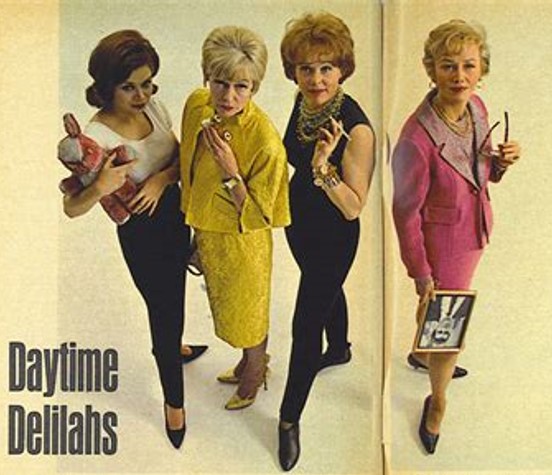
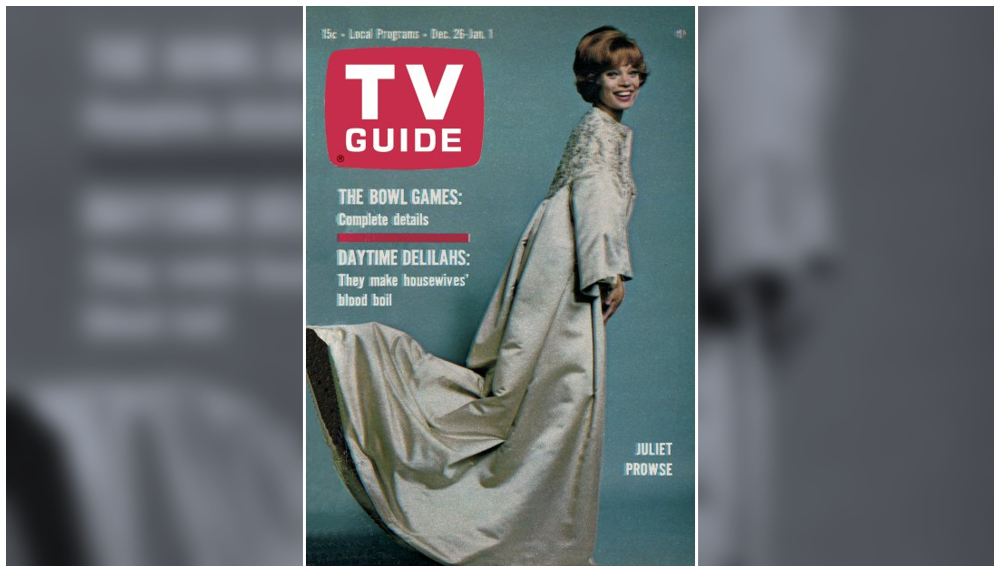
The Daytime Delilahs. Commenting on last Saturday's TV Guide (December 26, 1964), MemotoSelf asks, "Who are they? And why do 'they make housewives' blood boil'?" 


The Daytime Delilahs in question are, from left to right, Lee Lawson (who plays Barbara Sterling on Love of Life), Haila Stoddard (Pauline Rysdale on The Secret Storm), Ludi Claire (Elizabeth McGrath from The Edge of Night), and Audra Lindley (Liz Mathews on Another World). (Joan Anderson, aka Nora Hansen on The Doctors, is not pictured. They are the vixens of video, the harlots and harridans who exist to lure your favorite male heroes from home and hearth and ensnare them in their deadly webs of sin, and female viewers love to hate them. All five of the featured vixens report having been accosted in the street by fans, and the mail they receive is often so venomous that the networks won't let them see it. (One anonymous woman, reports Lawson, writes regularly "telling me that I am wicked and that I must die.") People like that haven't disappeared, by the way; they've just moved to social media.

Name That Episode! From that same issue, I mentioned that quite a few of the programs from Sunday's listing are available on DVD or streaming, but that I didn't have time to list the episodes. Well, I'm not sure I have any more time now than I did then, so maybe I was just lazy. But here's a sample for you. In addition, since shows like Bullwinkle are out as complete series, we know this week's episode is available even if we don't have its name.

The Roaring 20's: "So's Your Old Man"
Surfside 6: "Spring Training"
87th Precinct: "Man in a Jam"
Profiles in Courage: "John Adams"
Harbor Command: "Illegal Entry"
My Little Margie: "Margie, the Writer"
Car 54, Where Are You?: "The Biggest Day of the Year"
My Favorite Martian: "Won't You Come Home, Uncle Martin, Won't You Come Home?"
West Point: "Start Running"
Bonanza: "The Saga of Squaw Charlie"
The Rogues: "The Real Russian Caviar"
Men of Annapolis: "Blinding Light"
What's My Line?: Season 16, Episode 17
The Ed Sullivan Show: several individual acts on YouTube

Pretty much all of the movies from that day are available as well:

Going My Way
Slattery's Hurricane
The Thing
The Ride Back
Never Wave at a WAC
Blue Murder at St. Trinian's
The Dummy Talks
The Adventures of Tom Sawyer
The Jackpot

If you ever wanted to try and recreate a day of television, this might be a place to start. 

And Now For Something Completely Different. Finally, speaking of Ed Sullivan, we've often talked about how jarring it can be seeing rock acts performing alongside pop singers, Broadway actors, ventriloquists, animal acts, and Topo Gigio. Here's a great example: a terrific rendition of "Keep Me Hangin' On" by Vanilla Fudge from January 14, 1968. This isn't your grandfather's really big shew.


TV  

January 3, 2022

What's on TV? Sunday, December 27, 1964


Today's listing gives us an opportunity to really appreciate what television was like nearly 60 years ago. Every so often this happens, when we have an unusual number of programs available either on DVD, streaming, or YouTube. For instance, from the Minneapolis-St. Paul issue, we have Car 54, Where Are You?, What's My Line?, Harbor Command, My Favorite Martian, Bonanza, The Rogues, Bullwinkle, Men of Annapolis, Profiles in Courage, The Roaring '20s, Surfside 6, 87th Precinct, The West Point Story, several moviesthey're all out there, in whole or in part, for anyone looking for them. Depending on where you live, there might have been other shows on that are just as available.

You might like to know the titles of these episodes. Well, I don't have time to get them now, but I'll check them out and get back to you.

January 1, 2022

This week in TV Guide: December 26, 1964


A Happy New Year to everyone from this little corner of the world. I'm sure many of you are waking up this day with hopes that 2022 will turn out to be a better year, perhaps the best year yet. It would be hard to imagine things could continue to get worse (although on a personal note this year ended on a real high note), so let's look on the bright side of things—namely that flickering box in your living room. Just what does it have in store for us?

l  l  l

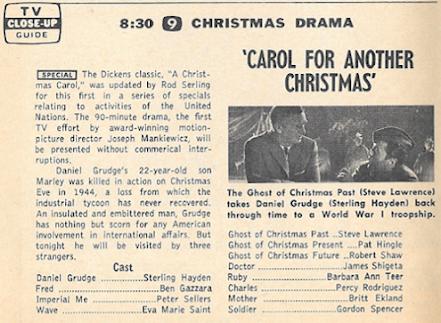
Last week, I mentioned the program The Legend of Silent Night, which appeared in TV Guide under the generic heading "Christmas Drama." This week (Monday, 8:30 p.m. CT, ABC), we have another such Christmas Drama, Rod Serling's legendary take on A Christmas Carol, Carol for Another Christmas.


The movie, directed by Joseph L. Mankiewicz and featuring an all-star cast, is the first in a series of planned movies made by the United Nations for the purpose of demonstrating the organization's mission. (I wrote about them a few years ago at TVParty!, so I won't rehash all the details here.) Now, your mileage may vary, but it's true that Carol got some pretty bad reviews at the time, with many critics suggesting that Serling's strident, polemical script served to undercut its intended drama; in fact, its "legendary" status may be due to being considered a "lost classic," having gone unseen for nearly 50 years after its original broadcast until it was rebroadcast in 2012 on TCM. 

But you know, not everything that Rod Serling wrote was great; he knew that better than anyone. And not every "lost classic" is actually a classic. It's still worth watching, though, as a part of television history. 

One last thing; you know how I've written about how quick we are to declare Christmas over as soon as the calendar flips over to December 26. Well, Carol for Another Christmas was aired on December 28. And it was still called a Christmas Drama. And that's not all; on Saturday, Jackie Gleason offers his annual Christmas show (6:30 p.m., CBS), in which he talks about his own childhood Christmas memories and reads "'Twas the Night Before Christmas," while his sidekick Frank Fontaine offers his version of "A Christmas Carol." Try telling the Great One that Christmas was over before his Christmas show aired!

I've made this point before, but the 12 Days of Christmas don't start until Christmas, and it's quite apparent from past TV Guides that even in the '60s, the period of time between Christmas and New Year's was considered an extension of the holiday. Schools were out, parties were held, many people were taking time off if their office wasn't already closed. Heck, WCCO even has the Mora High School choir singing Christmas music Saturday afternoon. Today things seem different; a couple of years ago we actually saw store employees taking down decorations on Christmas Eve. By the time December 26 rolls around we're already on to something else, stripped trees already sit on the curbside waiting to be picked up by the trashman. By December 28, it can often be as if Christmas had never happened. As I said, we're in too much of a damn hurry.

l  l  l

During the 60s, the Ed Sullivan Show and The Hollywood Palace were the premiere variety shows on television. Whenever they appear in TV Guide together, we'll match them up and see who has the best lineup.

Sullivan: Scheduled guests are singer Leslie Uggams, impressionist Frank Gorshin, comedian Rip Taylor, the Serendipity Spingers, comedienne Jean Carroll, the Czechoslovakian State Folk Dance ensemble and Burger's animals. On tape: juggler Gil Dova and the comedy team of Davis and Reese.

Palace: Host Van Johnson introduces actress-singer Betty Grable; tenor Sergio Franchi; comedian Jackie Mason; French trapeze artist Mimi Zerbini; comic Paul Gilbert; the Jambaz balancing act; the dancing Bal Caron Trio; and the Zeros, knife throwing act.

I'm not convinced that this is the strongest week you'll see. Of course, Frank Gorshin probably could have impersonated everyone on either show, and that would have been worth watching. I'm not a big Leslie Uggams fan, though, and Rip Taylor always used to drive me crazy. On the other hand, if therest of the cast weren't enough, I think Betty Grable gives Palace at least one leg up on the competition, if not two

l  l  l

Throughout the 60s and early 70s, TV Guide's weekly reviews were written by the witty and acerbic Cleveland Amory. Whenever we get the chance, we'll look at Cleve's latest take on the shows of the era. 

When this week's series first premiered in 1962 it was called, simply, The Nurses. Now, by the time Cleveland Amory has gotten to it, it's become The Doctors and the Nurses. What's it all about? Says Cleve, "There are four kinds of opera—grand opera, soap opera, horse opera and, last and least, hospital opera. We have our own thoughts as to why so many people have, for so many years, found the hospital shows so fascinating—including every last gory operation-room detailbut up to now we have spared you this theory."

As I say, the show started out as The Nurses, starring Shirl Conway and Zina Bethune in the titular roles, but after a couple of seasons doctors Michael Tolan and Joseph Campanella were brought in to add some bulk to the dramatis personae; as one of the producers put it, there's only so much drama you can squeeze out of a storyline that deals with nurses, because there's only so much nurses can do on their own. At some point, you have to bring doctors into the mix. According to Amory, the additions have done little good: "CBS, not content to do the gentlemanly thing and let the old show, The Nurses, go—a decision by which they could have won the undying gratitude of millions yet unborn—have, instead, in their infinite obstinacy, seen fit not only to keep The Nurses on, but, horror of horrors, to add to it."

Storylines are almost uniformly grim, "some of the heaviest fare this side of the Black Hole of Calcutta—and we hesitate to mention that for fear they'll shoot that, too." Stories include examinations (no pun intended) of menopause, the concerns a black patient has about having a black doctor, and a two-parter about abortion. That one, in which a woman apparently died as the result of a botched abortion, climaxes with "about as silly a chase as we can recall, with the abortionist engaging in a high school debate with his chaser (Tolan), who had been accused of performing the operation." The innocent Tolan, says Amory, "behaved like such a heel that to this day we don't believe the script got it right. We believe he was guilty. As to the Mata Hari girl who helped him (Katherine Crawford), if ever we saw a nurse's aide who needed aid, she was it."

To be fair, there have been some good episodes, marked by good writing and acting, but these seem to be the exception rather than the rule, as the very next episode will invariably be another turkey. He did like one, which featured an interesting guest-star turn by Barbara Harris, but "As for the writing, the kindest thing on could say about it was that there wasn't any. Maybe Miss Harris ad-libbed it from an old movie."

l  l  l

I'm surprised there's no New Year's Eve programming on the networks, at least here in Minneapolis-St. Paul. I'd assumed that CBS might have been showing Guy Lombardo, but as we look into it further, it turns out we're in that period from 1965-70 in which Guy and his Royal Canadians were syndicated, and apparently no one in the Twin Cities thought it was worth carrying. Over on NBC's Tonight, Johnny Carson probably has a cutaway to Times Square for the ball drop, and ABC has The Les Crane Show (carried in Minneapolis on WCCO, the CBS affiliate), which doesn't even begin until midnight. In fact, the only New Year's Eve show is a local one, from KSTP, Channel 9. It's called Nightwatch, a three-hour live music program from Souls Harbor ministries in downtown Minneapolis. I never watched this, but I remember this program running on New Year's Eve for years. Not the same program, of course.


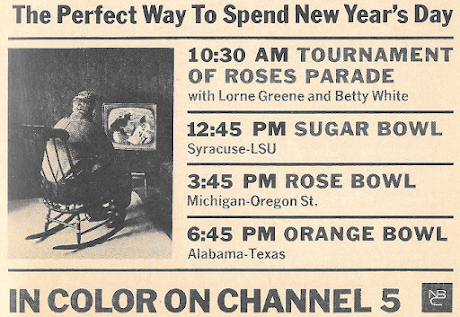
The New Year rings in bright and early with The Today Show (7:00 a.m., NBC), which devotes the entire two hours to the Grammy-award winning Swingle Singers. The festivities continue with the Cotton Bowl Parade from Dallas (9:30 a.m., CBS), hosted by Allen Ludden and for-mer Miss America Marilyn Van Derbur. At 10:00 a.m., NBC carries a half-hour of highlights from last night's King Orange Jamboree, hosted by Dennis Weaver, with Grand Marshal Jackie Gleason. At 10:30 a.m., CBS and NBC offer dueling coverage of the Tournament of Roses Parade and Grand Marshal Arnold Palmer; CBS's features Bess Myerson and Ronald Reagan, while NBC has the long-running team of Lorne Greene and the now-late Betty White. Finally, at 11:00 a.m., ABC's Les Crane and Kathy Nolan host the Mummers Parade from Philadelphia. Added to the football to come, there should be no complaints about finding something to watch. 

l  l  l

After months of struggle, the college and pro football seasons both come to conclusions this week. (Yes, I know it's hard to believe the NFL season once ended before February, but it's true.)

The two pro leagues have coordinated their championship game schedules to avoid conflict, and so the AFL leads off on Saturday with the defending champion San Diego Chargers taking on the Buffalo Bills at 1:00 pm on ABC. It's one of the most memorable games in AFL history, as the Bills, riding the arm of Jack Kemp and a ferocious defense, dismantle the Chargers 20-7. Most remembered of all is Bills linebacker Mike Stratton's tremendous hit on Chargers star Keith Lincoln, "The Hit Heard 'Round the World," which knocked the MVP of last year's title game out for the rest of this one. As a side note, NBC's new contract with the AFL, one that provides the upstart league with financial security, begins in 1965; until the start of Monday Night Football in 1970, this will be the final pro football telecast by ABC.

The following day at 12:30 pm, CBS gives us the NFL championship between the heavily favored Baltimore Colts and the Cleveland Browns. After a scoreless first half, which one sportswriter describes by writing, "Never have so many paid so much to see so little," the Browns come alive in the second half, and dominate the Colts, winning 27-0. It's the first time CBS has broadcast the championship game, under a unified new contract; even though the network carried most of the league's regular season games, previous title contests had been carried by NBC. It's also, to this day, the last championship won by the Brownies.

As for college football, believe it or not, the title—rather, the mythical national championship—has already been decided. The college football landscape is a lot different in 1964 than it is today; the national champion is chosen by the Associated Press and United Press International polls before the bowl games, which are considered little more than exhibitions. Speaking of bowls, there are only nine of them, and some conferences, like the Big Ten and Pac-8, put limits on how many of their teams can go bowling, and where. 

And so the undefeated Alabama Crimson Tide, led be star quarterback Joe Namath, have already been proclaimed national champions when they travel to Miami to play the #3 Texas Longhorns in the first-ever nighttime Orange Bowl (6:45 p.m., NBC). It's also the conclusion to NBC's "Football Widows" triple-header, which begins at 12:45 p.m. with the Sugar Bowl (LSU 13, Syracuse 10) and continues at 3:45 p.m. with the Rose Bowl (Michigan 34, Oregon State 7) before winding up in Miami. And while the Crimson Tide stride into the Orange Bowl as champs, they leave as chumps after losing to the Longhorns 21-17. Meanwhile, Arkansas, ranked #2 and also undefeated, beats #6 Nebraska 10-7 in the Cotton Bowl (12:45 p.m., CBS), and is chosen national champion by the Football Writers Association and the Helms Foundation. Don't feel too sorry for Joe Namath, though; the following day he'll sign with the AFL's New York Jets for $400,000, making him the highest-paid player in the history of professional football.

l  l  l

Let's see what else we've got this week.

On Saturday, ABC's Wide World of Sports (4:00 p.m.) presents the Australian Rules football championship between Melbourne and Collingwood. Having watched many matches over the years, I can safely say that the description of the sport having "a complicated set of rules" is an understatement. Having no rules at all would be closer. 

At 9:00 a.m. Sunday morning, CBS presents another in their series of Sunday cultural specials, with a broadcast of a 1959 staging of "Noye's Fludde," a 15th Century miracle play set to music by Benjamin Britten. A nice color feature article accompanies the broadcast, taking a look at the nature of miracle plays and background behind the production. Of course, shows like this have always been stuck somewhere harmless in the broadcasting schedule, where they can't do much ratings damage. Later in the evening, Gordon and Sheila MacRae host Winterland on Ice (6:30 p.m., ABC), supported by members of the Ice Follies, including former world champion Donald Jackson. Then CBS puts a cultural bookend on the day with an 8:00 p.m. telecast of the Royal Ballet doing "Les Sylphides" by Chopin, followed by the third act of "The Sleeping Beauty" by Tchaikovsky. featuring the legendary Margot Fonteyn and Rudolf Nureyev.

One of the things I find interesting is that the networks are still showing first-run episodes throughout Christmas and New Year's, in addition to specials. For example, there's a full-page ad for The Lucy Show on Monday night (8:00 p.m., CBS), with special guest star Danny Kaye (another CBS star, natch). 

Tuesday's episode of the aforementioned The Doctors and the Nurses (9:00 p.m,, CBS) probably drives Cleveland Amory crazy, and I'm not sure I blame him: the staff and patients witness a life-and-death drama across the street as a man threatens to jump off a building. 

And speaking of Danny Kaye—well, on his own variety show (Wednesday, 9:00 p.m., CBS), he has his own crossover guest, with The Beverly Hillbillies' Buddy Ebsen doing the honors. I just love this self-promotion.
 
I mentioned the dearth of New Year's Eve programming, but that doesn't mean there isn't anything on Thursday: on Kraft Suspense Theatre (9:00 p.m, NBC), Roddy McDowall stars as an alcoholic former teacher trying to prove a skid-row friend innocent of a robbery and murder that claimed his own life.

And if you're not into the football scene, Friday's highlight is probably Nuthouse (7:30 p.m., CBS) an hour-long satire of pop culture produced by Jay Ward and Bill Scott of Bullwinkle fame. As I recall, it was a pilot for a series that never went anywhere.

l  l  l

Finally, if you've been past the toy aisle of a store lately, you know the Marvel Cinematic Universe has taken over pretty much everywhere. But this week's article about Fess Parker, written by Arnold Hano, reminds us that merchandising has always been a part of hit entertainment.

Parker became a huge star in the '50s by playing Davy Crockett, King of the Wild Frontier, on Walt Disney's show. Everywhere you heard "The Ballad of Davy Crockett," you saw kids wearing coonskin caps, and Parker drew thousands to his every appearance. When Disney declined to revive the series, Parker and producer Aaron Rosenberg sat down to see what other kind of Crockett-like character they might be able to adapt into a series. They settled on Daniel Boone, and today the Boone publicity machine is going non-stop.  "A comic-strip syndicate ordered an artist-writer team to rough up two weeks of panels for a daily Boone strip. A soft-drink TV commercial featured a cartoon figure of Daniel Boone. And—bless their hammer pin heads—the kiddies began singing: "Daniel Boone was a man . . . a big man . . ." Adds Parker, "We are ready to meet the demand for a merchandising program. NBC is even ready to create the demand, if it has to." As I often say, the more things change, . . .

Daniel Boone ran for six seasons. Parker, already a millionaire from the Crockett series and owner of 30% of Boone, became even more wealthy, turned down the lead role of McCloud, and retired from acting to oversee various real estate developments and operate a successful winery. Not a bad career. I imagine Disney took some notes, don't you? TV