November 14, 2022
What's on TV? Thursday, November 18, 1954
Art Linkletter's guest on today's House Party (1:30 p.m., CBS) is the legendary film director Mack Sennett, creator of the Keystone Kops, models for many of today's world governments. He worked with many of the biggest names in Hollywood, and his contributions to the film industry earned him an honorary academy Award in 1938. Although he'd been retired for nearly 20 years, he'd appeared on This is Your Life with Ralph Edwards earlier in the year. Kind of cool to think that as early as 1954, TV could bring you a piece of nostalgia. The listings are from Chicagoland.
November 12, 2022
This week in TV Guide: November 13, 1954
I trust that by now most of you know me well enough to understand that the only time I recycle a TV Guide story is when I don't have an issue for that week (hey, it happens!) and that, even then, I try to introduce something new to what I've written. I'll admit there are times, though, when I'm tempted to dip into the archives anyway, either because I'm short of time or simply unmotivated by an issue that doesn't seem to say much. (There's also laziness, but we'll let that pass.) And then I'll run across the hook, that one thing that jumpstarts everything else, and after that it all falls into place.
For example, if you know your history, you're bound to notice a line (no pun intended) in Sunday's listing for What's My Line? (9:30 p.m. CT, CBS) that leaps out. Following the usual boilerplate ("John Daly moderates for panelists Arlene Francis, Dorothy Kilgallen, Bennett Cerf") the magazine, as it often does, adds a promo for an article elsewhere in the issue: "The panelist covers a murder trial in Cleveland, page 18."
Just because she's covering the Trial of the Century, though, doesn't mean she's quitting her weekend job. She arrives in Cleveland at 4:00 a.m. Monday morning after appearing on WML, is in bed in the hotel by 5, up at 8, and at the courthouse at 9:45. She then flies back to New York to spend the evening with her family, gets up at 5:30 Tuesday morning to record two sessions of their radio show, and is back in Cleveland and at the courthouse by noon. When she's not travelling, she pounds out her daily "Voice of Broadway" column. Oh, and she also covers the trial.
For many years, the 1954 murder trial of Dr. Sam Sheppard was considered the most famous American murder trial of the 20th century, if not all the nation's history; it certainly was the most widely reported. The accused, Dr. Sam, was a neurosurgeon from a prominent medical family in Cleveland. His wife, Marilyn, was found bludgeoned to death the morning of July 4, 1954, along with her unborn child, in the upstairs bedroom. Sheppard claimed that she had been murdered by a "bushy-haired intruder" whom he had tried and failed to fight off. The prosecution claimed Sheppard had done it himself because of an adulterous affair he was having with a nurse at his hospital. Now, he's on trial for his life.
The Sheppard case had, Dorothy Kilgallen would say, "'[a]ll the ingredients of what in [the] newspaper business we call a good murder. It has a very attractive victim, who was pregnant, and the accused is a very important member of the community, respectable, [a] very attractive man. Then added to that, you have the fact that it is a mystery as to who did it." Reporters converged on Cleveland from around the country and even from Europe, and the story dominated the local newspapers.
Dorothy Kilgallen is no stranger to the crime beat; although known primarily for her Broadway column, her appearances as a regular panelist on WML, and her daily radio show with her husband, Dick Kollmar, she's also a respected journalist (as was her father), a crime reporter (a regular at the biggest murder trials, some of which she reviewed in her posthumously published book, Murder One), and confidant of politicians and celebrities alike. And she knows how to cover a story, which is why she's in Cleveland, representing the Hearst newspapers.
Even before the start of the trial, Dorothy's made her presence felt. During jury selection, one prospect was dismissed for discussing the trial with a friend; she explained the friend had asked her if she'd gotten Dorothy's autograph. (Dorothy sent a note to the dismissed juror: "Dear Betty, the reporters thought you would have made a good juror.") She was even invited to meet with trial judge Edward Blythin in his chambers; the judge told her that he and his wife enjoy her on TV, and later said, "I can understand why she is so popular." She doesn't mind the publicity; "I've been working hard since I was 17 years old to get where I am now, and although the attention slows me down, I am grateful to give autographs."
Just because she's covering the Trial of the Century, though, doesn't mean she's quitting her weekend job. She arrives in Cleveland at 4:00 a.m. Monday morning after appearing on WML, is in bed in the hotel by 5, up at 8, and at the courthouse at 9:45. She then flies back to New York to spend the evening with her family, gets up at 5:30 Tuesday morning to record two sessions of their radio show, and is back in Cleveland and at the courthouse by noon. When she's not travelling, she pounds out her daily "Voice of Broadway" column. Oh, and she also covers the trial.
And now, as Paul Harvey would say, the rest of the story. You remember that quote from Dorothy, the one about this being a "good murder"? She made that comment to Judge Blythin in his chambers, when he asked her what brought her to Cleveland; he couldn't understand why such well-known newspeople as Bob Considine, Theo Wilson, and Marguerite Parton were covering the trial. That's when she said, "it is a mystery as to who did it."
"Mystery?" Blythin replied, "It's an open and shut case."
"Well, what do you mean, Judge Blythin?" she asked, stunned.
He answered, "Well, he is guilty as hell. There is no question about it."
She didn't reveal this story at the time, or for many years afterward; she felt she was not at liberty to do so, she explained, since the conversation was off the record. Sheppard was found guilty of second-degree murder on December 21 after a 9-week trial (a verdict with which Kilgallen was outraged; as a result, her column was dropped by Cleveland newspapers) and was sentenced by Blythin to life in prison. Blythin died in 1958, and in 1964 Kilgallen casually mentioned her conversation with him at an event attended by Sheppard's new lawyer, F. Lee Bailey. Bailey got her testimony in a deposition in May, and included it in his appeal. A judge overturned Sheppard's conviction in July on grounds of pre-trial publicity and judicial prejudice; that decision was upheld in a landmark Supreme Court ruling in 1966, which ordered a new trial. Sheppard was retried in October, 1966, in the same courthouse in which he had been convicted 12 years earlier, and was acquitted. He died in 1970. A 1975 TV-movie was made about the case; I wrote about that here.
By the time of Dr. Sam's retrial, Dorothy Kilgallen, who had so criticized the verdict and whose deposition played a role in the overturning of Sheppard's conviction, had been dead for a year, apparently of an accidental overdose. She had covered Jack Ruby's 1964 murder trial in Dallas and had interviewed Ruby, and she was skeptical of the Warren Report' conclusions regarding the assassination of John F. Kennedy. There are many to this day who think her death was murder and was related to her investigation into the assassination.
l l l
Well, if I can't build on that, I should probably just wrap it up, and judging by the number of lines you see below this one, it's probably apparent to you that I've decided to keep going, perhaps to my detriment. (You'll be the judge of that.) Two of America's most successful comics have also decided to keep going, and according to this week's joint review (probably written by Dan Jenkins), it may be detrimental to them as well.
For five seasons, one of the Golden Age's shining moments was Your Show of Shows, starring Sid Caesar and Imogene Coca. Then they split up, choosing to go their separate ways (as did their director, Max Liebman). Everyone agrees that the three of them, separate, are less than the sum of their parts; unfortunately, the one who seems to have suffered the most is Coca. (Saturday, 8:00 p.m., NBC)
Part of the challenge for Coca, Jenkins says, is that she is "a performer who must be given an idea, rather than a script; a direction, rather than set lines." After five years, she's exhausted the bits from her nightclub act, and "everyone has seen her several times more than once"; she also "appears to have run out of writers who know what to do what her gamin-like qualities." That's not to say that every sketch is a dud; she has excelled in some of them, but too often they run too long. And as everyone knows, "Brevity is still the soul of wit."
Our other star under the gun is Red Buttons, who in the off-season moved from CBS to NBC, from Monday nights to Friday nights (7:00 p.m.), and from one writing staff to another. But, says Jenkins, "he is still Red Buttons. If one is an aficionado, he is the greatest. Otherwise . . ."
The problem is that Buttons "has no comic traits peculiar to him alone. He is not funny per se. A Jack Benny can be hilarious just standing with his arms folded, staring at an old lady in the front row. Buttons can't. He needs material." And Red's writers, "whose numbers must by now be as forlorn as they are legion," can only recycle old bits. Television is a demanding medium, one that demands staying power, "a basic talent which can rise above material and carry its own weight on off-weeks." So far, Red "has displayed very little of it."
l l l
Is there anything interesting to report from the industry? Well, here's something; at the Hollywood Teletype, Dan Jenkins reports that "New, young CBS comic Johnny Carson will replace Jack Paar for several weeks in January." That would be Paar's weekday morning show, which airs at 7:00 a.m. on CBS. It won't be the last time; Johnny takes Jack's place again in 1962, this time permanently. As I recall, that turns out pretty well.
The first reports are in on how television covered the 1954 midterm elections, and it's described as "generally creditable," which is probably better that what we just had. NBC pulled off something of a technical coup, with a four-way split screen discussion between their commentators in New York, D.C., Chicago, and Los Angeles. And here's something: since WRCA in New York broadcasts in color (it's the NBC affiliate, now known as WNBC), it asked the parties what they'd like for their "official TV color." The Democrats choose green, the Republicans blue. Red, of course, would have been unthinkable for either party given the Cold War.
And remember how I wrote about how companies get involved with the shows they sponsor? It seems that the Campbell Soup Company, which sponsors the sitcom Dear Phoebe on NBC, doesn't like canned laughter. Therefore, they've ordered the laugh track deleted from the show. Now, that's the kind of sponsor interference I can get behind.
l l l
Here's another one of those stories that jumps off the page. I must have read Brooks and Marsh's Complete Director to Prime-Time Network TV Shows from cover to cover when it first came out in 1979, and one of the things that stuck with me for some reason was an anecdote about an episode of CBS's Studio One—the episode that's on this Monday night at 9:00 p.m., as it happens. It's called "Let Me Go, Lover," a drama about murder and corruption in the record industry, and since producer Felix Jackson needed a song, he went to Mitch Miller, head of recording for CBS's subsidiary, Columbia Records. "Miller gave [Jackson] an obscure ballad called 'Let Me Go, Devil,' and urged that it be sung on the soundtrack by an unknown songstress rather than by an established star, in order to heighten the dramatic impact. With remarkable foresight he then saw to it that, prior to the telecast, record stores were well stocked with her Columbia recording of the song."
The song, sung by Joan Weber, was renamed, "Let Me Go, Lover" to match the title, and was used throughout the story. The next morning, "record stores were deluged with customers wanting 'that song that was on TV last night'—and 'Let Me Go, Lover' became a phenomenal hit," selling a half-million copies in the next five days (it eventually became a million-seller) and hit #1 on the Billboard charts. Mitch Miller knew what he was doing, which is why he was the success he was, and after more than 40 years, I've finally gotten to use that anecdote.
What else is on? There's Orson Welles' noirish version of Macbeth (Sunday, noon, WTMJ), with Welles in the title role, plus Jeanette Nolan, Dan O'Herlihy, Roddy McDowall, and Alan Napier in a non-Alfred role as "A Holy Father." Also on Sunday afternoon, Hallmark Hall of Fame presents "A Matter of Principle," the story of how John Adams defended the British soldiers accused of the Boston Massacre (4:00 p.m., NBC).
The latest NBC color spectacular is the Pulitzer Prize-winning romantic comedy "State of the Union," on Producer's Showcase (Monday, 7:00 p.m.), with Joseph Cotten and Margaret Sullivan in the roles previously played on the big screen by Spencer Tracy and Katharine Hepburn. Wednesday's highlight is the World Lightweight Championship fight between champion Paddy DeMarco and challenger Jimmy Carter (no, not that one), from the Cow Palace in San Francisco (9:00 p.m., CBS). Carter, who lost the title to DeMarco in March, regains it with a TKO in the 15th round. And on Thursday, CBS presents its own spectacular, as Shower of Stars uses Betty Grable, Harry James, and other stars in sketches about entertainers traveling from gig to gig. The sponsor, incidentally, is Chrysler. Coincidence?
Before I forget, The Liberace Show airs on Wednesday at 9:30 on WBKB, and the young lady on the cover of this week's issue is Liberace's latest squeeze (pronounced "beard"), Joanne Rio, a struggling young actress who's described as "the only girl he takes home to mother." Despite the headline in one article entitled "Liberace Fiancee Tells of First Kiss," she denies that the couple are engaged, saying that "We just enjoy each other's company, that's all."
l l l
Finally, we'll be celebrating Thanksgiving next week with an appropriate issue, but in the meantime, the deadline is at hand to order tickets for TV Guide's Thanksgiving Day TV Party, which takes place live on WGN from 3 to 4:00 p.m. on Thursday, November 25. The tickets are free for both kids and adults, and all kids receive a free gift package.
The show will be hosted by Super Circus star Mary Hartline and features the top Chicagoland TV children's favorites: Uncle Johnny Coons; John Conrad and Elmer the Elephant; "Pied Piper" Art Hern; Two-Ton Baker, the Happy Pirate; singing cowboy Bob Atcher; and Romper Room's Miss Rosemary. There's also a contest to select two lucky kids as "Mr. Pilgrim" and "Miss Pilgrim," and in addition to appearing on the show, the lucky boy and girl each get this impressive haul of prizes:
- A 21-inch Sentinel table model television set.
- A genuine Schwinn Hornet bicycle, complete with horn, headlights and all features.
- A pedigreed cocker spaniel puppy and a month's supply of Rival Dog Food.
- A handsome 21-jewel Lady or Lord Elgin wrist watch.
Those kids are making out like bandits, aren't they? I wonder how many hundreds of them were begging their parents to let them send in their names and photos? I wonder how many parents were trading side glances about the dog? And I wonder how much the tax added up to for the winners?
Anyway, it sounds like a lot of fun, doesn't it? This whole idea of a Thanksgiving TV party, with celebrities from all the local stations—not quite like a family get-together, but something special. I know other stations did things like this, for Thanksgiving or Christmas. Of course, without local kids' shows, I don't suppose you'd see anything like it today. But then, sometimes it doesn't seem as if we have as much fun today, either. TV
November 11, 2022
Around the dial
Today is Veterans Day, and I'd be remiss if I didn't start out with recognition for all those serving in the Armed Forces, here and elsewhere. There's no jingoism needed to thank them for their service.
Now, for this week. There are many jokes out there about associating size with quality, and I think it would be right and proper to pass on all of them now. I'll just say that even though we have a smaller set of links to share this week, the quality more than makes up for the quantity.
Earlier this week, HBO celebrated its 50th birthday. For several years, HBO was cable TV, at least as far as many people were concerned, and to this day the network has a place at the highest level of broadcasting. At The Ringer, Alison Herman looks at how it's come a long way during those years and how it keeps overcoming the obstacles.
It's been a long time since I checked out GSN, the Game Show Network. So long, in fact, that the last shows I watched there were What's My Line?, Password, and PlayMania (for obvious reasons). The Flaming Nose brings us up to date with this review of one of its most popular shows, America Says, with host John Michael Higgins.
The Broadcasting Archives links to a Washington Post story by John Kelly on the catchy music that punctuated late-night movies back in the 1950s. The best-known of these is "The Syncopated Clock" by Leroy Anderson, but there are others you'll probably recognize in this charming look back.
John is back at Cult TV Blog with another documentary review, this time a 2015 look at Manchester's Strangeways Prison and its infamous 1990 riot. The story is interesting, the techniques used in the documentary are interesting; read all about it.
I do link to Terence at A Shroud of Thoughts for other than obituaries, but he's always on top of things, and he does them so well—the way they should be done. He has several this week that deserve your attention: Andrew Prine, Leslie Jordan, Ron Masak, and Jules Bass. Champions all.
A pretty good week at that, right? As I said, size isn't everything. TV
November 9, 2022
What I've been watching: October, 2022
Shows I’ve Watched: | Shows Next on the List: |
Rocky Jones, Space Ranger | Combat! |
Surfside 6 Maverick | Cheyenne |
It's often said that the appeal of classic television, at least in part, is due to the desire to recapture the sense of one's youth, whether it be childhood, college years, or some other significant memory. Watching the show takes you back to that time and causes you to release positive endorphins or whatever it is that's supposed to give you that warm feeling all over. And while there's undoubtedly truth to that, I think that explanation tends to be too easy. It doesn't account for the vagaries of human emotions, the environment in which one grows up, the—oh hell, why don't we just admit that everyone's different, and there's no accounting for taste, good or bad.
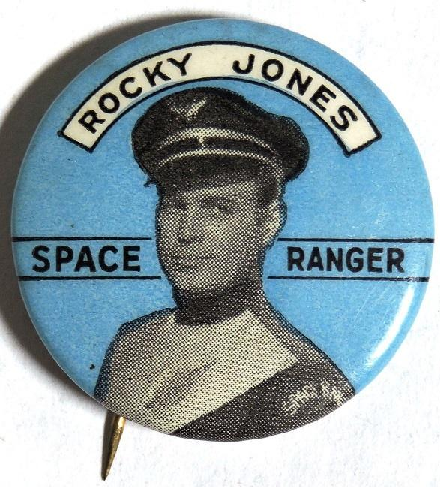
Take Rocky Jones, Space Ranger, for example. I know I'm old, but even I didn't see Rocky Jones in its original 1954 run. My first experience with the Space Ranger came on Mystery Science Theater 3000, in two compilation movies, Manhunt in Space and Crash of Moons, and while the riffing on both of them was great, it doesn't exactly provide the best platform for determining a show's quality. Fortunately, however, the miracles of technology (and YouTube) allow us to see the entire 39-episode series as it was originally broadcast: 12 three-episode stories, three standalone episodes, and no riffing. Rocky Jones may be for kids, but it holds up for adults as well.
![]() |
| Rocky and Vena (artist's conception) |
Also as part of Rocky's team is the beautiful navigator Vena, who doesn't fight but does apparently help chart the course; Professor Newton, who in appearance and manor bears a distinct resemblance to William Hartnell, the first Doctor Who; and the professor's young ward Bobby, who's a precocious boy genius and otherwise has no backstory whatsoever. Overseeing Space Ranger operations is Secretary Drake, who has something of a father-son relationship with Rocky. (That's them in the picture in the heading.)
While I wouldn't put Rocky Jones at the pinnacle of science fiction television, it does have a lot going for it. First, there's Richard Crane, who may not be a great actor but who makes for an ideal space hero. He speaks with authority and confidence (and even sounds like a pilot when he's talking with space control), can fight his way out of difficulty, and—most important, in terms of being a convincing leader—knows exactly how to handle his crew. He looks at Winky as a trusted and valued associate, even when he's often providing comic relief; doesn't condescend to Bobby, who really is smart, even if he's just a kid; and treats Vena with respect and a kind of big-brother affection. One of my complaints with Shatner's Captain Kirk is that, in my opinion, he doesn't always exhibit an intuitive and humane understanding of how to deal with his crew as individuals and has to be reminded of this by Doctor McCoy; it's a trait that supervisors often lack in handling their subordinates. Rocky, on the other hand, seems to know how to do this instinctively.
Keeping with the Star Trek theme, the show also offers an interesting alternative means of space exploration, relying on these small, four-or-five man rockets rather than the gigantic starships, and using manned space stations as hubs for intergalactic travel. The show may not have science on its side—that doesn't always appear to have been important to the writers—but from a practical matter, it strikes me as being both an expedient and economical way to deal with the vastness of space, and even in the future, someone's going to have to foot the bill for all this.
And since I raised the matter of science, Rocky Jones is no better or worse than most shows, and it's a definite step above the space serials of the 1930s and 40s. (Hey, the rocket in Commando Cody flies through a space populated by blue skies and clouds!) It's true that the planets all seem to have oxygen-based atmospheres, but at least the crew goes through the motions of checking the readings first. And while the exotic aliens they encounter are all humanoid in appearance and speck colloquial English, they do have a universal translator just in case. At least the details weren't ignored completely.
Chief among those exotic aliens are two that bear mentioning: Bovarro, the ruler of Posita, who starts out being hostile to the Federation—I mean the United Worlds—but becomes a trusted ally. He's played by our old friend from Hogan's Heroes, John Banner, and it's always fun to see him turn up in something else. (And thinner!) Rocky's chief nemesis in the first season is the wonderfully snooty Cleolanta (Patsy Parsons), leader of Ophecius. She's always trying to make trouble for the United Worlds (got it right that time), a task complicated by the incompetence of her subordinates; she forever compares them unfavorably to Rocky, so much so that you suspect she'd be much happier with Rocky at her side, both in and out of the office. Whenever her underlings let her down; she all but looks into the camera with a "See what I have to put up with?" expression, and it's hard not to feel some sympathy for her.
One of the advantages of having been introduced to Rocky Jones through MST3K is that it keeps your expectations kind of low, which means you might be pleasantly surprised. The special effects are actually pretty good for the time, the adventures exciting for the most part; the moralizing kept to a reasonable level (unlike, say, some sci-fi shows we could name), and because the violence is limited to fighting—the Rangers carry weapons but they're never used, and nobody is killed—it's safe for kids without being boring for adults.
Would I pay for the Rocky Jones DVD? Well, I'm not sure about that. (On the other hand, I'd really like a model of the Orbit Jet!) But watching it on YouTube is a no-brainer, and I'm glad I did.
l l l
Having worked our way through 77 Sunset Strip, Bourbon Street Beat, The Roaring '20s, and Hawaiian Eye, we now come to the last of the Warner Bros. detective shows of the era: Surfside 6. And in this case, last does mean least, since by now the assembly line production of P.I. series with alliterative names set in exotic locations has clearly run dry.
Lest anyone get the wrong idea, though, I'm not saying that Surfside 6 fails to give me pleasure and enjoyment, because it does. And I'm not sure, given the formula that applies to these series, that we could have done any better. However, as they might say at MST3K, the setup does have a few flaws, beginning with the cast—or perhaps I should say the number of people in the cast.
![]() |
| (l-r) Cha Cha, Sandy, Dave, Daphne, and Kenny |
As you might expect, this often results in cast congestion, even given the lead rotation that WB employs in their shows. Lee Patterson and Van Williams are very likeable; they're good at their job, tough when they have to be, and can convince you that you'd hire them. (Kenny came over from the aforementioned Bourbon Street Beat, where he was a law student graduating into the PI business, and it's a nice touch that the writers include the detail that he's now a full-fledged attorney). As an actor, Troy Donahue can often seem stiff, but I'll admit that he has a presence that adds up to being a star; as the least experienced of the trio, Sandy often gets in cases where he has a personal involvement, which sometimes leads to questionable decisions on his part—whether that's because of the writing, or it's meant to reflect that lack of experience, I'm not quite sure. Perhaps a combination of both. I should add that any time a P.I. gets involved with a former flame, it usually means trouble, especially—as was the case with Kenny in one episode—you mistakenly accuse her of murder.
But then there's Cha Cha, by far the weakest character not only in this series, but perhaps in all the WB detective shows. Her presence compares poorly with Connie Stevens, Dorothy Provine and the Frankie Ortega Trio (the musical talent in the other WB detective shows); and the most she can be said to contribute is very lame comic relief. As far as I'm concerned, she can just cha cha her way right out, and give the extra screen time to Diane McBain; a WB regular, you'd think she'd get more visibility than she does. Daphne's not one of those dumb blonde socialites, even though she could occasionally use better judgements with men. She's not only more fun to watch, she's more fun to look at.
The point, as you may have figured, is that we don't really get enough of anyone (except Cha Cha; any time for her is too much), which means it's harder for the likability of the characters to paper over the holes in the plots. There are too many occasions when A doesn't logically lead to B, and you're left wondering if you might have missed something, even though you're pretty sure you didn't leave the room and you weren't thinking about anything else. Even if the writing wasn't the week spot in shows like this, it would be a problem; here, it's that much more noticeable.
If this comes across as negative, it's supposed to—kind of. Compared to the rest of the WB stable, it's just not as good. Compared to non-WB shows—well, you might not be watching it if you weren't already into them. And maybe that's the point. If you loved 77 Sunset Strip, you'll probably like Surfside 6. If you liked Hawaiian Eye, you'll likely find Surfside 6 a fun way to pass an hour. And if you're looking for something to really challenge you as a viewer, you'll probably just keep on looking. As for me, it fits perfectly into the time spot I've given it, and that's perfectly fine with me.
l l l
We're more than halfway through the first season of Maverick, which means I've watched enough of it that I need to let you know, but not enough to draw a fair conclusion, and I think I'm going to return to it sometime in the future, after I've had a chance to talk about its various iterations.
Our hero, as things begin, is James Garner, impeccable as Bret Maverick, the gambler floating through the West looking for big-stakes games and getting involved in a fair amount of trouble along the way, all the while protesting that he's only interested in making money. He's joined in the eighth episode by Jack Kelly as Bret's brother Bart, after the producers discovered they couldn't keep up the pace of making weekly episodes; by rotating the stars, separate crews could be working on two episodes at once. This becomes a WB trademark, but viewers wouldn't have been used to it at the time, so for Bart's first few appearances, the episodes utilize the framing device of having Bret provide the opening and closing narration, as if to reassure viewers that, yes, he's still part of the series. Still, it goes to show that two Mavericks are better than one, and both Garner and Kelly carry their episodes with an easy charm.
Maverick has always been known for its whimsical and occasionally satirical look at the Western genre in general, and other Western series in particular. However, that was something of an evolutionary process, and we're not quite there yet. At this point, both Bret and Bart are closer to being traditional Western heroes, although as early as the first episode, "War of the Silver Kings," Bret's propensity for outsmarting rather than outgunning his adversary is evident in a convoluted scheme to outsmart the owner of a rival silver mine, something that would become a trademark of the series. "Relic of Fort Tejon," another early episode, is the first overtly comic episode, as Bret has to deal with a camel he won in a poker game, all the while trying to fend off a hired gun. I want to see more of this evolution, though. For instance, we've yet to see the show's famous spoofs of Bonanza and Gunsmoke, and we've only met two of the show's colorful recurring characters, Dandy Jim Buckley (Efrem Zimbalist Jr.) and Samantha Crawford (Diane Brewster), once each.
James Garner famously left Maverick after three of the show's five seasons, having won a lawsuit against Warner Bros. freeing him from his contract, and the series would try to compensate for Garner's absence by introducing still more Maverick relatives, cousin Beau (Roger Moore) and brother Brent (Robert Colbert). By the final season, Kelly is left to go it as the lone Maverick, with some of Garner's old episodes rerun to fill out the inventory. When you think about it, that's actually not a bad idea, considering that it would have been a year or two since anyone saw them, and you wouldn't have been exposed to them via DVDs or binging back then.
What all this means is that I've done my due diligence by letting you know what I've been watching, but we'll return to Maverick in another season or so, when the series has become what it is, to give you a fuller picture. But as to whether or not you should dive in—by all means! It's enjoyable, whimsical, with two strong and likable leads, and fine performances by guest stars. It may well vie with Sunset Strip as WB's best. TV
November 7, 2022
What's on TV? Sunday, November 6, 1955
Unless I'm mistaken, I think we have a winner in the contest for the year's best program description: WSTV's 6:00 p.m. listing for Lassie. "Dog Drama." That about says it, doesn't it? Elsewhere, NBC Opera Theater makes its season debut with Lukas Foss' made-for-TV opera Griffelkin, about a young devil residing in Hell's nursery. That's preceded by an interview with former president Herbert Hoover, when he had been out of office for nearly 23 years (2:00 p.m., WTRF). You Are There takes us to the O.K. Corral, as Walter Cronkite and his news team interview the Earps and Clantons, played by Robert Bray, John Larch, John Anderson, DeForest Kelley (who, sadly, doesn't play Doc Holliday), Arthur Reese, and Ernest Baldwin. Not a bad day of broadcasting, as seen in the Pittsburgh Edition.
Subscribe to:
Posts (Atom)